ART
BEAUTÉ ET BIEN-ÊTRE
ARTISANAT
CULTURE ET HISTOIRE
DIVERTISSEMENT
ENVIRONNEMENT
NOURRITURE ET BOISSONS
INGÉNIERIE INVERSE
SCIENCES
SPORTS
TECHNOLOGIE
TECHNOLOGIE PORTABLE
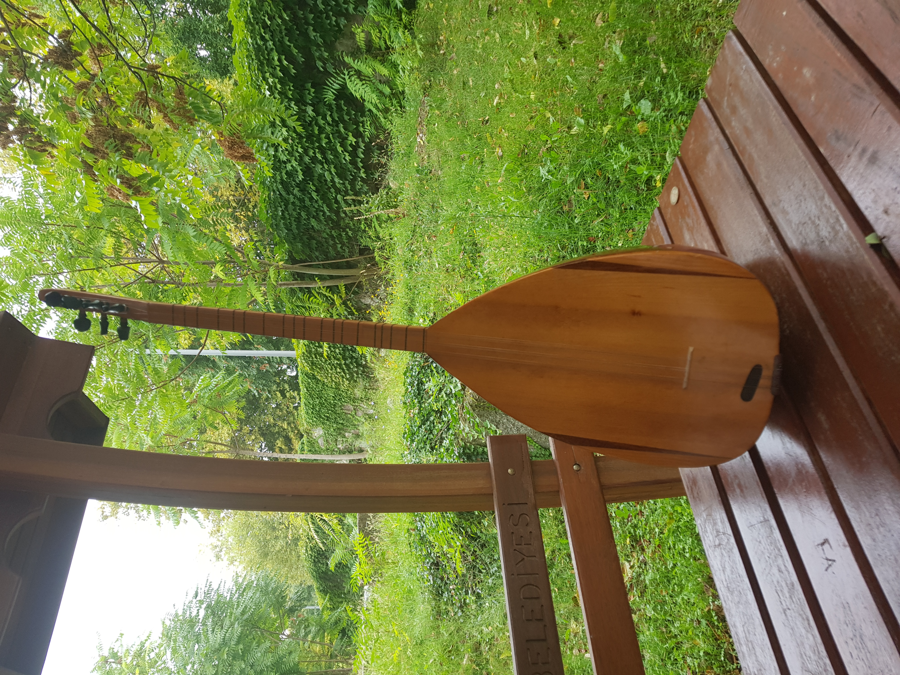
Sakhalinio · CC BY-SA 4.0


Building a Bağlama — The Turkish Long-Necked Lute with Movable Frets
Build a bağlama, Turkey's long-necked lute: a teardrop bowl body, a long neck, and frets that are TIED on with nylon so they slide — because Turkish music is microtonal and the movable frets let you place the notes between the notes. A serious maker build in the fretted string: how frets turn simple length ratios into a scale.
Intermédiaire
Several hours over a few sessions
Consignes
1
1
A lute whose frets slide
A lute whose frets slide
The bağlama is Turkey's long-necked lute: a teardrop bowl, a long fretted neck, and doubled strings. Its frets are TIED on and can slide, so it can play the microtones — the notes between the notes — of Turkish music.
2
2
Make the bowl body
Make the bowl body
Shape a deep teardrop bowl — carved from a block, or built up from thin wooden staves glued edge to edge. This bowl is the resonator.
Matériaux pour cette étape :
 Contreplaqué de bouleau de Baltique1 pièce
 Colle à bois vinylique (PVA)1 pièce
Outils nécessaires :
 Scie à métaux
3
3
Fit the soundboard
Fit the soundboard
Glue a thin, light wooden soundboard over the open face of the bowl, with a few small holes to let the sound out. A light top vibrates best.
Matériaux pour cette étape :
 Planche de résineux sec1 pièceColle à bois vinylique (PVA)1 pièce
4
4
Fit the long neck
Fit the long neck
Fix a long, straight neck to the bowl. The bağlama's neck is long on purpose, to give it a wide range of notes.
Matériaux pour cette étape :
 Tourillon en bois1 pièceColle à bois vinylique (PVA)1 pièce
5
5
Fit the tuning pegs
Fit the tuning pegs
Bore holes in the pegbox at the end of the neck and fit the tuning pegs — a bağlama usually carries six or seven strings grouped in three courses.
Matériaux pour cette étape :
 Chevilles d'accord6 pièces
Outils nécessaires :
 Alêne
Alêne6
6
String it
String it
Carve a bridge and a nut, then run the strings from the bridge on the soundboard up the neck to the pegs, grouped in three close courses.
Matériaux pour cette étape :
 Corde à piano en acier 0,032"1 pièce
Outils nécessaires :
 Couteau à sculpter sloyd
7
7
Tie on the frets
Tie on the frets
Tie loops of nylon line tightly around the neck as frets. Unlike metal frets set into the wood, these are MOVABLE — you can slide them along the neck.
Matériaux pour cette étape :
 Fil de nylon pour frettes1 pièce
8
8
Place the frets by ratio
Place the frets by ratio
Set the main frets so that pressing behind each one shortens the string to a simple fraction of its length — halfway for the octave, two-thirds for the fifth, three-quarters for the fourth.
9
9
Add the microtonal frets
Add the microtonal frets
Now add extra frets BETWEEN the usual ones. Turkish music uses microtones that sit between the Western keys, and the sliding tied frets let you place them exactly.
10
10
Tune the courses
Tune the courses
Tune the three courses to the bağlama's tuning. Doubling the strings in each course makes the sound fuller and richer.
11
11
Play with a plectrum
Play with a plectrum
Strum and pick the strings with a thin, flexible plectrum, pressing behind the frets to choose notes and sliding between the microtones.
12
12
Compendium — frets, ratios and microtones
Compendium — frets, ratios and microtones
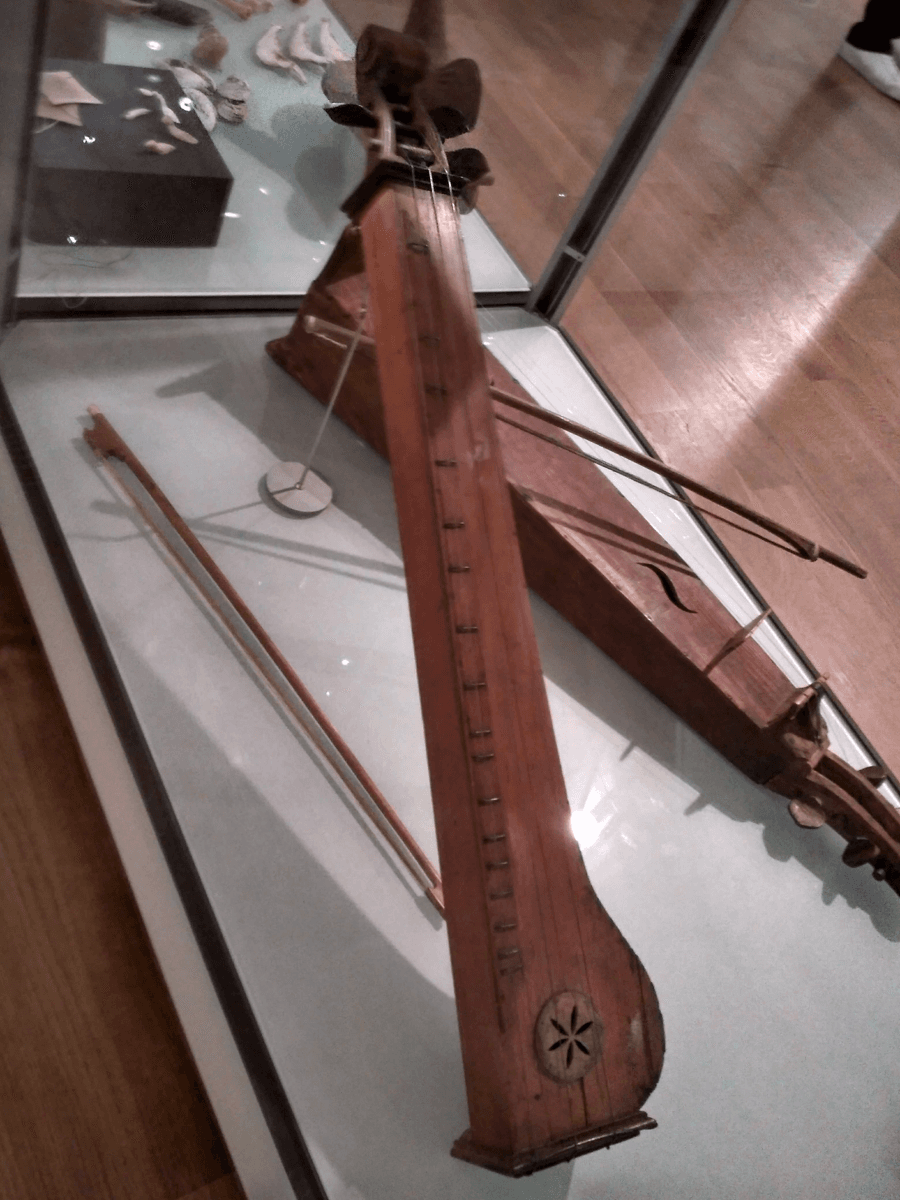
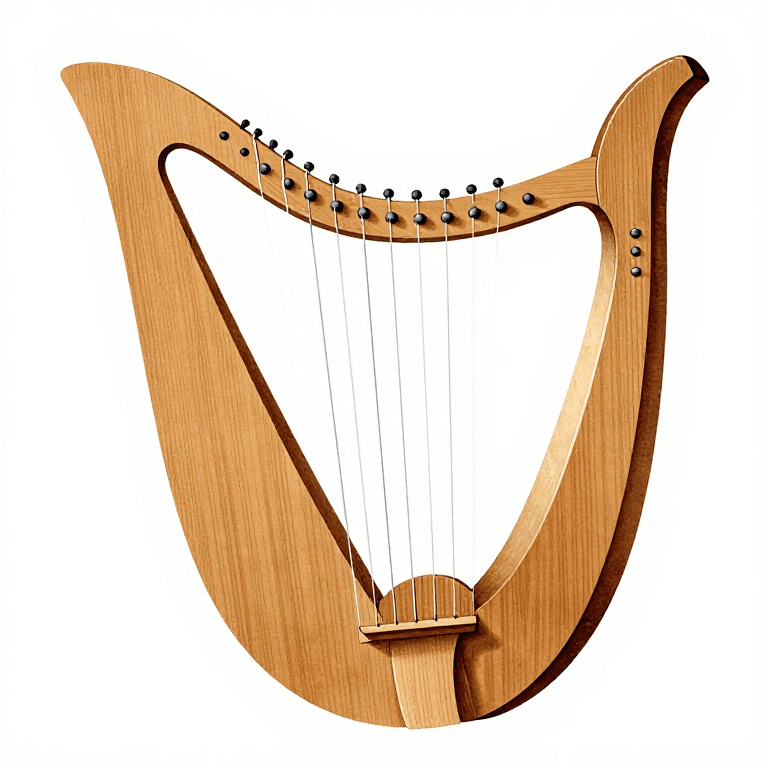
A fret is simply a hard ridge that stops a string at a fixed point so it always sounds the same note. Pressing a string behind a fret shortens its vibrating length, and a shorter string vibrates faster and sounds higher: halve the length and the pitch rises an octave, take two-thirds of it for a fifth, three-quarters for a fourth. Those simple whole-number ratios are the skeleton of every scale, and frets set them permanently under your fingers so a player can leap accurately between notes. But the bağlama does something a guitar cannot: its frets are not metal bars fixed in the wood but loops of nylon or gut tied round the neck, and they can be SLID. That is because Turkish and Ottoman music is microtonal — it uses notes that fall in the cracks between the Western twelve, like the 'neutral' second and third — and movable tied frets let a player place those in-between pitches exactly, and re-tune the whole instrument to a different makam (mode) just by sliding them. The teardrop bowl and its light soundboard amplify the strings as in any lute or guitar, and the long neck gives the bağlama a wide range. It belongs to the saz family of Turkey, Central Asia and the Balkans — cousins of the lute, the oud and, distantly, the guitar. On Youblob its fretted kin is the langspil, and its deeper ancestor is the lyre, from the day someone first ran a string over a neck and learned to stop it at a fret.
Matériaux
7- Espace réservé
- 1 pièceEspace réservé
- 1 pièceEspace réservé
- 1 pièceEspace réservé
- 6 piècesEspace réservé
- Espace réservé
- 1 pièceEspace réservé
Outils requis
3- Espace réservé
- Espace réservé
- Espace réservé
Blueprints liés
Ces blueprints partagent des connaissances — techniques, matériaux ou principes
CC0 Domaine public
Ce blueprint est publié sous CC0. Vous êtes libre de copier, modifier, distribuer et utiliser ce travail pour tout usage, sans demander la permission.
Soutenez le Maker en achetant des produits via son Blueprint où il perçoit une Commission Maker définie par les Vendeurs, ou créez une nouvelle itération de ce Blueprint et incluez-le comme connexion dans votre propre Blueprint pour partager les revenus.