
Ukuvuna Nokucubungula i-Rooibos — Izintaba zaseCederberg, eNtshona Koloni
Consignes
Ukuqonda isitshalo se-rooibos
Ukuqonda isitshalo se-rooibos
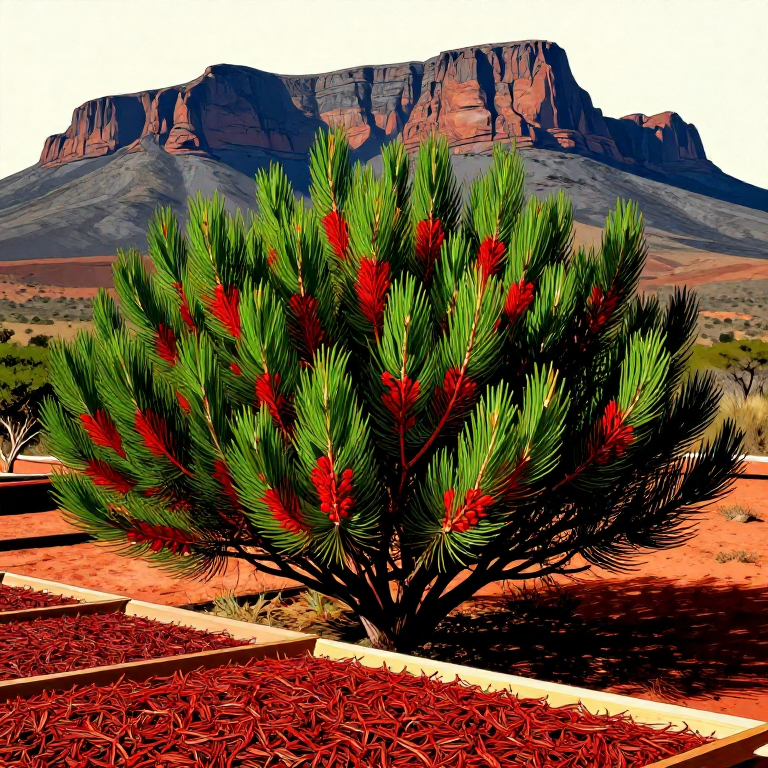
I-rooibos (Aspalathus linearis) ayisiyona itiye — iyisihlahla esincane somndeni wezimbali i-Fabaceae (umndeni wezimbali zamahlumela). Ikhula kuphela esifundeni saseCederberg eNtshona Koloni yaseNingizimu Afrika, lapho umhlabathi ongumhlabathisane onobuso (pH 3.5-5.0) nezi zulu ezingu-250-600mm ngonyaka zidala izimo ezifanele. Isitshalo sifinyelela ubude obungu-1-2m futhi siphila iminyaka engu-5-8 yokuvuna. Amahlamvu ayo amancane anjengezinaliti, angaba ngu-10-40mm ubude. I-rooibos inekhemikhali i-aspalathin, umvimbeli wokuvuvukala ongekho kwezinye izitshalo emhlabeni.
Ukuhlola ukulungela kokuvuna
Ukuhlola ukulungela kokuvuna
Isikhathi sokuvuna siqala ngoMasingana (uJanuwari) kuya kuNdasa (uMashi) — ihlobo laseNingizimu ye-hemisphere. Izitshalo zilungele ukuvunwa uma amagatsha amasha esekhule ngokwanele futhi amahlamvu esenamanzi amahle. Isitshalo kufanele sibe nobudala obungu-18 izinyanga okungenani ngaphambi kokuvuna kokuqala. Amahlamvu kufanele abe luhlaza okumnyama, ahlanganiswe ngokuqinile egatsheni. Uma umhlaba usomile kakhulu ngenxa yesomiso, linda uze uthole imvula ngaphambi kokuvuna — ukuvuna phakathi nesomiso kubulala isitshalo.
Ukusika amagatsha ngesikela
Ukusika amagatsha ngesikela
Sika amagatsha e-rooibos ngesikela ebukhali, ugcine cishe ngu-30cm ngaphezu komhlabathi. Lokhu kumqoka kakhulu — ukusika ngaphansi kwalokhu kubulala isitshalo ngoba akukwazi ukuphinde kumile. Isitshalo esiphilile sizokhiqiza amagatsha amasha kusuka ezicutshaneni ezisele futhi silungele ukuvunwa kabusha emva kwezinyanga ezingu-6-8. Qoqa amagatsha awahlanganise ayizinyanda ukuze kulula ukuwathwala. Inyanda ngayinye kufanele ibe ngu-5-8kg.
Matériaux pour cette étape :
 Rameaux mûrs de rooibos50 kg
Outils nécessaires :
 Faucille
 Gants de travail en cuir
Ukuthwala izinyanda endaweni yokusebenza
Ukuthwala izinyanda endaweni yokusebenza
Thwala izinyanda zamagatsha uziyise endaweni yokusika — indawo eqondile enomthunzi ecishe ibe seduze nenkundla yokomisa. Amagatsha kufanele acutshungulwe ngosuku olufanayo lokuvuna. Ukubambezeleka kudala ukubola nokumila kwesikhunta esenza i-rooibos ibe nombala omnyama nensizi engemnandi. Beka izinyanda phezu kwepulangwe noma i-tarpaulin, ungabeki ngqo emhlabathini ukugwema ukungcola.
Outils nécessaires :
 Bâche en polyéthylène
Ukusika amagatsha abe yizicucu ezincane
Ukusika amagatsha abe yizicucu ezincane
Sika amagatsha e-rooibos abe yizicucu ezincane ezingu-3-5mm ubude ngomshini wokusika noma ngesikela. Ukubukhulu balezi zicucu kumqoka — izicucu ezinkulu ngokweqile azikwazi ukuvuvukalisa kahle, kuthi ezincane ngokweqile zibe uthuli. Umshini wokusika unamasongo abukhali aphendula ngesivinini esingu-1,500-3,000 rpm. Uma usika ngesandla, sika ube nesiqiniseko sokuthi zonke izicucu zilingana ngobukhulu. Amahlamvu nezingxenyana zamahlamvu kufanele zihlanganiswe namagatsha asikiwe.
Outils nécessaires :
 Coupeuse mécanique de thé
 Pierre à aiguiser
Ukukhuhla izicucu ukuze kuqale ukuvuvukala
Ukukhuhla izicucu ukuze kuqale ukuvuvukala
Izicucu ezisikiwe kufanele zikhuhliwe (bruised) ukuze kuqale inqubo yokuvuvukala (oxidation). Misa izicucu ngemishini yokugaya noma uzikhuhle ngezandla — lokhu kuphula amaseli emahlamvini, kukhulula ama-enzyme kanye nama-polyphenol azidingayo ukuze kuqale ukuvuvukala. Ungaboni uma izicucu ziqala ukuba manzi futhi zikhipha iphunga elimnandi, elibukhazikhazi. Leli gxathu linquma insimbi yombala nesithombe se-rooibos yokugcina.
Outils nécessaires :
 Broyeur à cylindres pour le froissage
Ukufukamela — inqubo yokuvuvukala
Ukufukamela — inqubo yokuvuvukala
Beka izicucu ezikhuhliwe zibe yinqwaba endaweni epholile engaphakathi, ngobude obungu-20-30cm. Fafaza amanzi amancanyana ukugcina umswakama — izicucu kufanele zibe manzi kodwa zingaminzi. Vala inqwaba nge-tarpaulin ukuze ugcine ukushisa nokuswakama. Inqubo yokuvuvukala (i-fermentation) ithatha amahora angu-8-12. Phakathi nalesi sikhathi, ama-polyphenol emahlamvini avuvukala ngenxa yama-enzyme, aguqula umbala usuka oluhlaza okwesibhakabhaka uya kubomvu-nsundu — umbala wesiqobo we-rooibos. Ukushisa kwinqwaba kunyuka kufinyelele ku-38-42°C. Uma kushisa ngaphezu kuka-50°C, vula i-tarpaulin ukuze upholise.
Matériaux pour cette étape :
 Eau distillée20 litres
Outils nécessaires :
Bâche en polyéthylène Thermomètre à sonde à demeure
Ukwendlala enkundleni yokomisa
Ukwendlala enkundleni yokomisa
Emva kwamahora angu-8-12 okuvuvukala, yendlala izicucu ze-rooibos enkundleni yokomisa ngokulinganayo. Inkundla yokomisa indawo eyenziwe ngokhonkolo noma itshe lesamente eqondile, ephakeme emhlabathini. Yendlala izicucu zibe wucezu oluncane — ubude obungaphansi kuka-5cm. Sebenzisa ihhala ukuze uzisabalalise ngokulinganayo. I-rooibos kufanele ibhekane nelanga ngqo. Phendula izicucu njalo emva kwamahora angu-2-3 ukuze zicome ngokulinganayo. Inqubo yokomisa ithatha amahora angu-1-3 elangeni laseNingizimu Afrika ehlobo.
Outils nécessaires :
 Aire de séchage en béton
 Râteau de jardin
Ukuhlola ukoma
Ukuhlola ukoma
I-rooibos ekomile kufanele ibe nomswakama ongaphansi kuka-10%. Hlola ukoma ngokuthatha isandla esigcwele se-rooibos usigxobe — kufanele siphuke ngomsindo oqinile, singaguqi noma singanyakazi. Uma sisaguqa, kusafanele ikome isikhathi esidana. Umbala kufanele ube bomvu-nsundu ngokulinganayo, engathi umbala wekhobha le-sinamoni. Izicucu eziluhlaza noma ezimhlophe zibonisa ukuthi ukuvuvukala bekungaphelele. Iphunga kufanele libe mnandi, linokulungiselela — phakathi kwenyama nekhobha.
Ukuhlungisa ngezihluzo
Ukuhlungisa ngezihluzo
Dlulisa i-rooibos ekomile ezihluzisweni eziningi ukuze uhlukanise izicucu ngobungako futhi ususe izinto zangaphandle (amatshe amancane, izingcezu zokhuni olungasikekanga kahle, izinambuzane). Isihluzo sokuqala (isihlungi esinezimbobo ezingu-5mm) sisusa izingcezu ezinkulu. Isihluzo sesibili (2mm) sihlukanisa i-rooibos yesigaba esiphezulu. Isihluzo sesithathu (1mm) sibutha uthuli olufayini. Uthuli lwamazinga aphansi lungathengiswa njenge-rooibos yokugaya noma lusetshenziswe ekwenzeni umhlanganiso wetiye.
Outils nécessaires :
 Tamis vibrantTamis vibrantTamis vibrant
Ukuhlanzwa nge-steam
Ukuhlanzwa nge-steam
I-rooibos ehlungiwe ihlanzwa nge-steam (pasteurization) ukuze kubulale amagciwane kanye ne-mould. Dlulisa i-rooibos endaweni ye-steam eku-100°C amasekhondi angu-30-60. Lokhu kwanele ukubulala ama-coliform kanye ne-Salmonella ngaphandle kokuguqula insimbi yephunga. Emva kokuhlanzwa nge-steam, komisa kabusha i-rooibos ize umswakama ube ngaphansi kuka-8% ukuze ugweme ukumila kwesikhunta phakathi kokugcinwa. Leli gxathu lifuneka ukuze i-rooibos ihlangabezane nemigomo yokuphepha kokudla yaseNingizimu Afrika kanye neyamazwe aphesheya.
Outils nécessaires :
 Chambre de pasteurisation à la vapeur
 Humidimètre
Ukuhlela izigaba nokupakisha
Ukuhlela izigaba nokupakisha
I-rooibos ihlelwa ngezigaba ngobukhulu nesimo. Isigaba esiphezulu (Super Grade) sinezicucu ezinhle, ezibomvu-nsundu, ezinobude obulinganayo noma ngobukhulu — lesi sigaba sithengiswa njenge-loose leaf tea. Izigaba eziphansi zisetshenziswa emabhokisini etiye (tea bags). Izilinganiso ze-rooibos ehlungiwe: uthuli olufinayo ongaphansi kuka-4%, umswakama ongaphansi kuka-8%, ama-coliforms angaphansi kuka-10 CFU/g. Pakisha i-rooibos ezikhwameni ze-kraft paper ezine-foil polyethylene ngaphakathi ukuze ivikele umswakama, ukukhanya, nokuphefumula. Gcina endaweni epholile, eyomile. I-rooibos epakishiwe kahle igcineka iminyaka engu-2-3 ngaphandle kokulahlekelwa izinga.
Matériaux pour cette étape :
 Sac kraft doublé d'aluminium20 pièces
 Étiquettes adhésives de scellage20 pièces
Outils nécessaires :
 Thermosoudeuse à sachets
 Balance de cuisine numérique
Matériaux
4- Espace réservé
- 20 litresEspace réservé
- 20 piècesEspace réservé
- 20 piècesEspace réservé
Outils requis
16- Espace réservé
- Espace réservé
- Espace réservé
- Espace réservé
- Espace réservé
- Espace réservé
- Espace réservé
- Espace réservé
- Espace réservé
- Espace réservé
- Espace réservé
- Espace réservé
- Espace réservé
- Espace réservé
- Espace réservé
- Espace réservé
CC0 Domaine public
Ce blueprint est publié sous CC0. Vous êtes libre de copier, modifier, distribuer et utiliser ce travail pour tout usage, sans demander la permission.
Soutenez le Maker en achetant des produits via son Blueprint où il perçoit une Commission Maker définie par les Vendeurs, ou créez une nouvelle itération de ce Blueprint et incluez-le comme connexion dans votre propre Blueprint pour partager les revenus.