ART
BEAUTÉ ET BIEN-ÊTRE
ARTISANAT
CULTURE ET HISTOIRE
DIVERTISSEMENT
ENVIRONNEMENT
NOURRITURE ET BOISSONS
INGÉNIERIE INVERSE
SCIENCES
SPORTS
TECHNOLOGIE
TECHNOLOGIE PORTABLE

Understanding Germanium from Zinc Ore Processing — The Semiconductor That Started the Electronics Age
Intermédiaire
Consignes
1
1
Understand Germanium's Discovery
Understand Germanium's Discovery
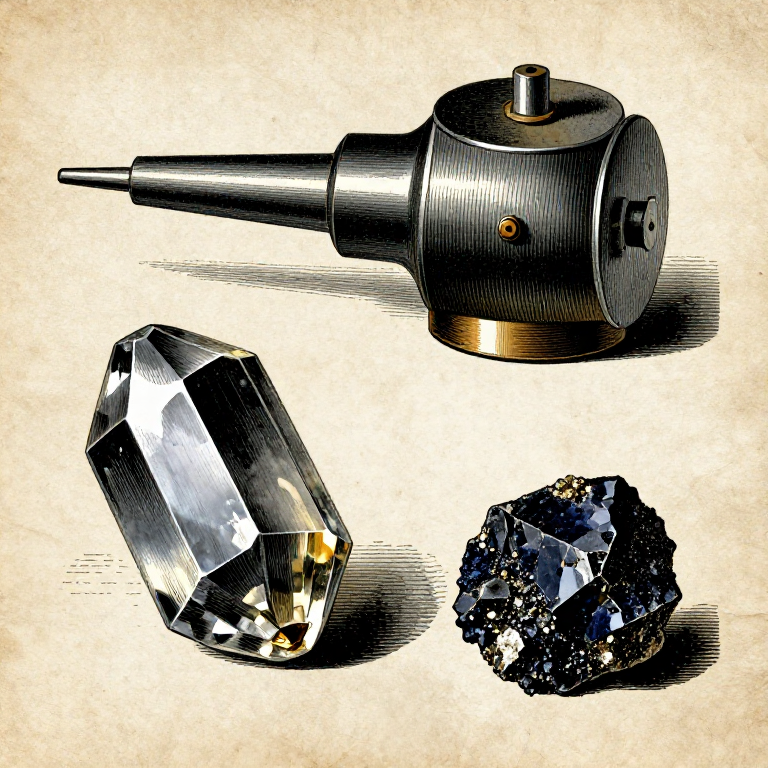
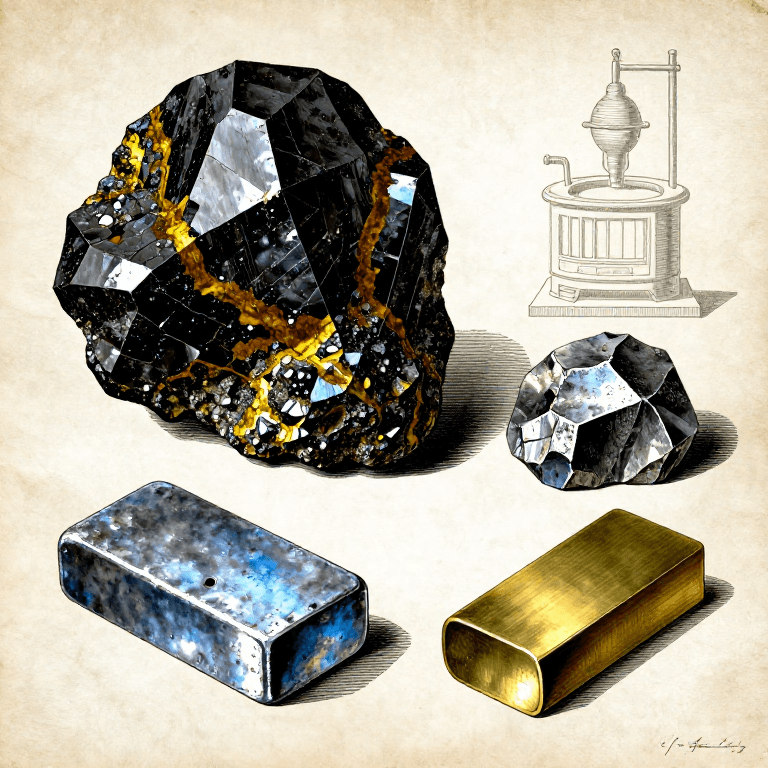
Clemens Winkler discovered germanium in 1886 from the mineral argyrodite (Ag₈GeS₆) found in Freiberg, Saxony. It perfectly matched Mendeleev's 1871 prediction of 'eka-silicon' — atomic weight 72.3 (predicted 72), density 5.47 g/cm³ (predicted 5.5), and forming a dioxide with density 4.7 (predicted 4.7). This dramatic confirmation of the periodic law cemented Mendeleev's place in history.
2
2
Identify Germanium Sources
Identify Germanium Sources
Germanium rarely forms its own minerals — argyrodite is a collector's curiosity, not a commercial source. Over 75% of germanium comes from zinc ore processing: sphalerite (ZnS) contains 0.01-0.3% germanium substituting for zinc in the crystal lattice. Coal fly ash is the second major source, as germanium concentrates in certain coal seams at 5-300 ppm. Global production is about 130 tonnes annually.
Outils nécessaires :
 Loupe de poche 10x
3
3
Trace the Zinc Refinery Recovery Path
Trace the Zinc Refinery Recovery Path
During zinc smelting, germanium concentrates in flue dust and residues because GeO₂ is more volatile than ZnO. The dust is leached with hydrochloric acid, and germanium is separated by distillation as germanium tetrachloride (GeCl₄), which boils at 83.1°C — conveniently below water's boiling point. This low boiling point makes fractional distillation an elegant separation method.
Matériaux pour cette étape :
 Acide chlorhydrique dilué à 10 %
Outils nécessaires :
 Lunettes-masque anti-projections chimiques
 Gants résistants aux produits chimiques
4
4
Understand Zone Refining Purification
Understand Zone Refining Purification
GeCl₄ is hydrolyzed to GeO₂, then reduced with hydrogen at 600°C to germanium metal. Zone refining — invented by William Pfann at Bell Labs specifically for germanium — pushes impurities through a molten zone traveling along a solid bar. After 10-20 passes, purity reaches 99.9999999% (9N), with fewer than 1 impurity atom per billion germanium atoms. This technique later enabled silicon chip manufacturing.
5
5
Examine Germanium's Semiconductor Properties
Examine Germanium's Semiconductor Properties
Germanium has a band gap of 0.67 eV — narrower than silicon's 1.12 eV. This means germanium conducts electricity more readily at room temperature, making it superior for detecting weak signals. John Bardeen, Walter Brattain, and William Shockley used germanium to build the first transistor at Bell Labs on December 23, 1947 — the invention that launched the electronic age.
6
6
Test Germanium's Infrared Transparency
Test Germanium's Infrared Transparency
Germanium is opaque to visible light but transparent to infrared radiation from 2-14 micrometers — the thermal imaging band. This property makes germanium the primary lens material for thermal cameras, night vision systems, and FLIR (Forward Looking Infrared) equipment. A germanium lens looks like a polished metal disc to the eye but passes thermal radiation like glass passes visible light.
Outils nécessaires :
 Lunettes-masque de sécurité
7
7
Understand Fiber Optic Applications
Understand Fiber Optic Applications
Adding 3-5% germanium dioxide to silica glass increases its refractive index — this creates the core of optical fibers, where light is trapped by total internal reflection. Without germanium doping, fiber optic cables could not guide light over hundreds of kilometers. About 30% of global germanium production goes to fiber optics, carrying over 95% of the world's long-distance internet traffic.
8
8
Compare Germanium and Silicon Transistors
Compare Germanium and Silicon Transistors
Silicon replaced germanium for most transistors by the 1960s because silicon dioxide forms a superior insulating surface layer, silicon is 1,000 times more abundant, and silicon works at higher temperatures (150°C vs 75°C for germanium). But germanium is making a comeback: SiGe (silicon-germanium) alloys enable faster transistors for 5G communications, and pure germanium channels may power chips beyond 2030.
9
9
Explore Solar Cell and Detector Uses
Explore Solar Cell and Detector Uses
Multi-junction solar cells for space applications use germanium as the bottom layer, capturing infrared photons that silicon misses. The Mars rovers Spirit, Opportunity, and Curiosity all used germanium-based solar cells. Germanium detectors cooled to liquid nitrogen temperature achieve the highest energy resolution of any radiation detector, used in nuclear physics labs and environmental monitoring.
10
10
Document Findings and Strategic Importance
Document Findings and Strategic Importance
Record germanium's key properties: density 5.323 g/cm³, melting point 938°C, and characteristic metallic gray color with a diamond cubic crystal structure identical to silicon's. China produces 60% of global germanium supply, making it a critical mineral for defense and communications. In 2023, China restricted germanium exports, highlighting its strategic importance alongside gallium in the semiconductor supply chain.
Outils nécessaires :
 Balance de précision
Matériaux
1- Espace réservé
Outils requis
5- Espace réservé
- Espace réservé
- Espace réservé
- Espace réservé
- Espace réservé
Matériaux des Blueprints connectés
10 % d'attribution
Extracting Zinc from Sphalerite — Roasting and Reduction of the Invisible Metal
par Peter
Travail des Métaux
77
0
0
0
8
0

10 % d'attribution
Understanding Cadmium from Zinc Smelting — The Toxic Metal in Rechargeable Batteries
par Peter
Exploitation Minière
11
0
0
0
5
0

10 % d'attribution
Understanding Indium from Zinc Ore — The Soft Metal Behind Every Touchscreen
par Peter
Chimie
58
0
0
0
3
0
CC0 Domaine public
Ce blueprint est publié sous CC0. Vous êtes libre de copier, modifier, distribuer et utiliser ce travail pour tout usage, sans demander la permission.
Soutenez le Maker en achetant des produits via son Blueprint où il perçoit une Commission Maker définie par les Vendeurs, ou créez une nouvelle itération de ce Blueprint et incluez-le comme connexion dans votre propre Blueprint pour partager les revenus.