ART
BEAUTÉ ET BIEN-ÊTRE
ARTISANAT
CULTURE ET HISTOIRE
DIVERTISSEMENT
ENVIRONNEMENT
NOURRITURE ET BOISSONS
INGÉNIERIE INVERSE
SCIENCES
SPORTS
TECHNOLOGIE
TECHNOLOGIE PORTABLE
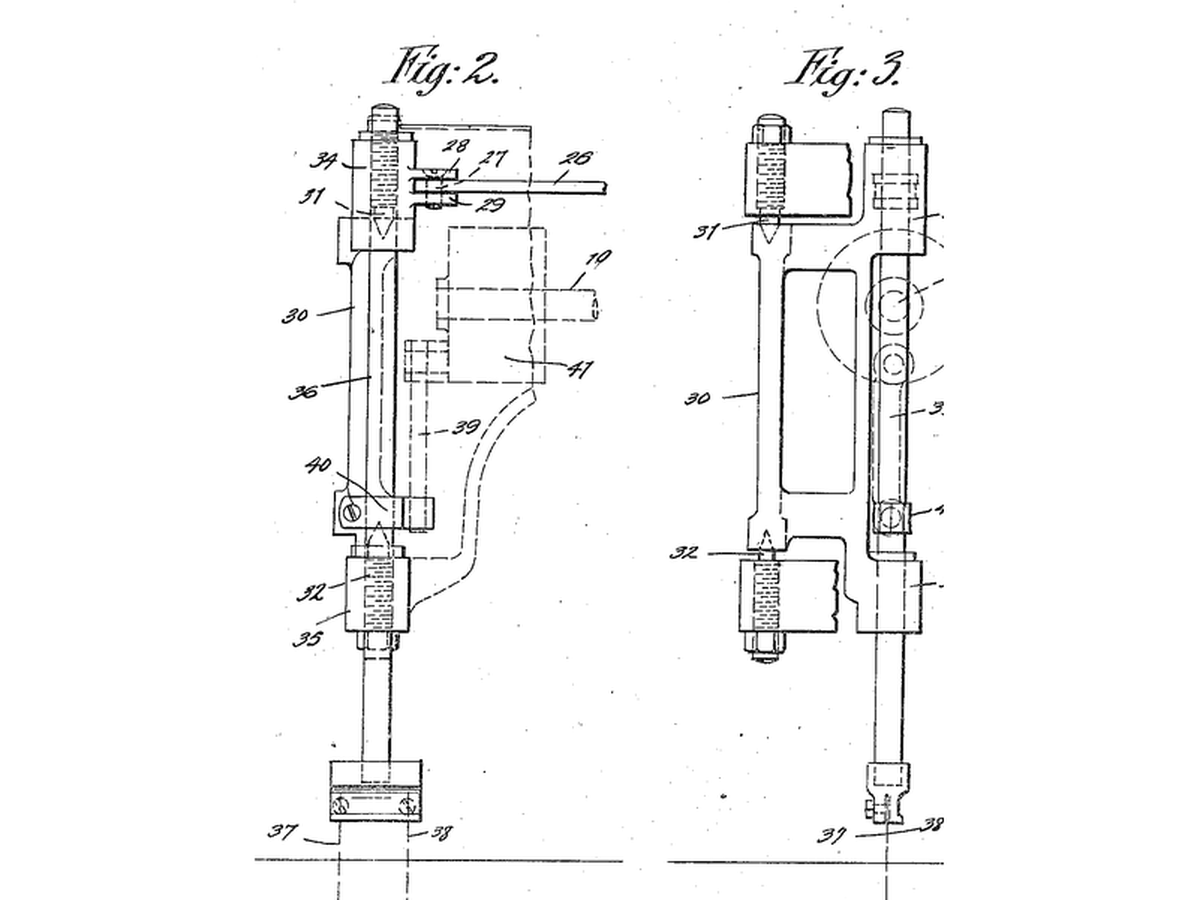


Zigzag Stitch Mechanism
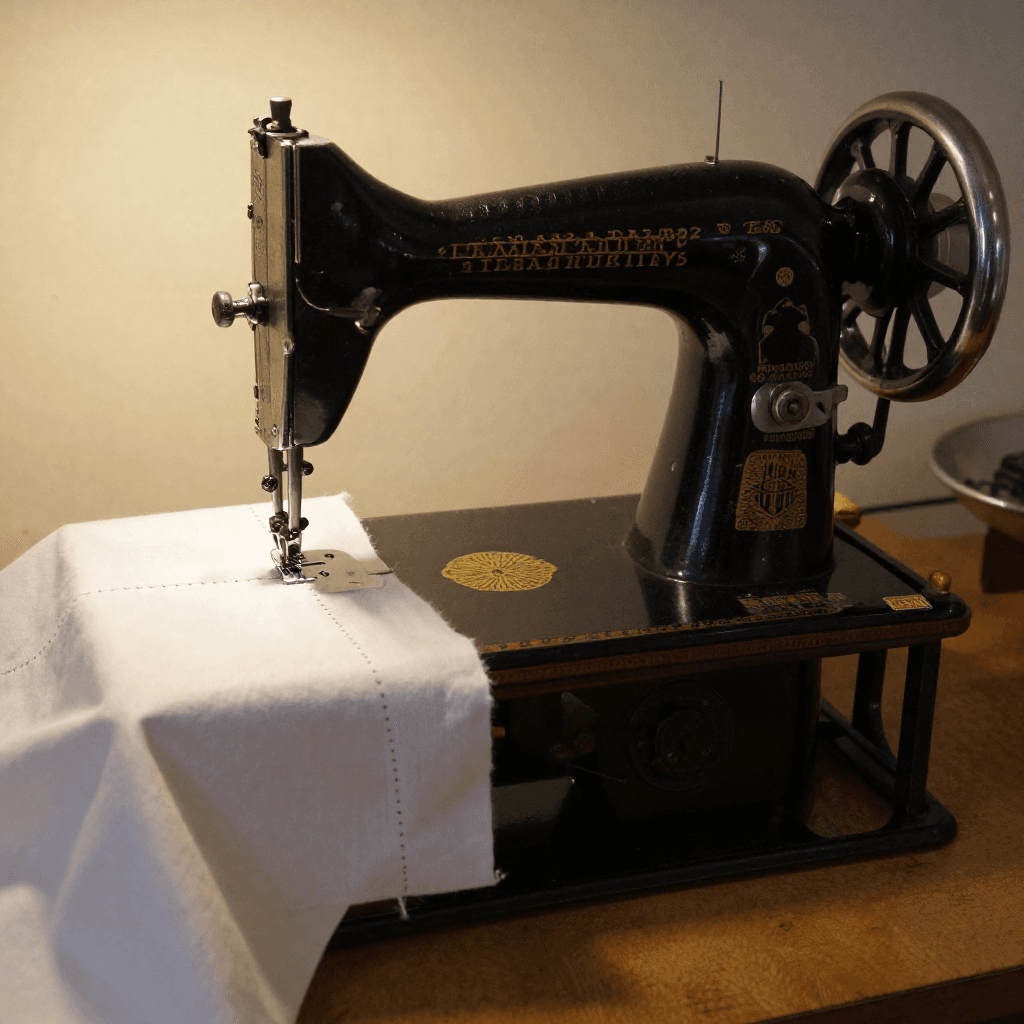
The lock-stitch machine already published sews a straight line, and a straight line of thread cannot stretch - which is why early machines could not sew knitted cloth, finish a raw edge, or work a buttonhole. The next rung is a mechanism that swings the needle bar sideways between stitches, driven by a cam turning with the main shaft.
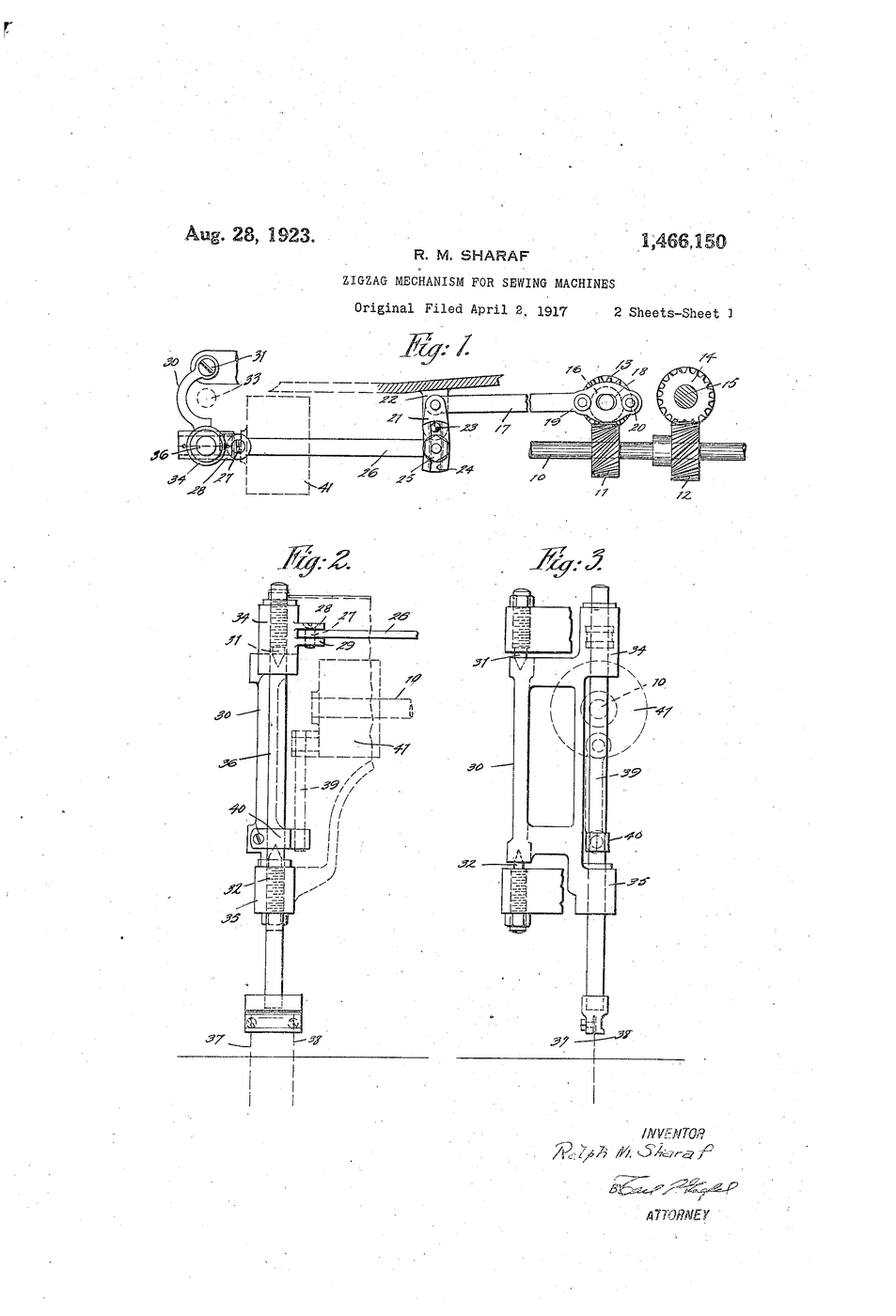
**US 1,466,150**, "Zigzag mechanism for sewing machines", Ralph M. Sharaf, filed 2. April 1917, granted 28. August 1923: a cam-driven vibration of the needle bar while the machine stitches, with the throw adjustable. Domestic zigzag machines followed in the 1950s.
**You build the motion in wood** - a cam, a follower and a pen drawing the needle's path - then sew both stitches on jersey and pull them until something gives.
Intermédiaire
3 hours
Consignes
1
1
Cut a cam
Cut a cam
From 18 mm plywood cut a 60 mm disc and drill its pivot hole 5 mm off centre: that offset is half the zigzag width. Cut a second disc with a 10 mm offset for a wider stitch.
Matériaux pour cette étape :
 Panneau de contreplaqué1 pièce
Outils nécessaires :
 Scie égoïne
 Perceuse sans fil
 Règle
Règle2
2
Follower and needle bar
Follower and needle bar
Screw a pivoted arm to the board so one end rides on the cam's edge and the other carries a dowel - the needle bar. A spring keeps the follower against the cam. Tape a marker to the dowel.
Matériaux pour cette étape :
 Vis à métaux4 pièces
 Assortiment de ressorts de compression1 jeu
 Tourillon en bois1 pièce
 Marqueur permanent1 pièce
Outils nécessaires :
 Pistolet à colle chaude
 Étau d'établi
3
3
Draw the stitch
Draw the stitch
Pull a strip of graph paper steadily under the pen while turning the cam by hand, one turn per stitch. Measure the width of the trace; swap cams and repeat. Lock the follower to draw a straight line for comparison.
Matériaux pour cette étape :
 Papier millimétré1 feuille
 Ruban de masquage1 rouleau
Outils nécessaires :
Règle4
4
Sew the real thing
Sew the real thing
Cut six 200 x 50 mm jersey strips. Join them in pairs with a 100 mm seam: straight stitch, zigzag 3 mm, zigzag 5 mm, all at 2.5 mm stitch length.
Matériaux pour cette étape :
 Lot de jersey pour tee-shirts1 pièce
 Fil de polyester10 mètres
Outils nécessaires :
 Machine à coudre
 Ciseaux de couturière
5
5
Pull until it gives
Pull until it gives
Mark 100 mm across each seam. Pull each pair apart steadily by hand and note the marked length when the thread snaps - or when it does not, and the cloth simply stretches.
Outils nécessaires :
Règle Mètre ruban
6
6
Thread geometry and your results
Thread geometry and your results
Chargement du notebook Jupyter…
7
7
History & Context
History & Context
**What the patent specifies:** a cam-driven mechanism that vibrates the needle bar laterally during stitching, with adjustable throw. **Modern build (derived):** a plywood cam and follower drawing the path, plus real seams for the test.
The same sideways swing gave overcast edges, buttonholes and decorative stitches, and cam stacks later let a machine select a pattern. Its limits: a zigzag uses more thread, can tunnel thin cloth if the tension is wrong, and the needle bar's sideways travel puts a limit on machine speed.
Matériaux
9- 1 pièceEspace réservé
- 4 piècesEspace réservé
- Espace réservé
- 1 pièceEspace réservé
- 1 pièceEspace réservé
- 1 feuilleEspace réservé
- 1 rouleauEspace réservé
- Espace réservé
- 10 mètresEspace réservé
Outils requis
8- Espace réservé
- 1 vendor sell this, none ship to you yetEspace réservé
- Espace réservé
- Espace réservé
- Espace réservé
- Espace réservé
- Espace réservé
- 1 vendor sell this, none ship to you yetEspace réservé
Blueprints liés
Ces blueprints partagent des connaissances — techniques, matériaux ou principes
CC0 Domaine public
Ce blueprint est publié sous CC0. Vous êtes libre de copier, modifier, distribuer et utiliser ce travail pour tout usage, sans demander la permission.
Soutenez le Maker en achetant des produits via son Blueprint où il perçoit une Commission Maker définie par les Vendeurs, ou créez une nouvelle itération de ce Blueprint et incluez-le comme connexion dans votre propre Blueprint pour partager les revenus.