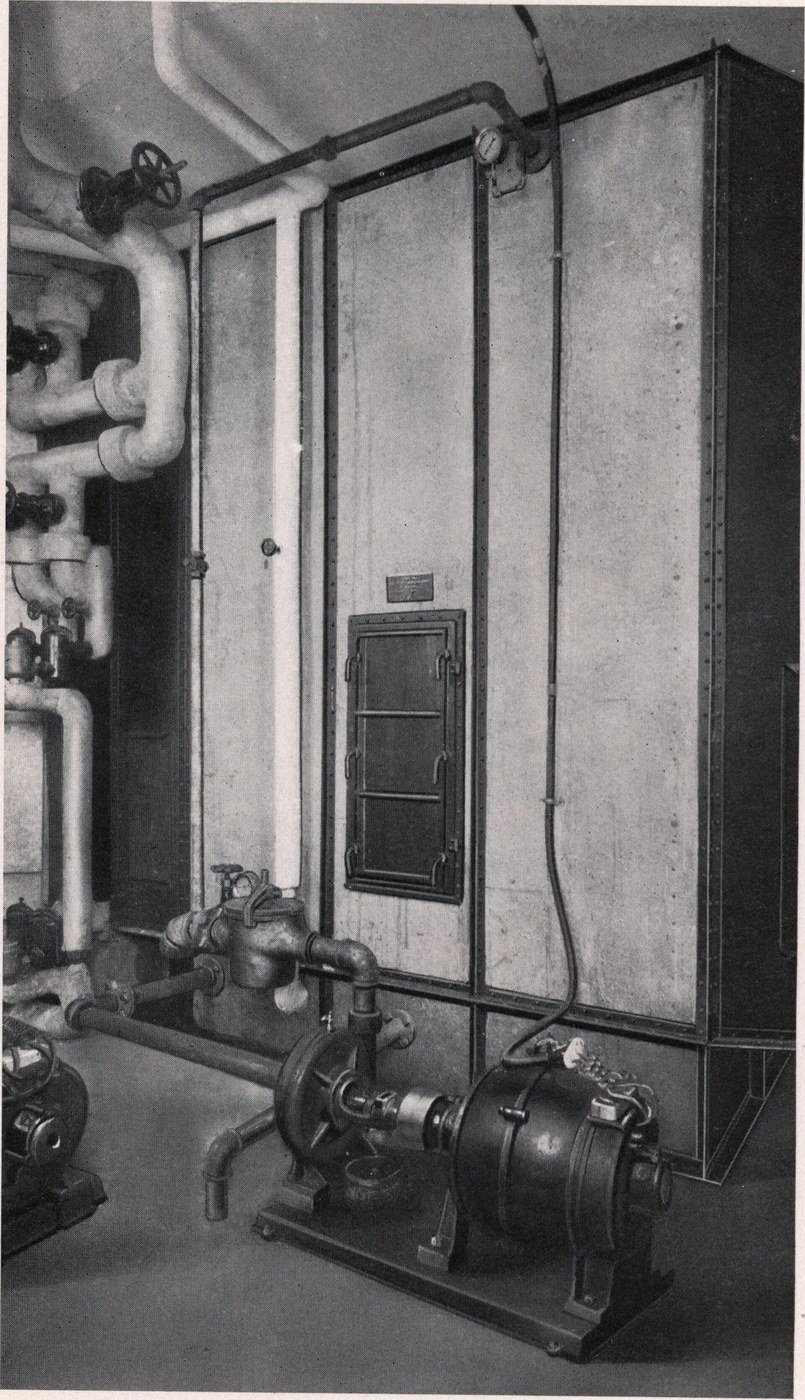
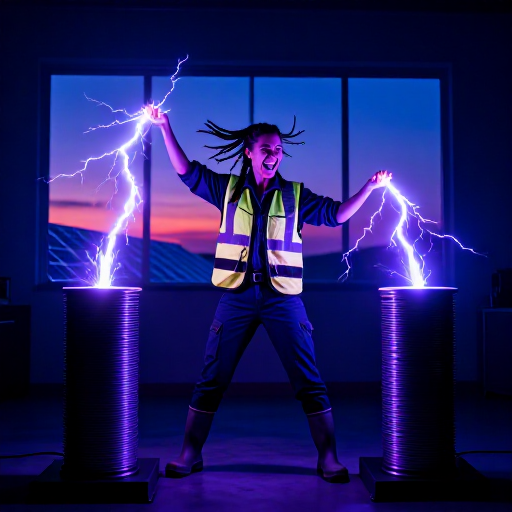

Air Conditioning
Everything else in this batch fights temperature. Carrier's insight was that for the problem he was actually asked to solve, temperature was not the variable that mattered.
A Brooklyn printer could not hold colour register: paper swells and shrinks with humidity, so each pass of a four-colour job landed in a different place. He wanted dry air, held steady. Cooling was the means, not the end.
The mechanism is the counter-intuitive part. To dry air you do not heat it or filter it — you chill it below its dew point. Cold air cannot hold as much water, so the excess condenses on the cold surface and runs away, and the air leaves the coil saturated but carrying far less water than it arrived with. Reheat it slightly and you have air at a chosen temperature and a chosen humidity.
So an air conditioner is two machines in one: a heat pump, and a dehumidifier that works by deliberately overshooting.
That is why it beat every passive method in this batch. Evaporative cooling adds moisture and is bounded by the wet-bulb temperature; a windcatcher moves whatever air exists. Only a refrigerated coil can make air both cooler and drier, which is what made the humid tropics and subtropics habitable for industry.
Instruksi
Find the dew point with a shiny can
Find the dew point with a shiny can
Put water and a thermometer in a polished metal can and add ice slowly, stirring, watching the outside.
Record the temperature at the instant mist first appears on the metal.
That is the dew point — the temperature at which today's air is saturated.
Repeat on a dry day and a humid day.
Expect the dew point to track the humidity, not the air temperature: a cold damp day and a hot dry day can share an air temperature and have completely different dew points.
The dew point, not relative humidity, is the number that tells you how cold a surface must be to take water out of the air.
Alat yang dibutuhkan:
 Thermometer (0-100°C)
Dry air by overshooting
Dry air by overshooting
Blow room air across a surface chilled well below the dew point — a can of iced water, or the cold side of any small refrigerator — and collect what runs off. Weigh it.
Measure the air's humidity before and after.
Expect liquid water to accumulate and the outgoing air to be colder and drier.
Note the peculiar logic: to remove water you must chill the air past where you want it, then let it warm back up.
Dehumidifying costs a deliberate overshoot, which is exactly why an air conditioner uses more energy than a cooler that merely lowers temperature.
Prove the two knobs are separate
Prove the two knobs are separate
Take the cold dry air from step 2 and warm it gently with a small heater. Measure temperature and humidity at each stage.
Expect warming to raise the temperature and LOWER the relative humidity, while the actual quantity of water carried stays put.
You now have independent control: the coil sets the moisture, the reheat sets the temperature.
That pair is what 'conditioning' means — not cooling. Carrier's own phrase was 'man-made weather', and the plants that needed it most were textile mills, printers and tobacco stores rather than offices.
Follow the heat outdoors
Follow the heat outdoors
Run a small refrigerator or a window unit and measure the air temperature at its cold side and at its hot side, and estimate the flow at each.
Expect the heat leaving the hot side to exceed the heat removed from the cold side, by roughly the electrical power drawn.
Nothing was destroyed; heat was moved, and the work of moving it was added to the pile.
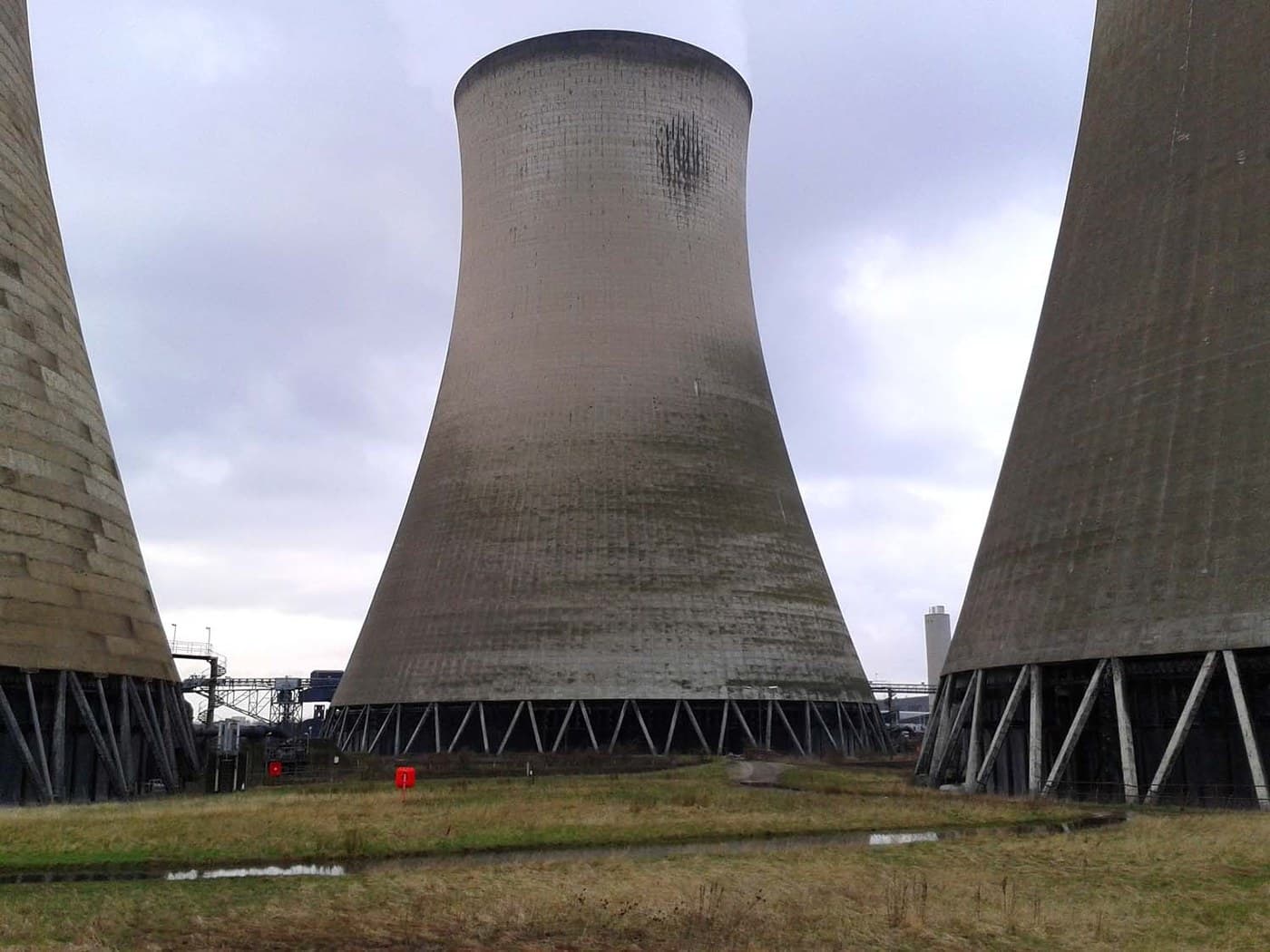
An air conditioner heats the world slightly more than it cools the room — which is why a city full of them is measurably warmer outdoors, and why the cooling tower in the previous blueprint exists.
Compare it honestly with the rest of this batch
Compare it honestly with the rest of this batch
On the same day, measure the temperature and humidity delivered by an evaporative cooler and by a refrigerated unit, and the electrical power each draws.
Expect the evaporative cooler to be far cheaper to run, to add moisture, and to fail in humid air; the refrigerated unit to work anywhere, dry the air, and cost an order of magnitude more energy.
Now do the arithmetic that matters for a building: how much of that energy could be saved by shading, ventilating at night, adding thermal mass and running a fan — the previous nine blueprints — before the compressor is switched on at all.
The machine is the last resort, not the first.
History & Context
History & Context
It was invented to fix a printing press, in 1902. Willis Carrier, a young engineer, was asked to stop paper at the Sackett-Wilhelms lithographic plant in Brooklyn swelling between colour passes. He designed apparatus that chilled air below its dew point to control moisture, and later published the psychrometric formulae that let anyone else design such a system. Comfort was a side effect of an industrial process-control problem, and for its first two decades air conditioning was a factory technology.
Cinemas made it popular. In the 1920s American theatres advertised cooled air as the attraction, which is where the summer blockbuster comes from — the one place a family could be cold in July. Domestic units followed after the Second World War, and with them the demographic shift of populations into the American South, the Gulf and southeast Asia. Few technologies in this corpus have moved where people physically live as directly.
The refrigerant history is a genuine environmental lesson, told in two acts. Early machines used ammonia and sulphur dioxide, which are toxic. CFCs — Freon — replaced them in the 1930s precisely because they were non-toxic and non-flammable, and were then found to destroy stratospheric ozone; the Montreal Protocol phased them out. Their HFC replacements are safe for ozone and are potent greenhouse gases, now being phased down in turn. Twice, a substance was adopted for solving the previous substance's obvious hazard and was later found to have a hazard nobody was measuring.
It closed this batch's other options rather than beating them on merit. The yakhchāl, the windcatcher, the ice house and the zeer are all conditional — on climate, on season, on humidity, on labour. Air conditioning is unconditional, and unconditional wins in a market. But its energy demand is now large enough that the conditional methods are being rebuilt alongside it, which is the argument for publishing all ten of these together.
Honest limits. It needs continuous substantial electrical power and stops entirely without it. It rejects more heat outdoors than it removes indoors, contributing to urban heat islands. Its refrigerants have repeatedly turned out to have consequences discovered after mass adoption. It requires a sealed building, which makes indoor air quality a separate engineering problem. Condensate must be drained, and standing water in ducts is a microbiological risk. And it is a manufactured, serviced appliance — the only technology in this batch that a maker cannot build, maintain or repair unaided.
Bahan
2- 1 kgPlaceholder
- 2 literPlaceholder
Alat yang Diperlukan
3- Placeholder
- Placeholder
- Placeholder
Bahan cetak biru terhubung

Blueprint terkait
Blueprint ini berbagi pengetahuan — teknik, bahan, atau prinsip

CC0 Domain Publik
Cetak biru ini dirilis di bawah CC0. Anda bebas untuk menyalin, memodifikasi, mendistribusikan, dan menggunakan karya ini untuk tujuan apa pun, termasuk komersial, tanpa meminta izin.
Dukung Maker dengan membeli produk melalui Cetak Biru mereka di mana mereka mendapatkan Komisi Pembuat yang ditetapkan oleh Penjual, atau buat iterasi baru dari Cetak Biru ini dan masukkan sebagai koneksi di milik Anda sendiri.