
Autogiro
Cuando a un avión se le para el motor, deja de volar. El ala necesita que el aire pase sobre ella, y si no hay empuje que lo produzca, el avión cae. Así murieron muchos pilotos en los primeros años: no por el fallo del motor, sino por lo que pasaba después.
El autogiro resuelve eso girando su ala. El rotor no lleva motor. Gira solo, empujado por el aire que sube a través de él mientras la máquina avanza o desciende. Eso se llama autorrotación, y significa que el rotor sigue sustentando aunque el motor se apague — la máquina baja despacio en vez de caerse.
Pero un rotor que gira crea un problema propio. La pala que avanza recibe más viento que la que retrocede, y ese desequilibrio vuelca la máquina. Los tres primeros autogiros de Juan de la Cierva se estrellaron por eso. La solución fue poner bisagras de batimiento: cada pala queda libre para subir y bajar, así compensa sola la diferencia.
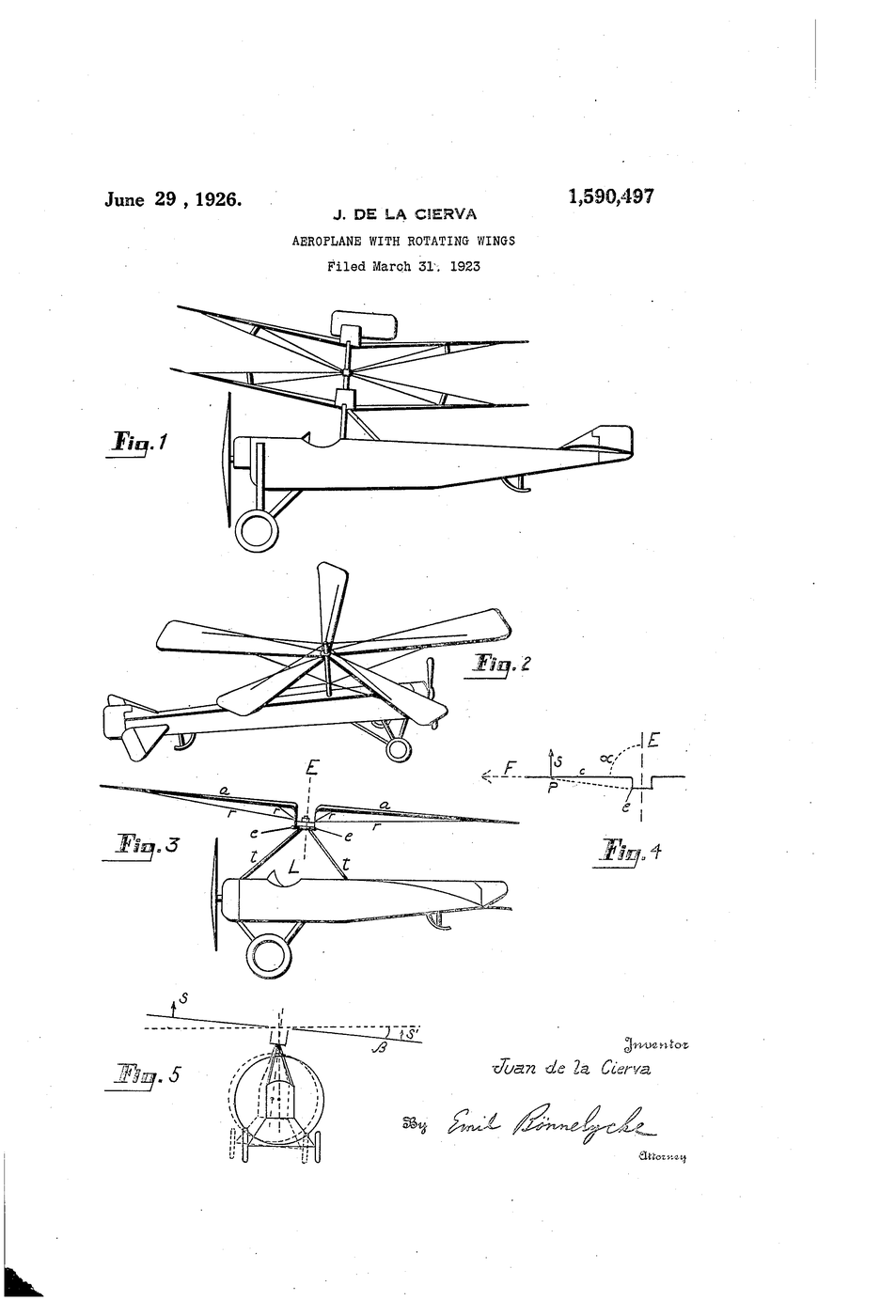
Patente US 1,590,497, "Aeroplane with rotating wings", presentada el 31 de marzo de 1923 y concedida el 29 de junio de 1926 a Juan de la Cierva.
Instruksi
Lee la patente y fíjate en la bisagra
Lee la patente y fíjate en la bisagra
De la Cierva reclama un ala giratoria libre, sin motor, con las palas articuladas para moverse arriba y abajo. La bisagra es lo que hace que funcione.
Tira una semilla de arce y obsérvala
Tira una semilla de arce y obsérvala
Deja caer una semilla de arce, o un papel doblado en forma de hélice. Baja girando, despacio. Nadie la empuja: el aire que sube la hace girar.
Corta cuatro palas de balsa
Corta cuatro palas de balsa
Corta 4 tiras de balsa de 120 × 15 mm. Deben pesar lo mismo — si una pesa más, el rotor vibra y no sirve.
Material untuk langkah ini:
 Lembaran kayu balsa1 bungkus
Dale un poco de ángulo a cada pala
Dale un poco de ángulo a cada pala
Lija cada tira para que quede inclinada unos 4° respecto al plano de giro, todas hacia el mismo lado. Sin ese ángulo el rotor no arranca.
Haz un buje rígido
Haz un buje rígido
Pega las cuatro palas a un disco de balsa, fijas, sin ninguna articulación. Este es el rotor de los tres primeros autogiros de De la Cierva.
Monta el buje sobre un eje libre
Monta el buje sobre un eje libre
Clava el buje en una varilla con un alfiler, de modo que gire sin rozamiento. No le pongas motor de ningún tipo.
Material untuk langkah ini:
 Batang Dowel Kayu1 buah
Déjalo caer desde dos metros
Déjalo caer desde dos metros
Súbelo y suéltalo recto. El rotor arranca solo y baja girando. Eso es autorrotación, y no hace falta nada más para conseguirla.
Toma el tiempo de caída
Toma el tiempo de caída
Cronometra la bajada tres veces y saca la media. Compárala con la de la varilla sola, sin rotor. La diferencia es la sustentación que da el rotor.
Ahora sopla desde un lado
Ahora sopla desde un lado
Con el rotor girando, échale aire lateral con un ventilador para simular el vuelo hacia adelante. El rotor se inclina y todo el conjunto se vuelca.
Entiende por qué se vuelca
Entiende por qué se vuelca
La pala que va contra el viento recibe más aire y sustenta más; la que va a favor, menos. El rotor sube de un lado y baja del otro. Eso es la disimetría de sustentación.
Haz un segundo buje con bisagras
Haz un segundo buje con bisagras
Monta otras cuatro palas iguales, pero sujetas con un trocito de cinta de tela que haga de bisagra. Cada pala debe poder subir y bajar libremente.
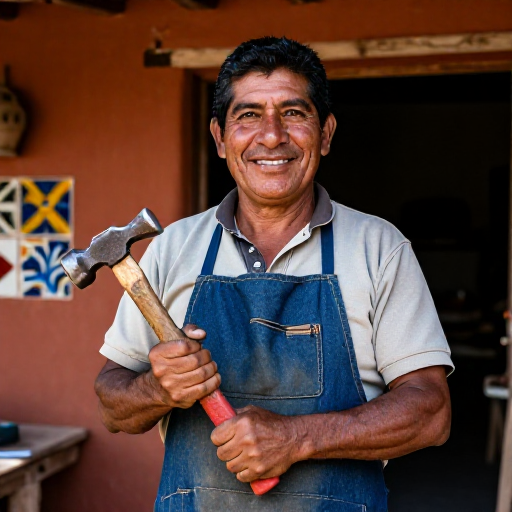
Alat yang dibutuhkan:
 Tang Berujung Rata
Repite la prueba del ventilador
Repite la prueba del ventilador
Mismo viento lateral, mismo rotor girando. Ahora las palas aletean — suben y bajan una vez por vuelta — y el conjunto se mantiene nivelado.
Mira una pala de cerca mientras gira
Mira una pala de cerca mientras gira
Fíjate en una sola pala. Sube cuando avanza contra el viento y baja cuando retrocede. Al subir pierde sustentación, y así se compensa sola.
Compara las dos caídas con viento
Compara las dos caídas con viento
Suelta los dos rotores con el ventilador encendido. El rígido se vuelca; el articulado baja recto. Esa es toda la diferencia entre tres accidentes y una patente.
Historia y contexto — el ala que gira sola
Historia y contexto — el ala que gira sola
La patente. US 1,590,497, "Aeroplane with rotating wings", presentada el 31 de marzo de 1923 y concedida el 29 de junio de 1926 a Juan de la Cierva y Codorníu, ingeniero español. Él mismo llamó a la máquina Autogiro, con mayúscula, porque era su marca registrada; por eso ese nombre se conserva aquí.
Las fechas del primer vuelo, con cuidado. Se repite mucho que el C.4 voló el 9 de enero de 1923. Ese día empezaron las pruebas en el aeródromo de Getafe. El primer vuelo real fue el 17 de enero de 1923, y lo hizo el capitán Alejandro Gómez Spencer — el primer hombre que voló un aparato de ala giratoria. Las dos fechas son ciertas y no significan lo mismo.
Los tres fracasos que hicieron falta. El C.1, el C.2 y el C.3 no volaron. Todos tenían el mismo problema: en cuanto la máquina cogía velocidad hacia adelante, el rotor sustentaba más por el lado que avanzaba contra el viento que por el que retrocedía, y volcaba. De la Cierva probó rotores contrarrotatorios y otras soluciones antes de dar con la buena, que además es la más sencilla: si cada pala puede subir y bajar libremente, se equilibra ella sola. La pala que sustenta de más sube, y al subir cambia su ángulo efectivo y deja de sustentar de más. No hay que medir nada ni controlar nada. El paso 12 de esta guía es exactamente ese descubrimiento.
Autogiro no es helicóptero, y conviene no confundirlos. El rotor del autogiro no tiene motor: gira porque el aire lo atraviesa de abajo arriba. Por eso un autogiro no puede quedarse quieto en el aire ni despegar en vertical como un helicóptero — necesita avanzar. A cambio, no puede entrar en pérdida de la forma en que lo hace un avión, y si el motor falla sigue descendiendo controlado. Esa era la obsesión de De la Cierva desde que un trimotor suyo se estrelló en 1919 por entrar en pérdida.
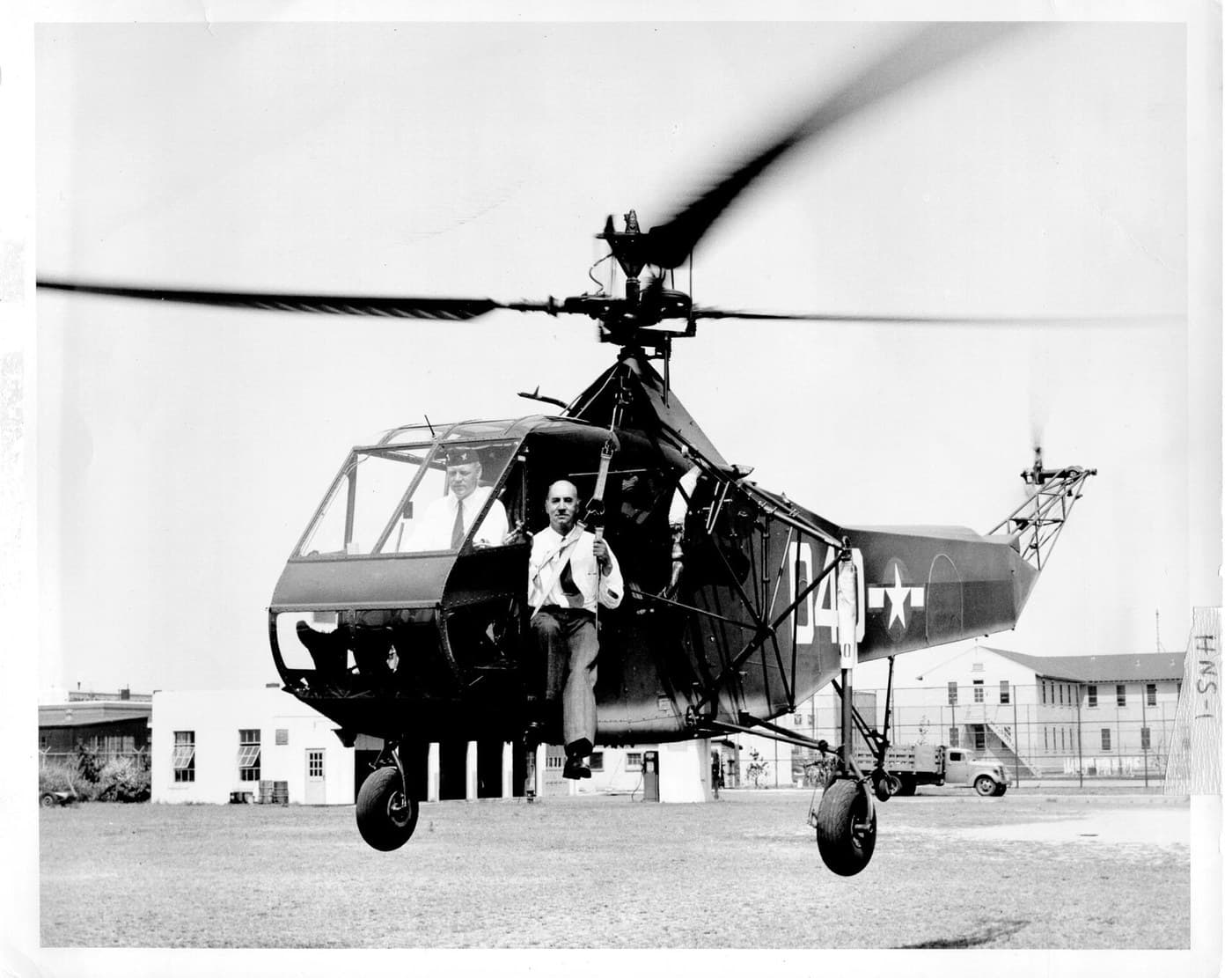
Lo que dejó para después. La bisagra de batimiento no se quedó en los autogiros: es una pieza imprescindible de casi todos los helicópteros que vinieron luego, porque el problema de la disimetría de sustentación es el mismo en cuanto hay rotor y vuelo hacia adelante. Igor Sikorsky patentó su helicóptero en 1935 (US 1,994,488), doce años después del primer vuelo del C.4, y la articulación de las palas ya venía de aquí. Y la autorrotación sigue siendo hoy el procedimiento con el que un helicóptero aterriza cuando se le para el motor — lo mismo que hace tu rotor en el paso 7. De la Cierva murió en 1936, en un accidente de avión comercial en Croydon; no pilotaba.
Bahan
2- 1 bungkusPlaceholder
- 1 buahPlaceholder
Alat yang Diperlukan
1- Placeholder
Blueprint terkait
Blueprint ini berbagi pengetahuan — teknik, bahan, atau prinsip


CC0 Domain Publik
Cetak biru ini dirilis di bawah CC0. Anda bebas untuk menyalin, memodifikasi, mendistribusikan, dan menggunakan karya ini untuk tujuan apa pun, termasuk komersial, tanpa meminta izin.
Dukung Maker dengan membeli produk melalui Cetak Biru mereka di mana mereka mendapatkan Komisi Pembuat yang ditetapkan oleh Penjual, atau buat iterasi baru dari Cetak Biru ini dan masukkan sebagai koneksi di milik Anda sendiri.