

Making Blister Steel by Cementation — Carburizing Wrought Iron into Steel
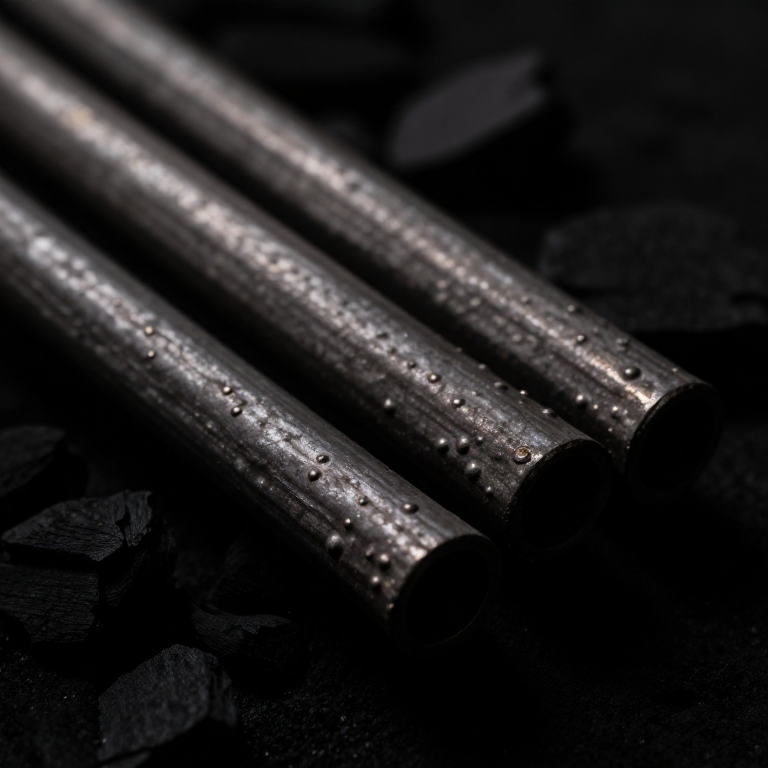
Wrought iron bends but will not hold an edge; cast iron holds an edge but shatters. Steel — iron with just the right sliver of carbon — does both, and for centuries the great problem of metalworking was how to make it reliably. The cementation process, used across Europe from the 1600s, was the first method to manufacture steel in quantity from ordinary wrought iron bars.
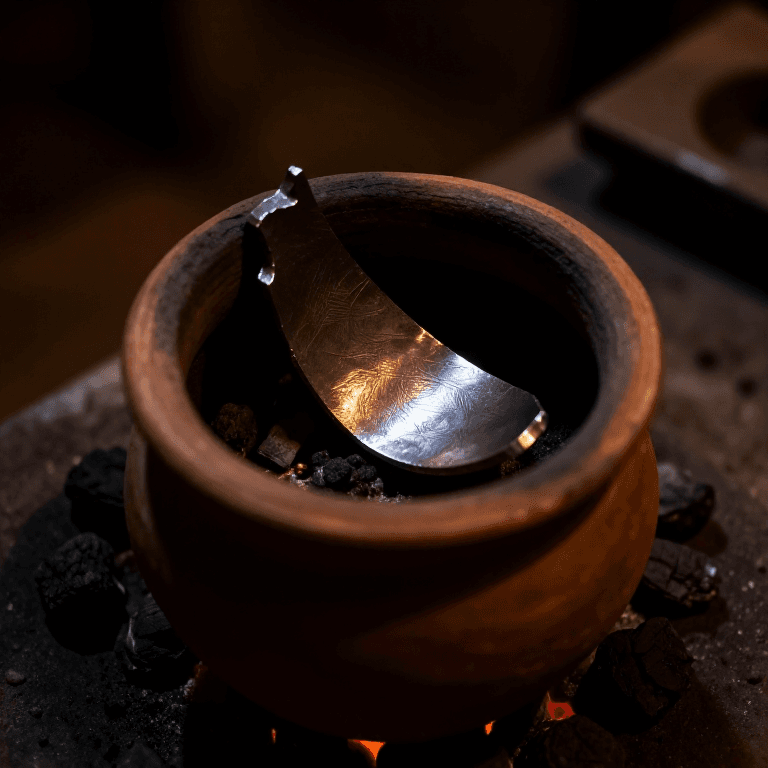
The idea is to add carbon to solid iron without ever melting it. Bars of wrought iron are packed in powdered charcoal inside a sealed stone chest and roasted for a week at a bright red heat. Over those days, carbon slowly creeps out of the charcoal and diffuses into the surface of the iron, turning the skin into steel. Gas trapped under the surface raises little blisters across the bars — which is why the product is called blister steel.
Blister steel is uneven, carbon-rich at the surface and soft in the core, so smiths refined it further: forge-welding and folding it into shear steel, or melting it in crucibles into perfectly uniform cast steel. But cementation was the foundation — the step that first made steel an industrial material rather than a rare treasure.
Instruksi
Understand cementation
Understand cementation
Select wrought iron bars
Select wrought iron bars
Material untuk langkah ini:
 Batang besi tempa20 kg
Build the cementation chest
Build the cementation chest
Material untuk langkah ini:
 Bata Tahan Api60 buah
Alat yang dibutuhkan:
 Sekop Tangan
Crush the charcoal
Crush the charcoal
Material untuk langkah ini:
 Arang Bongkahan15 kg
Alat yang dibutuhkan:
 Palu
PaluPack iron and charcoal in layers
Pack iron and charcoal in layers
Seal the chest with clay
Seal the chest with clay
Material untuk langkah ini:
 Lempung10 kg
Fire at red heat for days
Fire at red heat for days
Material untuk langkah ini:
 Batu bara bituminus200 kg
Let the carbon diffuse
Let the carbon diffuse
Recognise the blisters
Recognise the blisters
Alat yang dibutuhkan:
 Tang tarik
Cool slowly and open
Cool slowly and open
Alat yang dibutuhkan:
Tang tarikRefine into shear steel
Refine into shear steel
Alat yang dibutuhkan:
PaluTest that it is steel
Test that it is steel
Material untuk langkah ini:
 Air5 liter
Bahan
6- 20 kgPlaceholder
- 60 buahPlaceholder
- 15 kgPlaceholder
- 10 kgPlaceholder
- 200 kgPlaceholder
- 5 literPlaceholder
Bahan cetak biru terhubung

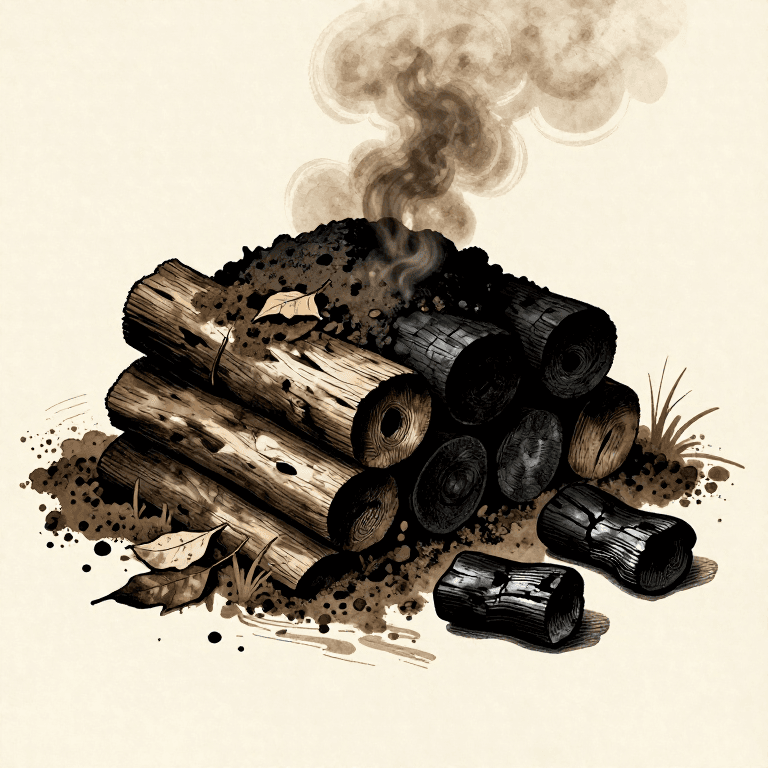

Blueprint terkait
Blueprint ini berbagi pengetahuan — teknik, bahan, atau prinsip

CC0 Domain Publik
Cetak biru ini dirilis di bawah CC0. Anda bebas untuk menyalin, memodifikasi, mendistribusikan, dan menggunakan karya ini untuk tujuan apa pun, termasuk komersial, tanpa meminta izin.
Dukung Maker dengan membeli produk melalui Cetak Biru mereka di mana mereka mendapatkan Komisi Pembuat yang ditetapkan oleh Penjual, atau buat iterasi baru dari Cetak Biru ini dan masukkan sebagai koneksi di milik Anda sendiri.