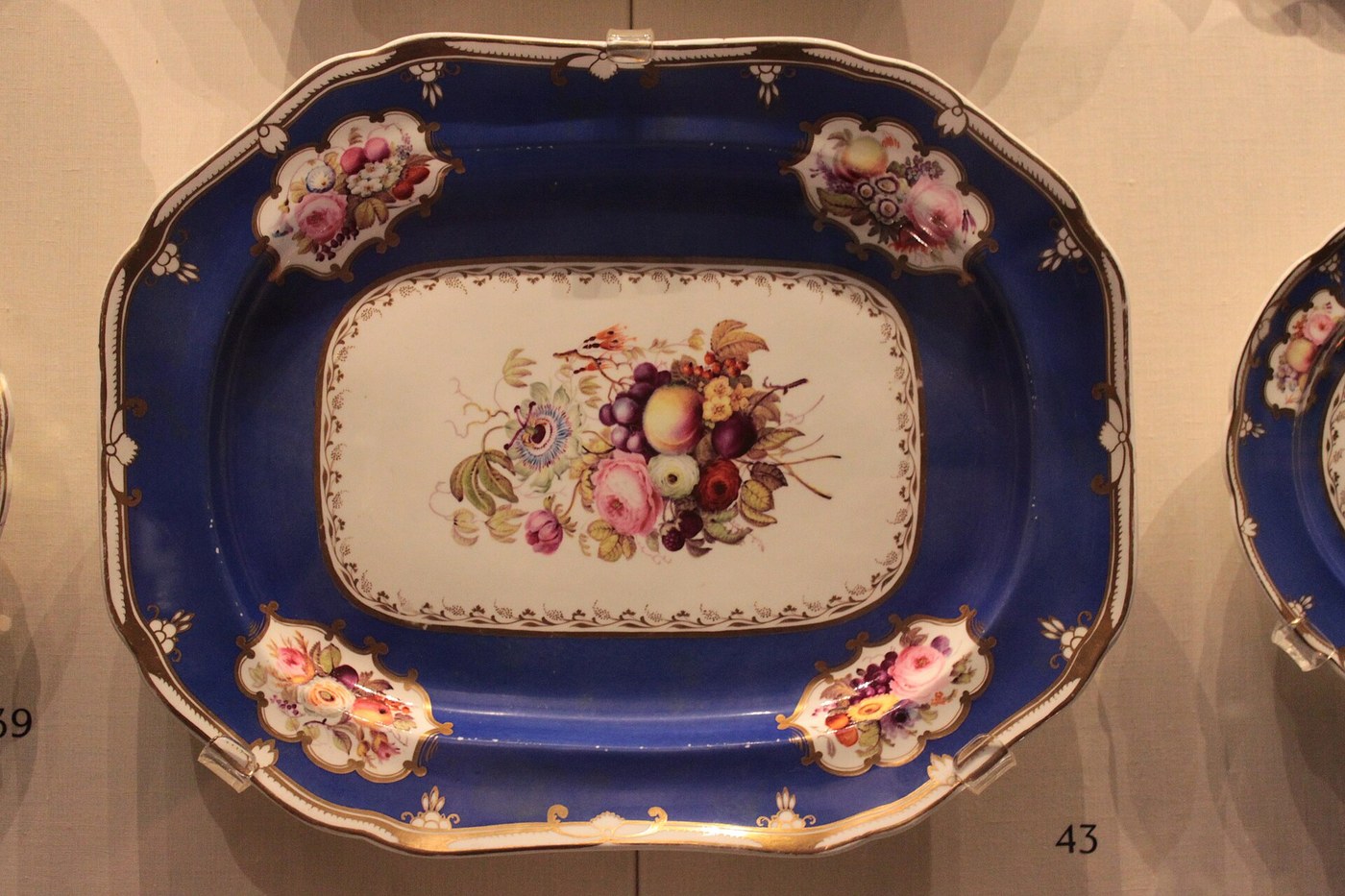
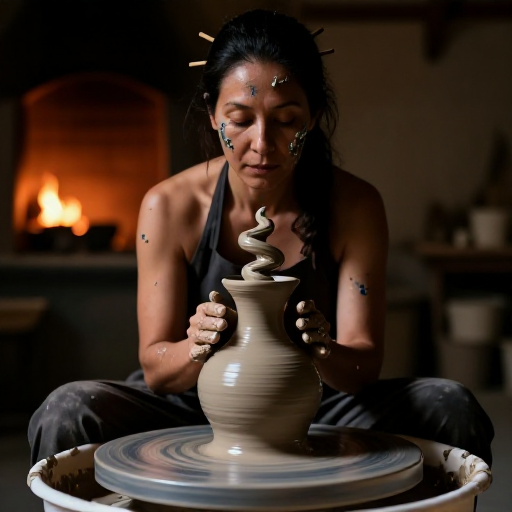

Bone China
Instruksi
Understand the three ingredients
Understand the three ingredients
Each does a different job, and the proportions are the recipe.
- Bone ash, roughly 50% — calcium phosphate, gives whiteness, translucency and strength.
- China clay (kaolin), roughly 25% — provides plasticity so the body can be worked.
- China stone or feldspar, roughly 25% — the flux that melts and glassifies the body.
Material untuk langkah ini:
 Abu tulang (serbuk kalsium fosfat)500 g
 Tanah liat kaolin250 g
 Bongkahan feldspar250 g
Blend by weight and test plasticity
Blend by weight and test plasticity
Weigh dry, mix thoroughly, then wet it.
- Weigh the three components to your chosen proportions.
- Dry-blend until completely uniform in colour.
- Add water gradually and wedge to a workable body.
Material untuk langkah ini:
 Timbangan Dapur Digital1 buah
Form thin, and fire high first
Form thin, and fire high first
Bone china reverses the usual firing order, and that surprises people.
- Form pieces as thin as the body will allow.
- Dry slowly and completely.
- Biscuit fire HIGH, around 1250 °C, to vitrify the body.
- Glaze fire LOWER, around 1050-1100 °C.
Test translucency and ring
Test translucency and ring
Two traditional tests, both of them measuring real properties.
- Hold a fired piece up to a strong light — you should see the shadow of your fingers through it.
- Tap the rim gently and listen for a sustained ring.
History and context
History and context
Europe's porcelain obsession ran for two centuries. Chinese porcelain arrived as an unexplained luxury, and every European attempt to copy it failed until Böttger at Meissen produced true hard-paste porcelain around 1708 — under conditions close to imprisonment, because the recipe was a state asset.
England went a different way. Thomas Frye at the Bow porcelain factory patented a body containing bone ash in 1748. Josiah Spode standardised the roughly 6:4:3 proportion of bone ash, china stone and china clay around 1800, and that formulation became the industry's. Staffordshire built an industry on it.
Why it suited England specifically: the raw materials were available — Cornish china clay and stone, and bone ash from the slaughtering trade — and the lower firing temperature suited the coal-fired bottle kilns in use, which struggled to reach hard-paste temperatures reliably. It is a recipe shaped by local materials and local fuel, not an attempt at chemical purity.
An honest note on labelling: in the UK the term bone china has a legal meaning tied to bone ash content — a minimum of 30% is the usual figure quoted, with fine bone china around 45-50%. Elsewhere the term is used loosely. If you want the real thing, the number matters more than the word.
Bahan
4- Placeholder
- 250 gPlaceholder
- 250 gPlaceholder
- 1 buahPlaceholder
CC0 Domain Publik
Cetak biru ini dirilis di bawah CC0. Anda bebas untuk menyalin, memodifikasi, mendistribusikan, dan menggunakan karya ini untuk tujuan apa pun, termasuk komersial, tanpa meminta izin.
Dukung Maker dengan membeli produk melalui Cetak Biru mereka di mana mereka mendapatkan Komisi Pembuat yang ditetapkan oleh Penjual, atau buat iterasi baru dari Cetak Biru ini dan masukkan sebagai koneksi di milik Anda sendiri.