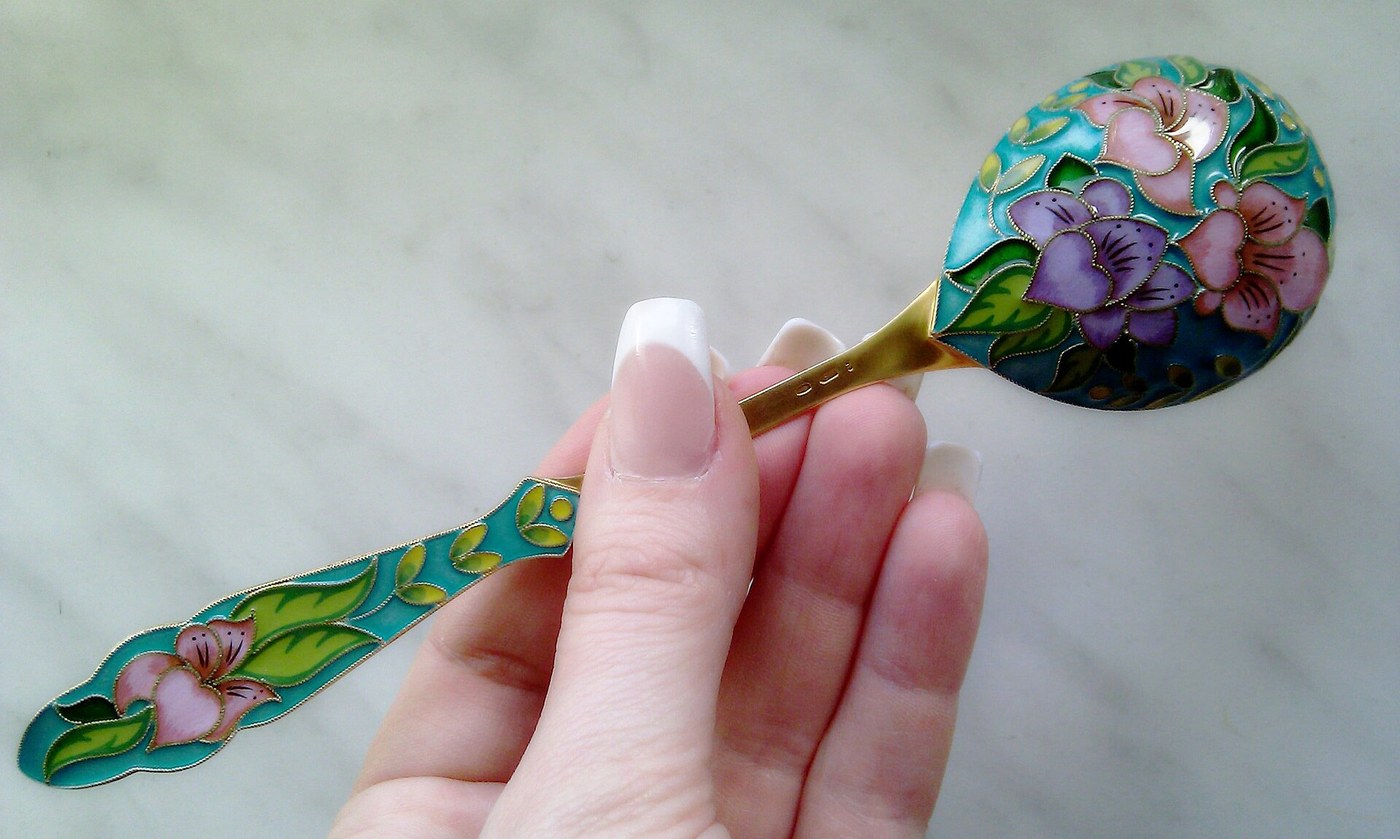


Cloisonné Enamel
Instruksi
Match the metal to the glass
Match the metal to the glass
Enamel fails on the wrong substrate for a reason you can predict.
- Use copper, fine silver or gold — not brass, not steel.
- Clean the metal to bare bright and handle it by the edges.
- Note the metal's thickness: too thin and it will warp in the kiln.
Material untuk langkah ini:
 Lembaran Tembaga1 lembar
Bend and set the wires on edge
Bend and set the wires on edge
Flat wire, standing upright, following the drawing.
- Bend flattened wire to the outline of each shape.
- Stand each on edge on the metal and fix it — traditionally with a trace of gum, then fused in a first firing.
- Check every cell is fully closed.
Material untuk langkah ini:
 Kawat Tembaga1 length
Wash the enamel and fill the cells
Wash the enamel and fill the cells
Powdered glass, washed until the water runs clear, laid wet into each cell.
- Wash each colour repeatedly to remove the fines.
- Lay the wet powder into its cell with a fine spatula or quill.
- Draw off surplus water and let it dry completely before firing.
Material untuk langkah ini:
 Bubuk enamel kaca1 set
Fire, refill, repeat — then stone it flat
Fire, refill, repeat — then stone it flat
Expect three or more firings before the cells are full.
- Fire until the surface goes glossy, then cool.
- Note the enamel has sunk well below the wire — refill and fire again.
- When proud of the wire, grind the whole surface flat with abrasive stone under water, then re-fire briefly to restore gloss.
Material untuk langkah ini:
 Termometer Baca Seketika1 buah
History and context
History and context
Cloisonné is ancient — Egyptian work uses cut gemstones set in cells rather than fused glass, which is properly inlay rather than enamel, and the distinction matters. Fused glass cloisonné flourishes in Byzantium, reaches extraordinary refinement in Chinese work from the Ming dynasty onward, and in Japanese shippō of the nineteenth century.
Anglo-Saxon garnet cloisonné — the Sutton Hoo shoulder clasps, the Staffordshire Hoard — is the inlay kind: thin slices of garnet set over patterned gold foil that reflects light back through the stone. It is a different craft that looks similar, and confusing the two is common.
Champlevé is the sibling technique, and worth naming because the visual result is close: instead of building walls up with wire, you carve cells DOWN into a thicker metal plate and fill those. Champlevé suits heavier objects and thicker metal; cloisonné allows finer, more intricate cell work on thin sheet. Limoges made its name in champlevé.
Why the repeated firings are not inefficiency: each cycle also relieves stress and lets the enameller correct colour. Japanese masters ran a dozen or more firings on a single piece, and the depth of colour in that work comes directly from that patience.
Bahan
4- 1 lembarPlaceholder
- 1 lengthPlaceholder
- 1 setPlaceholder
- 1 buahPlaceholder
Blueprint terkait
Blueprint ini berbagi pengetahuan — teknik, bahan, atau prinsip

CC0 Domain Publik
Cetak biru ini dirilis di bawah CC0. Anda bebas untuk menyalin, memodifikasi, mendistribusikan, dan menggunakan karya ini untuk tujuan apa pun, termasuk komersial, tanpa meminta izin.
Dukung Maker dengan membeli produk melalui Cetak Biru mereka di mana mereka mendapatkan Komisi Pembuat yang ditetapkan oleh Penjual, atau buat iterasi baru dari Cetak Biru ini dan masukkan sebagai koneksi di milik Anda sendiri.