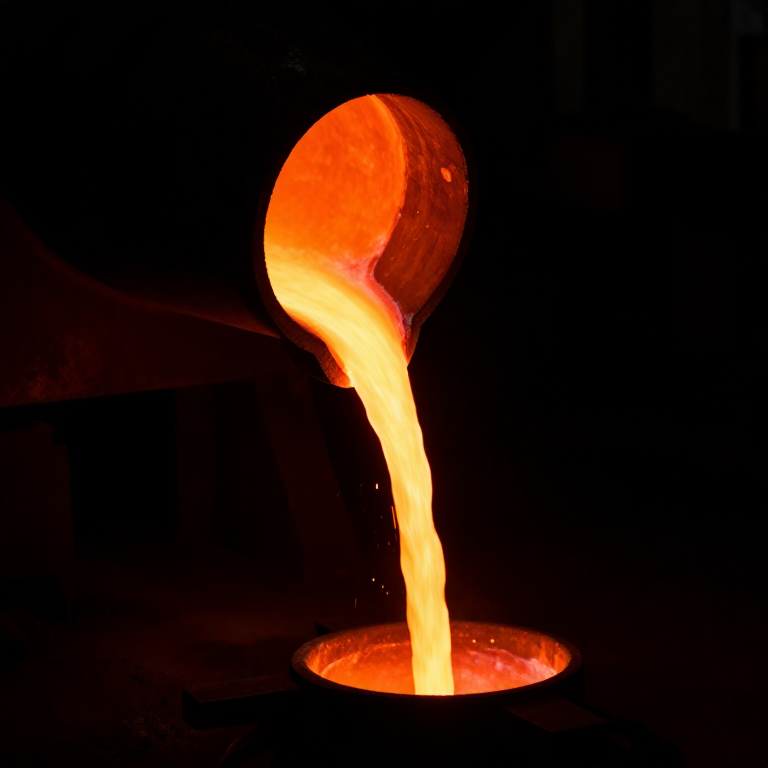


Casting Iron in a Cupola Furnace — Re-Melting Pig Iron into Finished Castings
The blast furnace makes pig iron by the tonne, but pig iron in bars is not yet a useful object. To turn it into pots, pipes, stoves, and machine frames, a foundry re-melts it and pours it into moulds — and the workhorse that does the re-melting is the cupola furnace.
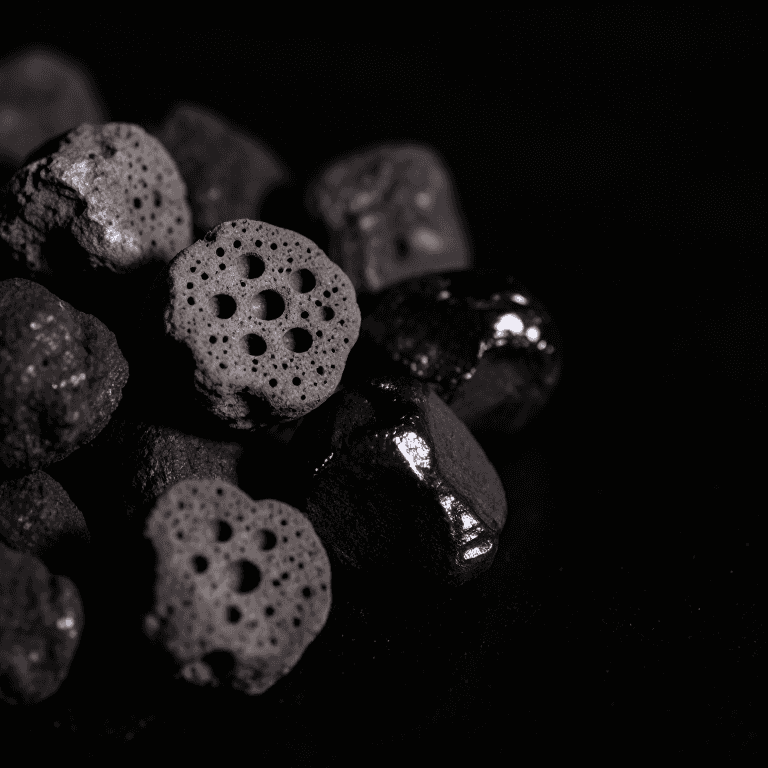
A cupola is a tall iron chimney lined with firebrick, charged from the top with alternating layers of coke, pig iron, and limestone, and blown with air near its base. Unlike the blast furnace it does not smelt ore; it simply melts iron that is already made, quickly and cheaply, keeping a steady stream of molten metal ready to tap. The melting iron picks up a little carbon from the coke and runs out of the tap hole as grey cast iron.
Poured into sand moulds shaped from wooden patterns, that iron sets into castings of almost any form. Cast iron is brittle but immensely strong in compression and cheap to pour into complex shapes, which made the cupola the beating heart of Victorian industry — casting everything from cooking pots and drainpipes to the columns and machines of the factories themselves.
Instruksi
Understand the cupola
Understand the cupola
Build and line the cupola
Build and line the cupola
Material untuk langkah ini:
 Bata Tahan Api100 buah
Alat yang dibutuhkan:
 Sekop Tangan
Light the coke bed
Light the coke bed
Material untuk langkah ini:
 Kokas metalurgi60 kg
Start the blast
Start the blast
Alat yang dibutuhkan:
 Peniup udara
Charge in layers
Charge in layers
Material untuk langkah ini:
 Batangan besi kasar80 kg
 Lempeng batu kapur6 kg
Melt the iron
Melt the iron
Flux off the slag
Flux off the slag
Alat yang dibutuhkan:
 Batang penyadap tungku
Prepare the sand moulds
Prepare the sand moulds
Material untuk langkah ini:
 Pasir cetak60 kg
Alat yang dibutuhkan:
 Kotak cetak
Tap the molten iron
Tap the molten iron
Alat yang dibutuhkan:
 Gayung tuang logam
Pour the castings
Pour the castings
Shake out and clean
Shake out and clean
Alat yang dibutuhkan:
 Gerinda sudut
Identify cast iron
Identify cast iron
Bahan
5- 100 buahPlaceholder
- 60 kgPlaceholder
- 80 kgPlaceholder
- Placeholder
- 60 kgPlaceholder
Alat yang Diperlukan
6- Placeholder
- Placeholder
- Placeholder
- Placeholder
- Placeholder
- 1 vendor sell this, none ship to you yetPlaceholder
Bahan cetak biru terhubung

Blueprint terkait
Blueprint ini berbagi pengetahuan — teknik, bahan, atau prinsip

CC0 Domain Publik
Cetak biru ini dirilis di bawah CC0. Anda bebas untuk menyalin, memodifikasi, mendistribusikan, dan menggunakan karya ini untuk tujuan apa pun, termasuk komersial, tanpa meminta izin.
Dukung Maker dengan membeli produk melalui Cetak Biru mereka di mana mereka mendapatkan Komisi Pembuat yang ditetapkan oleh Penjual, atau buat iterasi baru dari Cetak Biru ini dan masukkan sebagai koneksi di milik Anda sendiri.