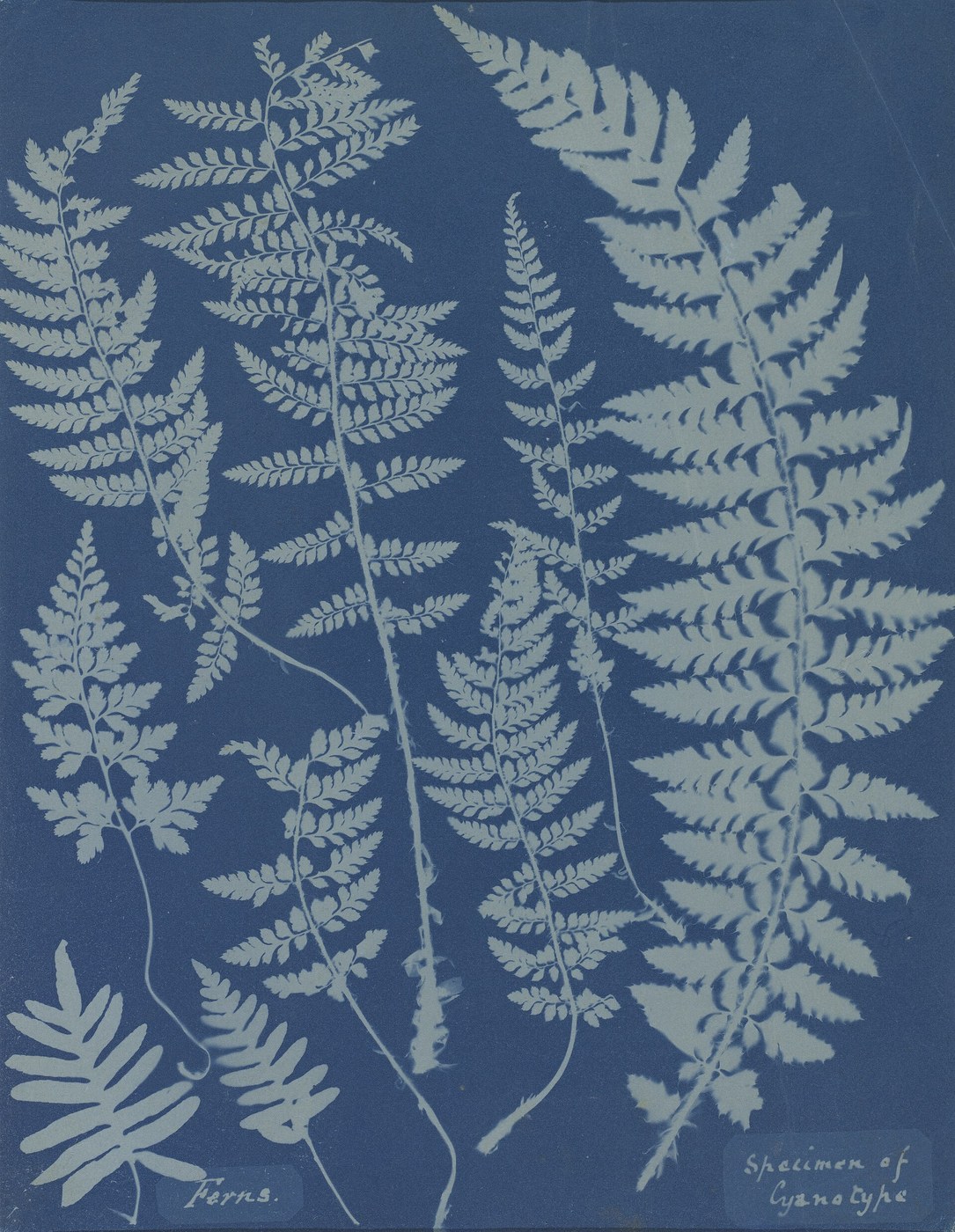


Cyanotype Print
The cyanotype is where the word blueprint comes from. Sir John Herschel invented it in 1842, and he was not trying to make art — he wanted a cheap way to copy mathematical tables. It was quickly adopted for reproducing technical drawings, and for the better part of a century an engineering drawing was literally a white line on a blue ground.
The chemistry is two iron salts: ferric ammonium citrate and potassium ferricyanide. Brushed onto paper and dried in the dark, the coating is sensitive to ultraviolet. Where UV strikes it, the iron is reduced and reacts to form Prussian blue, which lodges permanently between the paper fibres. Where something blocked the light, it washes away white.
No darkroom, no enlarger, no developer. Sunlight and water. It remains one of the oldest photographic processes still in everyday use.
Konten berbahaya
Blueprint ini mengandung prosedur berbahaya. Masuk dan aktifkan konten berbahaya di pengaturan akun Anda untuk melihat petunjuk langkah demi langkah.
CC0 Domain Publik
Cetak biru ini dirilis di bawah CC0. Anda bebas untuk menyalin, memodifikasi, mendistribusikan, dan menggunakan karya ini untuk tujuan apa pun, termasuk komersial, tanpa meminta izin.
Dukung Maker dengan membeli produk melalui Cetak Biru mereka di mana mereka mendapatkan Komisi Pembuat yang ditetapkan oleh Penjual, atau buat iterasi baru dari Cetak Biru ini dan masukkan sebagai koneksi di milik Anda sendiri.