
SENI
KECANTIKAN & KESEHATAN
KERAJINAN
BUDAYA & SEJARAH
HIBURAN
LINGKUNGAN
MAKANAN & MINUMAN
REKAYASA BALIK
ILMU PENGETAHUAN
OLAHRAGA
TEKNOLOGI
PERANGKAT PAKAI
Ebonite (Hard Rubber)
Mary

Dibuat oleh

Mary

22. September 2026FI
0
0
0
0
0

Ebonite (Hard Rubber)

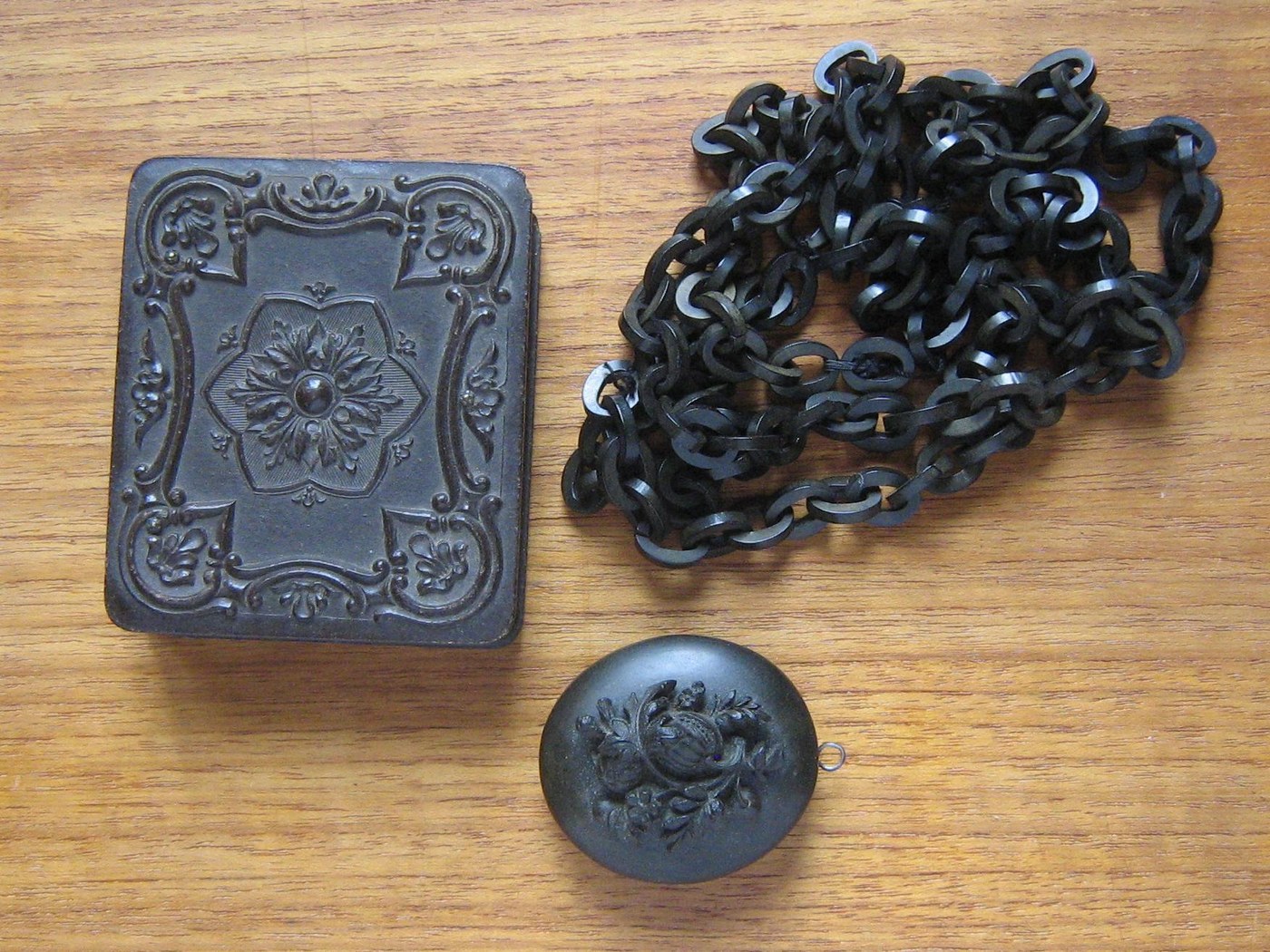
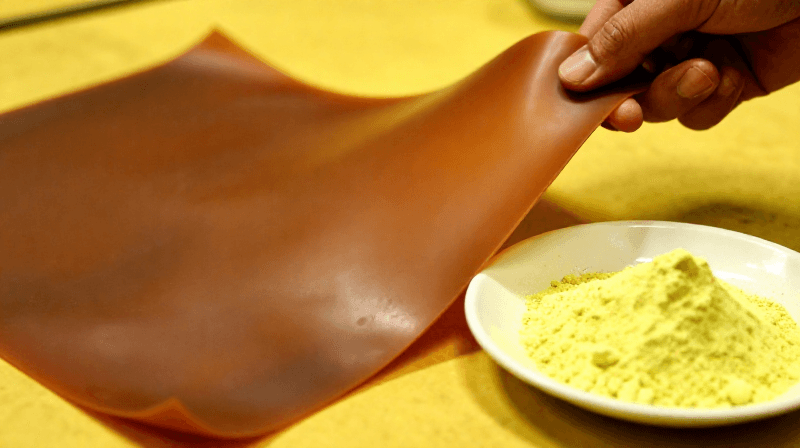
Vulcanised rubber is rubber with a few sulphur bridges between its chains. Keep adding sulphur and the bridges multiply until the chains cannot move at all: the soft, stretchy material turns into a hard black solid you can turn on a lathe, polish like ebony and use as an electrical insulator. **US 8,075**, "Improvement in the Manufacture of India Rubber", Nelson Goodyear (brother of Charles), granted 6. May 1851, claims "the combining of india-rubber and sulphur… for making a hard and inflexible substance hitherto unknown": about equal parts by weight, heated to 260–275 °F for three to six hours. It was one of the first rigid materials made by chemically changing a natural polymer, over half a century before Bakelite. **You turn a part from commercial ebonite rod and measure what the sulphur did** — its density, and its charge when rubbed. Curing ebonite needs a heated press and releases hydrogen sulphide, so the blueprint starts from finished rod; the notebook does the chemistry.
Menengah
3 hours

Instruksi

1

Cut the blank

Clamp 20 mm ebonite rod in the vise between soft jaws. Saw off 60 mm. Ebonite chips like hard wood; saw slowly to avoid cracking the end.

Material untuk langkah ini:

Batang ebonitBatang ebonit1 buah

Alat yang dibutuhkan:

Gergaji BesiGergaji Besi
Ragum MejaRagum Meja
Penggaris BajaPenggaris Baja
Kacamata Pengaman BeningKacamata Pengaman Bening
2

Chuck and face

Grip 20 mm of the blank in the lathe's 3-jaw chuck. Face the end square with a sharp HSS tool at about 800 rpm, light cuts.

Alat yang dibutuhkan:

Mesin Bubut LogamMesin Bubut Logam
Set pahat bubut (HSS)Set pahat bubut (HSS)
Kacamata Pengaman BeningKacamata Pengaman Bening
Masker DebuMasker Debu
3

Turn to 16 mm

Turn 40 mm of length down to 16.0 mm. Check with the caliper every pass. The chips smell of sulphur - that is the bonded sulphur you measure later.

Alat yang dibutuhkan:

Mesin Bubut LogamMesin Bubut Logam
Set pahat bubut (HSS)Set pahat bubut (HSS)
Jangka Sorong Digital 6 InciJangka Sorong Digital 6 Inci
4

Drill the bore

Spot the centre with a centre drill, then drill 3 mm through 35 mm from the tailstock. Clear chips every 5 mm - ebonite heats and gums if packed.

Alat yang dibutuhkan:

Set mata bor senterSet mata bor senter
Set mata bor dalam kotakSet mata bor dalam kotak
Mesin Bubut LogamMesin Bubut Logam
5

Taper the grip

Set the compound to a shallow angle and taper 25 mm from 16 mm down to 10 mm. This is a fountain-pen grip section, the job ebonite still does today.

Alat yang dibutuhkan:

Mesin Bubut LogamMesin Bubut Logam
Set pahat bubut (HSS)Set pahat bubut (HSS)
Jangka Sorong Digital 6 InciJangka Sorong Digital 6 Inci
6

Sand and polish

At low speed, sand 400 then 800 grit, then run the Micro-Mesh grits in order. Finish with polishing compound on a cloth. Ebonite takes a deep gloss without lacquer.

Material untuk langkah ini:

AmplasAmplas2 lembar
Pasta polesPasta poles5 g

Alat yang dibutuhkan:

Kit pengamplasan mikro-jala (9 kekasaran)Kit pengamplasan mikro-jala (9 kekasaran)
Mesin Bubut LogamMesin Bubut Logam
Masker DebuMasker Debu
7

Part off

Part off at 45 mm with the parting tool. Chamfer the cut end by hand with 800 grit.

Alat yang dibutuhkan:

Set pahat bubut (HSS)Set pahat bubut (HSS)
Mesin Bubut LogamMesin Bubut Logam
8

Measure the density

Weigh the part. Drop it into 50 ml of water in the graduated cylinder and read the rise. Do the same with a bundle of rubber bands. Enter both in the notebook.

Material untuk langkah ini:

Karet gelangKaret gelang1 bungkus

Alat yang dibutuhkan:

Timbangan Digital PresisiTimbangan Digital Presisi
Gelas ukurGelas ukur
9

Rub it and pick up paper

Tear tissue into 5 mm scraps. Rub the ebonite 10 strokes on wool felt and hold it 2 cm above the scraps. Repeat with an acrylic offcut. Count scraps lifted by each.

Material untuk langkah ini:

Kertas tisu bebas asamKertas tisu bebas asam1 lembar
Lembaran AkrilikLembaran Akrilik1 buah

Alat yang dibutuhkan:

Kain kempa wolKain kempa wol
10

The sulphur arithmetic

Memuat notebook Jupyter…
11

History & Context

**What the patent specifies:** rubber and sulphur in about equal parts (or 2 : 1 with magnesia or lime), 260–275 °F, three to six hours. **Modern build (derived):** commercial ebonite rod, typically 25–32 % sulphur - the notebook shows why more than about 32 % cannot bond. Ebonite was named for ebony, which it replaced in combs, pipe stems and instrument parts. It became a standard insulator of the electrical age and is still preferred for fountain-pen feeds because ink wets it. Its limits: it softens with heat, fades to brown and smells of sulphur in sunlight as the surface oxidises, and is brittle under impact.

Bahan

6

Alat yang Diperlukan

14

Blueprint terkait

Blueprint ini berbagi pengetahuan — teknik, bahan, atau prinsip
CC0 Domain Publik

Cetak biru ini dirilis di bawah CC0. Anda bebas untuk menyalin, memodifikasi, mendistribusikan, dan menggunakan karya ini untuk tujuan apa pun, termasuk komersial, tanpa meminta izin.

Dukung Maker dengan membeli produk melalui Cetak Biru mereka di mana mereka mendapatkan Komisi Pembuat yang ditetapkan oleh Penjual, atau buat iterasi baru dari Cetak Biru ini dan masukkan sebagai koneksi di milik Anda sendiri.

Diskusi

(0)

Masuk untuk bergabung dengan diskusi

Memuat komentar...