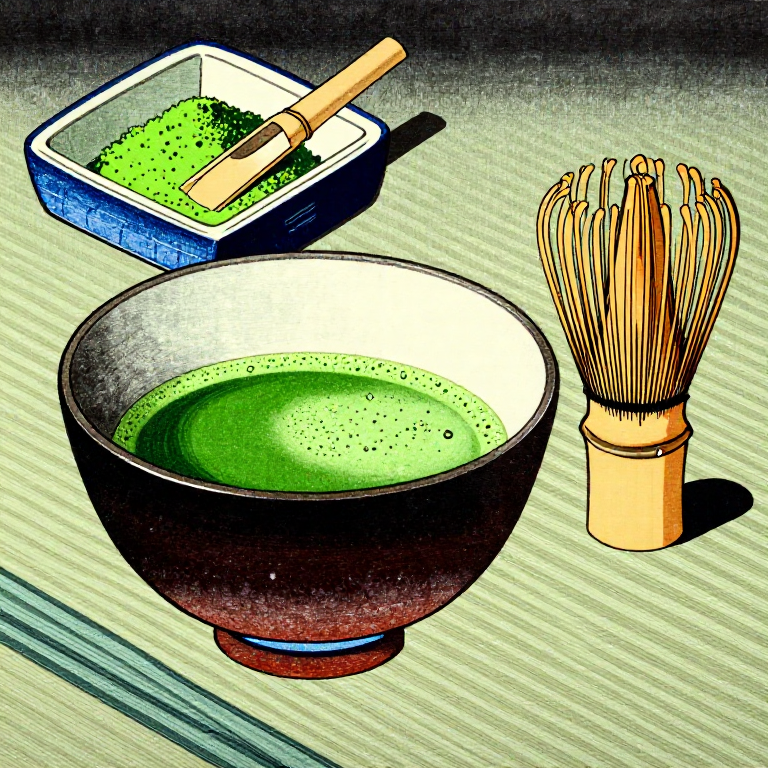


Menyiapkan Matcha dari Daun Tencha yang Digiling Batu — Kualitas Upacara Teh Jepang
Matcha adalah bubuk teh hijau halus yang dibuat dengan menggiling daun tencha — Camellia sinensis yang ditanam di bawah naungan — menggunakan gilingan batu tangan. Teknik ini merupakan bagian dari upacara teh tradisional Jepang (chanoyu).
Instruksi
Memahami produksi daun tencha
Memahami produksi daun tencha
Tencha adalah jenis daun khusus yang digunakan untuk matcha — tanaman Camellia sinensis dinaungi di bawah kanopi buluh atau kain selama 20-30 hari sebelum panen. Penaungan memaksa tanaman memproduksi klorofil dan L-theanine berlebih, memberikan matcha warna hijau cerah dan rasa umami. Setelah dikukus untuk menghentikan oksidasi, batang dan urat daun dibuang dan daun dikeringkan rata.
Material untuk langkah ini:
 Daun tencha (ditanam di bawah naungan)30 g
Menggiling tencha menjadi bubuk
Menggiling tencha menjadi bubuk
Masukkan daun tencha ke dalam corong gilingan batu tangan dan putar batu atas perlahan — kira-kira satu putaran per detik. Permukaan granit menggiling potongan daun yang rapuh menjadi bubuk sangat halus dengan ukuran partikel 5-20 mikrometer. Gilingan tangan menghasilkan sekitar 30-40 g matcha per jam. Ayak bubuk melalui saringan jala halus untuk menghilangkan partikel kasar.
Alat yang dibutuhkan:
 Gilingan tangan dari batu
 Saringan Teh Jaring Halus
Menyiapkan peralatan
Menyiapkan peralatan
Hangatkan chawan dengan mengisinya setengah dengan air panas dan biarkan satu menit, lalu buang airnya dan keringkan. Rendam chasen dalam air panas selama 30 detik untuk melunakkan cabang bambunya. Takar 2 sendok matcha (sekitar 2 g) dengan chashaku ke dalam mangkuk yang sudah dihangatkan.
Alat yang dibutuhkan:
 Mangkuk teh keramik (chawan)
 Pengocok teh bambu (chasen)
 Sendok teh bambu (chashaku)
Mengocok matcha (gaya Usucha)
Mengocok matcha (gaya Usucha)
Tuangkan 70 ml air panas bersuhu 70-80°C di atas bubuk matcha. Jangan gunakan air mendidih — suhu di atas 80°C membakar asam amino halus dan menghasilkan rasa pahit. Dengan chasen, kocok kuat dengan gerakan W atau M selama 15-20 detik hingga lapisan busa gelembung halus yang seragam menutupi permukaan.
Material untuk langkah ini:
 Air70 ml
Alat yang dibutuhkan:
Pengocok teh bambu (chasen)Menghargai dan menyajikan
Menghargai dan menyajikan
Dalam upacara teh Jepang (chanoyu), tuan rumah menyajikan mangkuk dengan bagian depannya menghadap tamu. Tamu memutar mangkuk dua kali searah jarum jam sebelum minum untuk menghindari minum dari bagian depan — isyarat kerendahan hati. Minum matcha dalam tiga tegukan. Matcha harus dikonsumsi dalam beberapa menit setelah dikocok karena bubuknya cepat mengendap.
Alat yang Diperlukan
10- Placeholder
- Placeholder
- Placeholder
- Placeholder
- Placeholder
- Placeholder
- Placeholder
- Placeholder
- Placeholder
- Placeholder
CC0 Domain Publik
Cetak biru ini dirilis di bawah CC0. Anda bebas untuk menyalin, memodifikasi, mendistribusikan, dan menggunakan karya ini untuk tujuan apa pun, termasuk komersial, tanpa meminta izin.
Dukung Maker dengan membeli produk melalui Cetak Biru mereka di mana mereka mendapatkan Komisi Pembuat yang ditetapkan oleh Penjual, atau buat iterasi baru dari Cetak Biru ini dan masukkan sebagai koneksi di milik Anda sendiri.