Kolaborasi
SENI
KECANTIKAN & KESEHATAN
KERAJINAN
BUDAYA & SEJARAH
HIBURAN
LINGKUNGAN
MAKANAN & MINUMAN
REKAYASA BALIK
ILMU PENGETAHUAN
OLAHRAGA
TEKNOLOGI
PERANGKAT PAKAI
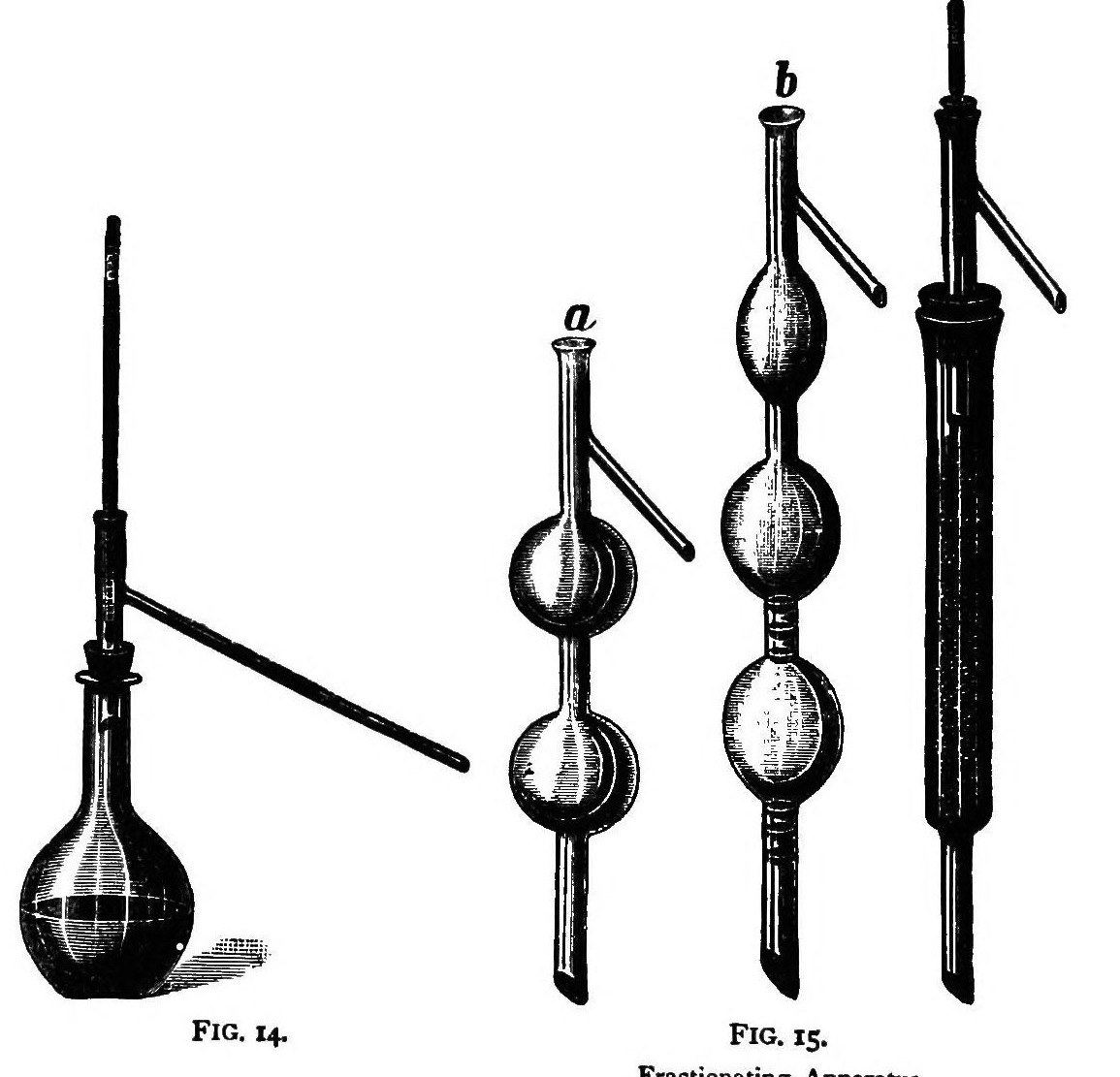


Fractionating Still: Hempel Bead Column on a Round Flask with Liebig Condenser (Gattermann, 1901)
The classic laboratory set-up for splitting a mixture of liquids by boiling point. A round flask is topped by a Hempel column, a tube packed with glass beads, with a side outlet near the top and a thermometer in a cork above it. The higher-boiling vapour condenses on the beads and runs back, so the vapour reaching the outlet is richer in the lower-boiling part; a Liebig condenser turns it to liquid in the receiver. One pass through it separates better than repeated distillations from a plain flask.
Result: a fractionating still for laboratory distillations at atmospheric pressure.
Source: L. Gattermann, The Practical Methods of Organic Chemistry (2nd American ed., 1901), pp. 16-24. Unknown: column and bead sizes. Picture: the book's Figs. 14-15.
Menengah
Unknown
Instruksi
1
1
Make the Hempel column
Make the Hempel column
Take a wide glass tube with a side outlet tube near its top and fill it with glass beads; the beads act like sieves, holding back the higher-boiling part. Fit it to a round, short-necked flask with a bored cork (or have it fused onto the bulb); flasks with the same neck width can share one cork. Choose a flask the charge will fill about two-thirds. Not given: sizes. Ours: a glass tube for the column body.
Material untuk langkah ini:
 Tabung kaca1 column
 Manik kaca1 packing
 Labu alas bulat1 buah
 Sumbat gabus2 buah
Alat yang dibutuhkan:
 Pelubang gabus
2
2
Set the thermometer and condenser
Set the thermometer and condenser
Pass the thermometer through a cork (not rubber) in the top of the column so its bulb sits level with the outlet, never down in the liquid. For liquids boiling up to 100° join the outlet to a Liebig condenser with a cork (long for very low boilers, short for high); from 100-200° cool the receiver with running water; above that a wide glass tube 50 cm long on the outlet is enough. If the vapour attacks cork, push the outlet far into the condenser instead. Clamp the apparatus above the outlet, never below it, or the hot glass may crack.
Material untuk langkah ini:
 Termometer Laboratorium1 buah
 Kondensor berpendingin air1 buah
 Labu Erlenmeyer2 receivers
Alat yang dibutuhkan:
 Statif (penyangga laboratorium)Pelubang gabus
3
3
Fractionate
Fractionate
Add a few bits of glass or platinum wire against bumping. Heat on the water-bath for liquids boiling up to about 80°, otherwise over a small free flame moved slowly to and fro under the flask, never above the liquid level, so the distillate falls into the receiver steadily in drops. With the Hempel column stop heating now and then so the liquid held in the beads can run back. Collect the first runnings, the main fraction at a steady temperature, and the last runnings in separate receivers; for a mixture, collect fractions over set ranges and distil them again.
Alat yang dibutuhkan:
 Pembakar BunsenStatif (penyangga laboratorium)
Bahan
7- 1 columnPlaceholder
- 1 packingPlaceholder
- 1 buahPlaceholder
- 2 buahPlaceholder
- 1 buahPlaceholder
- Placeholder
- 2 receiversPlaceholder
Alat yang Diperlukan
3- Placeholder
- Placeholder
- Placeholder
Cetak biru ini membuat

Blueprint terkait
Blueprint ini berbagi pengetahuan — teknik, bahan, atau prinsip

CC0 Domain Publik
Cetak biru ini dirilis di bawah CC0. Anda bebas untuk menyalin, memodifikasi, mendistribusikan, dan menggunakan karya ini untuk tujuan apa pun, termasuk komersial, tanpa meminta izin.
Dukung Maker dengan membeli produk melalui Cetak Biru mereka di mana mereka mendapatkan Komisi Pembuat yang ditetapkan oleh Penjual, atau buat iterasi baru dari Cetak Biru ini dan masukkan sebagai koneksi di milik Anda sendiri.