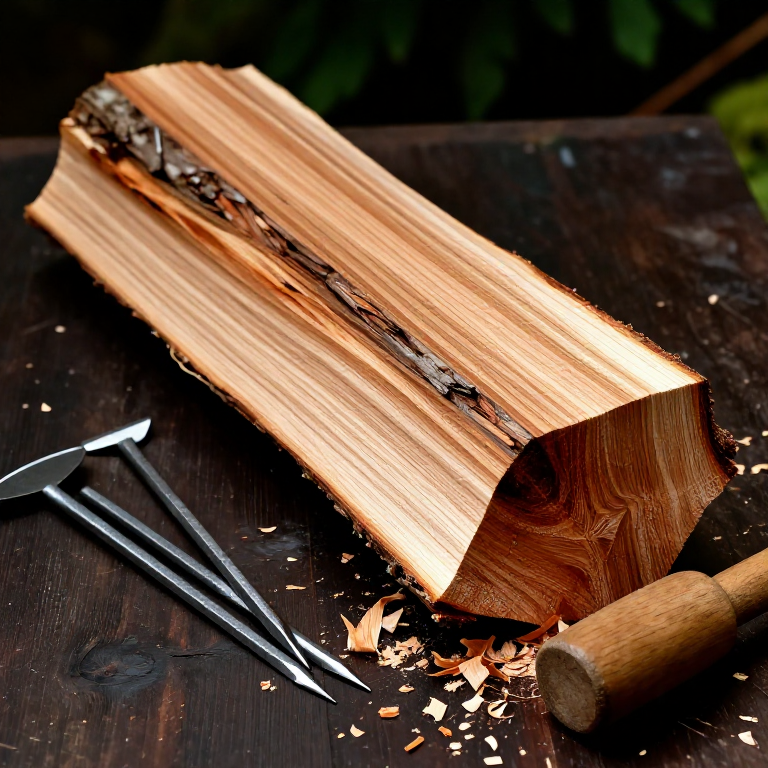


Riving Planks from a Log — Splitting Timber Along the Grain with Wedges
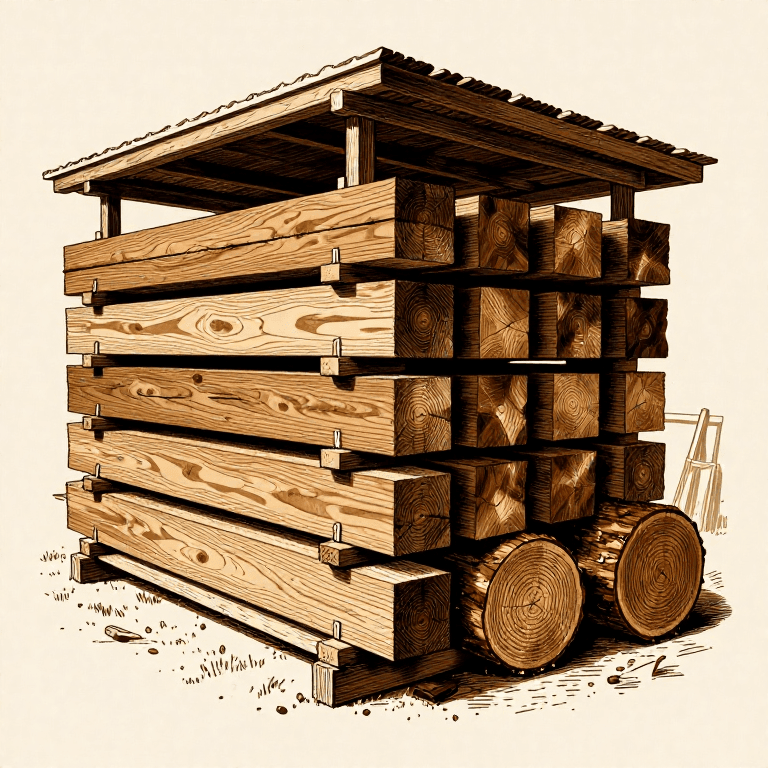
Before sawmills, every plank was riven — split from a log using wedges and mallets. Riving exploits the natural grain of the wood: a wedge driven into the end grain propagates a crack that follows the fibres, producing a plank that is stronger than any sawn board because no fibres are cut across. Every Viking longship, every medieval roof, and every Iron Age door was built from riven timber.
The technique is simple but requires reading the wood. A straight-grained log splits cleanly into halves, quarters, and eighths. Each successive split reduces the section until planks of the desired thickness are reached. Crooked grain, knots, or spiral growth cause the split to run off-line, ruining the plank. Selecting the right log is half the skill.
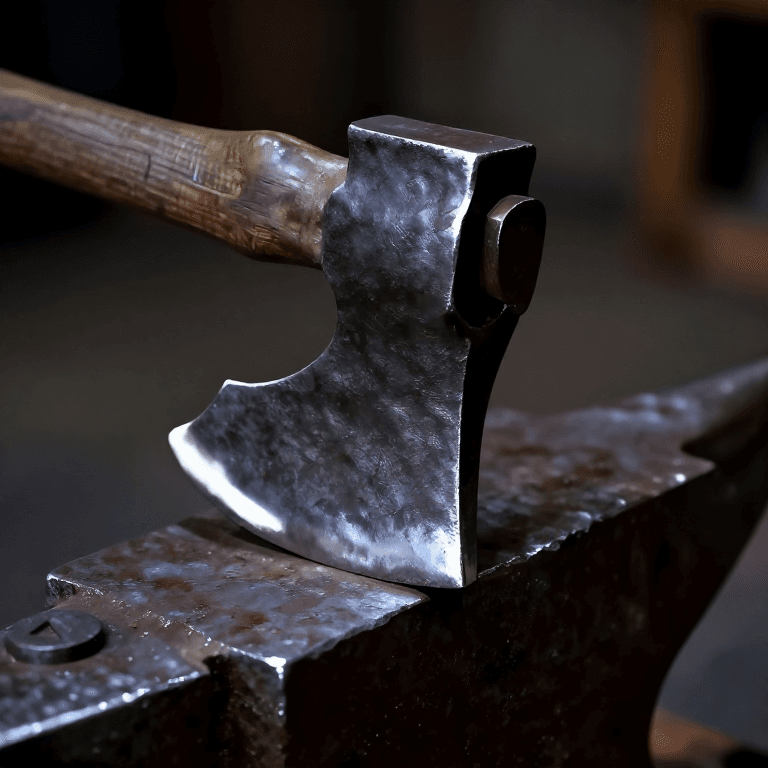
Iron wedges transformed riving from a slow stone-age process into an efficient production method. A smith's iron wedge driven by a wooden maul splits a log in minutes. Combined with an iron drawknife for smoothing, riving produces finished planks faster than pit-sawing and with superior strength.
Instruksi
Select a straight-grained log
Select a straight-grained log
Material untuk langkah ini:
 Papan ek (merah)1 buah
Split the log in half
Split the log in half
Alat yang dibutuhkan:
 Palu Tempa
 Set baji baja
 Godam
GodamQuarter each half
Quarter each half
Rive planks from the quarters
Rive planks from the quarters
Alat yang dibutuhkan:
 Froe (pisau belah)
 Palu Kayu
Correct wandering splits
Correct wandering splits
Smooth the riven surface
Smooth the riven surface
Alat yang dibutuhkan:
 Pisau Tarik
 Bangku serut
 Beliung
Bahan
1- 1 buahPlaceholder
Alat yang Diperlukan
8- Placeholder
- Placeholder
- Placeholder
- Placeholder
- Placeholder
- Placeholder
- Placeholder
- Placeholder
Bahan cetak biru terhubung
Cetak biru ini membuat



Blueprint terkait
Blueprint ini berbagi pengetahuan — teknik, bahan, atau prinsip
CC0 Domain Publik
Cetak biru ini dirilis di bawah CC0. Anda bebas untuk menyalin, memodifikasi, mendistribusikan, dan menggunakan karya ini untuk tujuan apa pun, termasuk komersial, tanpa meminta izin.
Dukung Maker dengan membeli produk melalui Cetak Biru mereka di mana mereka mendapatkan Komisi Pembuat yang ditetapkan oleh Penjual, atau buat iterasi baru dari Cetak Biru ini dan masukkan sebagai koneksi di milik Anda sendiri.