Kolaborasi
SENI
KECANTIKAN & KESEHATAN
KERAJINAN
BUDAYA & SEJARAH
HIBURAN
LINGKUNGAN
MAKANAN & MINUMAN
REKAYASA BALIK
ILMU PENGETAHUAN
OLAHRAGA
TEKNOLOGI
PERANGKAT PAKAI
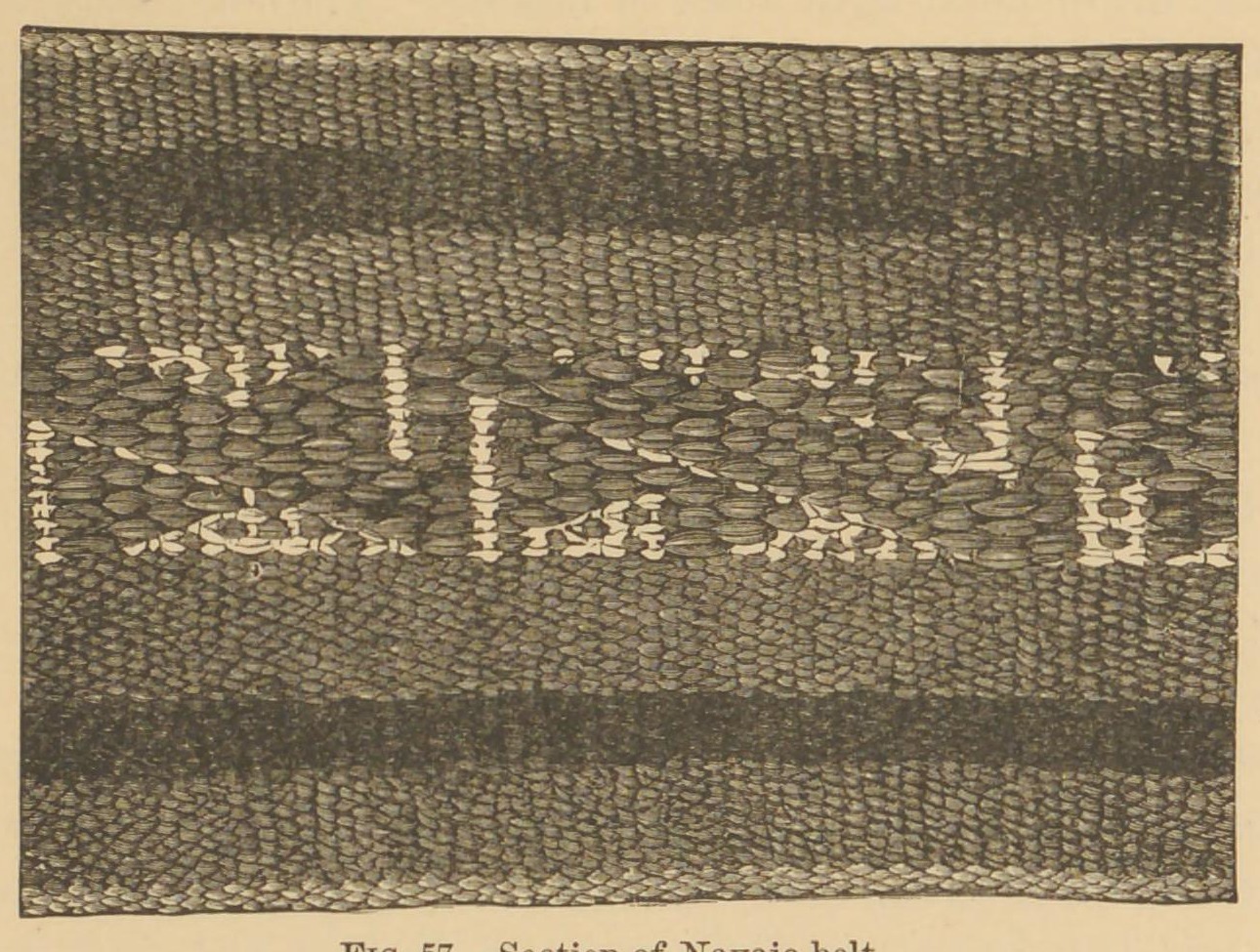


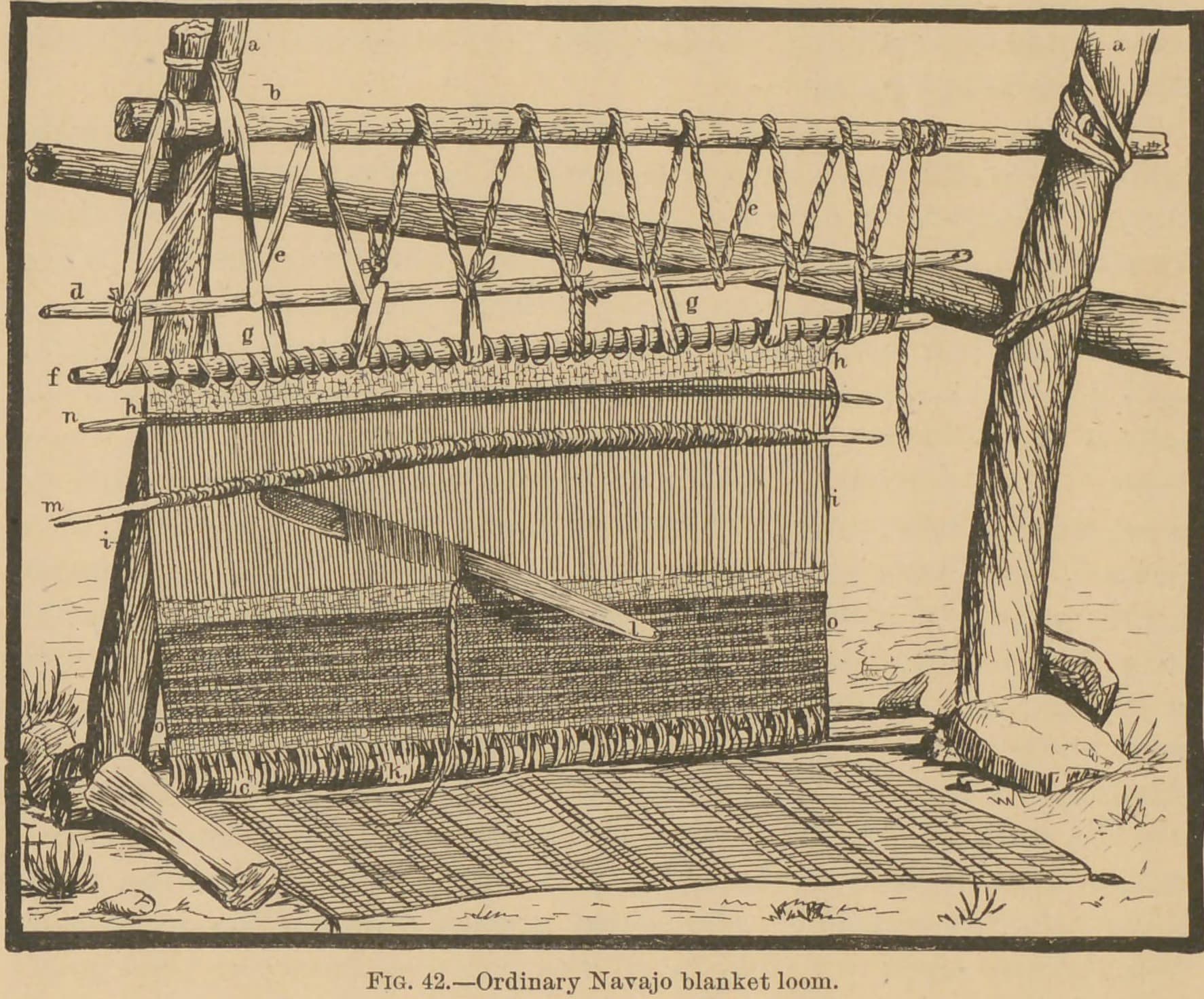
Navajo Sash or Belt: Warp Wound on Four Stakes, Endless on Two Beams, Tensioned by the Weaver's Weight, Raised Figures Picked Up (Matthews, 1884)
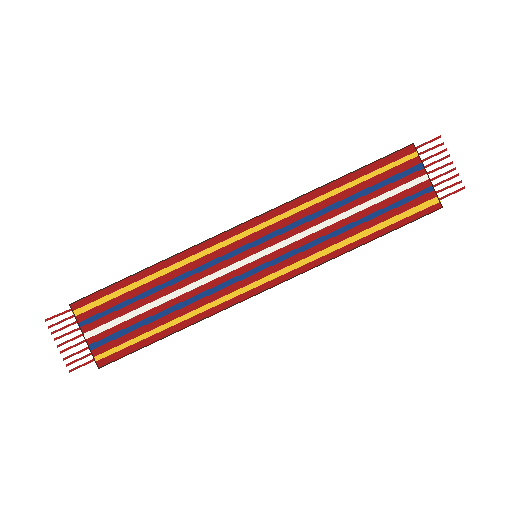
How Navajo (Diné) women wove sashes, belts, garters and hair-bands, as Washington Matthews recorded: warp wound in a figure-8 round four stakes to make both sheds, slid onto two beams so it stays endless, one beam tied high and the other looped under the weaver's thighs for tension, raised figures picked up with a slender stick, and the last foot of warp cut for fringes.
Menengah
A few hours
Instruksi
1
1
His figures
His figures
Memuat notebook Jupyter…
2
2
Read Matthews
Read Matthews
"While still on the loom the belt is endless."
3
3
Wind the warp
Wind the warp
Drive four sticks into the ground: a and b at the ends, c and d between them (Fig. 56). Wind the warp from below upward so every turn passes over a and b but alternate turns over c and d; that makes the two sheds. Usually three colours of thread are used. Tie a string round the crossing of the sheds to keep them apart. (Ours: space a and b about the finished length of the sash.)
Material untuk langkah ini:
 Benang Wol Celup1 buah
Alat yang dibutuhkan:
 Pasak tenda
 Palu Kayu
4
4
Mount it
Mount it
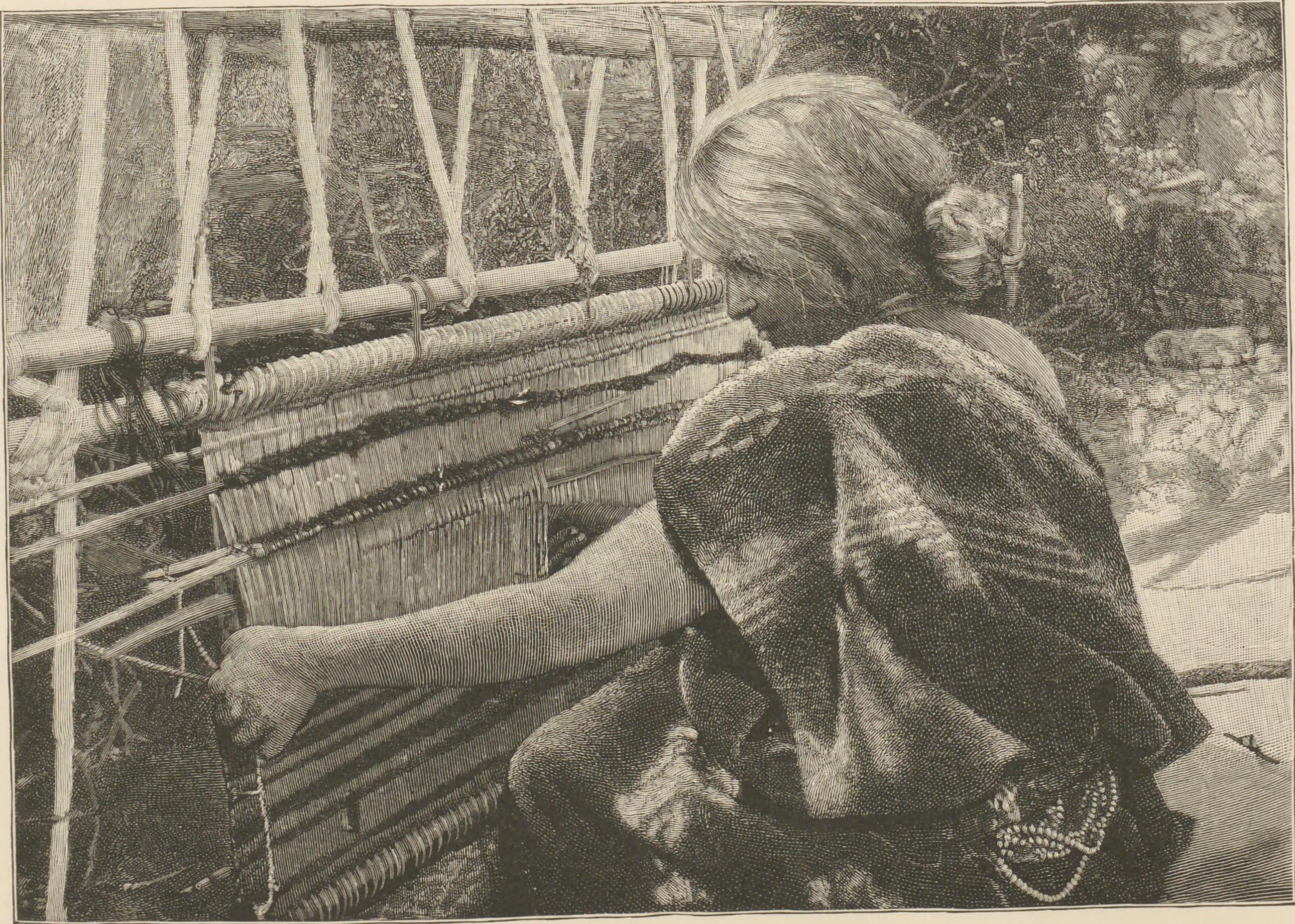
Put the upper beam in place of stick b and the lower beam in place of a. Tie the upper beam to a rafter, post or tree; tie a loop of rope to the lower beam and pass it under your thighs, so your weight pulls the warp tight. Put a shed-rod in the upper shed, string healds on the lower shed, and add a round stick with one loop of each thread round it to keep them in order.
Material untuk langkah ini:
 Pasak kayu1 buah
 Tali1 buah
 Tali Pintal1 buah
Alat yang dibutuhkan:
 Pisau
5
5
Weave
Weave
Weave with a short batten (much shorter than a blanket batten), the reed-fork rarely needed. For raised figures, slip a slender stick under chosen warp threads and pass the weft twice or more beneath them: the back shows a different figure. A skilled weaver made 25-30 cm an hour.
Material untuk langkah ini:
Benang Wol Celup1 buah Papan ek putih1 buah
Alat yang dibutuhkan:
 Pisau TarikPisau
6
6
Move the warp and finish
Move the warp and finish
When you can't reach, pull the front layer of warp down toward you: it slides round the beams. When all but about a foot (30 cm) of warp is filled, cut the unwoven warp in the middle: it becomes the fringes.
Alat yang dibutuhkan:
Pisau7
7
Troubleshooting
Troubleshooting
Sash troubleshooting.
Flow
Loading...
8
8
History and honest limits
History and honest limits
From Washington Matthews, "Navajo Weavers", **3rd Annual Report of the Bureau of Ethnology** (1884), pp. 388-390, Figs. 56-57 and Plate XXXVI (checked on the archive.org scan 101714660.nlm.nih.gov). He saw about a dozen raised-figure patterns, woven from memory. Zuni women set up their belt warps differently, tied to a rafter and to their own belt, with wooden healds. Sash length, width and stake spacing are ours.
Bahan
5- 2 buahPlaceholder
- 1 buahPlaceholder
- 1 buahPlaceholder
- 1 buahPlaceholder
- 1 buahPlaceholder
Cetak biru ini membuat
Blueprint terkait
Blueprint ini berbagi pengetahuan — teknik, bahan, atau prinsip

CC0 Domain Publik
Cetak biru ini dirilis di bawah CC0. Anda bebas untuk menyalin, memodifikasi, mendistribusikan, dan menggunakan karya ini untuk tujuan apa pun, termasuk komersial, tanpa meminta izin.
Dukung Maker dengan membeli produk melalui Cetak Biru mereka di mana mereka mendapatkan Komisi Pembuat yang ditetapkan oleh Penjual, atau buat iterasi baru dari Cetak Biru ini dan masukkan sebagai koneksi di milik Anda sendiri.