

Player Piano
Instruksi
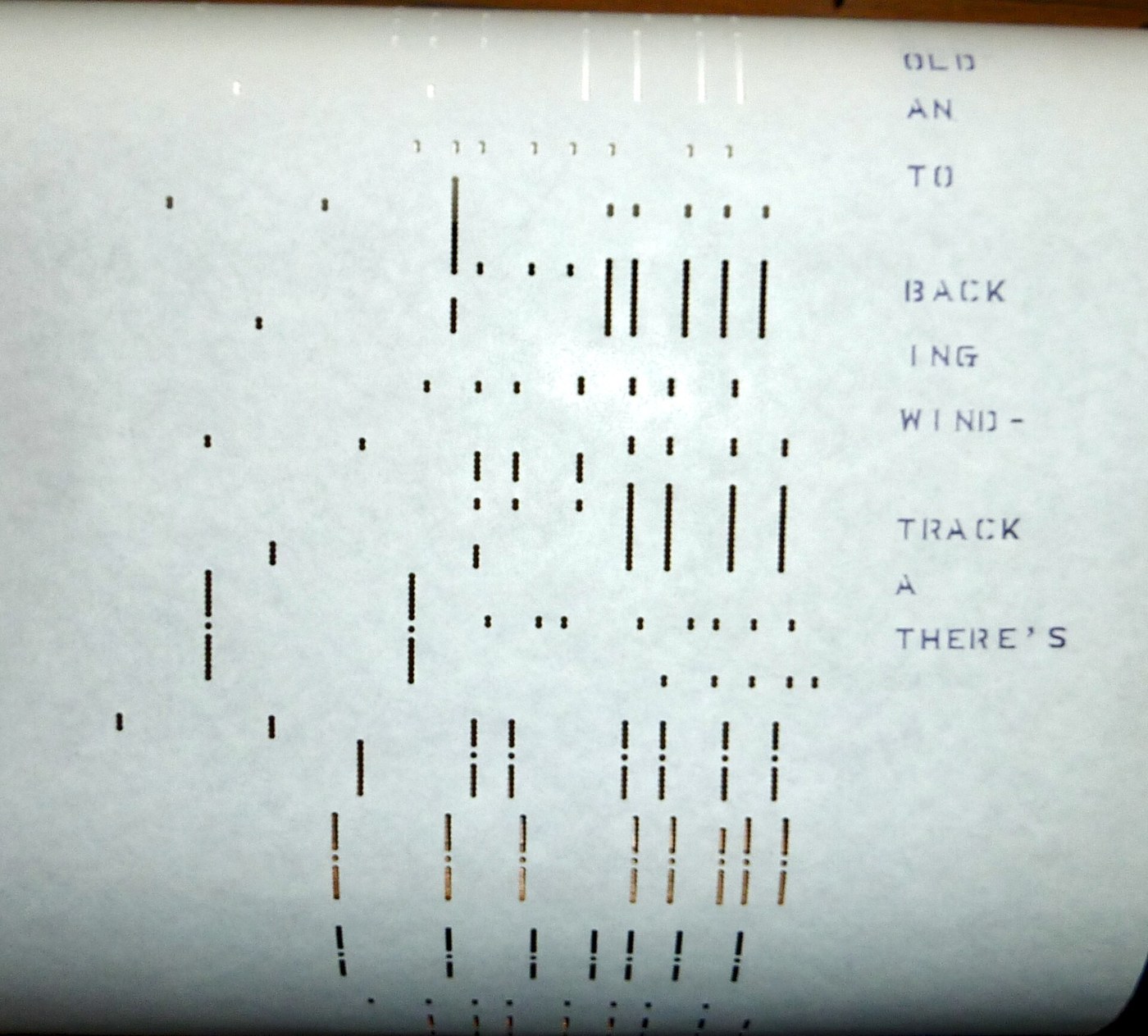
Encode a tune as holes
Encode a tune as holes
Turn music into a punched program before building anything to read it.
- Rule a paper strip into columns, one per note of a simple scale.
- Mark time down the length of the strip.
- Punch a hole where a note starts and extend it for as long as the note sounds.
Material untuk langkah ini:
 Penggaris1 buah
Build the tracker bar
Build the tracker bar
A row of ports that the paper slides across, sealing all of them except where a hole passes.
- Drill a row of small holes in a flat bar, spaced to match your columns.
- Connect each to a tube.
- Run the paper over the bar under light tension so it seals the ports.
Material untuk langkah ini:
 Pipa tembaga1 length
 Selang Karet1 length
Make one pneumatic actuator
Make one pneumatic actuator
Suction, not pressure, does the work — build a single note first.
- Make a small flat bellows that collapses when air is drawn out of it.
- Connect it to one tracker port.
- Apply steady suction to the system and pass a hole over that port.
Drive it with foot bellows and play
Drive it with foot bellows and play
The operator supplies the power, and that turns out to be the musical control.
- Connect a foot-pumped bellows or a vacuum source.
- Feed the roll and let the actuators fire.
- Pump harder and softer and listen to what changes.
History and context
History and context
Edwin Votey built the Pianola in 1895 in Detroit — a push-up cabinet with wooden fingers that sat in front of an ordinary piano and pressed its keys. Aeolian took it up, and within about ten years the mechanism was being built inside pianos instead. The trade peaked around 1924, when player pianos were a substantial fraction of all pianos sold in the United States.
Reproducing pianos are the interesting descendants. Welte-Mignon (1904), Duo-Art and Ampico added extra perforation columns encoding dynamics and pedalling, captured from a live performance. Rolls exist of Debussy, Mahler, Grieg, Rachmaninoff and Gershwin playing their own music. They are genuine performance data from before electrical recording — with the caveat, which enthusiasts sometimes skip, that dynamic capture was imperfect and rolls were routinely edited afterwards, so what plays back is a good but not literal record.
Punched paper is a programming medium. The line runs from Jacquard's punched cards controlling a loom in 1804, through Hollerith's tabulating cards in 1890, to piano rolls, to the punched tape that fed early computers. A piano roll is code: a stored, repeatable, editable set of instructions that a machine executes.
What killed it: radio and electrical recording in the 1920s, then the Depression. Why buy rolls when a wireless plays orchestras for nothing. The mechanism survives in restoration, and the idea survives wholesale in MIDI — which, like a roll, stores note, time and velocity rather than sound.
Bahan
3- 1 buahPlaceholder
- 1 lengthPlaceholder
- 1 lengthPlaceholder
Blueprint terkait
Blueprint ini berbagi pengetahuan — teknik, bahan, atau prinsip
CC0 Domain Publik
Cetak biru ini dirilis di bawah CC0. Anda bebas untuk menyalin, memodifikasi, mendistribusikan, dan menggunakan karya ini untuk tujuan apa pun, termasuk komersial, tanpa meminta izin.
Dukung Maker dengan membeli produk melalui Cetak Biru mereka di mana mereka mendapatkan Komisi Pembuat yang ditetapkan oleh Penjual, atau buat iterasi baru dari Cetak Biru ini dan masukkan sebagai koneksi di milik Anda sendiri.