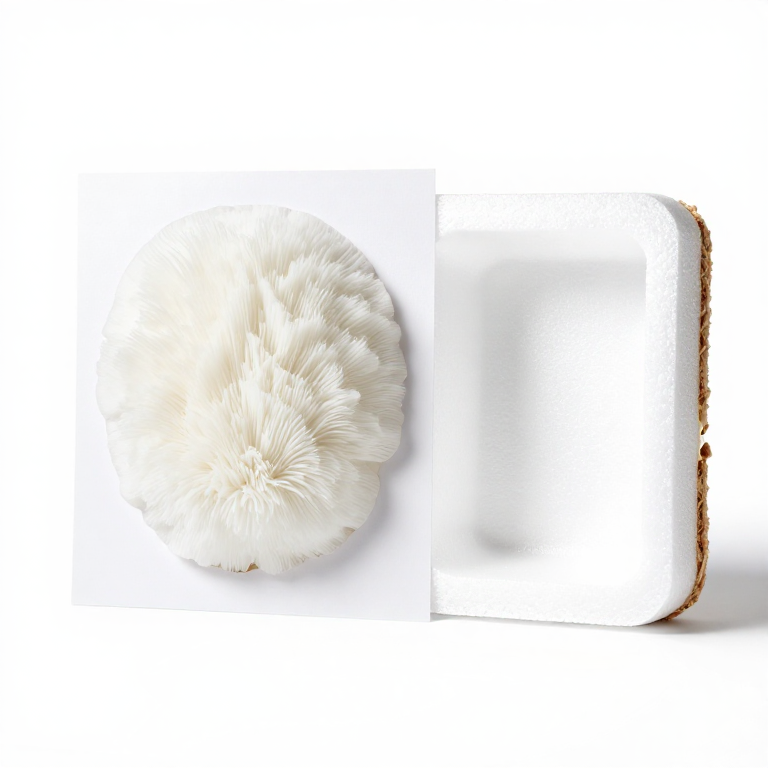


Growing Mycelium Packaging Material — Biodegradable Foam Alternative
Instruksi
Pasteurize the Substrate
Pasteurize the Substrate
Chop the agricultural waste (hemp hurd, straw, or corn stalks) into pieces approximately 1-3cm long. Submerge in water and heat to 65-80 degrees C for 60-90 minutes. This pasteurization kills competing moulds and bacteria that would outcompete the mycelium, without sterilizing the substrate completely (some beneficial microorganisms survive and actually aid mycelium growth). Drain the substrate thoroughly — it should be damp but not dripping. Squeeze a handful: a few drops of water should emerge, but it should not stream. Excess moisture causes bacterial contamination (anaerobic conditions), while too-dry substrate will not support mycelium growth.
Material untuk langkah ini:
 Jerami Cacah1-2 kg kg
 Tepung serbaguna50g g
Alat yang dibutuhkan:
 Panci Besar
Inoculate and Pack the Mould
Inoculate and Pack the Mould
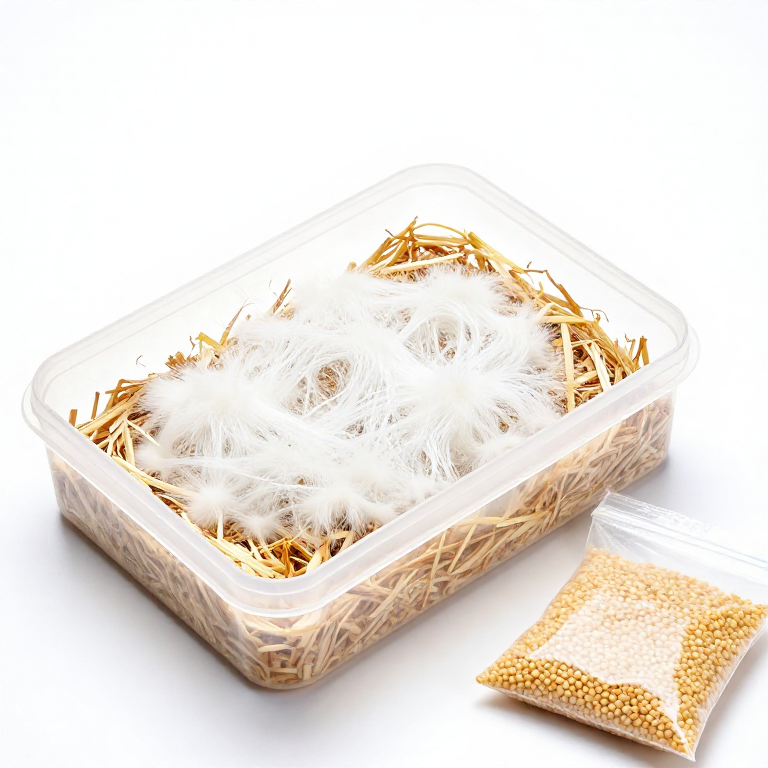
Break the grain spawn into individual grains and mix thoroughly with the cooled, drained substrate at a ratio of 10-15% spawn to substrate by weight. Higher spawn ratios colonize faster and resist contamination better. Pack the inoculated substrate firmly into your mould — the material must be compressed to ensure the mycelium fibers bind the particles into a solid mass. Loose packing produces crumbly, weak material. Wrap the filled mould loosely in plastic to maintain humidity (the mycelium needs high humidity but also some gas exchange). Poke a few small holes in the plastic for air.
Material untuk langkah ini:
 Bibit jamur200-300g g
Alat yang dibutuhkan:
 Cetakan bentuk kemasan
Incubate for Colonization
Incubate for Colonization
Place the wrapped moulds in a dark, warm location (24-28 degrees C) for 5-7 days. The mycelium grows from each grain spawn point, sending out white hyphae (threadlike filaments) that penetrate and bind the substrate particles together. By day 3-4, white mycelium should be visible on the surface. By day 5-7, the entire surface should be covered with a dense white mat, and the material should hold together as a solid block when the mould is removed. If green or black mould appears instead of white mycelium, the substrate was contaminated — discard it and start over with more thorough pasteurization or a higher spawn ratio.
Alat yang dibutuhkan:
 Plastik pembungkus
Unmould and Skin
Unmould and Skin
Once fully colonized, remove the material from the mould. It should be a solid, self-supporting block that holds its shape. For a smoother, more finished surface, leave the unmoulded piece at room temperature in indirect light for 1-2 additional days. The mycelium will grow a dense outer skin over all exposed surfaces, sealing the material and giving it a smooth, white appearance similar to polystyrene foam. This skinning phase is what gives mycelium packaging its professional appearance and improved water resistance compared to unskinned material.
Dry and Heat-Kill
Dry and Heat-Kill
To halt growth and prevent the material from producing mushroom fruiting bodies (which would deform the packaging), heat-kill the mycelium by placing the formed piece in an oven at 80-100 degrees C for 2-4 hours. This dries the material and kills the fungal organism while preserving the structural integrity of the mycelium network. The finished material is lightweight (density approximately 50-100 kg per cubic metre, comparable to expanded polystyrene), insulating, shock-absorbing, fire-resistant (mycelium does not melt or produce toxic fumes like polystyrene), and fully compostable. It decomposes in a home compost or garden soil within 30-90 days, returning nutrients to the soil rather than persisting as plastic waste for centuries.
Alat yang dibutuhkan:
 Oven
OvenBahan
5- 1-2 kg kgPlaceholder
- 50g gPlaceholder
- 200-300g gPlaceholder
- 1-2 kg buahPlaceholder
- 50g buahPlaceholder
Alat yang Diperlukan
6- Placeholder
- Placeholder
- Placeholder
- Placeholder
- Placeholder
- Placeholder
CC0 Domain Publik
Cetak biru ini dirilis di bawah CC0. Anda bebas untuk menyalin, memodifikasi, mendistribusikan, dan menggunakan karya ini untuk tujuan apa pun, termasuk komersial, tanpa meminta izin.
Dukung Maker dengan membeli produk melalui Cetak Biru mereka di mana mereka mendapatkan Komisi Pembuat yang ditetapkan oleh Penjual, atau buat iterasi baru dari Cetak Biru ini dan masukkan sebagai koneksi di milik Anda sendiri.