SENI
KECANTIKAN & KESEHATAN
KERAJINAN
BUDAYA & SEJARAH
HIBURAN
LINGKUNGAN
MAKANAN & MINUMAN
REKAYASA BALIK
ILMU PENGETAHUAN
OLAHRAGA
TEKNOLOGI
PERANGKAT PAKAI
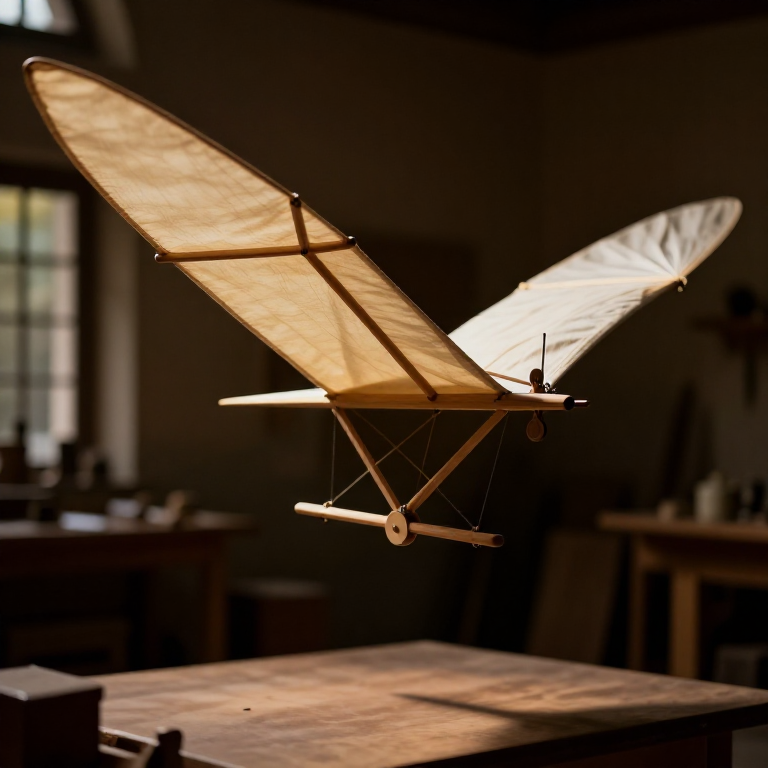


Building Leonardo da Vinci's Ornithopter — The Flapping-Wing Flying Machine
Leonardo da Vinci spent decades studying how birds fly, filling his 1505 Codex on the Flight of Birds with observations of wings, air and balance. From it came his ornithopter: a machine in which a person lies prone and drives great bird-like wings up and down with arms and legs. This blueprint reconstructs it — wing frames, linen membranes, and a pulley-and-pedal drive. It is also honest about the outcome: a human simply cannot produce the power to flap wings big enough to lift themselves. The dream failed, but Leonardo's insights into cambered wings and air as a fluid were right, and they fed the aircraft that finally flew.
Lanjutan
30
Instruksi
1
1
Study Leonardo's bird flight
Study Leonardo's bird flight
Leonardo watched birds for years, recording in his 1505 Codex on the Flight of Birds how a wing pushes against the air, how camber gives lift, and how a bird shifts its weight to balance. He set out to let a person fly the same way — by flapping wings.
2
2
Build the wing frames
Build the wing frames
Build two large wings on a light wooden frame, jointed so each can beat down and lift back up. Curve the leading edge into a camber like a bird's wing, the shape Leonardo saw gives lift.
Material untuk langkah ini:
 Kayu beech4 buah
Alat yang dibutuhkan:
 Gergaji Tangan
3
3
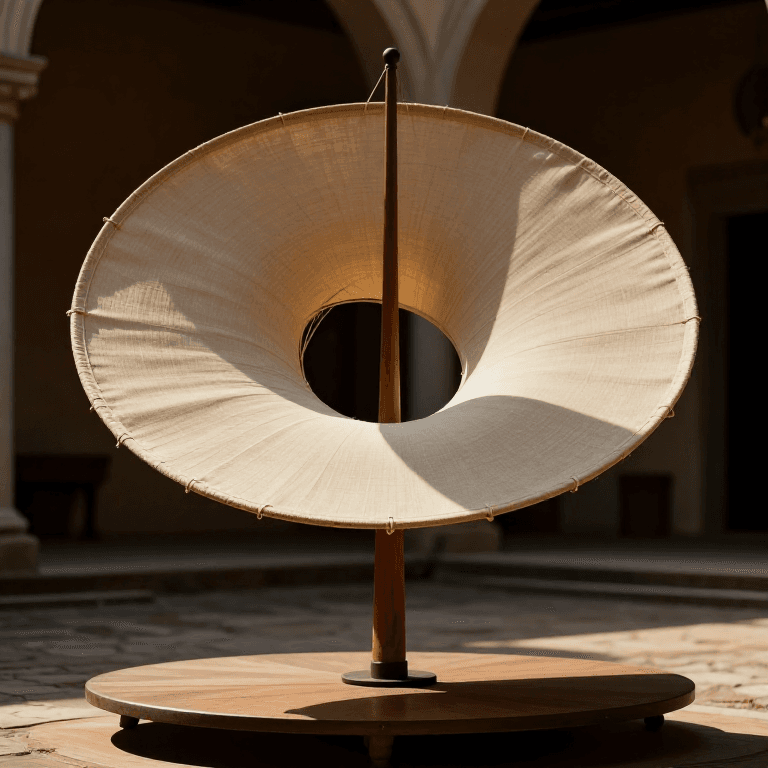
Cover the wings with linen
Cover the wings with linen
Stretch linen tightly over the wing frames so each wing presents a solid face that grips the air on the downstroke. Stitch and seal the membrane as Leonardo specified for his flying machines.
Material untuk langkah ini:
 Kain linen25 square meter
Alat yang dibutuhkan:
 Penusuk (Uncek)
4
4
Build the pilot's cradle
Build the pilot's cradle
Build a frame where the pilot lies face-down (prone), the streamlined, balanced posture Leonardo drew, with straps to hold the body and free the arms and legs to work the wings.
Material untuk langkah ini:
Kayu beech2 buah Kulit rekonstitusi2 buah
Alat yang dibutuhkan:
 Pisau
Pisau5
5
Rig the flapping drive
Rig the flapping drive
Connect the wings to hand cranks and foot pedals through ropes and pulleys, so the pilot's arms and legs together haul the wings down hard and raise them for the next beat — pooling all four limbs' strength.
Material untuk langkah ini:
 Tali pengikat besar25 meter
Alat yang dibutuhkan:
 Bor Tangan Ulir
6
6
Work the wings
Work the wings
The pilot pumps pedals and cranks; the wings beat down against the air. Feel how much force each downstroke needs — and how quickly a human tires trying to sustain it.
7
7
The honest verdict
The honest verdict
It cannot lift a person. Human muscles deliver only a fraction of the power needed to flap wings large enough to carry a body plus the machine; birds have far greater power-to-weight and dedicated flight muscles. Only in 2010, with featherlight modern materials, did a human-powered ornithopter (the Snowbird) briefly sustain flight — showing just how near-impossible Leonardo's goal was.
8
8
What Leonardo got right
What Leonardo got right
His grasp of cambered wings, of air pushing back like a fluid, and of shifting the centre of gravity to steer were all correct, and passed into the gliders and aircraft of later centuries. Flight came not from flapping but from fixed wings and an engine — yet it began with observations like his.
Bahan
6- 6 buahPlaceholder
- 25 square meterPlaceholder
- 2 buahPlaceholder
- 25 meterPlaceholder
- 1 buahPlaceholder
- 1 buahPlaceholder
Alat yang Diperlukan
4- Placeholder
- Placeholder
- Placeholder
- Placeholder
Bahan cetak biru terhubung
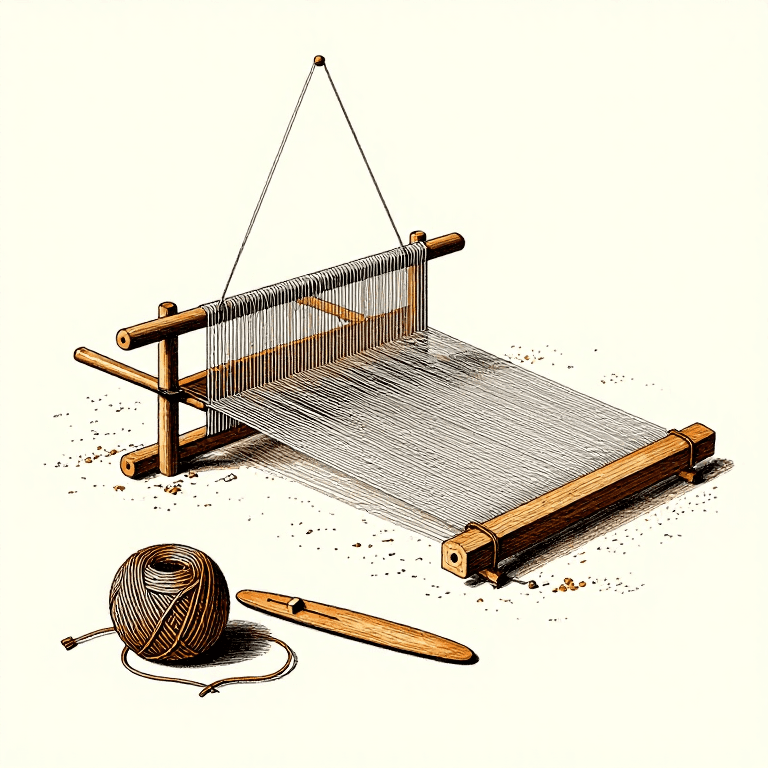

Blueprint terkait
Blueprint ini berbagi pengetahuan — teknik, bahan, atau prinsip
CC0 Domain Publik
Cetak biru ini dirilis di bawah CC0. Anda bebas untuk menyalin, memodifikasi, mendistribusikan, dan menggunakan karya ini untuk tujuan apa pun, termasuk komersial, tanpa meminta izin.
Dukung Maker dengan membeli produk melalui Cetak Biru mereka di mana mereka mendapatkan Komisi Pembuat yang ditetapkan oleh Penjual, atau buat iterasi baru dari Cetak Biru ini dan masukkan sebagai koneksi di milik Anda sendiri.