SENI
KECANTIKAN & KESEHATAN
KERAJINAN
BUDAYA & SEJARAH
HIBURAN
LINGKUNGAN
MAKANAN & MINUMAN
REKAYASA BALIK
ILMU PENGETAHUAN
OLAHRAGA
TEKNOLOGI
PERANGKAT PAKAI
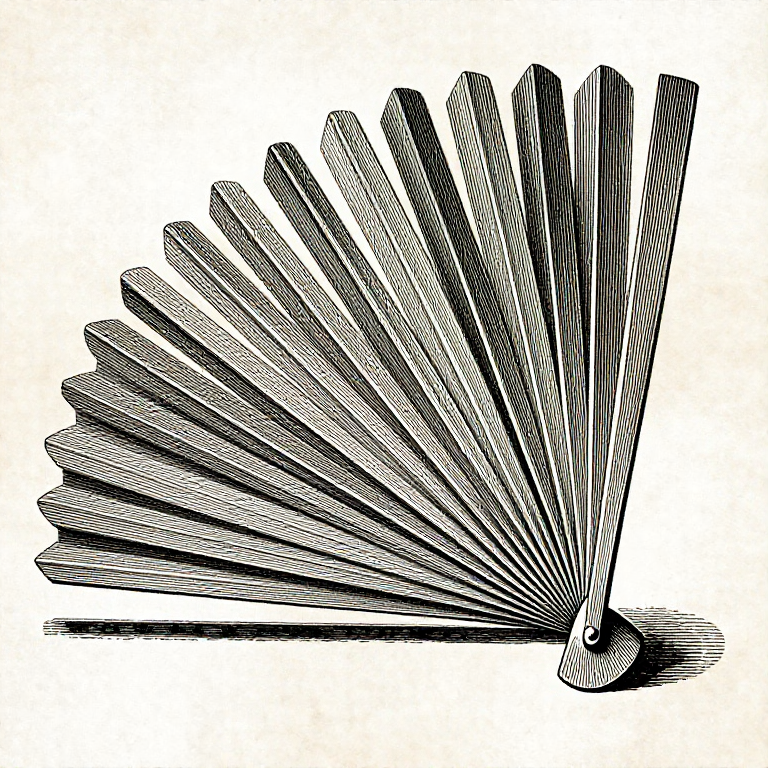


Setting Up: The Last Half Millimetre Decides Whether Anyone Plays It
An instrument can be beautifully made, correctly fretted and properly braced, and still be unplayable. The difference is the setup: the last few tenths of a millimetre at the nut, the bridge and the neck.
Every one of these adjustments is a compromise between two faults. Low action plays easily and buzzes; high action is clean and tiring. A deep nut slot is easy at the first fret and buzzes on the open string.
This rung is the order the adjustments are made in, what each one is measured against, and what each fault sounds like — because the order matters: several of them change each other.
Menengah
4 hours
Instruksi
1
1
Neck relief comes first, because it moves everything else
Neck relief comes first, because it moves everything else
A neck under string tension bows forward slightly. A tiny amount of that — relief — is wanted, because a vibrating string swings in a wide arc in the middle of its length and a dead flat neck puts the frets right in its path.
**Measure it, do not eyeball it.** Press one string down at the first fret and at the fret where the neck meets the body. The string is now a straight edge. The gap between it and the top of the fret around the middle is the relief, and a feeler gauge reads it directly.
Typical values are 0.1 to 0.3 mm: less on a low-action instrument, more on one played hard.
Adjust it first — by the truss rod where there is one, or by planing the fingerboard where there is not — because relief changes the height of every string over every fret. Setting the action first and the relief afterwards means doing the action twice.
A **back-bowed** neck, curving away from the strings, buzzes everywhere and cannot be fixed by raising the action.
Material untuk langkah ini:
 Set senar gitar (akustik, perunggu fosfor)1 set
Alat yang dibutuhkan:
 Set pengukur celah
 Penggaris
 Jangka Sorong Digital 6 Inci
2
2
The nut: the slot that is always cut too high
The nut: the slot that is always cut too high
The nut holds the strings at the correct height and spacing at the head end. Its slots are the most common thing wrong with an instrument.
**Height.** A nut slot only has to clear the FIRST fret. Press the string at the third fret and look at the gap over the first: it should be barely there, the thickness of a sheet of paper. Anything more makes the first few frets stiff and sharp — the string has to be stretched further to reach the fret, which is the compensation problem in miniature.
Cut slots down in very small steps. A slot cut too deep buzzes on the open string and cannot be undone except by filling it or making a new nut.
**Slot shape.** The slot must be a smooth ramp falling away towards the head, so the string leaves it at one clean point — the front edge. A slot that is flat along its length or dips in the middle gives two contact points and a buzz or a sitar-like rattle.
**Width.** Slightly wider than the string, never tight. A pinched string binds instead of sliding, so the instrument goes out of tune whenever it is bent or retuned, and then jumps back with an audible ping.
Material untuk langkah ini:
Set senar gitar (akustik, perunggu fosfor)1 setAlat yang dibutuhkan:
 Set Kikir JarumSet pengukur celahJangka Sorong Digital 6 Inci
3
3
Action and intonation at the bridge
Action and intonation at the bridge
**Action** is the string height over a fret near the body end. It is measured at a stated fret — on a guitar usually the twelfth — and it is where the compromise is made: low and easy against clean and loud.
Rough figures at the twelfth fret: a steel-string guitar 2.0 to 2.5 mm on the bass and about 1.6 mm on the treble; a classical higher, 3.5 to 4 mm on the bass because nylon strings swing wider.
The bass side is always higher than the treble side, because a thicker, slacker string moves further.
**Intonation** is set after the action, because raising the action increases the sharpening and therefore the compensation needed.
Check it the standard way: compare the harmonic at the twelfth fret with the note fretted at the twelfth. The harmonic is exactly half the string, so it is the truth. If the fretted note is sharp, the string is effectively too short — move the saddle back. If flat, move it forward.
On a violin or an erhu the whole bridge moves, so this is a routine adjustment. On a glued guitar bridge it means reshaping the saddle, which is why the saddle is a separate replaceable strip.
Material untuk langkah ini:
Set senar gitar (akustik, perunggu fosfor)1 set Bakalan spruce berlaminasi1 buah
Alat yang dibutuhkan:
 Penala kromatis dan metronom (jepit)Set pengukur celahSet Kikir JarumJangka Sorong Digital 6 Inci
4
4
Pegs that hold, and reading a buzz
Pegs that hold, and reading a buzz
**A friction peg works by taper, not by force.** A wooden peg holds because it is a cone in a matching conical hole, so the fit must be along its whole length. A peg touching only at its ends slips however hard it is pushed; the fix is to ream the hole and shave the peg to match, not to jam it in. Peg compound — chalk for grip, soap for slip — is a fine adjustment on a good fit and useless on a bad one.
**Wind the string neatly**, downwards on the shaft towards the head. Each turn sitting below the last increases the break angle over the nut, which is what keeps the string seated. Turns crossing over each other slip, and the instrument drifts flat for days.
**Reading a buzz** is the last skill and it saves hours:
*Buzzes on open strings only* — the nut slot is too deep, or the neck is back-bowed.
*Buzzes fretted low on the neck but not open* — not enough relief.
*Buzzes at one fret only, all strings* — that fret is high. Level it.
*Buzzes everywhere above a certain fret* — the action is too low, or the fingerboard rises where it joins the body.
*A rattle that changes when you touch the body* — it is not the strings at all. A loose brace, a lifting bridge or something inside.
Find which of those it is before adjusting anything, because the fixes for the first two are opposite.
Material untuk langkah ini:
 Pasak2 buahSet senar gitar (akustik, perunggu fosfor)1 set
Alat yang dibutuhkan:
 Mesin pembuat pasak (engkol tangan)Set Kikir JarumSet pengukur celah
Bahan
3- Placeholder
- Placeholder
- 2 buahPlaceholder
Blueprint terkait
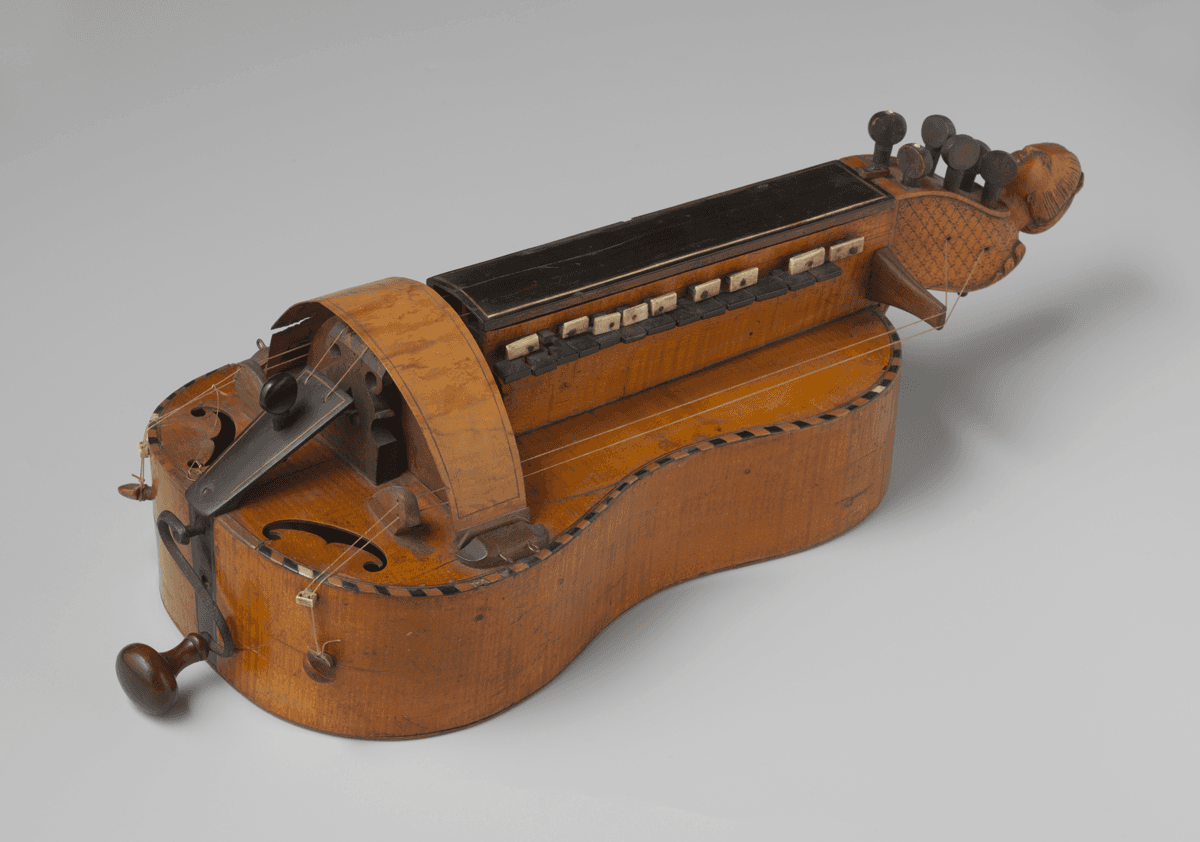
Blueprint ini berbagi pengetahuan — teknik, bahan, atau prinsip


CC0 Domain Publik
Cetak biru ini dirilis di bawah CC0. Anda bebas untuk menyalin, memodifikasi, mendistribusikan, dan menggunakan karya ini untuk tujuan apa pun, termasuk komersial, tanpa meminta izin.
Dukung Maker dengan membeli produk melalui Cetak Biru mereka di mana mereka mendapatkan Komisi Pembuat yang ditetapkan oleh Penjual, atau buat iterasi baru dari Cetak Biru ini dan masukkan sebagai koneksi di milik Anda sendiri.