SENI
KECANTIKAN & KESEHATAN
KERAJINAN
BUDAYA & SEJARAH
HIBURAN
LINGKUNGAN
MAKANAN & MINUMAN
REKAYASA BALIK
ILMU PENGETAHUAN
OLAHRAGA
TEKNOLOGI
PERANGKAT PAKAI
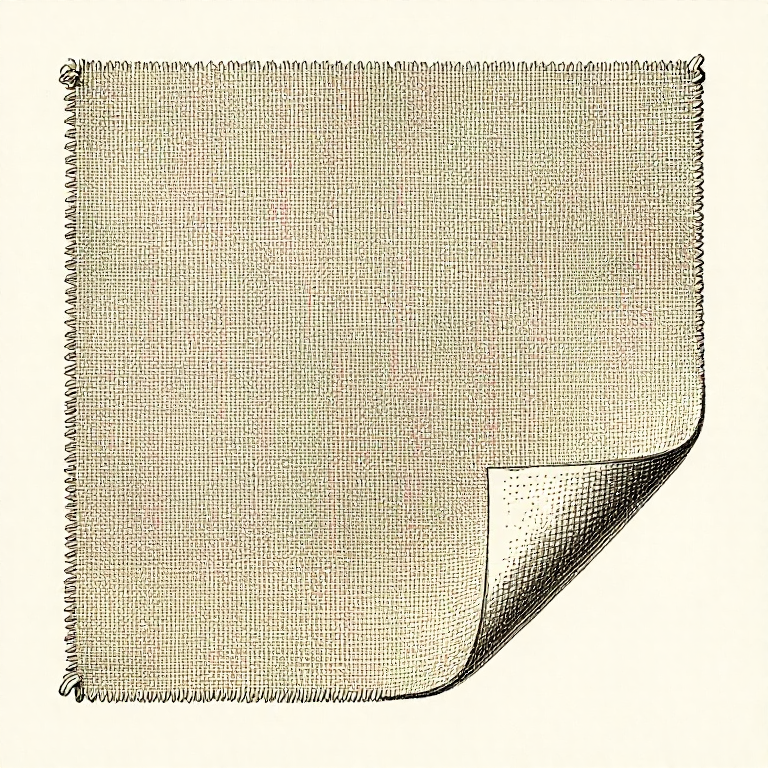


The Grain of Cloth: Three Directions, Three Different Materials
Woven cloth is made of threads at right angles, and it behaves completely differently depending on which way you pull it. Along the WARP it barely stretches. Across the WEFT it gives a little. At 45 degrees — the BIAS — it stretches a great deal and drapes like something else entirely.
That is why every pattern piece carries a grainline arrow, and why ignoring it produces a garment that twists on the body, hangs crooked, and cannot be fixed by altering it.
It is also a tool. A bias-cut strip stretches round a curve where a straight strip buckles, which is the entire reason bias binding exists, and a bias-cut skirt hangs in a way a straight-cut one never will.
Pemula
2 hours
Instruksi
1
1
Find the grain: the selvedge is the reference
Find the grain: the selvedge is the reference
The SELVEDGE is the finished edge running down both sides of the cloth as it comes off the loom, and it runs parallel to the warp. That makes it the reference for everything else — the face side and face edge of a piece of cloth.
The WARP (or lengthwise grain) runs parallel to the selvedge. The WEFT (or crosswise grain) runs from selvedge to selvedge. The BIAS is any diagonal, and TRUE bias is exactly 45 degrees to both.
Test it by pulling. Tug along the selvedge and the cloth hardly moves; tug selvedge to selvedge and it gives a little; tug diagonally and it stretches noticeably and narrows as it does. Ten seconds with any scrap teaches this better than any diagram.
Material untuk langkah ini:
 Kain Katun1 buah
 Kain linen1 buah
Alat yang dibutuhkan:
 Penggaris
 Kapur penjahit
2
2
Straighten the grain before cutting anything
Straighten the grain before cutting anything
Cloth is often stored and sold off-grain — pulled skew on the bolt, so the weft is not at right angles to the selvedge. Cut a piece from it and the piece is born crooked.
Find the true crosswise line by snipping the selvedge and TEARING across, or by pulling one weft thread out and cutting along the gap it leaves. Either gives a line that follows the weave rather than the edge of the bolt.
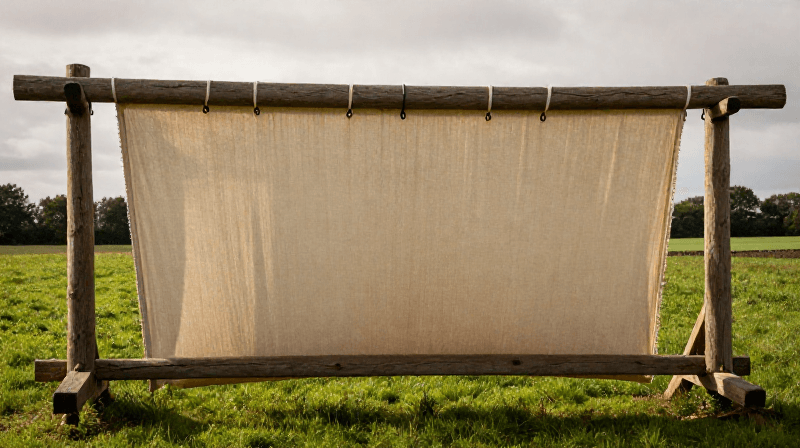
If the two ends are not square to the selvedges, pull the cloth firmly on the bias in the opposite direction, or press it back square with steam. That is the same operation as tentering woollen cloth on a frame, done at a small scale.
Material untuk langkah ini:
Kain Katun1 buahAlat yang dibutuhkan:
 Gunting
 Setrika uap
 Papan setrikaPenggaris
3
3
The grainline arrow is an instruction, not a hint
The grainline arrow is an instruction, not a hint
Every pattern piece has an arrow. Lay the piece so that arrow is exactly parallel to the selvedge — measure from the arrow to the selvedge at both ends of the arrow and make the two measurements equal.
Both ends is the whole technique. Eyeballing it gets you within a few degrees, and a few degrees on a trouser leg is a leg that spirals round the body over a day's wear.
Pieces cut on the FOLD have the fold line marked instead, and that line must also lie on grain. A fold that is not on grain produces a piece that is not symmetrical, which is worse than merely being off-grain.
Material untuk langkah ini:
 Kertas1 buahKain Katun1 buah
Alat yang dibutuhkan:
 Meteran Gulung
 Jarum pentul jahitKapur penjahitPenggaris
4
4
Using the bias on purpose
Using the bias on purpose
Cut a strip at 45 degrees and it will stretch round an outside curve and ease round an inside one without a single pleat. That is why a neckline is bound with bias strips, and why a straight strip put there ripples however carefully it is sewn.
Bias also drapes. A bias-cut skirt falls in soft folds and follows the body because the cloth can extend where it needs to, which no amount of shaping on the straight grain reproduces.
The cost is that bias grows. A bias-cut garment hangs and lengthens for a day or two before it settles, so it is left hanging before the hem is marked — and a hem marked immediately after cutting will be uneven by the time it is worn.
Material untuk langkah ini:
Kain Katun1 buah Benang Katun1 buah
Alat yang dibutuhkan:
GuntingPenggarisJarum pentul jahitBahan
4- 4 buahPlaceholder
- 1 buahPlaceholder
- 1 buahPlaceholder
- 1 buahPlaceholder
Blueprint terkait
Blueprint ini berbagi pengetahuan — teknik, bahan, atau prinsip
CC0 Domain Publik
Cetak biru ini dirilis di bawah CC0. Anda bebas untuk menyalin, memodifikasi, mendistribusikan, dan menggunakan karya ini untuk tujuan apa pun, termasuk komersial, tanpa meminta izin.
Dukung Maker dengan membeli produk melalui Cetak Biru mereka di mana mereka mendapatkan Komisi Pembuat yang ditetapkan oleh Penjual, atau buat iterasi baru dari Cetak Biru ini dan masukkan sebagai koneksi di milik Anda sendiri.