SENI
KECANTIKAN & KESEHATAN
KERAJINAN
BUDAYA & SEJARAH
HIBURAN
LINGKUNGAN
MAKANAN & MINUMAN
REKAYASA BALIK
ILMU PENGETAHUAN
OLAHRAGA
TEKNOLOGI
PERANGKAT PAKAI
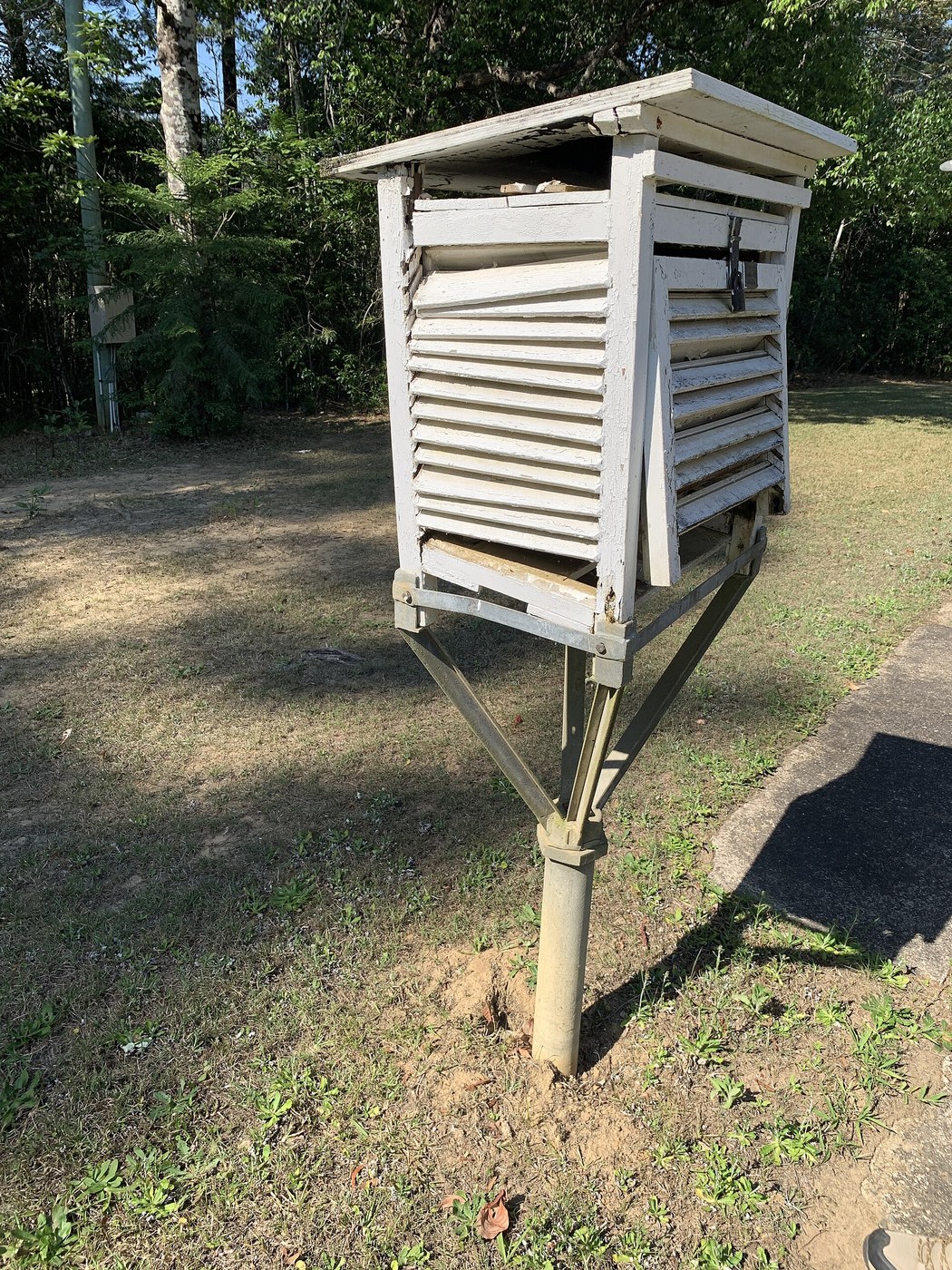


The Stevenson Screen
Thomas Stevenson — a lighthouse engineer, and Robert Louis Stevenson's father — designed this box in 1864 to solve a problem that had made a century of temperature records incomparable: every observer shielded their thermometer differently, so every station was measuring something slightly different.
The screen is a white louvred box on legs. The double louvres let air through while blocking every direct and reflected ray; the white paint reflects what lands on it; the double roof stops the sun heating the ceiling; the open slatted floor stops heat rising off the ground. Each feature removes one specific way of measuring the wrong thing.
It is the least glamorous object in this batch and the one that makes the rest of it trustworthy. A thermometer without a screen is a decoration; the same thermometer inside one produces a number another station can be compared against.
Menengah
2 days
Instruksi
1
1
Build double louvres, sloping down and out
Build double louvres, sloping down and out
Make each wall from two staggered rows of angled slats so that no straight line passes from outside to the thermometer, while air moves through freely.
Single louvres let low sun and ground-reflected light through at certain times of day, giving an error that appears and disappears with the sun and is therefore almost impossible to spot in the data. Slope them down and outward so rain and spray run off rather than in. This is the most work in the build and the reason the screen works.
Material untuk langkah ini:
 Lembaran kayu lapis2 lembar
 Paku lapis seng100 buah
 Lem Kayu1 buah
Alat yang dibutuhkan:
 Gergaji Tangan
 Palu cakar
 Penggaris
2
2
Paint it white, and keep repainting it
Paint it white, and keep repainting it
Paint every surface, inside and out, with white exterior paint, and repaint before it yellows or flakes.
White is not tradition, it is the measurement: a weathered or dirty screen absorbs more sunlight, warms, and reads high on sunny calm days. Published comparisons put a poorly maintained screen up to a degree above a clean one. Use ordinary white paint rather than a modern low-emissivity coating, because the screen needs to radiate its heat away at night as readily as it reflects by day.
Material untuk langkah ini:
 Cat luar ruang putih2 liter
Alat yang dibutuhkan:
 Amplas
3
3
Double roof, slatted floor, door to the pole
Double roof, slatted floor, door to the pole
Fit two roof boards with an air gap between them, leave the floor as spaced slats with a solid baffle below, and hang the door so it faces the nearer pole — north in the northern hemisphere.
The roof gap stops the sun-heated outer board radiating down onto your thermometers. The slatted floor lets cold air drain out. And the door faces away from the equator so that opening it at your reading time never lets the sun fall directly on the instruments — a real error, committed once a day, at the same time every day.
Material untuk langkah ini:
Lembaran kayu lapis1 lembarPaku lapis seng50 buahAlat yang dibutuhkan:
Gergaji Tangan Kompas
4
4
Set the thermometers at 1.25 metres over short grass
Set the thermometers at 1.25 metres over short grass
Mount the screen so the thermometer bulbs sit between 1.25 and 2 metres above the ground, over natural short grass, well away from buildings, paving and tarmac.
These numbers are the WMO standard and they exist so that stations can be compared. Over tarmac a screen reads up to two degrees high on a sunny afternoon; beside a wall it reads the wall's stored heat all evening. If you cannot meet the standard, record precisely what you did instead — a documented non-standard site is usable, an undocumented one is not.
Material untuk langkah ini:
 Pasak kayu4 buah
Alat yang dibutuhkan:
 Meteran GulungPalu cakar
5
5
Prove the screen is doing something
Prove the screen is doing something
For a week, run a second thermometer outside the screen in the open and record both at the same moments.
On a calm sunny afternoon the unscreened one will read several degrees higher; on a clear night it will read lower, because it radiates to the sky. Two rows of numbers you collected yourself are worth more than any assurance in this blueprint, and they tell you exactly how wrong your records were before you built the box.
Material untuk langkah ini:
 Termometer1 buah
6
6
The errors the screen removes, in numbers
The errors the screen removes, in numbers
Memuat notebook Jupyter…
7
7
Write the site description down once, properly
Write the site description down once, properly
Record the latitude, longitude, altitude, screen height, ground surface, and the distance and height of everything within thirty metres. Photograph it in four directions.
This is called metadata and it is what lets someone interpret your record in twenty years, including you. It also lets you explain a step in your own data: the year the hedge grew, or the neighbour laid a patio. Station history explains more apparent climate signals than climate does.
Alat yang dibutuhkan:
Meteran GulungBahan
6- 2 lembarPlaceholder
- 150 buahPlaceholder
- 1 buahPlaceholder
- 2 literPlaceholder
- 4 buahPlaceholder
- 1 buahPlaceholder
Blueprint terkait
Blueprint ini berbagi pengetahuan — teknik, bahan, atau prinsip

CC0 Domain Publik
Cetak biru ini dirilis di bawah CC0. Anda bebas untuk menyalin, memodifikasi, mendistribusikan, dan menggunakan karya ini untuk tujuan apa pun, termasuk komersial, tanpa meminta izin.
Dukung Maker dengan membeli produk melalui Cetak Biru mereka di mana mereka mendapatkan Komisi Pembuat yang ditetapkan oleh Penjual, atau buat iterasi baru dari Cetak Biru ini dan masukkan sebagai koneksi di milik Anda sendiri.