कला
सौंदर्य और कल्याण
हस्तशिल्प
संस्कृति और इतिहास
मनोरंजन
पर्यावरण
खाद्य और पेय
रिवर्स इंजीनियरिंग
विज्ञान
खेल
प्रौद्योगिकी
पहनने योग्य



Trigonometry — Build a Clinometer and Measure a Tree's Height
A hands-on maths project: make a simple clinometer from a protractor, a straw and a weighted string, use it to measure the angle to the top of a tree or building, and then calculate the height you cannot reach. A Python cell does the trigonometry, and a compendium shows why sine waves run through all of science.
शुरुआती
30 minutes
निर्देश
1
1
Turning an angle into a height
Turning an angle into a height
Ancient astronomers invented trigonometry to turn the ANGLES they measured into the LENGTHS of triangles. You will use it to measure the height of something too tall to reach.
2
2
Build a clinometer
Build a clinometer
Tape a drinking straw along the straight edge of a protractor to sight through. Tie a short string to the centre of the protractor with a small weight on the end, so it hangs down and shows the angle. That is a clinometer -- it measures how steeply you are looking up.
इस चरण के लिए सामग्री:
 मिश्रित रंगों का कार्डस्टॉक पैक1 टुकड़ा
 रसोई की सूती डोरी1 टुकड़ा
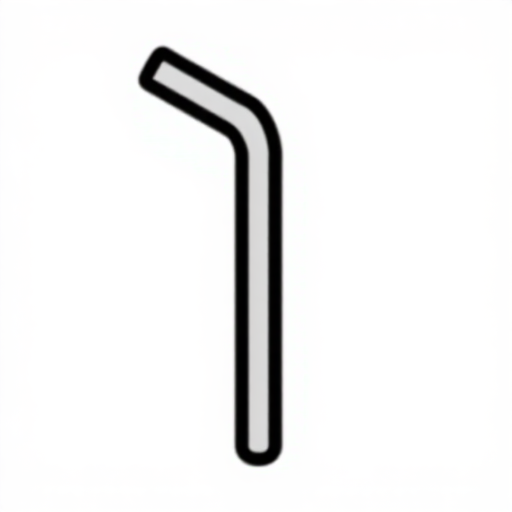 स्टेनलेस इस्पात की नलियों का सेट1 टुकड़ा
आवश्यक उपकरण:
 चाँदा / कोणमापी
3
3
Sight the treetop and measure
Sight the treetop and measure
Stand back from a tree or building and look through the straw at its very top. Read the angle the hanging string marks on the protractor (this tells you the angle above horizontal). Then measure your distance from the base with a tape measure. Write down the angle and the distance.
आवश्यक उपकरण:
 नापने का फीता
4
4
Calculate the height
Calculate the height
Jupyter नोटबुक लोड हो रही है…
आवश्यक उपकरण:
 डेस्कटॉप कंप्यूटर
 परिकलक
5
5
Compendium: the mathematics of waves
Compendium: the mathematics of waves
What your clinometer teaches. (1) In a right triangle the sine, cosine and tangent are ratios of the sides that depend ONLY on the angle, so a single table of them works for every triangle -- Ptolemy tabulated them around 150 AD, and Indian mathematicians shaped them into the 'sine' we use (the word comes from Sanskrit jya). (2) The tangent turns an angle you can see into a length you cannot reach -- the everyday tool of surveyors and sailors. (3) As an angle turns full circle, sine and cosine trace smooth repeating WAVES. (4) Those sine waves describe sound, light, radio, tides and alternating current, and underlie GPS, music synthesis and the Fourier analysis that compresses every image and song on your phone.
सामग्री
4- 1 टुकड़ाप्लेसहोल्डर
- 1 टुकड़ाप्लेसहोल्डर
- 1 टुकड़ाप्लेसहोल्डर
- 1 शीटप्लेसहोल्डर
आवश्यक उपकरण
5- प्लेसहोल्डर
- 1 vendor sell this, none ship to you yetप्लेसहोल्डर
- प्लेसहोल्डर
- प्लेसहोल्डर
- प्लेसहोल्डर
संबंधित ब्लूप्रिंट
ये ब्लूप्रिंट ज्ञान साझा करते हैं — तकनीक, सामग्री या सिद्धांत

CC0 पब्लिक डोमेन
यह ब्लूप्रिंट CC0 के तहत जारी किया गया है। आप बिना अनुमति माँगे इस कार्य को किसी भी उद्देश्य के लिए कॉपी, संशोधित, वितरित और उपयोग करने के लिए स्वतंत्र हैं।
उनके ब्लूप्रिंट के माध्यम से उत्पाद खरीदकर मेकर का समर्थन करें जहाँ वे मेकर कमीशन कमाते हैं जो विक्रेताओं द्वारा निर्धारित होता है, या इस ब्लूप्रिंट का नया संस्करण बनाएँ और राजस्व साझा करने के लिए इसे अपने ब्लूप्रिंट में कनेक्शन के रूप में शामिल करें।