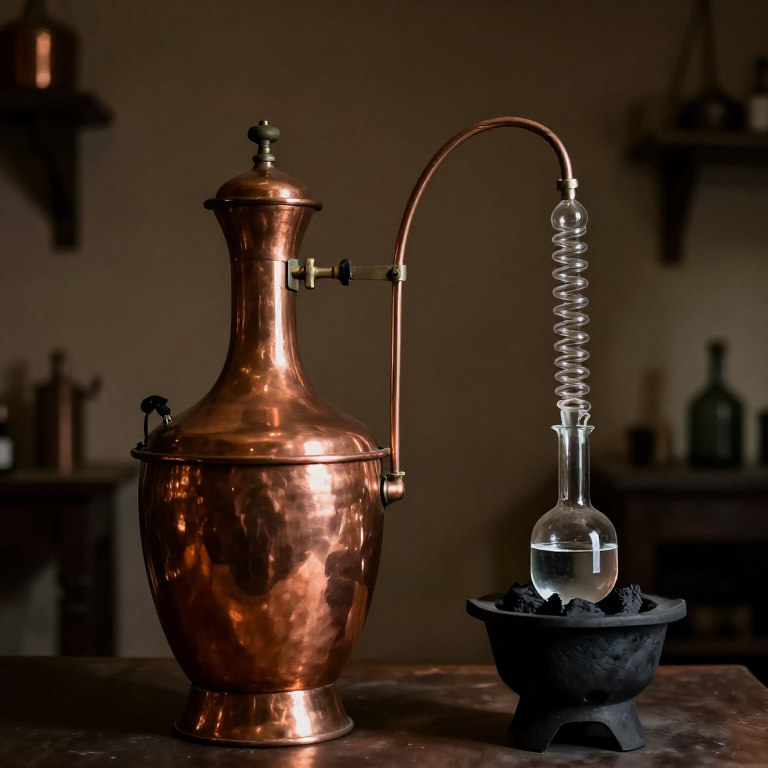


Building a Copper Alembic Still — Islamic Golden Age Distillation
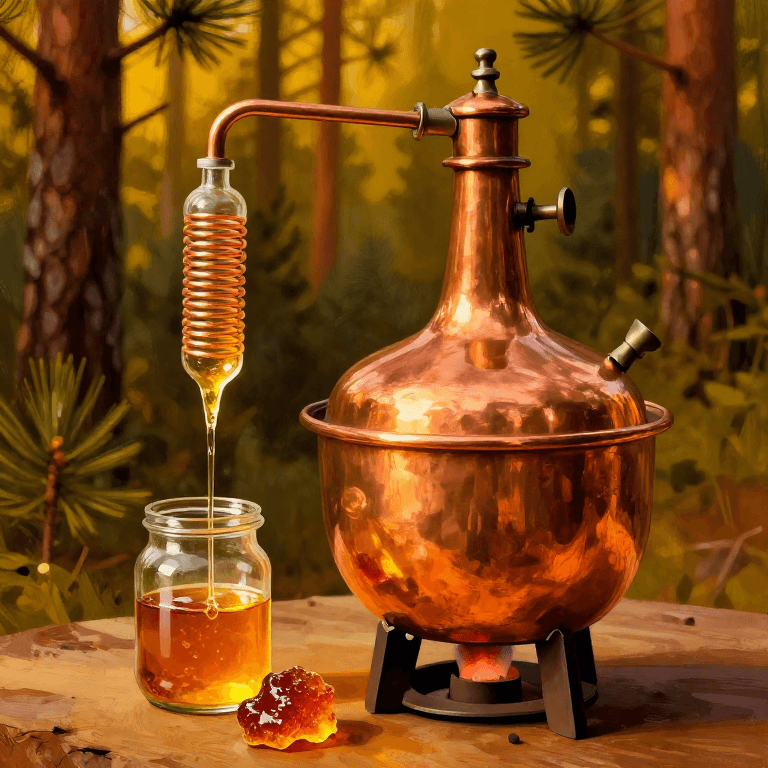
The alembic still (al-anbiq, from Greek ambix — 'cup') was perfected by the Islamic scholar Jabir ibn Hayyan (known in Europe as Geber) around 800 AD. While simple distillation existed in antiquity — Aristotle described seawater evaporation around 350 BCE — Jabir transformed it from a curiosity into a precision chemical instrument by designing the distinctive 'head' (alembic cap) that efficiently condenses rising vapors and channels them through a downward-sloping tube into a collection vessel.
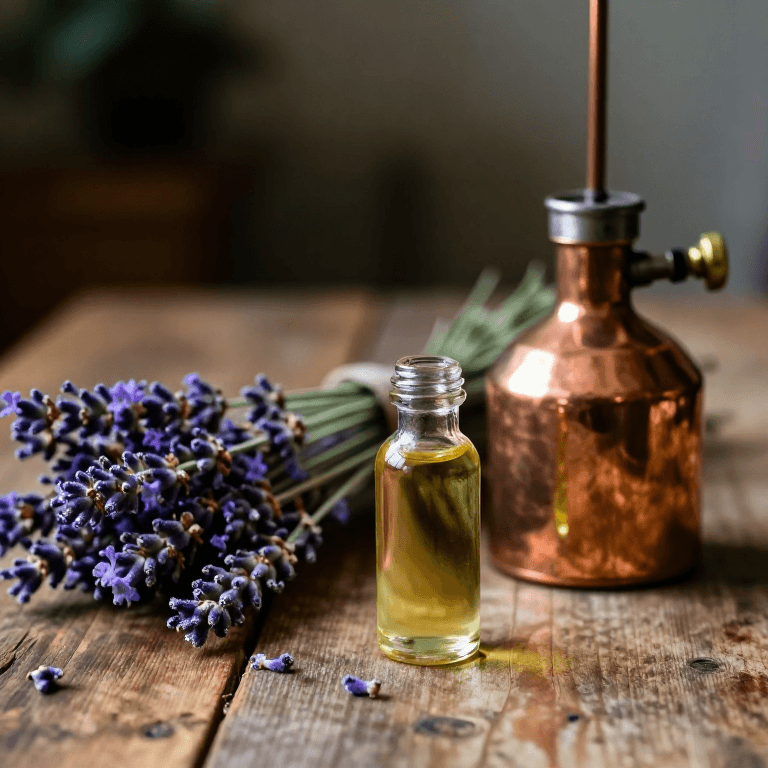
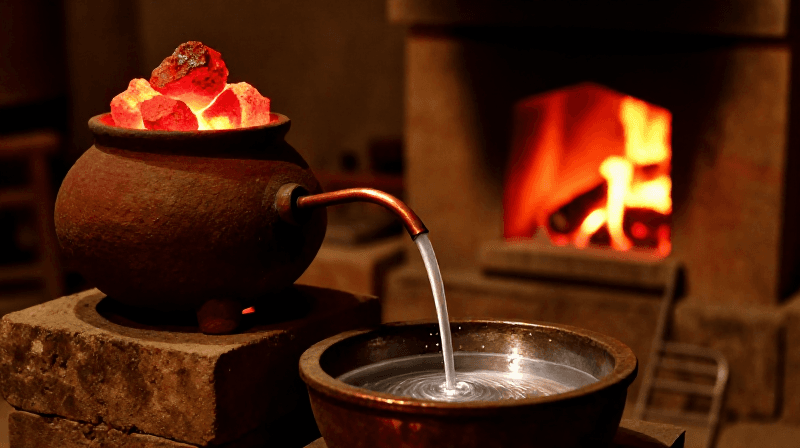
Jabir's innovation was understanding that different substances have different boiling points, and that by controlling heat carefully, you could separate a mixture into its components. His alembic could produce distilled water (pure enough for precise chemical experiments), essential oils (separated from plant material), mineral acids (including what he called 'spirit of salt' — hydrochloric acid), and concentrated alcohol (al-kuhl — originally meaning 'the fine powder', later applied to the distilled 'spirit' of wine).
The copper alembic design spread from Baghdad across the Islamic world to Al-Andalus (Islamic Spain), where it was adopted by European alchemists in the 12th century. It remained the standard laboratory instrument for 800 years and is still used today for artisanal spirits distillation, essential oil production, and hydrosol extraction. Every modern distillery, perfumery, and chemical refinery is a direct descendant of Jabir's copper pot.
निर्देश
Shape the copper pot (cucurbit)
Shape the copper pot (cucurbit)
The base of the alembic is the cucurbit — a round-bottomed copper pot approximately 30-40 cm in diameter and 25-30 cm tall, with walls 1-2 mm thick. Copper is the ideal material: it conducts heat evenly (preventing hot spots that cause scorching), is easily shaped by hammering, resists corrosion from most plant materials and mild acids, and can be soldered with silver or tin solder.
Start with a flat copper sheet approximately 60 × 60 cm. Anneal it by heating to dull red and quenching in water — this softens the copper for shaping. Raise the pot by hammering the sheet over a wooden form or into a depression, working from the center outward in concentric circles. The rim must be perfectly flat and level — the alembic head sits on this rim, and any gap allows vapors to escape rather than condensing.
इस चरण के लिए सामग्री:
 Copper Sheet1 टुकड़ा
आवश्यक उपकरण:
 Raising Hammer
 Raising Stake
Form the alembic head (capital)
Form the alembic head (capital)
The alembic head is the defining component — a dome-shaped cap that fits over the cucurbit and collects rising vapors. The dome narrows at the top to a point, then transitions into a downward-sloping tube (the 'beak' or 'lyne arm') that channels the condensed liquid into the collection vessel. Jabir's design genius was the gentle downward angle of this tube — it allows gravity to assist the flow of condensate rather than fighting it.
Shape the dome from a separate copper sheet by raising it over a dome-shaped wooden form. The internal volume of the dome should be approximately one-third the volume of the cucurbit — too small and it floods with condensate; too large and vapors cool too quickly and fall back into the pot. Solder a copper tube (15-20 mm diameter, 40-50 cm long) to the dome at a 15-20 degree downward angle.
इस चरण के लिए सामग्री:
Copper Sheet1 टुकड़ाआवश्यक उपकरण:
Raising HammerBuild the condensing coil
Build the condensing coil
The lyne arm tube from the alembic head leads to a condensing coil — a spiral of copper tubing submerged in a vessel of cold water. As the hot vapor passes through the water-cooled coil, it condenses back into liquid, which drips from the outlet into the collection vessel. Jabir's texts describe this cooling step as essential — without it, the lighter vapors escape as gas rather than condensing.
Coil approximately 2 meters of thin copper tubing (10-12 mm diameter) into a tight spiral that fits inside a wooden bucket or clay vessel. The coil should make 6-8 complete turns. Both ends must protrude from the cooling vessel — the inlet from the top (connected to the lyne arm) and the outlet from the bottom (dripping into the collection flask). Fill the cooling vessel with cold water, replacing it as it warms during distillation.
इस चरण के लिए सामग्री:
Copper Sheet1 टुकड़ा Bucket (5-gallon)1 टुकड़ा
Seal the joints with luting paste
Seal the joints with luting paste
The junction between the cucurbit and alembic head must be completely sealed — any vapor leak reduces yield and can be dangerous if distilling volatile substances. Jabir described a luting paste made from flour, water, and a small amount of egg white, applied as a thick ring around the joint. The paste dries hard during the initial heating and forms an airtight seal.
Apply the luting paste generously around the rim where the head sits on the cucurbit, smoothing it with wet fingers to fill every gap. Also seal the connection between the lyne arm tube and the condensing coil. Allow the paste to dry partially before beginning the distillation — it should be firm but not cracked. This seal is temporary and must be remade for each distillation run.
Charge the cucurbit and begin heating
Charge the cucurbit and begin heating
Fill the cucurbit no more than one-third full with the material to be distilled — water for testing, plant material and water for essential oils, or wine for alcohol distillation. The remaining two-thirds of the volume is needed for vapor expansion. Overfilling causes liquid to boil up into the lyne arm (bumping), contaminating the distillate with raw material.
Place the cucurbit over a gentle heat source — a charcoal brazier or sand bath. Jabir emphasized the importance of slow, controlled heating: too much heat causes violent boiling that ruins the distillation; too little and the vapors never reach the condenser. The ideal rate produces a slow, steady stream of condensate from the outlet — approximately 1-2 drops per second for a small still.
इस चरण के लिए सामग्री:
 Charcoal5 किलो
आवश्यक उपकरण:
 Chemical Splash Goggles
Collect and evaluate the distillate
Collect and evaluate the distillate
The condensed liquid dripping from the outlet is the distillate — and its character depends entirely on what was in the cucurbit. Distilled water is crystal clear and tasteless. Essential oil distillate separates into a thin oily layer floating on aromatic water (hydrosol). Distilled wine separates into aqua vitae (high-proof alcohol, collected early) and weaker fractions collected later.
Jabir taught that distillation could be repeated for increasing purity — re-distilling the distillate produces a more refined product. He called this 'rectification' and used it to produce acids of unprecedented concentration. This principle of repeated distillation remains fundamental to modern chemistry and spirits production — a whisky still performs essentially the same operation that Jabir described twelve centuries ago.
इस चरण के लिए सामग्री:
 Swing-Top Glass Bottles3 टुकड़े
Clean and maintain the still
Clean and maintain the still
After each distillation, dismantle the still, remove the luting paste, and wash all components thoroughly with clean water. Copper develops a green patina (verdigris — copper carbonate) over time, which can contaminate distillates with toxic copper compounds. Scrub the interior surfaces with a paste of salt and vinegar to restore bright copper, then rinse with clean water and dry completely.
Inspect the soldered joints for cracks or corrosion after every 10-15 uses. The thermal cycling of heating and cooling slowly fatigues the solder joints. A well-maintained copper alembic will last decades — many traditional distilleries in Portugal, Morocco, and southern France use stills that are over a century old, their interiors mellowed by generations of use into a smooth, seasoned patina that old-time distillers believe improves the quality of the spirit.
सामग्री
4- 1 टुकड़ाप्लेसहोल्डर
- 1 टुकड़ाप्लेसहोल्डर
- 5 किलोप्लेसहोल्डर
- 3 टुकड़ेप्लेसहोल्डर
आवश्यक उपकरण
4- प्लेसहोल्डर
- प्लेसहोल्डर
- प्लेसहोल्डर
- प्लेसहोल्डर
कनेक्टेड ब्लूप्रिंट सामग्री

संबंधित ब्लूप्रिंट
ये ब्लूप्रिंट ज्ञान साझा करते हैं — तकनीक, सामग्री या सिद्धांत

CC0 पब्लिक डोमेन
यह ब्लूप्रिंट CC0 के तहत जारी किया गया है। आप बिना अनुमति माँगे इस कार्य को किसी भी उद्देश्य के लिए कॉपी, संशोधित, वितरित और उपयोग करने के लिए स्वतंत्र हैं।
उनके ब्लूप्रिंट के माध्यम से उत्पाद खरीदकर मेकर का समर्थन करें जहाँ वे मेकर कमीशन कमाते हैं जो विक्रेताओं द्वारा निर्धारित होता है, या इस ब्लूप्रिंट का नया संस्करण बनाएँ और राजस्व साझा करने के लिए इसे अपने ब्लूप्रिंट में कनेक्शन के रूप में शामिल करें।