
लकड़ी की राख से पोटाश निकालना — हर आग में छिपा क्षारीय तत्व
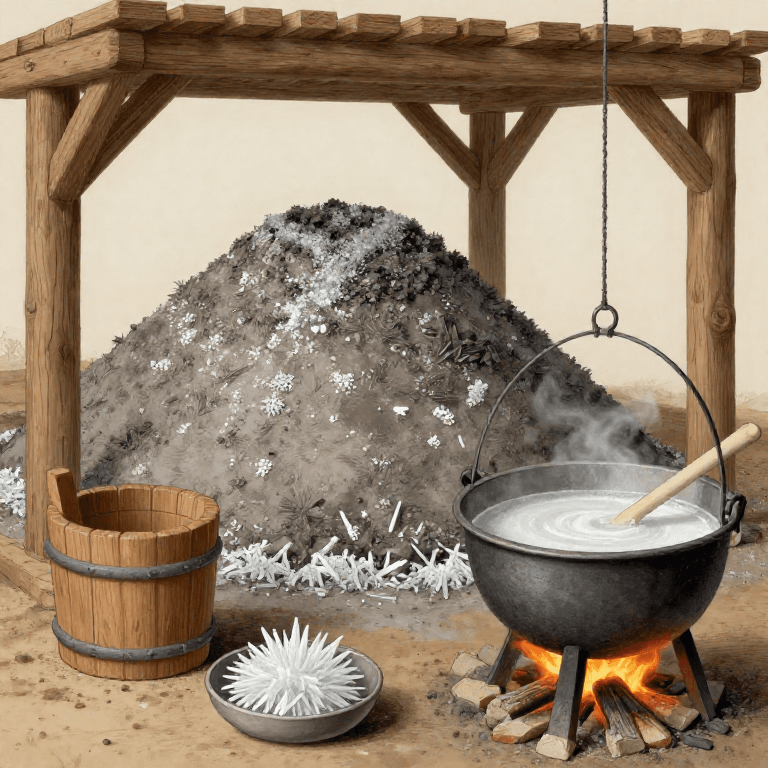
पोटैशियम (K, तत्व 19) पृथ्वी की पपड़ी का लगभग 2% है और नाइट्रोजन तथा फ़ॉस्फ़ोरस के साथ उन तीन मुख्य पोषक तत्वों में से एक है जिनकी पौधों को ज़रूरत होती है। इसका प्रतीक K लैटिन नाम "kalium" से आया है, जो "kali" पर बना है, और वह अरबी "अल-क़ली" (al-qalī), यानी पौधों की राख, से निकला है। अंग्रेज़ी शब्द "potash" तो और भी सीधा है: इसका अर्थ है "बर्तन की राख", वह अवशेष जो लकड़ी की राख के क्षार-जल को सूखने तक उबालने के बाद बर्तन में बचता है। यह ब्लूप्रिंट वही प्रक्रिया सिखाता है जिसने इस तत्व को उसका नाम दिया।
हम्फ़्री डेवी ने अक्टूबर 1807 में एक बड़ी वोल्टीय बैटरी की धारा को कॉस्टिक पोटाश (पोटैशियम हाइड्रॉक्साइड) से गुज़ारकर धात्विक पोटैशियम अलग किया — इस तरह पोटैशियम विद्युत-अपघटन से अलग की गई पहली धातु बना। उनके चचेरे भाई एडमंड ने लिखा कि जब डेवी ने चाँदी जैसी धातु की नन्ही बूँदों को क्षार की पपड़ी फोड़कर निकलते और आग पकड़ते देखा, तो वे खुशी से कमरे में नाचने लगे। शुद्ध धातु असाधारण है: इतनी मुलायम कि चाकू से कट जाए (मोह्स 0.4), इतनी हल्की कि पानी पर तैरे (घनत्व 0.862 ग्राम/सेमी³), और इतनी क्रियाशील कि पानी से तीव्र अभिक्रिया करती है और हाइड्रोजन छोड़ती है जो जल उठती है।
लेकिन पोटाश स्वयं — मुख्यतः पोटैशियम कार्बोनेट, K₂CO₃ — हज़ारों साल तक इस्तेमाल होता रहा, इससे बहुत पहले कि कोई जानता कि पोटैशियम क्या है। प्राचीन मेसोपोटामिया के लोग चर्बी और लकड़ी की राख से साबुन बनाते थे। आल्प्स के उत्तर में मध्यकालीन काँच-कारीगर अपने "वन-काँच" में लकड़ी की राख के पोटाश को गालक (फ़्लक्स) के रूप में इस्तेमाल करते थे। औपनिवेशिक अमेरिकियों ने हज़ारों टन पोटाश ब्रिटेन को निर्यात किया, और अमेरिका का सबसे पहला पेटेंट (सैमुअल हॉपकिंस, 31 जुलाई 1790) पोटाश और पर्ल ऐश बनाने की एक बेहतर विधि के लिए दिया गया। यही वह पदार्थ है जो साबुन, काँच, बारूद और खेती को जोड़ता है — सब कुछ आग के बाद बची राख से।
निर्देश
पोटैशियम के गुण और आवर्त सारणी में उसका स्थान समझें
पोटैशियम के गुण और आवर्त सारणी में उसका स्थान समझें
पोटैशियम (K, तत्व 19) आवर्त सारणी के समूह 1 (क्षार धातुएँ), आवर्त 4 में है। इसका परमाणु भार 39.098 और इलेक्ट्रॉन विन्यास [Ar] 4s¹ है। सभी क्षार धातुओं की तरह इसमें एक संयोजी इलेक्ट्रॉन होता है जिसे यह आसानी से दे देता है, इसलिए यह अत्यंत क्रियाशील है। शुद्ध धातु चाँदी जैसी सफ़ेद है, इतनी मुलायम कि मक्खन की छुरी से कट जाए (मोह्स कठोरता 0.4), और इसका घनत्व 0.862 ग्राम/सेमी³ है — लिथियम के बाद दूसरी सबसे हल्की धातु। यह केवल 63.5 °C (146 °F) पर पिघल जाती है।
पोटैशियम पानी से तीव्र अभिक्रिया करता है: 2K + 2H₂O → 2KOH + H₂↑। हाइड्रोजन गैस अपने आप जल उठती है और विशिष्ट बैंगनी-गुलाबी लौ से जलती है। इसी अभिक्रिया के कारण धात्विक पोटैशियम को खनिज तेल या अक्रिय गैस के नीचे रखना पड़ता है — प्रकृति में यह धातु के रूप में नहीं रह सकता। पृथ्वी की पपड़ी में पोटैशियम केवल K⁺ आयनों के रूप में फ़ेल्डस्पार (KAlSi₃O₈), मस्कोवाइट (KAl₂(AlSi₃O₁₀)(OH)₂) और सिल्वाइट (KCl) जैसे खनिजों में मिलता है। पौधे जड़ों से मिट्टी का K⁺ सोखते हैं; जब लकड़ी जलती है तो पोटैशियम राख में पोटैशियम कार्बोनेट (K₂CO₃) के रूप में रह जाता है।
अधिकतम पोटैशियम के लिए कठोर लकड़ी वाले पेड़ चुनें
अधिकतम पोटैशियम के लिए कठोर लकड़ी वाले पेड़ चुनें
कठोर लकड़ियाँ चुनें: ओक (बलूत), बीच, एल्म, मेपल या ऐश। यूरोप और औपनिवेशिक अमेरिका में कठोर लकड़ियाँ ही पोटाश की पारंपरिक लकड़ियाँ थीं; चीड़, स्प्रूस और फ़र जैसी नरम लकड़ियाँ कम राख छोड़ती हैं। राख में क्षार की मात्रा पेड़ की प्रजाति, छाल और टहनियों के अनुपात, और उस मिट्टी के अनुसार बहुत बदलती है जिसमें पेड़ उगा, इसलिए किसी एक आँकड़े पर सावधानी से भरोसा करें और अपनी राख को चरण 11 और 12 के परीक्षणों से जाँचें।
लकड़ी अच्छी तरह सूखी होनी चाहिए (कम से कम 6 महीने हवा में सुखाई गई)। गीली लकड़ी नमी उड़ाने में ऊर्जा बर्बाद करती है और पूरी तरह नहीं जलती, जिससे कुशल निक्षालन के लिए ज़रूरी हल्की राख के बजाय कोयला-मिली धूसर राख बचती है।
इस चरण के लिए सामग्री:
 कठोर लकड़ी की जलावन
आग का गड्ढा बनाएँ और कठोर लकड़ी को सफ़ेद राख होने तक जलाएँ
आग का गड्ढा बनाएँ और कठोर लकड़ी को सफ़ेद राख होने तक जलाएँ
आग किसी ढके हुए अग्निकुंड में जलाएँ — बारिश घुलनशील पोटैशियम को आपके इकट्ठा करने से पहले बहा ले जाएगी। कठोर लकड़ी को गरम, हवादार आग में जलाएँ। लकड़ी धीरे-धीरे डालें, हर खेप को पूरा जलने दें फिर और डालें। अच्छी हवा वाली गरम आग सफ़ेद या हल्की धूसर राख देती है; सुलगती आग बिना जले कार्बन से भरी काली राख देती है, जो कम उपयोगी है।
जलाते रहें जब तक पर्याप्त मात्रा में राख इकट्ठी न हो जाए — ठीक-ठाक उपज के लिए कम से कम 20-30 लीटर। आग को पूरी तरह जलकर राख होने दें; कोयले के बड़े टुकड़े निकाल दें जो पूरे नहीं जले। लकड़ी अपने वज़न का बहुत छोटा हिस्सा ही राख के रूप में छोड़ती है, इसलिए इतनी मात्रा के लिए बहुत ज़्यादा ईंधन चाहिए — एक शाम की आग से कहीं ज़्यादा; कई मेकर पूरे मौसम भर चूल्हे या अग्निकुंड की राख इकट्ठी करते हैं।
इस चरण के लिए सामग्री:
कठोर लकड़ी की जलावनआवश्यक उपकरण:
 अग्नि-कुंड
 आग कुरेदने की सलाख़
राख को पूरी तरह ठंडा होने दें और इकट्ठा करें
राख को पूरी तरह ठंडा होने दें और इकट्ठा करें
राख को कम से कम 24 घंटे ठंडा होने दें, और हटाने से पहले उसे चलाकर अंगारे खोजें: राख कई दिनों तक जीवित अंगारे छिपाए रख सकती है। गरम राख गंभीर जलन पैदा कर सकती है, प्लास्टिक पिघला सकती है और आग लगा सकती है। छूने पर ठंडी हो जाए तो धातु के फावड़े या करछी से सूखी धातु की बाल्टी में भरें। राख को सूखा रखें — अगर इकट्ठा करने से पहले बारिश राख के ढेर को भिगो दे, तो घुलनशील K₂CO₃ का बड़ा हिस्सा ज़मीन में रिसकर खो जाएगा।
इस चरण के लिए सामग्री:
 कठोर लकड़ी की राख
आवश्यक उपकरण:
 धातु की बाल्टी
कोयला अलग करने के लिए राख को मोटी छलनी से छानें
कोयला अलग करने के लिए राख को मोटी छलनी से छानें
ठंडी राख को मोटी छलनी (5-10 मिमी के छेद) से गुज़ारें ताकि बारीक राख कोयले के टुकड़ों, कीलों, पत्थरों और बिना जली लकड़ी के टुकड़ों से अलग हो जाए। जो बारीक सफ़ेद या हल्का धूसर चूर्ण नीचे गुज़रता है, वही आपका पोटाश-समृद्ध कच्चा माल है। छलनी में रुके कोयले के टुकड़े दूसरे कामों (ईंधन, पानी छानना, मिट्टी सुधारना) के लिए रखे जा सकते हैं, पर उनमें निकाले जा सकने वाला पोटैशियम बहुत कम होता है।
इस चरण के लिए सामग्री:
कठोर लकड़ी की राखआवश्यक उपकरण:
 छलनी
छलनीपुआल के फ़िल्टर वाला निक्षालन पीपा बनाएँ
पुआल के फ़िल्टर वाला निक्षालन पीपा बनाएँ
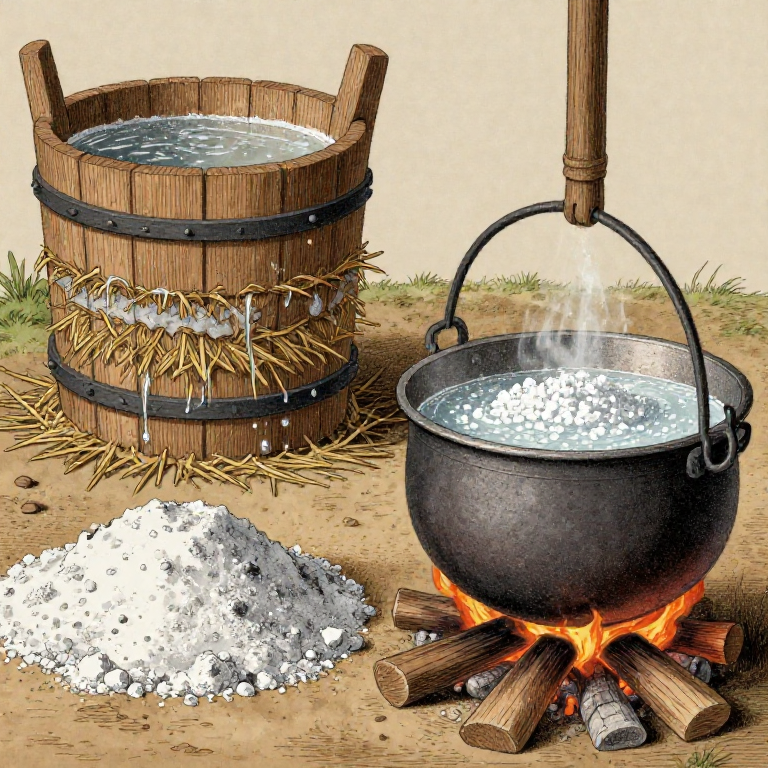
लकड़ी का पीपा या बड़ी बाल्टी लें जिसकी तली के पास छेद किया गया हो। पीपे की तली में पुआल या सूखी घास की मोटी परत (5-8 सेमी) बिछाएँ — यह फ़िल्टर का काम करती है ताकि बारीक राख निकासी का छेद बंद न करे और क्षार-जल में न जाए। पुआल साफ़ और सूखा होना चाहिए। पीपे को ऊँचे चबूतरे (पत्थर, ईंटें या लकड़ी का स्टैंड) पर रखें ताकि छेद के नीचे इकट्ठा करने वाली बाल्टी आ सके।
लकड़ी के पीपे पारंपरिक हैं; क्षार-जल एल्युमिनियम, जस्ते और टिन को नुकसान पहुँचाता है, जबकि लोहा और स्टेनलेस स्टील उसे झेल लेते हैं। अगर प्लास्टिक की बाल्टी इस्तेमाल करें तो पक्का करें कि वह HDPE (रीसाइक्लिंग कोड 2) की हो, जो क्षारीय विलयनों को झेलती है।
इस चरण के लिए सामग्री:
 कटा हुआ पुआल
आवश्यक उपकरण:
 लकड़ी का पीपा
 संग्रह की बाल्टी
पीपे को छनी हुई राख से भरें
पीपे को छनी हुई राख से भरें
पीपे को छनी हुई सफ़ेद राख से परत-दर-परत दबाते हुए भरें। हर परत को हल्का-सा दबाएँ — बहुत ढीली हो तो पानी नालियों से निकल जाता है और ज़्यादा K₂CO₃ नहीं घोलता; बहुत कसी हो तो पानी बिल्कुल नहीं रिसता। पीपे को किनारे से 10 सेमी नीचे तक भरें, ऊपर डाले जाने वाले पानी के लिए जगह छोड़ें। 25-30 लीटर सूखी राख वाला पीपा काम के लिए अच्छी मात्रा है।
इस चरण के लिए सामग्री:
कठोर लकड़ी की राखपोटैशियम निकालने के लिए राख में से धीरे-धीरे पानी गुज़ारें
पोटैशियम निकालने के लिए राख में से धीरे-धीरे पानी गुज़ारें
दबाई हुई राख पर धीरे-धीरे मृदु (कम लवण वाला) पानी डालें। बारिश का पानी सबसे अच्छा है: उसमें घुला हुआ कैल्शियम या मैग्नीशियम लगभग नहीं होता, जो कार्बोनेट से अभिक्रिया करके पपड़ी की तरह जम जाते। पानी राख में से नीचे रिसते हुए घुलनशील पोटैशियम कार्बोनेट (K₂CO₃) और कुछ कम मात्रा में पोटैशियम सल्फ़ेट (K₂SO₄) और पोटैशियम क्लोराइड (KCl) को घोलता है। इस प्रक्रिया को निक्षालन (lixiviation) कहते हैं।
थोड़ा-थोड़ा डालें और सोखने दें। बहुत तेज़ी से डालेंगे तो पानी पर्याप्त राख को छुए बिना नालियों से बह जाएगा। नीचे टपकने वाला द्रव क्षार-जल (पोटाश का विलयन) है, जो घुले हुए कार्बनिक यौगिकों के कारण भूरा होता है।
इस चरण के लिए सामग्री:
 साफ़ पानी (खँगालने के लिए)
आवश्यक उपकरण:
 बाल्टी
पीपे के नीचे बाल्टी में क्षार-जल इकट्ठा करें
पीपे के नीचे बाल्टी में क्षार-जल इकट्ठा करें
पीपे से निकलने वाला भूरा द्रव आपका कच्चा क्षार-जल है — पानी में पोटैशियम कार्बोनेट का क्षारीय विलयन। इसे साफ़ बाल्टी में इकट्ठा करें (लकड़ी, HDPE प्लास्टिक या लोहे की — एल्युमिनियम, जस्ते या टिन की कभी नहीं, जिन्हें क्षार-जल नुकसान पहुँचाता है)। पहली धार सबसे तेज़ होती है; बाद में डाला गया पानी लगातार कमज़ोर क्षार-जल देता है क्योंकि राख का घुलनशील पोटैशियम खत्म होता जाता है।
सुरक्षा: क्षार-जल के साथ काम करते समय आँखों की सुरक्षा और दस्ताने पहनें। पोटाश का क्षार-जल तीव्र क्षारीय होता है (आमतौर पर pH 11-13) और त्वचा व आँखों में रासायनिक जलन करता है। अगर त्वचा पर या आँख में छींटा पड़े तो तुरंत कम से कम 15 मिनट तक खूब साफ़ बहते पानी से धोएँ, और आँख में गया हो तो डॉक्टर को दिखाएँ। आँख में सिरका या कोई अन्य अम्ल न डालें; साफ़ पानी की एक बाल्टी पास रखें।
आवश्यक उपकरण:
संग्रह की बाल्टीकमज़ोर क्षार-जल को फिर से राख से गुज़ारकर गाढ़ा करें
कमज़ोर क्षार-जल को फिर से राख से गुज़ारकर गाढ़ा करें
इकट्ठा किया क्षार-जल उसी राख वाले पीपे से दूसरी और तीसरी बार गुज़ारें। हर बार गुज़रने पर और K₂CO₃ घुलता है और सांद्रता बढ़ती है। या पहले पीपे का क्षार-जल ताज़ी राख वाले दूसरे पीपे से गुज़ारें। पुराने पोटाश-निर्माता अक्सर पीपों की सीढ़ीदार कतारें चलाते थे और क्षार-जल को उबालने से पहले ताज़ी से ताज़ी राख से गुज़ारकर गाढ़ा करते थे — इससे ईंधन बचता था, क्योंकि उबालना पहले से गाढ़े क्षार-जल से शुरू होता था।
पंख परीक्षण से क्षार-जल की तीव्रता जाँचें
पंख परीक्षण से क्षार-जल की तीव्रता जाँचें
एक पंख की नोक क्षार-जल में डुबोएँ। यह साबुन बनाने वालों का पारंपरिक परीक्षण है: साबुन बनाने लायक तेज़ क्षार-जल पंख के रेशों को साफ़ तौर पर गला देता है, क्योंकि केराटिन तीव्र क्षार में टूट जाता है। यह मोटा और गुणात्मक परीक्षण है — बताता है कि क्षार-जल तेज़ है या नहीं, यह नहीं कि कितना। अगर पंख में कोई बदलाव न हो तो क्षार-जल बहुत कमज़ोर है और उबालने के चरण से पहले उसे फिर ताज़ी राख से गुज़ारना या थोड़ा वाष्पित करना होगा।
अंडा परीक्षण से क्षार-जल की सांद्रता जाँचें
अंडा परीक्षण से क्षार-जल की सांद्रता जाँचें
एक ताज़ा साफ़ अंडा धीरे से क्षार-जल में रखें। यह भी एक पारंपरिक परीक्षण है: जब क्षार-जल पर्याप्त घना हो जाता है, तो अंडा तैरता है और उसके छिलके का सिक्के जितना हिस्सा सतह के ऊपर दिखता है। अगर अंडा डूब जाए तो क्षार-जल को और गाढ़ा करना होगा — उसे और राख से गुज़ारें या आयतन घटाने के लिए प्रारंभिक वाष्पन शुरू करें। अंडों का घनत्व पुराने होने के साथ बदलता है, इसलिए ताज़ा अंडा लें और परिणाम को संकेत मानें।
तेज़ क्षार-जल को वाष्पन के लिए लोहे के बर्तन में डालें
तेज़ क्षार-जल को वाष्पन के लिए लोहे के बर्तन में डालें
गाढ़े क्षार-जल को ढलवाँ लोहे (कास्ट आयरन) की बड़ी देग या कड़ाहे में डालें। लोहा पोटाश के क्षार-जल को झेलता है, जबकि एल्युमिनियम उसमें तेज़ी से घुल जाता है और जस्ता व टिन गल जाते हैं, इसलिए लोहा इस्तेमाल करें। लोहे के बड़े पोटाश कड़ाहे अठारहवीं और उन्नीसवीं सदी के पोटाश व्यापार का मानक बर्तन थे। बर्तन ने ही हमें यह शब्द दिया: "pot-ash" वह राख-जैसा अवशेष है जो इस वाष्पन के बाद बर्तन में बचता है।
आवश्यक उपकरण:
 बड़ा ढलवाँ लोहे का कड़ाहा
 लंबे हत्थे वाली सँड़सी
क्षार-जल को स्थिर आग पर उबालें
क्षार-जल को स्थिर आग पर उबालें
लोहे की देग को स्थिर आग पर रखें और क्षार-जल को तेज़ उबाल पर लाएँ। आँच एक-सी रखें — बहुत तेज़ हो तो क्षार-जल खतरनाक ढंग से छींटे उड़ाता है; बहुत धीमी हो तो वाष्पन में बहुत ज़्यादा समय लगता है। पानी उड़ने के साथ क्षार-जल गहरा और गाढ़ा होता जाता है। आयतन घटने पर भंडार से और क्षार-जल डालें और देग को लगभग आधा भरा रखें। बड़ी खेप के लिए इसमें कई घंटे लगातार उबालना पड़ता है।
सुरक्षा: उबलता क्षार-जल छींटे उड़ाता है, और उसके छींटे व धुंध दाहक हैं। खुले में या बहुत हवादार जगह पर काम करें। आँखों की सुरक्षा और मोटे दस्ताने पहनें। उबलते क्षार-जल की देग को कभी बिना निगरानी न छोड़ें।
इस चरण के लिए सामग्री:
 जलावन लकड़ी
आवश्यक उपकरण:
आग कुरेदने की सलाख़गाढ़ा लेप बनने तक वाष्पन जारी रखें
गाढ़ा लेप बनने तक वाष्पन जारी रखें
पानी उड़ने के साथ द्रव गाढ़ा होकर गहरे भूरे, चाशनी जैसे लेप में बदल जाता है। आँच धीमी करें ताकि जले नहीं। बीच-बीच में लोहे की लंबी छड़ या लकड़ी के चप्पू से चलाएँ (चप्पू धीरे-धीरे झुलस जाएगा पर कुछ देर काम देगा)। जब लेप इतना गाढ़ा हो जाए कि उसमें से खींचा गया चम्मच ऐसी लकीर छोड़े जो धीरे-धीरे भरे, तो वाष्पन लगभग पूरा है। इस चरण में लेप कच्चा "काला नमक" है — कार्बनिक अवशेष, पोटैशियम सल्फ़ेट और राख के दूसरे खनिजों के साथ K₂CO₃ का मिश्रण।
आवश्यक उपकरण:
लंबे हत्थे वाली सँड़सीकार्बनिक पदार्थ जलाने के लिए अवशेष को लाल ताप पर निस्तापित करें
कार्बनिक पदार्थ जलाने के लिए अवशेष को लाल ताप पर निस्तापित करें
गाढ़े लेप को लोहे के उथले बर्तन में डालें या लोहे की समतल सतह पर फैलाएँ। इसे तेज़ आग पर तब तक गरम करें जब तक यह मद्धम लाल न दमकने लगे (लगभग 600-700 °C)। कच्चे नमक को गहरा रंग देने वाले कार्बनिक यौगिक कार्बन डाइऑक्साइड और जलवाष्प बनकर जल जाते हैं, और धूसर-सफ़ेद कच्चा पोटाश बचता है। ऐतिहासिक रूप से कड़ाहे में पिघलाया गया काला नमक पोटाश के रूप में बिकता था, जबकि कार्बनिक पदार्थ जलाने के लिए भट्ठी में पकाया गया काला नमक अधिक सफ़ेद निकलता और पर्ल ऐश के रूप में बिकता था। समान ताप के लिए बीच-बीच में चलाएँ। चटक लाल ताप से नीचे रहें: पोटैशियम कार्बोनेट लगभग 890 °C पर पिघलता है, और नमक पिघलकर एक कठोर डला बन जाएँगे जिसे सँभालना कठिन है।
आवश्यक उपकरण:
 आहनशाला का चिमटा
 चूल्हा (भट्ठी की आग)
कच्चे पोटाश को ठंडा करके इकट्ठा करें
कच्चे पोटाश को ठंडा करके इकट्ठा करें
बर्तन को आग से हटाएँ और पोटाश को पूरी तरह ठंडा होने दें — शांत हवा में कई घंटे। परिणाम कच्चा पोटाश है: पोटैशियम कार्बोनेट (K₂CO₃) का धूसर-सफ़ेद चूर्ण जिसमें पोटैशियम सल्फ़ेट (K₂SO₄), पोटैशियम क्लोराइड (KCl), सिलिका और सूक्ष्म खनिज जैसी अशुद्धियाँ हैं। यह कच्चा पोटाश बिना और शुद्ध किए खाद, काँच बनाने के गालक और साबुन बनाने में इस्तेमाल हो सकता है। इसे बंद, सूखे बर्तन में रखें — K₂CO₃ आर्द्रताग्राही है और हवा से नमी खींचकर गीला, चिपचिपा ढेर बन जाता है।
आवश्यक उपकरण:
 भंडारण की बाल्टी
घोलकर, छानकर और फिर वाष्पित करके पर्ल ऐश तक शुद्ध करें
घोलकर, छानकर और फिर वाष्पित करके पर्ल ऐश तक शुद्ध करें
अधिक सफ़ेद और शुद्ध पोटैशियम कार्बोनेट के लिए कच्चे पोटाश को गरम पानी में घोलें, फिर बारीक कपड़े से छानें ताकि अघुलनशील अशुद्धियाँ (सिलिका, कैल्शियम कार्बोनेट, आयरन ऑक्साइड) निकल जाएँ। छना हुआ द्रव अब भी दूसरे घुलनशील लवण, मुख्यतः पोटैशियम सल्फ़ेट और पोटैशियम क्लोराइड, लिए रहता है, इसलिए यह अधिक शुद्ध है पर शुद्ध K₂CO₃ नहीं। विलयन को लोहे की देग में धीरे-धीरे सूखने तक वाष्पित करें। मिलने वाला सफ़ेद चूर्ण अठारहवीं सदी के व्यापार के पर्ल ऐश के क़रीब है: शुद्ध किया गया पोटैशियम कार्बोनेट जो बढ़िया काँच, बेकिंग में ख़मीर उठाने वाले पदार्थ के रूप में (बेकिंग सोडा से पहले) और रसायन में इस्तेमाल होता था। पर्ल ऐश कच्चे पोटाश से महँगा बिकता था।
इस चरण के लिए सामग्री:
साफ़ पानी (खँगालने के लिए)आवश्यक उपकरण:
 महीन जाली की चलनी
सभ्यता से पोटाश के संबंध समझें
सभ्यता से पोटाश के संबंध समझें
पोटाश प्रारंभिक तकनीक की लगभग हर शाखा से जुड़ा है। साबुन: पोटाश का क्षार-जल चर्बी के साथ उबालने पर नरम साबुन देता है; साबुन बनाने वाले अक्सर क्षार-जल में बुझा चूना मिलाते थे ताकि कार्बोनेट का कुछ हिस्सा अधिक दाहक पोटैशियम हाइड्रॉक्साइड में बदल जाए। कठोर साबुन इसके बजाय पौधों की राख के सोडे से बनता था। काँच: पोटाश गालक का काम करता है, जिससे काँच शुद्ध सिलिका के गलनांक (लगभग 1700 °C) से बहुत कम तापमान पर पिघल सकता है। उत्तरी यूरोप का "वन-काँच" (Waldglas) लकड़ी की राख का पोटाश इस्तेमाल करता था; भूमध्यसागरीय काँच सोडा (Na₂CO₃) इस्तेमाल करता था, प्राचीन काल में नेट्रॉन से और बाद में नमक-सहिष्णु तटीय पौधों की राख से। बारूद: शोरा (KNO₃) शोरे की क्यारियों से आता था, जहाँ सड़ता कार्बनिक पदार्थ और मिट्टी के जीवाणु नाइट्रेट बनाते थे, ज़्यादातर कैल्शियम नाइट्रेट। क्यारियों से निक्षालित नाइट्रेट वाला पानी फिर लकड़ी की राख से गुज़ारा जाता या पोटाश में मिलाया जाता, जो कैल्शियम नाइट्रेट को पोटैशियम नाइट्रेट में बदल देता और कैल्शियम को कार्बोनेट के रूप में नीचे बैठा देता। खेती: पोटैशियम N-P-K खाद प्रणाली के तीन प्रमुख पोषक तत्वों में से एक है। किसान के खेत की हर आग मिट्टी को पोटैशियम लौटाती रही, इससे बहुत पहले कि कोई कारण समझता।
अरबी नाम "अल-क़ली" से 1807 में हम्फ़्री डेवी की खुशी तक, पोटैशियम की कहानी रसायन के इतिहास से होकर गुज़रती है — एक उपयोगी पदार्थ जो हज़ारों साल से ज्ञात था, पर धातु के रूप में केवल दो सदियों से कुछ अधिक पहले अलग किया गया।
सामग्री
6- 1 टुकड़ाप्लेसहोल्डर
- 1 टुकड़ाप्लेसहोल्डर
- 1 टुकड़ाप्लेसहोल्डर
- 1 टुकड़ाप्लेसहोल्डर
- 1 टुकड़ाप्लेसहोल्डर
- 1 टुकड़ाप्लेसहोल्डर
आवश्यक उपकरण
13- प्लेसहोल्डर
- प्लेसहोल्डर
- प्लेसहोल्डर
- प्लेसहोल्डर
- प्लेसहोल्डर
- प्लेसहोल्डर
- प्लेसहोल्डर
- प्लेसहोल्डर
- प्लेसहोल्डर
- प्लेसहोल्डर
- प्लेसहोल्डर
- प्लेसहोल्डर
- प्लेसहोल्डर
कनेक्टेड ब्लूप्रिंट सामग्री
यह ब्लूप्रिंट बनाता है

CC0 पब्लिक डोमेन
यह ब्लूप्रिंट CC0 के तहत जारी किया गया है। आप बिना अनुमति माँगे इस कार्य को किसी भी उद्देश्य के लिए कॉपी, संशोधित, वितरित और उपयोग करने के लिए स्वतंत्र हैं।
उनके ब्लूप्रिंट के माध्यम से उत्पाद खरीदकर मेकर का समर्थन करें जहाँ वे मेकर कमीशन कमाते हैं जो विक्रेताओं द्वारा निर्धारित होता है, या इस ब्लूप्रिंट का नया संस्करण बनाएँ और राजस्व साझा करने के लिए इसे अपने ब्लूप्रिंट में कनेक्शन के रूप में शामिल करें।