कला
सौंदर्य और कल्याण
हस्तशिल्प
संस्कृति और इतिहास
मनोरंजन
पर्यावरण
खाद्य और पेय
रिवर्स इंजीनियरिंग
विज्ञान
खेल
प्रौद्योगिकी
पहनने योग्य
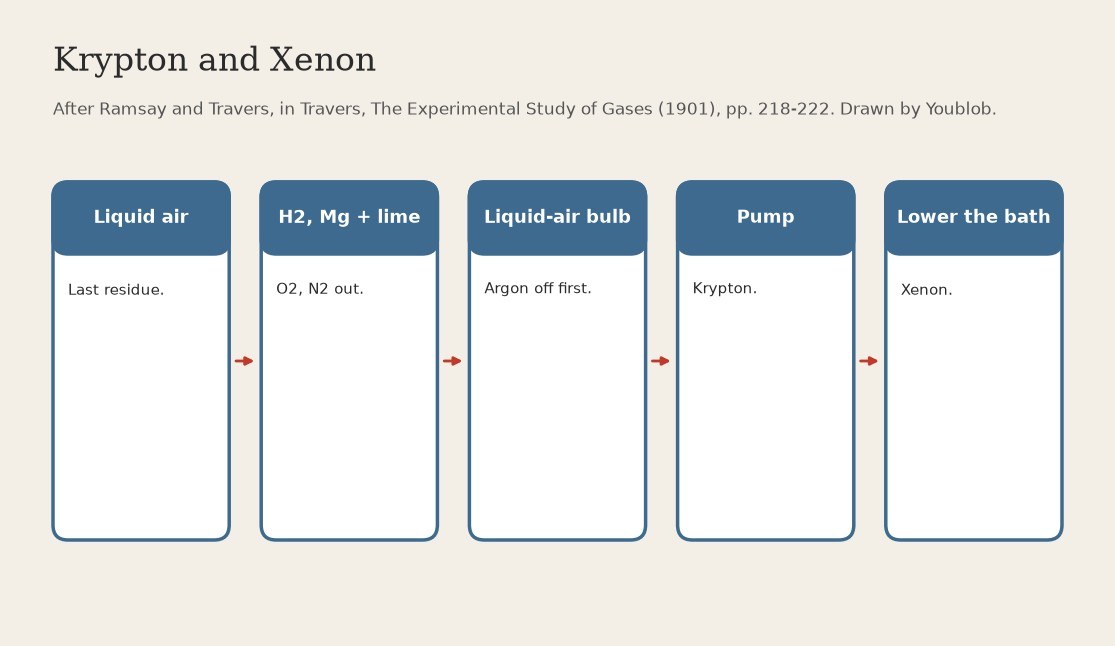


Krypton and Xenon: Liquid-Air Residues Cleaned and Fractionated at the Temperature of Liquid Air (Ramsay and Travers, 1901)
When liquid air boils away, the heavy noble gases stay in the last of it. Ramsay and Travers took that residue, stripped out the oxygen and nitrogen, and separated what was left by condensing it in liquid air and letting it boil off in fractions: argon first, then krypton, and xenon last of all.
Result: krypton and xenon gases (a litre of liquid air gives at most 0.1-0.2 cc of xenon).
Source: M. W. Travers, The Experimental Study of Gases (1901), pp. 218-222. Hydrogen is flammable; liquid air is very cold. Picture drawn by Youblob.
उन्नत
2 weeks
निर्देश
1
1
Collect the last of the liquid air
Collect the last of the liquid air
Let liquid air evaporate quietly in a vacuum vessel. The last of it is nearly all oxygen with some nitrogen, argon, krypton and xenon; evaporate it into a gasholder. Work from much liquid air: one litre gives at best 0.1-0.2 cc of xenon.
इस चरण के लिए सामग्री:
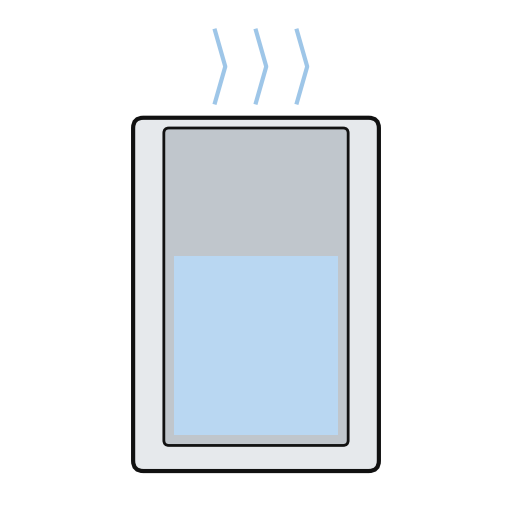 द्रव वायु1 many litres
आवश्यक उपकरण:
 निर्वात पात्र (ड्यूआर)
 गैसधारक
2
2
Strip out oxygen and nitrogen
Strip out oxygen and nitrogen
Pass the gas with hydrogen through a heated iron tube to remove the oxygen. Absorb the nitrogen with a mixture of magnesium and lime. Pass it over heated copper oxide to take out traces of carbon monoxide and hydrogen, then treat it with soda solution. Ours: a tube furnace for the heating.
आवश्यक उपकरण:
 हाइड्रोजन
 लोहे की नली
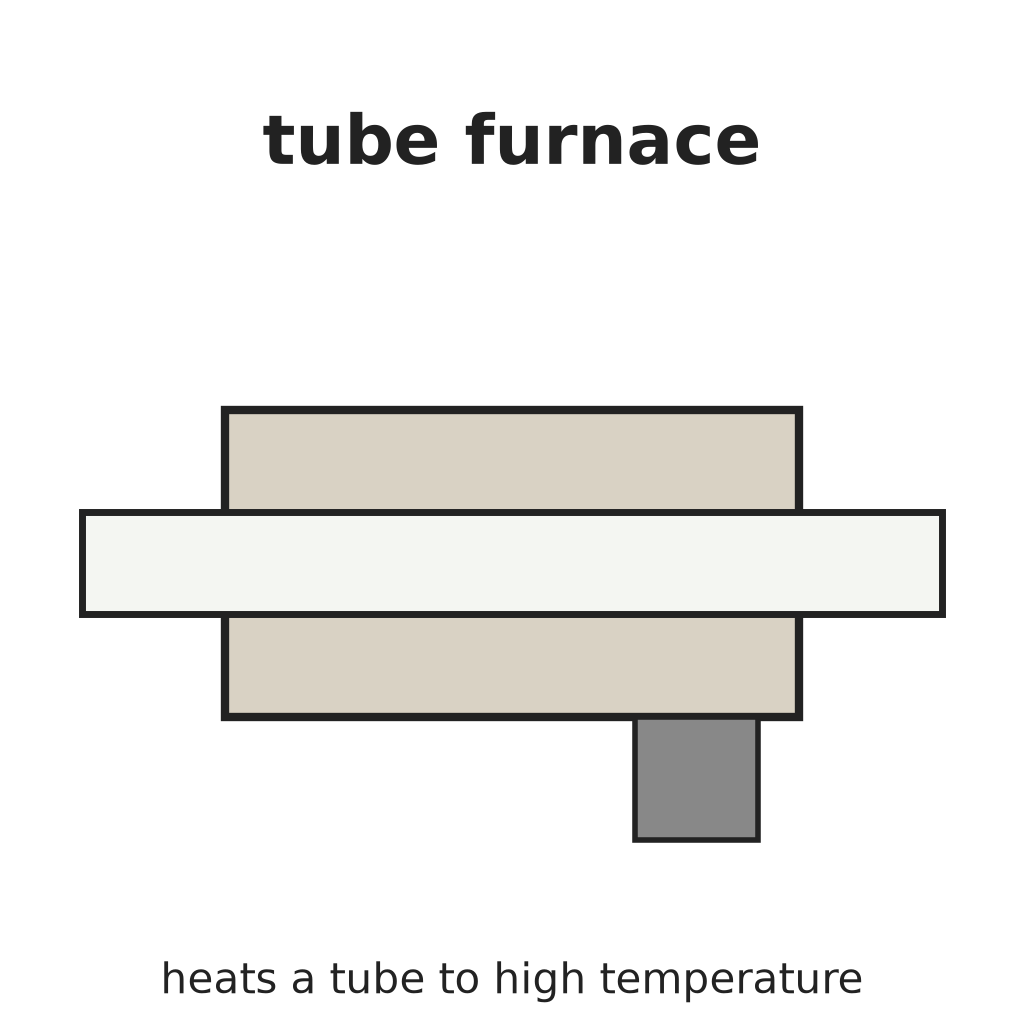 ट्यूब फ़र्नेस
 मैग्नीशियम
 बिना बुझा चूना
 कॉपर ऑक्साइड
 सोडियम हाइड्रॉक्साइड विलयनगैसधारक
3
3
First fractionation
First fractionation
Condense the gas in a bulb cooled by liquid air. Let the first part, mostly argon, boil off into a gasholder; collect the rest. Take the last traces off with the pump while the liquid-air vessel is lowered, so the xenon comes too. Travers got about 300 cc of heavy gas.
आवश्यक उपकरण:
 काँच की नलीद्रव वायुनिर्वात पात्र (ड्यूआर)
 निर्वात पंपगैसधारक
4
4
Refractionate
Refractionate
Condense and boil off again in six equal portions, throwing away the argon-rich first ones, and repeat, guided by the spectroscope. Let the liquid-air surface just touch the bottom of the bulb while the gas goes in, then immerse it; take every fraction off through the pump. Krypton has a vapour pressure of no more than 150 mm at this temperature; xenon hardly any.
आवश्यक उपकरण:
काँच की नलीद्रव वायुनिर्वात पात्र (ड्यूआर)निर्वात पंप हाथ का वर्णक्रमदर्शी
5
5
Part krypton from xenon
Part krypton from xenon
Condense the mixed gas and pump off everything that will come: that is krypton. Then lower the liquid air and collect the xenon. Repeat on each part several times, since krypton hides in the solid xenon.
आवश्यक उपकरण:
काँच की नलीद्रव वायुनिर्वात पात्र (ड्यूआर)निर्वात पंपगैसधारकआवश्यक उपकरण
13- प्लेसहोल्डर
- प्लेसहोल्डर
- प्लेसहोल्डर
- प्लेसहोल्डर
- प्लेसहोल्डर
- प्लेसहोल्डर
- प्लेसहोल्डर
- प्लेसहोल्डर
- प्लेसहोल्डर
- प्लेसहोल्डर
- प्लेसहोल्डर
- 1 vendor sell this, none ship to you yetप्लेसहोल्डर
- प्लेसहोल्डर
यह ब्लूप्रिंट बनाता है


संबंधित ब्लूप्रिंट
ये ब्लूप्रिंट ज्ञान साझा करते हैं — तकनीक, सामग्री या सिद्धांत

CC0 पब्लिक डोमेन
यह ब्लूप्रिंट CC0 के तहत जारी किया गया है। आप बिना अनुमति माँगे इस कार्य को किसी भी उद्देश्य के लिए कॉपी, संशोधित, वितरित और उपयोग करने के लिए स्वतंत्र हैं।
उनके ब्लूप्रिंट के माध्यम से उत्पाद खरीदकर मेकर का समर्थन करें जहाँ वे मेकर कमीशन कमाते हैं जो विक्रेताओं द्वारा निर्धारित होता है, या इस ब्लूप्रिंट का नया संस्करण बनाएँ और राजस्व साझा करने के लिए इसे अपने ब्लूप्रिंट में कनेक्शन के रूप में शामिल करें।