

Building a Cardboard Box Solar Oven — Passive Solar Cooking
निर्देश
Prepare the Nested Boxes
Prepare the Nested Boxes
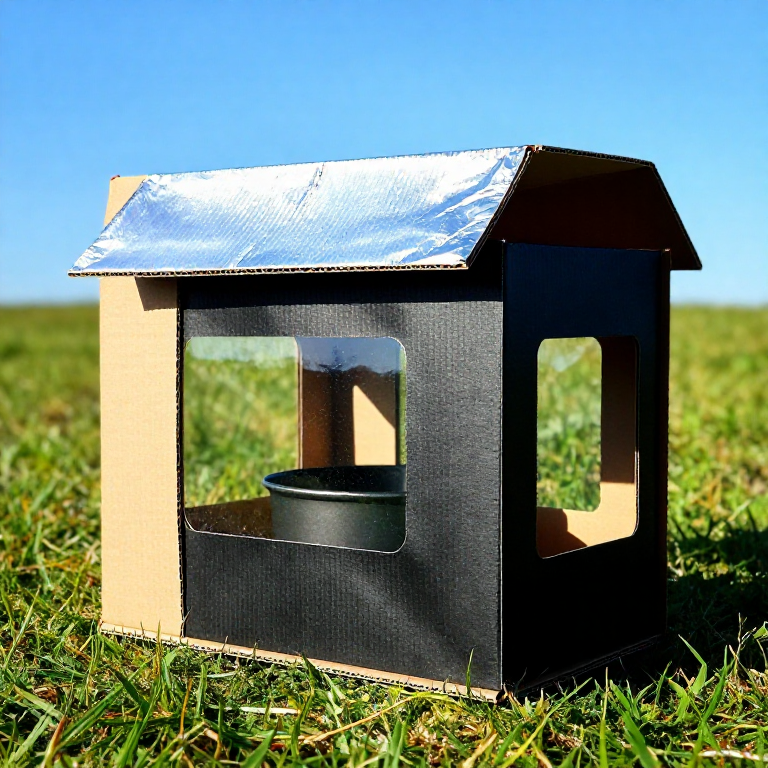
Select two cardboard boxes where the inner box fits inside the outer box with a 5-8cm gap on all sides and the bottom. This gap will be filled with insulation. Line the interior surfaces of the inner box (all four sides and the bottom) with black construction paper or paint them matte black — dark surfaces absorb solar radiation and convert it to heat more efficiently than light surfaces. Cover the bottom and inner walls of the outer box with aluminium foil (shiny side out) to reflect any radiation that penetrates the insulation back inward. Place crumpled newspaper, straw, or shredded cardboard in the gap between the boxes on all sides and the bottom. This insulation prevents heat from escaping through the box walls.
इस चरण के लिए सामग्री:
 नालीदार गत्ते का डिब्बा2 boxes टुकड़ा
 ऐलुमिनियम पन्नी 1100, 0.025 मि.मी.1-2 rolls टुकड़ा
 प्लास्टिक की चादर1 piece, larger than inner box opening टुकड़ा
 काला मोटा कागज़enough to line the inner box interior टुकड़ा
 अख़बारी काग़ज़ (गद्दी)enough to fill the gap between boxes टुकड़ा
 मरम्मत की चिपकने वाली पट्टी1 roll टुकड़ा
आवश्यक उपकरण:
 सीधी पट्टी
 भट्ठी का तापमापी
Build the Reflector Flap
Build the Reflector Flap
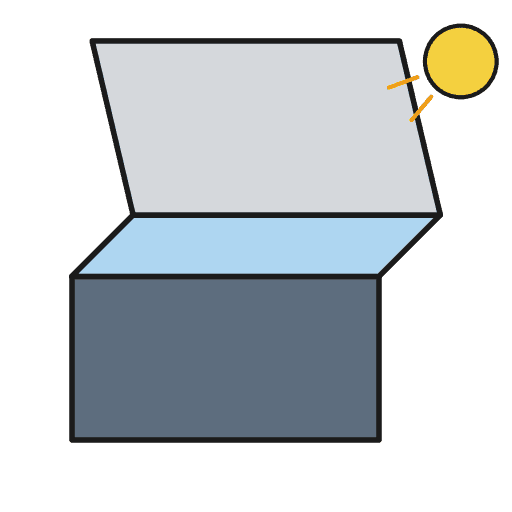
Cut a flap from the outer box lid (or a separate piece of cardboard) that is the same size as the inner box opening. Cover one side completely with aluminium foil (shiny side out), smoothing it flat to create a mirror-like reflective surface. Attach the flap to the back edge of the outer box with tape, creating a hinge so it can be angled. When propped open at approximately 60-70 degrees, the reflector bounces additional sunlight down through the oven window into the cooking chamber, effectively doubling the solar collection area. A stick or wire prop holds the reflector at the optimal angle toward the sun.
Install the Window
Install the Window
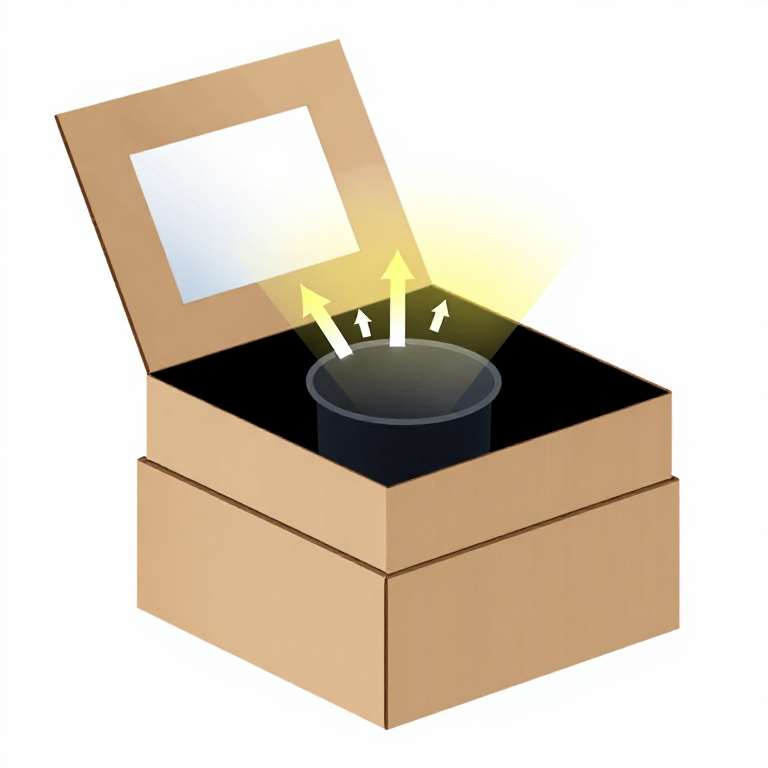
Place a clear plastic sheet (oven bag material, acrylic sheet, or a glass pane) over the top opening of the inner box, sealing it to the edges with tape. This creates the greenhouse effect: visible sunlight passes through the transparent window, is absorbed by the black interior surfaces and converted to infrared (heat) radiation, which cannot pass back through the plastic and is trapped inside the box. A double layer of plastic with an air gap between them (like a double-glazed window) improves insulation significantly — the trapped air layer reduces convective heat loss. Ensure the seal is as airtight as possible, as hot air escaping through gaps is the primary source of heat loss.
Test and Calibrate
Test and Calibrate
Place the oven in direct sunlight and orient it so the reflector directs maximum sunlight through the window. Place an oven thermometer inside. On a clear, sunny day, a well-built box oven should reach 120-150 degrees C within 30-60 minutes. If the temperature is too low, check: is the reflector properly angled? Is the seal around the window airtight? Is there sufficient insulation? Is the inner surface truly black (glossy black reflects; matte black absorbs)? The oven must be repositioned every 30-60 minutes to track the sun's movement across the sky. Dark-coloured thin-walled metal cooking pots absorb heat most efficiently inside the oven.
Cook with Solar Energy
Cook with Solar Energy
Place food in a dark, thin-walled metal pot with a lid inside the solar oven. Cooking temperatures of 120-150 degrees C are suitable for rice, beans, stews, vegetables, bread, and slow-cooked meats — comparable to a conventional oven at low temperature. Cooking times are typically 2-3 times longer than a conventional oven because the temperature is lower and fluctuates with cloud cover. A pot of rice that takes 20 minutes on a stove takes approximately 60-90 minutes in a solar oven. The oven reaches its highest temperature around solar noon (when the sun is highest). Solar ovens cannot brown or crisp food effectively because the temperature rarely exceeds 175 degrees C, but they excel at slow-cooking dishes that benefit from long, gentle heat. No fuel cost, no emissions, no fire risk.
सामग्री
12- 2 boxes टुकड़ाप्लेसहोल्डर
- 1-2 rolls टुकड़ाप्लेसहोल्डर
- 1 piece, larger than inner box opening टुकड़ाप्लेसहोल्डर
- enough to fill the gap between boxes टुकड़ाप्लेसहोल्डर
- 1 roll टुकड़ाप्लेसहोल्डर
- 2 boxes टुकड़ाप्लेसहोल्डर
- 1-2 rolls टुकड़ाप्लेसहोल्डर
- 1 piece, larger than inner box opening टुकड़ाप्लेसहोल्डर
- enough to line the inner box interior टुकड़ाप्लेसहोल्डर
- enough to fill the gap between boxes टुकड़ाप्लेसहोल्डर
- 1 roll टुकड़ाप्लेसहोल्डर
- 1 टुकड़ाप्लेसहोल्डर
आवश्यक उपकरण
4- Scissors or box cutter
- प्लेसहोल्डर
- प्लेसहोल्डर
- प्लेसहोल्डर
यह ब्लूप्रिंट बनाता है
CC0 पब्लिक डोमेन
यह ब्लूप्रिंट CC0 के तहत जारी किया गया है। आप बिना अनुमति माँगे इस कार्य को किसी भी उद्देश्य के लिए कॉपी, संशोधित, वितरित और उपयोग करने के लिए स्वतंत्र हैं।
उनके ब्लूप्रिंट के माध्यम से उत्पाद खरीदकर मेकर का समर्थन करें जहाँ वे मेकर कमीशन कमाते हैं जो विक्रेताओं द्वारा निर्धारित होता है, या इस ब्लूप्रिंट का नया संस्करण बनाएँ और राजस्व साझा करने के लिए इसे अपने ब्लूप्रिंट में कनेक्शन के रूप में शामिल करें।