
Polaroid Instant Camera
Edwin Land's daughter asked why she could not see the photograph straight away. The problem that question opens is not optical but mechanical: how do you carry out wet chemical processing inside a dry camera, in daylight, in about a minute, with no darkroom and no plumbing?
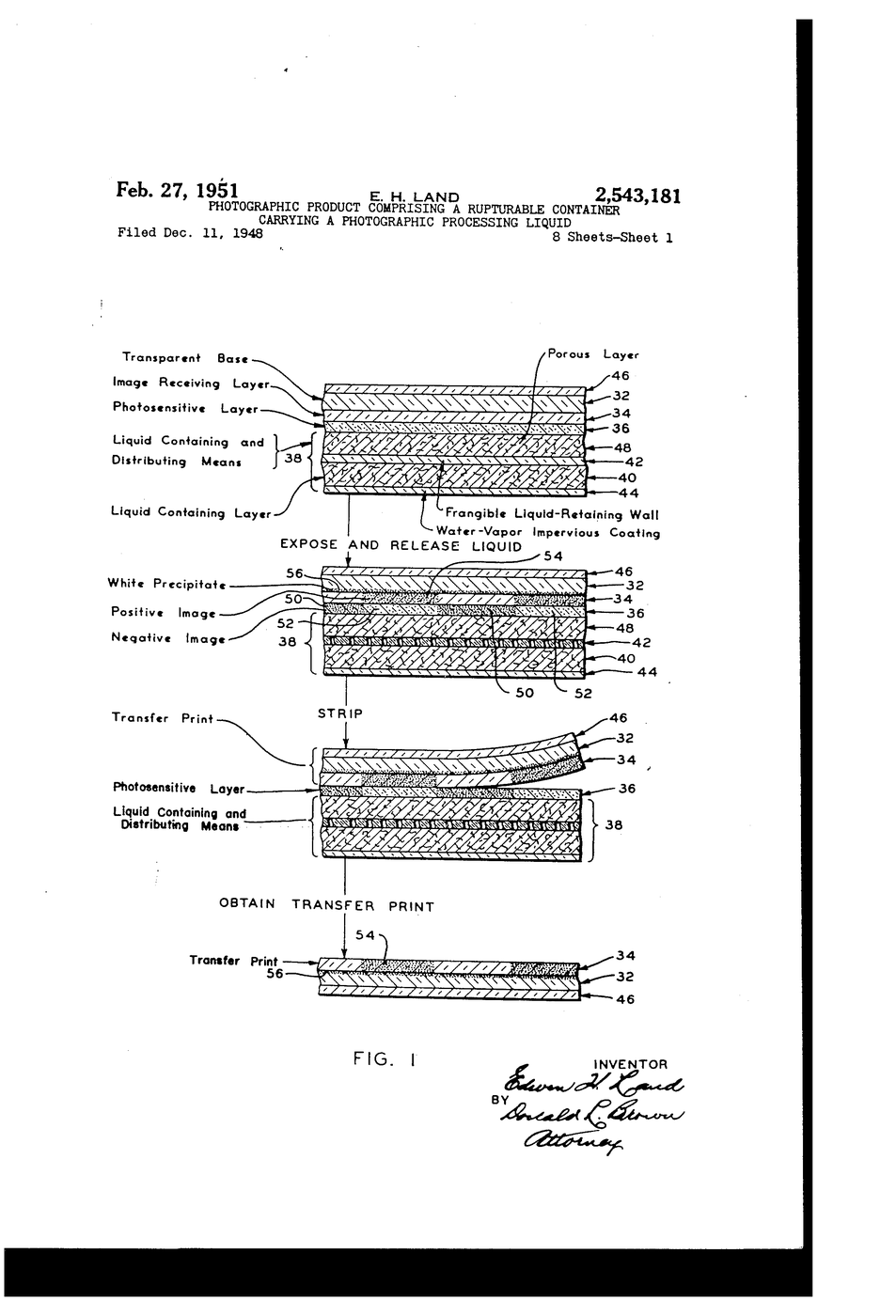
Land's answer was to package the chemistry. US 2,543,181, “Photographic product comprising a rupturable container carrying a photographic processing liquid”, granted 27 February 1951 (filed 11 December 1948) claims a small sealed pod that bursts under stress and spreads its contents “for substantially uniform distribution over a predetermined area”.
The detail that makes it work is a deliberate weakness: a “frangible liquid-retaining wall or membrane” that fails before the rest of the pod does, so the liquid always leaves in the same direction. The pod is also made vapour-impervious with coatings such as paraffin or polyethylene, because a pod that dries out on the shelf is useless.
निर्देश
State the problem precisely
State the problem precisely
Wet processing inside a dry camera, in daylight, in about 60 seconds. Write down the three sub-problems: contain the liquid, release it on demand, spread it evenly.
Try it the obvious way first
Try it the obvious way first
Put a few drops of coloured water between two sheets and press by hand. Note the blotches and dry patches. Uneven spread is the failure Land had to design out.
इस चरण के लिए सामग्री:
 खाने का रंग2 बूँदें
 कागज़2 शीट
आवश्यक उपकरण:
 पिपेट
पिपेटCut the pod
Cut the pod
Cut two 60 × 25 mm rectangles from tracing paper. These form the pod walls.
इस चरण के लिए सामग्री:
 पैटर्न उतारने के कागज का रोल1 शीट
आवश्यक उपकरण:
 कैंची
कैंची रूलर
रूलरSeal three sides strongly
Seal three sides strongly
Glue three edges with a wide, firm seal. Leave one long edge open.
इस चरण के लिए सामग्री:
 लकड़ी की गोंद3 मिली
Fill with processing liquid
Fill with processing liquid
Pipette 2 ml of water tinted with food colouring into the pod. This stands in for the developer–reagent paste.
इस चरण के लिए सामग्री:
खाने का रंग3 बूँदेंआवश्यक उपकरण:
पिपेटMake the fourth seal deliberately weak
Make the fourth seal deliberately weak
Seal the last edge with a thin, narrow line of glue. This is the frangible membrane — it must fail before any other seam. Engineering a controlled weakness is the invention.
इस चरण के लिए सामग्री:
लकड़ी की गोंद1 मिलीBuild the spreader rollers
Build the spreader rollers
Mount two dowels on the board with a gap slightly thinner than the filled pod. Land's camera pulls the sheet between exactly such a pair.
इस चरण के लिए सामग्री:
लकड़ी की गोंद5 मिलीआवश्यक उपकरण:
 सपाट लकड़ी का तख़्ता
 लकड़ी की डॉवेल छड़
Assemble the sandwich
Assemble the sandwich
Place the pod at the leading edge, between a sheet of paper (the negative) and a second sheet (the positive).
इस चरण के लिए सामग्री:
कागज़2 शीटPull it through
Pull it through
Draw the sandwich steadily between the rollers. The pod bursts at the weak seal and the liquid is dragged forward in an even film.
Inspect the spread
Inspect the spread
Separate the sheets. Measure how far the liquid travelled and how uniform it is. Compare directly with your hand-pressed attempt in step 2.
आवश्यक उपकरण:
रूलरVary the roller gap
Vary the roller gap
Repeat with a wider and a narrower gap. Too wide leaves streaks; too narrow bursts the pod sideways. Record the working range.
इस चरण के लिए सामग्री:
पैटर्न उतारने के कागज का रोल1 शीटखाने का रंग3 बूँदेंआवश्यक उपकरण:
रूलरVary the pull speed
Vary the pull speed
Pull one fast, one slow, timing each. Spread uniformity depends on speed as well as gap.
इस चरण के लिए सामग्री:
पैटर्न उतारने के कागज का रोल1 शीटखाने का रंग3 बूँदेंआवश्यक उपकरण:
 स्टॉपवॉच
Test the vapour barrier
Test the vapour barrier
Leave one filled pod open to the air overnight and one coated in a thin wax or oil film. Weigh both before and after. The patent specifies paraffin or polyethylene coatings for exactly this reason.
आवश्यक उपकरण:
 डिजिटल रसोई तराज़ू
History & Context
History & Context
US 2,543,181, Edwin H. Land, filed 11 December 1948, granted 27 February 1951. The granted title is a description in itself: “Photographic product comprising a rupturable container carrying a photographic processing liquid”.
Land demonstrated instant photography on 21 February 1947 at a meeting of the Optical Society of America in New York. The Polaroid Land Camera Model 95 and Type 40 film went on sale in November 1948 — a month before this patent was even filed. Land ultimately held 535 patents, second only to Edison among American inventors of his era.
What the pod really solved. The chemistry of diffusion-transfer reversal was the intellectual core, but the pod is the reason it became a consumer product. A sealed, shelf-stable, single-use reagent package that bursts predictably and meters itself is a packaging invention as much as a photographic one — and the same idea now appears in medical test kits, two-part adhesives and food processing.
The vapour barrier is the unglamorous part that made it shippable. A pod that slowly dries in a warehouse fails silently, months later, in a customer's hands.
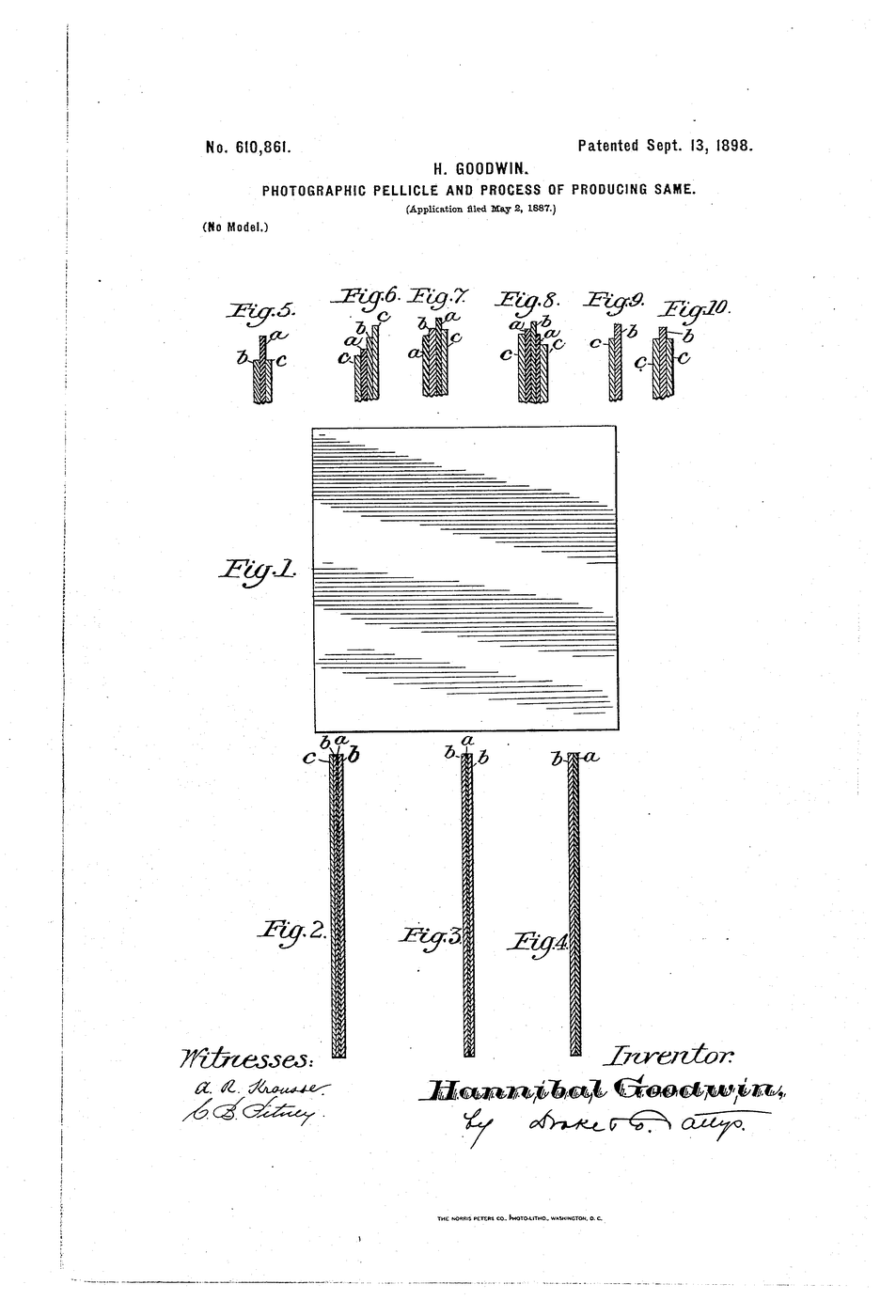
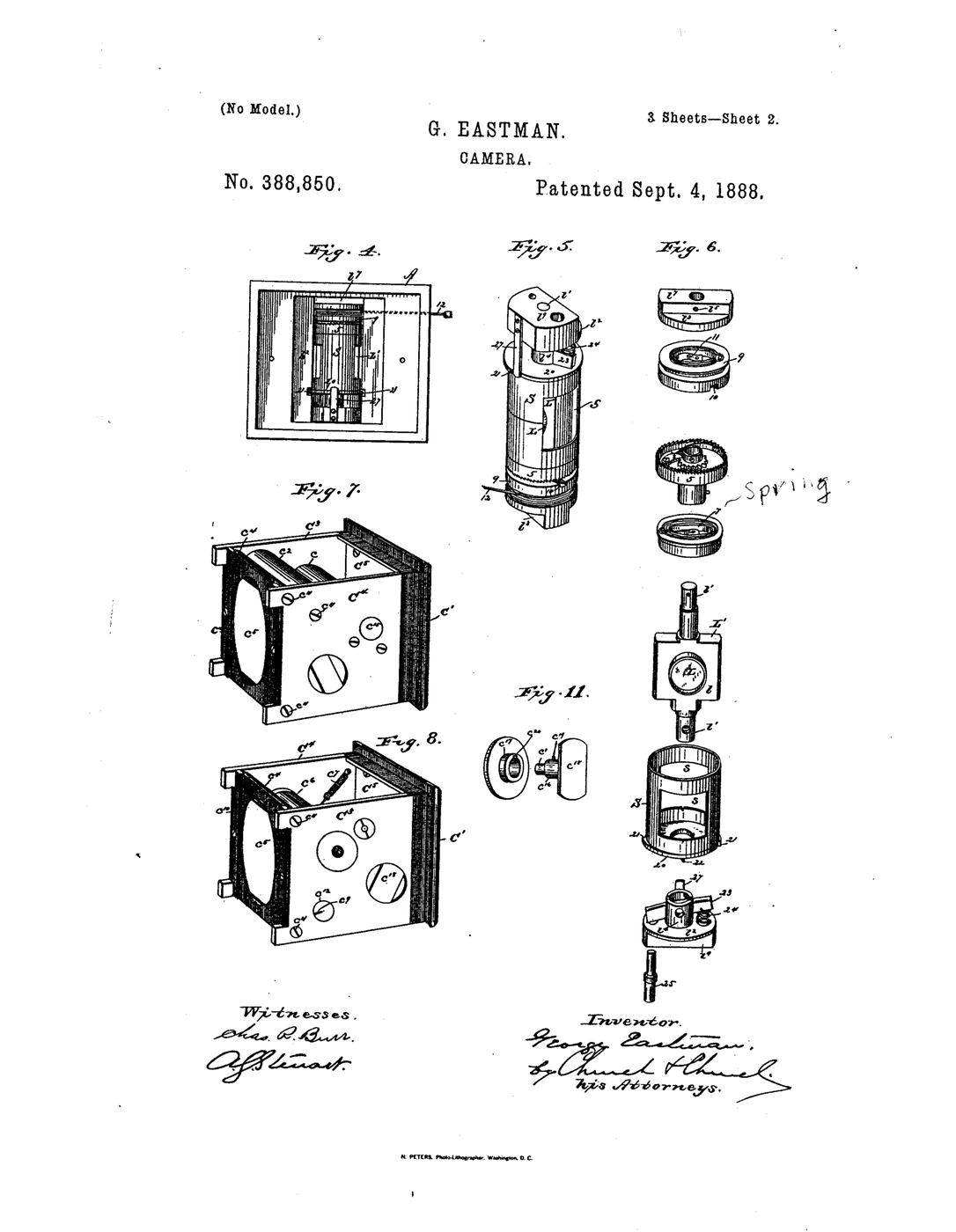
Where it sits. Goodwin's flexible base made roll film possible; Mannes and Godowsky put colour on it; Land removed the laboratory from the process entirely. Carlson's electrophotography, linked here, attacked the same instinct from the other direction — dry process, no liquid at all — and it is dry electrostatic imaging, not instant film, that ended up dominating office reproduction.
सामग्री
4- 11 बूँदेंप्लेसहोल्डर
- 2 शीटप्लेसहोल्डर
- प्लेसहोल्डर
- 9 मिलीप्लेसहोल्डर
कनेक्टेड ब्लूप्रिंट सामग्री

संबंधित ब्लूप्रिंट
ये ब्लूप्रिंट ज्ञान साझा करते हैं — तकनीक, सामग्री या सिद्धांत

CC0 पब्लिक डोमेन
यह ब्लूप्रिंट CC0 के तहत जारी किया गया है। आप बिना अनुमति माँगे इस कार्य को किसी भी उद्देश्य के लिए कॉपी, संशोधित, वितरित और उपयोग करने के लिए स्वतंत्र हैं।
उनके ब्लूप्रिंट के माध्यम से उत्पाद खरीदकर मेकर का समर्थन करें जहाँ वे मेकर कमीशन कमाते हैं जो विक्रेताओं द्वारा निर्धारित होता है, या इस ब्लूप्रिंट का नया संस्करण बनाएँ और राजस्व साझा करने के लिए इसे अपने ब्लूप्रिंट में कनेक्शन के रूप में शामिल करें।