कला
सौंदर्य और कल्याण
हस्तशिल्प
संस्कृति और इतिहास
मनोरंजन
पर्यावरण
खाद्य और पेय
रिवर्स इंजीनियरिंग
विज्ञान
खेल
प्रौद्योगिकी
पहनने योग्य
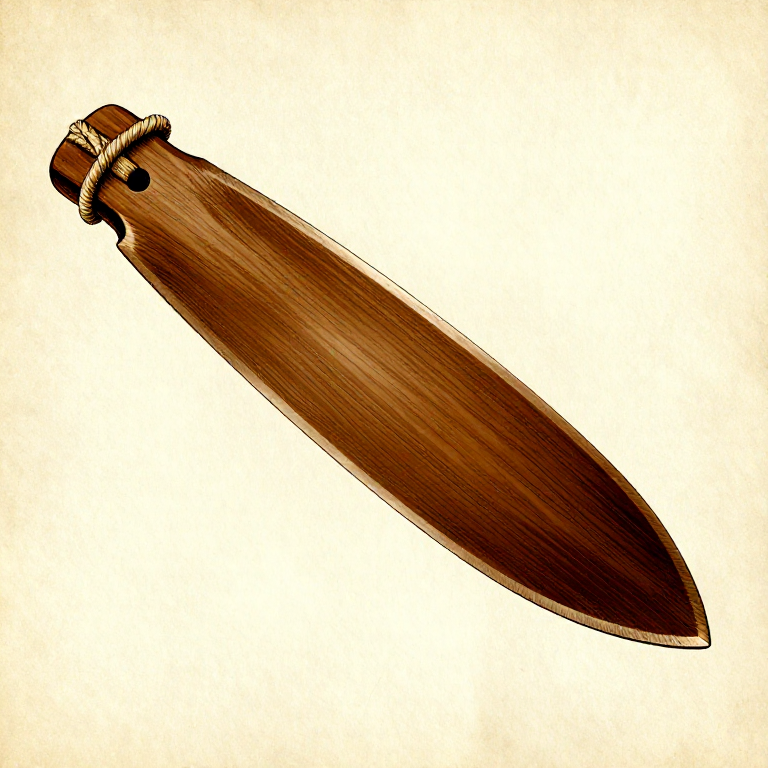


Making a Bull-Roarer — Whirling Sound Instrument
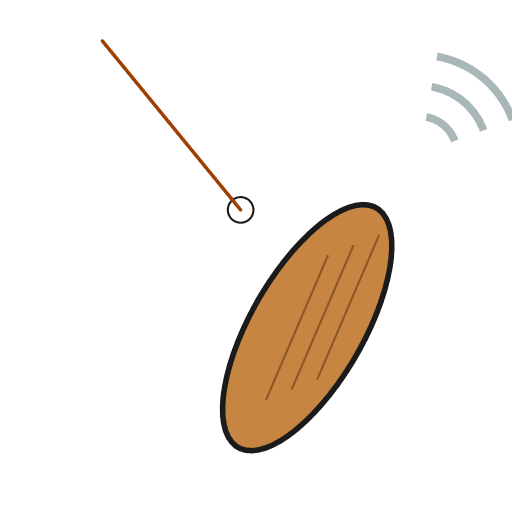
The bull-roarer (also called a rhombus or churinga) is one of the oldest known instruments, with examples dating to the Upper Palaeolithic over 18,000 years ago. It consists of a thin, flat piece of wood attached to a long cord — when swung in a circle overhead, the blade spins on its axis and vibrates the surrounding air to produce a deep, pulsing roar that can carry for kilometres. The sound frequency depends on the blade's size, thickness, and spinning speed. Bull-roarers served as signalling devices, ceremonial instruments, and hunting tools (the sound can drive game). Australian Aboriginal tjurunga, Maori purerehua, Greek rhombos, and Native American examples all share the same basic physics. The instrument was independently invented on every inhabited continent.
शुरुआती
1 hour
निर्देश
1
1
Select a Flat Piece of Dense Hardwood
Select a Flat Piece of Dense Hardwood
Choose a flat piece of dense hardwood such as oak, ash, or eucalyptus. You can split a section from a plank or select a naturally flat branch section. The wood must be well seasoned and free of knots — green wood is too heavy and will not vibrate freely.
इस चरण के लिए सामग्री:
 दृढ़ काष्ठ का पौधा-तना1 टुकड़ा
2
2
Shape the Blade into an Elongated Oval
Shape the Blade into an Elongated Oval
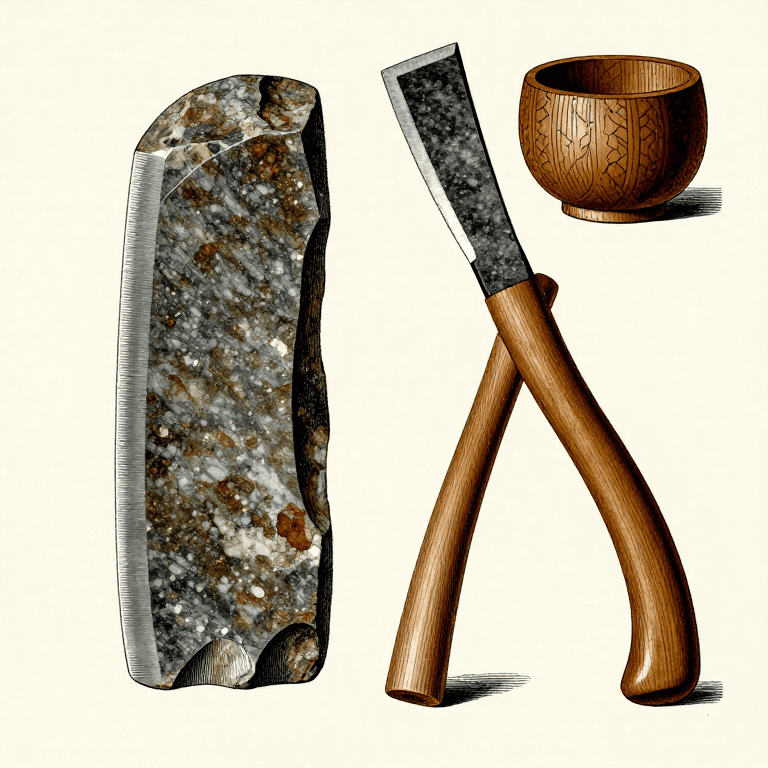
Carve the wood into a long oval or elongated leaf shape: 20 to 40 cm long, 4 to 6 cm wide, and 5 to 8 mm thick. Both ends should taper to a point or rounded tip. Use a flint blade or stone adze to rough out the shape, then refine the contours.
3
3
Taper Both Ends to Points
Taper Both Ends to Points
Ensure both ends of the blade taper symmetrically to a point or smooth rounded tip. Asymmetric ends cause the blade to wobble during flight rather than spinning evenly on its long axis. Check symmetry by holding the blade at its centre and sighting along the length.
4
4
Smooth Both Faces and Edges
Smooth Both Faces and Edges
Sand both flat faces and all edges smooth using a piece of sandstone. A rough surface creates uneven air turbulence that dampens the vibration and produces a weaker, less consistent sound. The faces should be flat and the edges rounded to a gentle profile.
आवश्यक उपकरण:
 बलुआ पत्थर (अपघर्षक)
5
5
Drill or Carve a Hole at One End
Drill or Carve a Hole at One End
Carve or drill a small hole at one end of the blade, positioned 1 to 2 cm from the tip. The hole should be just large enough to thread your cord through — approximately 5 to 6 mm in diameter. A bone awl or sharp flint point can bore through the thin wood.
6
6
Add a Slight Twist Along the Long Axis
Add a Slight Twist Along the Long Axis
Gently twist the blade along its long axis by 10 to 15 degrees. This slight twist acts like a propeller pitch — it causes the blade to spin consistently as it moves through the air rather than fluttering randomly. You can introduce the twist by soaking the wood briefly and twisting it while clamped, then letting it dry in the twisted position.
7
7
Thread the Cord Through the Hole
Thread the Cord Through the Hole
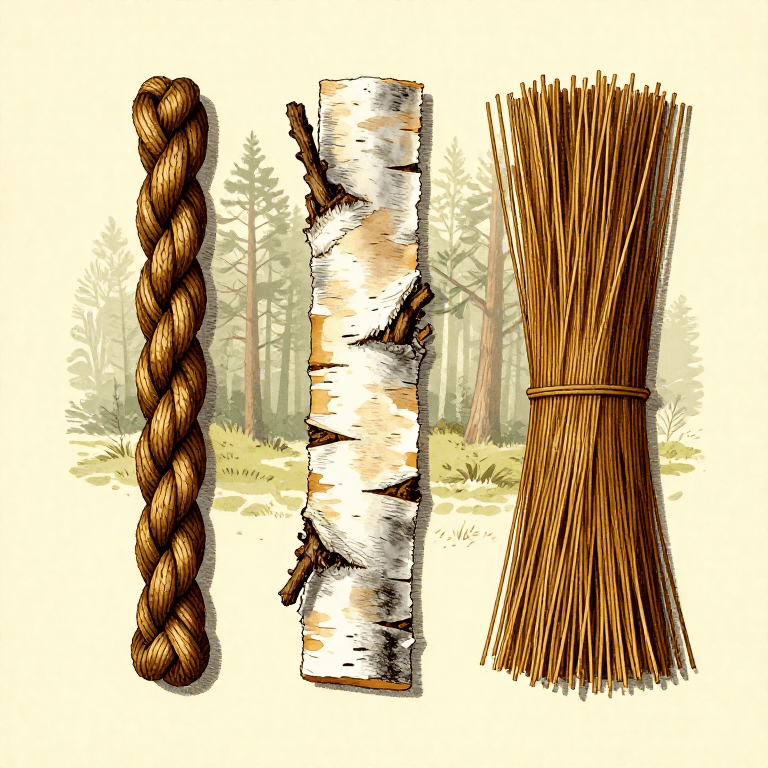
Thread a strong cord 1 to 2 metres long through the hole. Braided sinew, rawhide thong, or twisted plant fibre cord all work. The cord must be strong enough to withstand the centrifugal force of swinging without snapping — test by pulling sharply with both hands.
इस चरण के लिए सामग्री:
 रस्सी-डोरी1 टुकड़ा
8
8
Tie the Cord with a Swivel Knot
Tie the Cord with a Swivel Knot
Secure the cord to the blade with a knot that allows the cord to swivel freely — a simple loop through the hole works, or tie a small toggle knot. The cord must be able to twist and untwist as the blade spins. If the cord cannot swivel, it will wind up tight and stop the blade from rotating.
9
9
Swing the Bull-Roarer Overhead
Swing the Bull-Roarer Overhead
Hold the free end of the cord firmly and swing the bull-roarer in a large circle overhead, like a lasso. Start with slow, wide circles to get the blade airborne and spinning. As the blade catches the air and begins to rotate on its own axis, the characteristic deep pulsing roar will begin.
10
10
Vary the Speed to Change the Pitch
Vary the Speed to Change the Pitch
Increase the swinging speed to raise the pitch and intensity of the sound. Slow the swing for a deeper, more resonant roar. The pulsing quality comes from the blade alternately presenting its flat face and edge to the air as it spins. A well-made bull-roarer produces a sound audible over 1 to 2 kilometres in open terrain.
सामग्री
2- 1 टुकड़ाप्लेसहोल्डर
- 1 टुकड़ाप्लेसहोल्डर
आवश्यक उपकरण
1- प्लेसहोल्डर
कनेक्टेड ब्लूप्रिंट सामग्री
यह ब्लूप्रिंट बनाता है
संबंधित ब्लूप्रिंट
ये ब्लूप्रिंट ज्ञान साझा करते हैं — तकनीक, सामग्री या सिद्धांत


CC0 पब्लिक डोमेन
यह ब्लूप्रिंट CC0 के तहत जारी किया गया है। आप बिना अनुमति माँगे इस कार्य को किसी भी उद्देश्य के लिए कॉपी, संशोधित, वितरित और उपयोग करने के लिए स्वतंत्र हैं।
उनके ब्लूप्रिंट के माध्यम से उत्पाद खरीदकर मेकर का समर्थन करें जहाँ वे मेकर कमीशन कमाते हैं जो विक्रेताओं द्वारा निर्धारित होता है, या इस ब्लूप्रिंट का नया संस्करण बनाएँ और राजस्व साझा करने के लिए इसे अपने ब्लूप्रिंट में कनेक्शन के रूप में शामिल करें।