कला
सौंदर्य और कल्याण
हस्तशिल्प
संस्कृति और इतिहास
मनोरंजन
पर्यावरण
खाद्य और पेय
रिवर्स इंजीनियरिंग
विज्ञान
खेल
प्रौद्योगिकी
पहनने योग्य
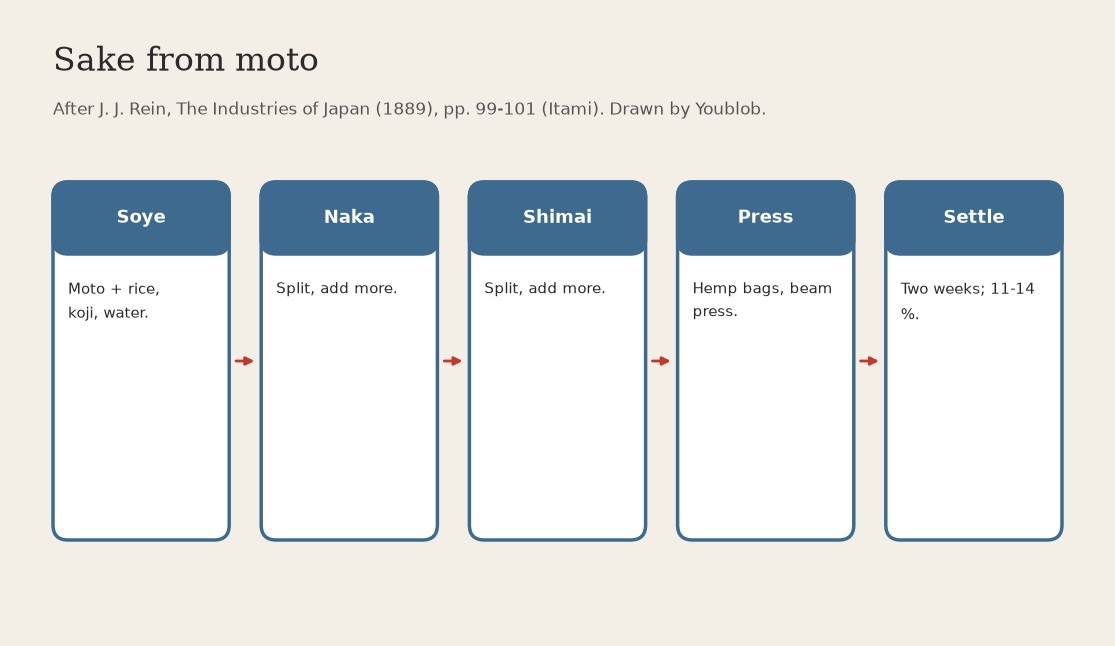


Sake from Moto: the Mash Built Up in Three Additions, Soye, Naka and Shimai, Pressed and Settled (Itami, after Rein 1889)
The brewers of Itami never put all the rice in at once. They fed the moto in three steps, roughly doubling the mash each time, so the yeast always stayed ahead of the sugar the koji made. Then they pressed the mash in a beam press and let the sake settle clear.
Result: sake of 11 to 14 % alcohol.
Source: J. J. Rein, The Industries of Japan (1889), pp. 99-101. The beam press is replaced by any press. Picture drawn by Youblob.
उन्नत
4 weeks
निर्देश
1
1
Soye: first addition
Soye: first addition
In a three-foot tub mix 1.30 koku steamed rice, 1.30 koku moto, 0.35 koku koji and 1.30 koku water (4.25 koku). Stir thoroughly every two hours for two or three days; it warms to about 20 C and smells pleasant and pungent. Ours: steam the rice over a pot.
इस चरण के लिए सामग्री:
 जापानी छोटे दाने वाला चावल1.3 koku
 मोटो (साके स्टार्टर मैश)1.3 koku
 कोजी चावल (Aspergillus oryzae)0.35 koku
 जल1.3 koku
आवश्यक उपकरण:
 काठ का टब
 लंबा लकड़ी का चलाने वाला डाँड़
 बड़ी देगची
 तापमापी
2
2
Naka: second addition
Naka: second addition
Split the soye between two tubs and add 2.00 koku steamed rice, 0.65 koku koji and 2.90 koku water (9.80 koku, 4.90 per tub). Stir vigorously every other hour for one day.
इस चरण के लिए सामग्री:
जापानी छोटे दाने वाला चावल2 kokuकोजी चावल (Aspergillus oryzae)0.65 kokuजल2.9 kokuआवश्यक उपकरण:
काठ का टबलंबा लकड़ी का चलाने वाला डाँड़बड़ी देगची3
3
Shimai: last addition
Shimai: last addition
Split again into four tubs and add 3.30 koku steamed rice, 1.00 koku koji and 4.20 koku water (Rein prints the naka here as 9.90; total 18.40 koku). Treat as before; keep tubs no more than half full.
इस चरण के लिए सामग्री:
जापानी छोटे दाने वाला चावल3.3 kokuकोजी चावल (Aspergillus oryzae)1 kokuजल4.2 kokuआवश्यक उपकरण:
काठ का टबलंबा लकड़ी का चलाने वाला डाँड़बड़ी देगची4
4
Main fermentation
Main fermentation
After three days pour all four tubs into one big six-foot tub. A brisk fermentation follows and eases in two or three days; the scum settles and the liquor is strongly alcoholic.
आवश्यक उपकरण:
काठ का टब5
5
Press
Press
Fill close-woven hemp bags with the mash, lay them crosswise in a strong box and press. Rein's press is a beam lever weighted with 600-900 kg; ours: any wine press. Collect the turbid sake.
आवश्यक उपकरण:
 लिनन का थैला
 अंगूर का कोल्हू
6
6
Settle and draw off
Settle and draw off
Let the sake stand quiet two weeks in a standing cask with two taps near the bottom, then draw it off clear by the upper tap. Store in barrels or closed tubs; heat it when warm weather comes to keep it.
आवश्यक उपकरण:
 लकड़ी का पीपा
सामग्री
4- 3.3 kokuप्लेसहोल्डर
- 1.3 kokuप्लेसहोल्डर
- प्लेसहोल्डर
- 8.4 kokuप्लेसहोल्डर
यह ब्लूप्रिंट बनाता है

संबंधित ब्लूप्रिंट
ये ब्लूप्रिंट ज्ञान साझा करते हैं — तकनीक, सामग्री या सिद्धांत

CC0 पब्लिक डोमेन
यह ब्लूप्रिंट CC0 के तहत जारी किया गया है। आप बिना अनुमति माँगे इस कार्य को किसी भी उद्देश्य के लिए कॉपी, संशोधित, वितरित और उपयोग करने के लिए स्वतंत्र हैं।
उनके ब्लूप्रिंट के माध्यम से उत्पाद खरीदकर मेकर का समर्थन करें जहाँ वे मेकर कमीशन कमाते हैं जो विक्रेताओं द्वारा निर्धारित होता है, या इस ब्लूप्रिंट का नया संस्करण बनाएँ और राजस्व साझा करने के लिए इसे अपने ब्लूप्रिंट में कनेक्शन के रूप में शामिल करें।