कला
सौंदर्य और कल्याण
हस्तशिल्प
संस्कृति और इतिहास
मनोरंजन
पर्यावरण
खाद्य और पेय
रिवर्स इंजीनियरिंग
विज्ञान
खेल
प्रौद्योगिकी
पहनने योग्य
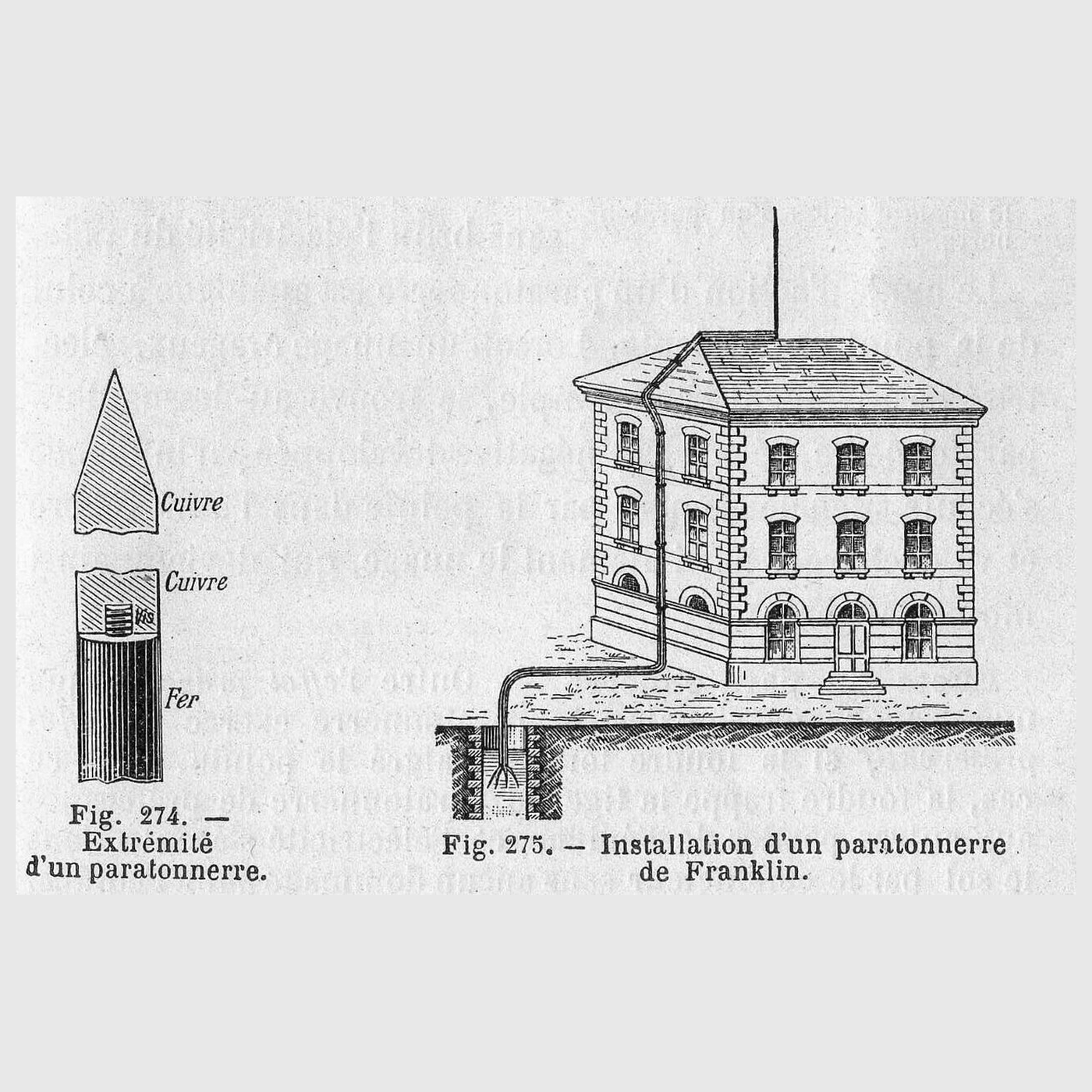


The Lightning Rod: Give the Strike a Path That Survives It
Benjamin Franklin proposed in 1750 that a pointed iron rod on a building, connected by a wire to the ground, would protect it from lightning; by 1752 rods were being put up. He took out no patent on it, or on any of his inventions.
A rod does not stop lightning. It gives the strike a place to land that is not the roof, and a path to earth thick enough to carry tens of thousands of amperes without melting. The sharp point — which Franklin showed would quietly draw charge off a conductor — matters much less than the thickness of the wire and the quality of the earth.
This rung works out both, and repeats Franklin's point-discharge experiment on a charged Leyden jar.
शुरुआती
About 2 hours
निर्देश
1
1
The power of points, and the size of the conductor
The power of points, and the size of the conductor
Jupyter नोटबुक लोड हो रही है…
2
2
Charge a Leyden jar to test points
Charge a Leyden jar to test points
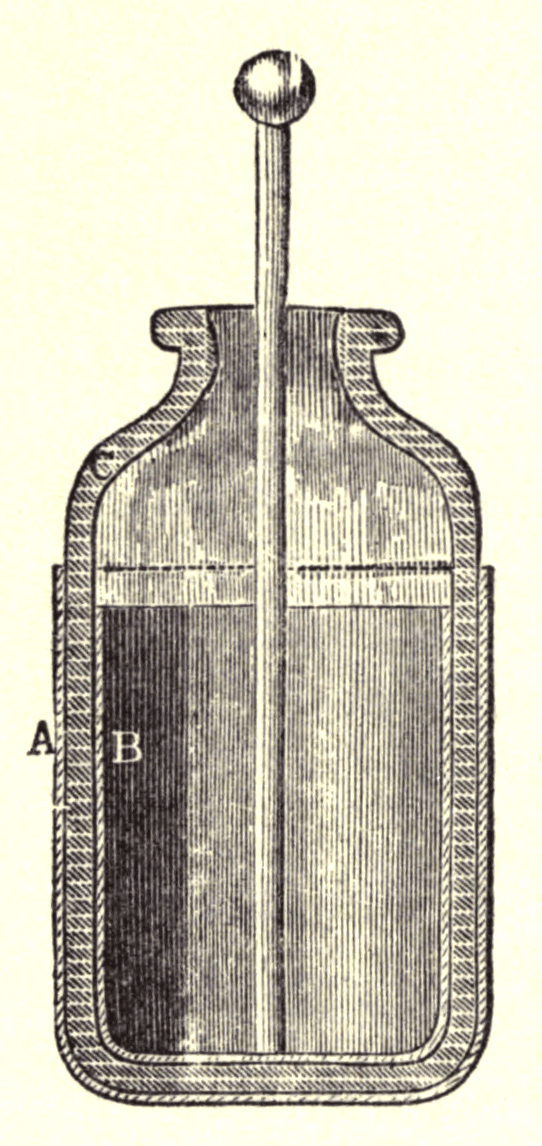
Franklin's experiments used a charged conductor and a Leyden jar. The embedded blueprint builds and charges one; the next step uses it.
3
3
Repeat Franklin's point-discharge experiment
Repeat Franklin's point-discharge experiment
Charge the Leyden jar. Bring a smooth ball — a metal ball on an insulated handle — slowly towards its terminal: nothing happens until it is close, then a single sharp spark jumps.
Charge the jar again and bring a needle, held on an insulated handle and wired to earth, slowly towards it, point first. In the dark you may see a faint glow at the point and hear a hiss; there is no big spark, and when you then test the jar with the ball, it is nearly discharged. The point drew the charge off quietly.
That is the 'power of points' Franklin reported. A modern rod works mainly by where it stands and how well it is earthed; the notebook shows why the wire matters more.
इस चरण के लिए सामग्री:
 ताँबे का तार1 मीटर
आवश्यक उपकरण:
 मगरमच्छ-क्लिप परीक्षण तार
 चमड़े के काम के दस्ताने
4
4
History and context
History and context
**Benjamin Franklin** proposed the pointed, earthed rod in a letter of 1750 and published it in *Poor Richard's Almanack* for 1753; rods were in use from 1752. No patent exists — Franklin declined to patent any of his inventions.
Modern lightning protection (IEC 62305 and its equivalents) keeps his three parts — air terminals, down-conductors, earth electrodes — and sizes them from the stroke statistics the notebook uses.
**Honest limits.** A rod protects a zone, not a whole landscape. It does not prevent surges entering along wires and pipes, which need their own protection. And it is only as good as its earth connection and its joints. **Never experiment with atmospheric electricity** — Georg Richmann was killed in 1753 repeating Franklin's experiment.
सामग्री
1- 1 मीटरप्लेसहोल्डर
आवश्यक उपकरण
2- प्लेसहोल्डर
- प्लेसहोल्डर
संबंधित ब्लूप्रिंट
ये ब्लूप्रिंट ज्ञान साझा करते हैं — तकनीक, सामग्री या सिद्धांत


CC0 पब्लिक डोमेन
यह ब्लूप्रिंट CC0 के तहत जारी किया गया है। आप बिना अनुमति माँगे इस कार्य को किसी भी उद्देश्य के लिए कॉपी, संशोधित, वितरित और उपयोग करने के लिए स्वतंत्र हैं।
उनके ब्लूप्रिंट के माध्यम से उत्पाद खरीदकर मेकर का समर्थन करें जहाँ वे मेकर कमीशन कमाते हैं जो विक्रेताओं द्वारा निर्धारित होता है, या इस ब्लूप्रिंट का नया संस्करण बनाएँ और राजस्व साझा करने के लिए इसे अपने ब्लूप्रिंट में कनेक्शन के रूप में शामिल करें।