कला
सौंदर्य और कल्याण
हस्तशिल्प
संस्कृति और इतिहास
मनोरंजन
पर्यावरण
खाद्य और पेय
रिवर्स इंजीनियरिंग
विज्ञान
खेल
प्रौद्योगिकी
पहनने योग्य
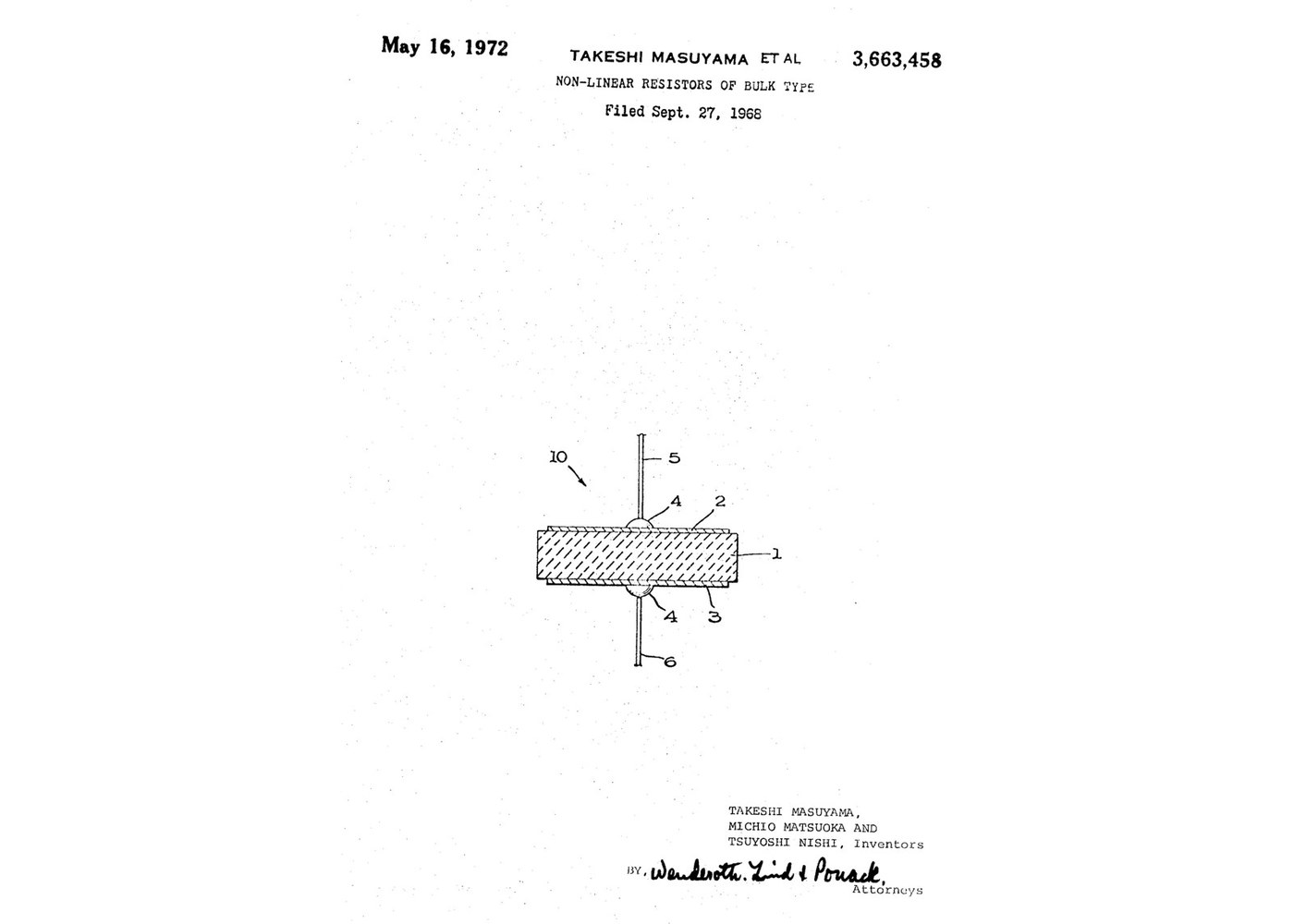


Metal Oxide Varistor: Zinc Oxide with 0.2 % Bismuth Oxide, 1300 °C, 1.0 mm (Masuyama 1972)
A non-linear resistor: the current through it rises far faster than the voltage across it. Masuyama, Matsuoka and Nishi made one from zinc oxide with a little bismuth oxide: pressed into a disc, sintered, lapped, and given metal electrodes. With 0.2 mole % bismuth oxide, sintered at 1300 °C and lapped to 1.0 mm, the disc measured a C-value of 0.3 at 1 mA and a nonlinearity exponent n of 1.1.
Source: T. Masuyama, M. Matsuoka and T. Nishi (Matsushita), US 3,663,458 (1972), Example 1. Unknown: what the silver paint is. The patent calls the spraying and the paint well known. The spraying is ours, after US Army Corps of Engineers EM 1110-2-3401 (1999). The 10 g batch is our arithmetic. Picture: the patent's drawing.
उन्नत
1 day
निर्देश
1
1
Weigh 99.8 : 0.2 and wet-mill 5 hours
Weigh 99.8 : 0.2 and wet-mill 5 hours
Mix zinc oxide and bismuth oxide 99.8 : 0.2 by moles. Ours, for 10 g: 9.887 g zinc oxide, 0.113 g bismuth oxide (our arithmetic). Mill wet for 5 hours, then dry. Unknown: the milling liquid.
इस चरण के लिए सामग्री:
 ज़िंक ऑक्साइड चूर्ण9.887 ग्रा
 बिस्मथ ऑक्साइड0.113 ग्रा
आवश्यक उपकरण:
 तराजू
 लोहे की बॉल मिल
 सुखाने की भट्ठी
2
2
Press discs 13 mm by 2.5 mm
Press discs 13 mm by 2.5 mm
Press the powder in a mould into discs 13 mm across and 2.5 mm thick at 340 kg/cm².
आवश्यक उपकरण:
 हाइड्रोलिक प्रेस
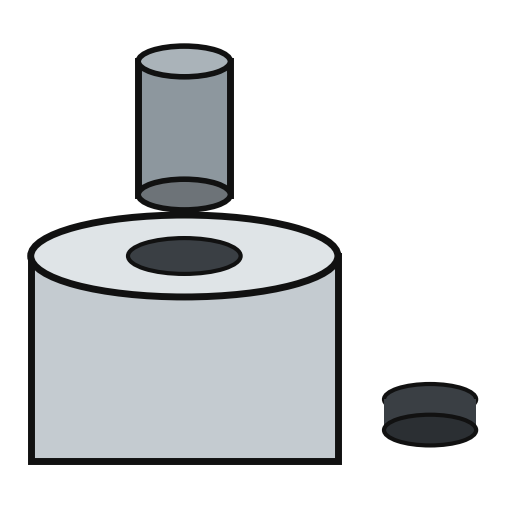 डिस्क दबाने की डाई
 वर्नियर कैलिपर
3
3
Sinter 1 hour at 1300 °C and furnace-cool
Sinter 1 hour at 1300 °C and furnace-cool
Sinter the discs in air for 1 hour at 1300 °C, then let them cool in the furnace to room temperature (about 15-30 °C). Masuyama gives 800 to 1200 °C as the best range for zinc oxide with bismuth oxide.
आवश्यक उपकरण:
 मफल भट्ठी
4
4
Lap both faces to 1.0 mm
Lap both faces to 1.0 mm
Lap both faces with 600-mesh silicon carbide until the disc is 1.0 mm thick.
आवश्यक उपकरण:
 सिलिकॉन कार्बाइड कणवर्नियर कैलिपर
5
5
Spray aluminium electrodes and attach leads
Spray aluminium electrodes and attach leads
Spray a metallised film of aluminium on both faces. Attach a lead wire to each with conductive silver paint. Ours, after US Army Corps of Engineers EM 1110-2-3401 (1999): wire-arc spray the aluminium from two 3.2 mm wires melted by an 18-40 V DC arc and atomised by compressed air, 15-20 cm from the disc and never at less than 45°, in at least two coats at right angles of 50-75 µm each. Unknown: the paint.
इस चरण के लिए सामग्री:
 ऐलुमिनियम की सिल्ली1 as 3.2 mm spray wire
 चाँदी की चालक पेंट1 as required
 ताँबे का तार2 टुकड़े
आवश्यक उपकरण:
वर्नियर कैलिपर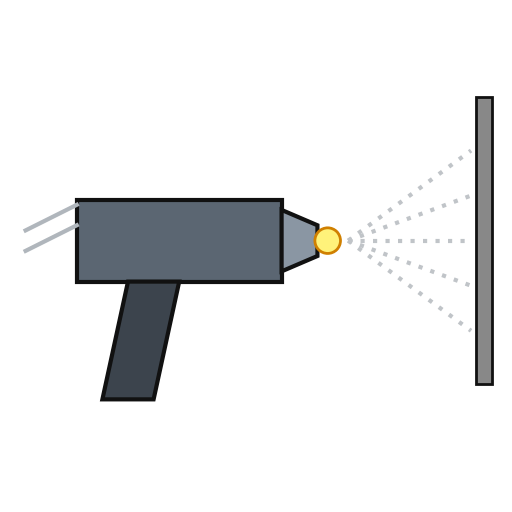 वायर-आर्क स्प्रे गन
 औद्योगिक वायु संपीडक
सामग्री
5- 9.887 ग्राप्लेसहोल्डर
- 0.113 ग्राप्लेसहोल्डर
- 1 as 3.2 mm spray wireप्लेसहोल्डर
- 1 as requiredप्लेसहोल्डर
- 2 टुकड़ेप्लेसहोल्डर
आवश्यक उपकरण
10- प्लेसहोल्डर
- प्लेसहोल्डर
- प्लेसहोल्डर
- प्लेसहोल्डर
- प्लेसहोल्डर
- प्लेसहोल्डर
- प्लेसहोल्डर
- प्लेसहोल्डर
- प्लेसहोल्डर
- प्लेसहोल्डर
यह ब्लूप्रिंट बनाता है

संबंधित ब्लूप्रिंट
ये ब्लूप्रिंट ज्ञान साझा करते हैं — तकनीक, सामग्री या सिद्धांत

CC0 पब्लिक डोमेन
यह ब्लूप्रिंट CC0 के तहत जारी किया गया है। आप बिना अनुमति माँगे इस कार्य को किसी भी उद्देश्य के लिए कॉपी, संशोधित, वितरित और उपयोग करने के लिए स्वतंत्र हैं।
उनके ब्लूप्रिंट के माध्यम से उत्पाद खरीदकर मेकर का समर्थन करें जहाँ वे मेकर कमीशन कमाते हैं जो विक्रेताओं द्वारा निर्धारित होता है, या इस ब्लूप्रिंट का नया संस्करण बनाएँ और राजस्व साझा करने के लिए इसे अपने ब्लूप्रिंट में कनेक्शन के रूप में शामिल करें।