
Extracting Lithium from Spodumene — The Lightest Metal That Powers the Future
Lithium is the lightest metal and the lightest solid element — atomic number 3, density only 0.534 g/cm³ (it floats on water, then reacts violently with it). It sits at the top of the alkali metal group alongside sodium and potassium, sharing their ferocious reactivity but surpassing them in electrochemical potential. This property — the highest electrode potential of any element — is what makes lithium the foundation of modern rechargeable batteries, from phones to electric vehicles to grid-scale energy storage.
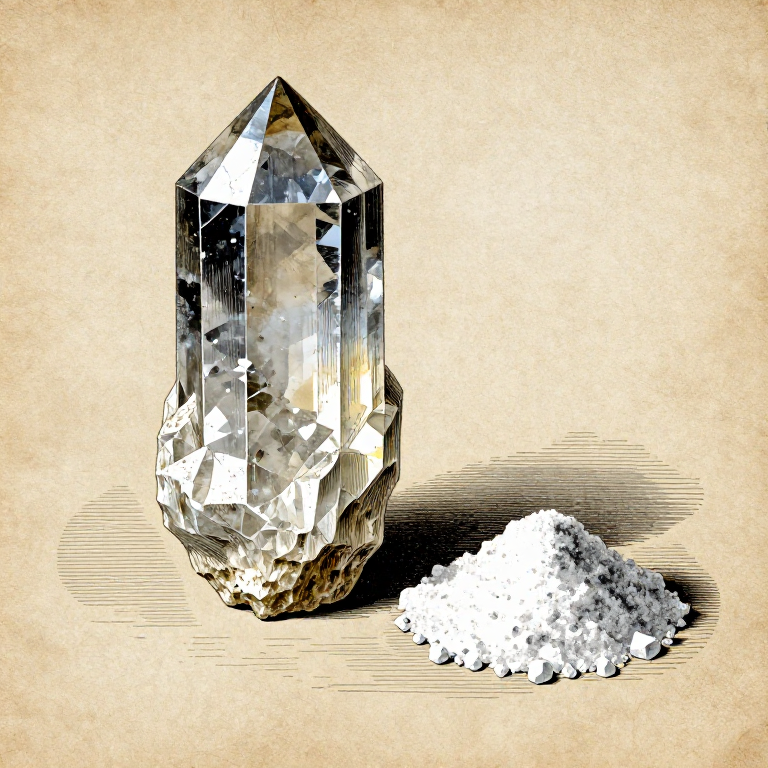
Lithium does not occur as a free metal in nature. Its primary ore is spodumene (LiAlSi₂O₆), a lithium aluminum silicate pyroxene mineral found in lithium-rich pegmatite granites. Spodumene crystals can be enormous — single crystals over 14 meters long have been found in the Black Hills of South Dakota. The mineral also occurs in Australia, Brazil, Zimbabwe, Portugal, and China. An alternative source is lithium-bearing brines (salt flats in Chile, Argentina, Bolivia), but ore-based extraction is the subject of this blueprint.
The challenge: spodumene in its natural α (alpha) form is extremely resistant to chemical attack. The silicon-oxygen framework locks lithium inside a dense monoclinic crystal structure. The solution is a two-step process: first, calcine (roast) the ore at 1050–1100 °C to convert α-spodumene to β-spodumene — a tetragonal form with an expanded, more open crystal lattice. Then react the β-spodumene with sulfuric acid at 250 °C, which selectively dissolves the lithium as lithium sulfate while leaving aluminum and silicon behind. The lithium sulfate is water-leached, purified, and precipitated as lithium carbonate (Li₂CO₃) — the standard commercial lithium compound.
HAZARD: Concentrated sulfuric acid causes severe chemical burns and generates toxic sulfur trioxide fumes when heated. Calcination at 1050+ °C requires proper furnace equipment. Lithium compounds are corrosive to skin and eyes. Work outdoors or under strong fume extraction. Wear acid-resistant gloves, chemical splash goggles, and a P100 respirator with acid gas cartridges. Have a sodium bicarbonate neutralization solution and running water immediately available for acid spills.
Instructions
Understand lithium's position and properties
Understand lithium's position and properties
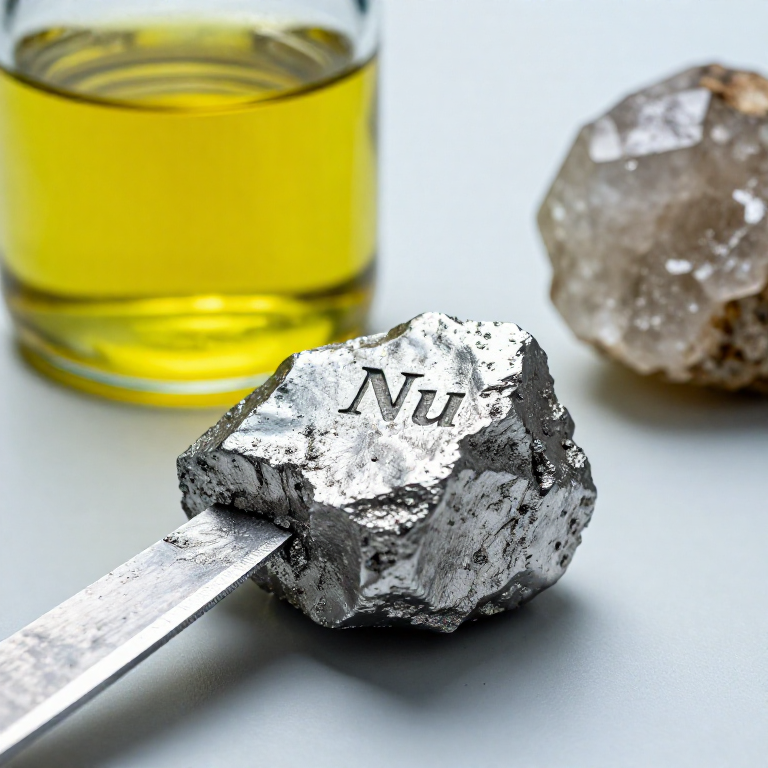
Lithium (Li, atomic number 3, atomic mass 6.94) is the first metal in the periodic table and the lightest solid element. It has a single valence electron in the 2s orbital, making it an alkali metal — extremely reactive, never found free in nature. Its density is only 0.534 g/cm³ (less than half that of water), and it is soft enough to cut with a knife. Fresh-cut lithium is silvery-white but tarnishes rapidly in air to a dull grey lithium oxide and then lithium hydroxide coating.
Lithium's electrochemical potential (−3.04 V vs. standard hydrogen electrode) is the most negative of any element — meaning it has the greatest driving force to lose its electron. This makes lithium ideal for batteries: a lithium cell packs more energy per gram than any other metal-based chemistry. Lithium compounds also lower the melting point of glass and ceramic glazes (lithium carbonate is used as a flux), strengthen aluminum alloys in aerospace, and serve as a mood stabilizer in psychiatric medicine. Annual global demand exceeds 100,000 tonnes of lithium carbonate equivalent.
Identify and acquire spodumene ore
Identify and acquire spodumene ore
Spodumene (LiAlSi₂O₆) is a lithium aluminum inosilicate of the pyroxene group. It occurs in lithium-bearing pegmatite granites — coarse-grained igneous intrusions rich in rare elements. Spodumene crystals are typically white to grey, prismatic, with two cleavage planes at approximately 87° (characteristic of pyroxene). Hardness is 6.5–7 on the Mohs scale — harder than feldspar, similar to quartz. The gem variety kunzite is pink (from manganese), and hiddenite is green (from chromium).
Spodumene contains approximately 3.7% lithium by weight (8.0% Li₂O). For this blueprint, acquire 200–500 grams of spodumene ore or concentrate from a mineral supplier. The ore should be white to grey, crystalline, and free of heavy contamination with other minerals. Pegmatite matrix rock (feldspar, quartz) is acceptable — it passes through the process as inert residue. Avoid weathered or heavily iron-stained material, which introduces impurities into the lithium extract.
Tools needed:
 Geological Hammer
Crush and grind the spodumene ore
Crush and grind the spodumene ore
Crush the spodumene ore to pieces under 5 mm using a hammer on a steel plate, then grind to a fine powder (under 0.5 mm) using a mortar and pestle. Finer grinding increases the surface area exposed during the sulfuric acid roast, improving lithium extraction efficiency. Industrial operations grind to under 75 μm (200 mesh), but for small-scale work, a consistently fine sand-like texture is sufficient.
Spodumene is hard (6.5–7 Mohs) and tough — expect grinding to take significant effort. Wear safety goggles during crushing to protect against flying chips. The powder should be dry — moisture causes clumping and interferes with the calcination step. If the ore is damp, spread the crushed material on a tray and dry in an oven at 110 °C for 2 hours before grinding.
Tools needed:
 Mortar and Pestle
 Safety Goggles
 Hammer (2 kg)
Calcine the ore to convert α-spodumene to β-spodumene
Calcine the ore to convert α-spodumene to β-spodumene
This is the critical step. Natural α-spodumene has a dense monoclinic crystal structure that is almost impervious to acid attack. Heating to 1050–1100 °C causes an irreversible phase transformation to β-spodumene — a tetragonal structure with a 30% volume expansion. The expanded lattice makes lithium atoms accessible to chemical extraction. Below 1000 °C the conversion is incomplete; above 1200 °C the material begins to melt and form glass (lithium lowers melting points), trapping the lithium permanently.
Spread the ground ore in a thin layer (under 10 mm) in a refractory crucible or kiln tray. Heat in a kiln or furnace to 1050–1100 °C and hold for 30–60 minutes. The ore will not visibly change color significantly — the conversion is a solid-state crystal rearrangement, not a chemical reaction with visible products. After calcination, allow the material to cool slowly in the furnace. The calcined powder may appear slightly lighter in color and will feel grittier due to the volume expansion cracking the particles.
Tools needed:
 Kiln
Kiln Clay Crucible (refractory)
 Leather Gauntlet GlovesSafety Goggles
Mix calcined ore with sulfuric acid
Mix calcined ore with sulfuric acid
Work outdoors with full acid PPE — concentrated sulfuric acid causes immediate severe burns. Mix the cooled, calcined β-spodumene powder with concentrated sulfuric acid (96% H₂SO₄) at a ratio of approximately 1:1 by weight. For 200 grams of calcined ore, use 200 grams (approximately 110 mL) of concentrated sulfuric acid. Add the acid to the ore slowly, stirring with a glass rod — never add ore to acid. The mixture will heat up significantly from the exothermic reaction of acid with residual moisture and minerals.
The goal is to form a thick, uniform paste. If the mixture is too dry (powdery), add a small amount more acid; if too wet (liquid pooling), add more ore. The acid-ore paste must be heated in the next step, so it should be workable but not soupy. Perform this mixing in a heat-resistant glass or porcelain container — never metal, which sulfuric acid attacks.
Materials for this step:
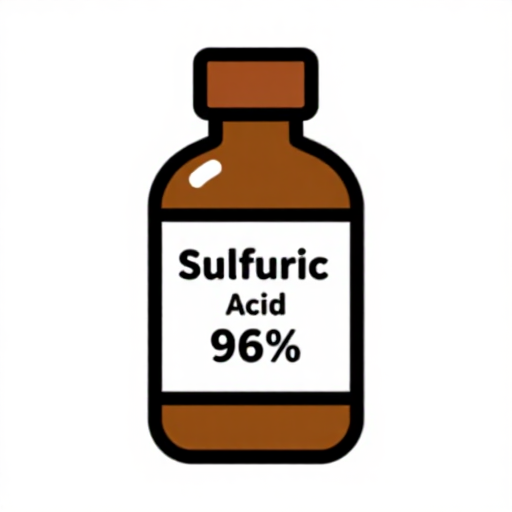 Sulfuric Acid (96% concentrated)200 g
Tools needed:
 Borosilicate Beaker
 P100/FFP3 Respirator with Acid Gas Cartridge
 Chemical-Resistant Gloves
 Chemical Splash Goggles
Heat the acid-ore mixture to 250 °C (acid roast)
Heat the acid-ore mixture to 250 °C (acid roast)
Transfer the acid-ore paste to a heat-resistant porcelain evaporating dish or refractory vessel and heat slowly to 250 °C on a hot plate or in a furnace. At this temperature, the sulfuric acid reacts selectively with the lithium in the β-spodumene lattice, forming water-soluble lithium sulfate (Li₂SO₄) while leaving aluminum and silicon as insoluble aluminum sulfate and silica residue.
The reaction: β-Li₂O·Al₂O₃·4SiO₂ + H₂SO₄ → Li₂SO₄ + Al₂O₃·4SiO₂ + H₂O. Heat slowly — too fast causes spattering of hot acid. Sulfur trioxide fumes (white, acrid) are released above 200 °C — maintain strong ventilation and wear acid gas respiratory protection. Hold at 250 °C for 30–60 minutes. The mixture transitions from a wet paste to a dry, cake-like solid as the water of reaction evaporates and excess acid is driven off.
Tools needed:
 Evaporating Dish (Porcelain)P100/FFP3 Respirator with Acid Gas Cartridge
 Leather Apron
Water-leach the lithium sulfate
Water-leach the lithium sulfate
Allow the roasted cake to cool to room temperature. Break it into small pieces and add to hot water (approximately 80 °C) at a ratio of 4–5 parts water to 1 part solid. Stir vigorously for 15–20 minutes. Lithium sulfate is highly water-soluble (34.8 g per 100 mL at 20 °C) and dissolves readily, while aluminum silicate residue and excess silica remain insoluble. The solution will be acidic (pH 1–3) due to residual sulfuric acid.
The leach solution should be clear to slightly cloudy. Heavily turbid solution indicates incomplete roasting (unreacted spodumene) or excessive grinding of gangue minerals — these can be removed by filtration in the next step. Let the slurry settle for 10 minutes before filtering to allow heavy particles to sink.
Tools needed:
 Heat-Resistant Glass Beaker (1 liter)
 Borosilicate Glass Rod
Filter the leach solution
Filter the leach solution
Filter the leach slurry through filter paper in a funnel to separate the clear lithium sulfate solution from the insoluble residue. The residue is primarily aluminum silicate, excess silica, and unreacted gangue — it can be discarded (it is not hazardous after the acid has been washed out). Wash the residue with a small amount of hot water to recover lithium sulfate trapped in the solids — this wash water is added to the main filtrate.
The clear filtrate contains lithium sulfate (Li₂SO₄), along with dissolved impurities: aluminum sulfate, iron sulfate, and sodium/potassium sulfates from the gangue minerals. The solution is typically pale yellow to colorless. If heavily colored (brown or green), significant iron is present — this will need to be removed before precipitation.
Materials for this step:
 Filter Paper (fine pore)5 sheets
Tools needed:
 Buchner Funnel (Porcelain)
 Erlenmeyer Flask
Neutralize and remove impurities
Neutralize and remove impurities
Add calcium hydroxide (slaked lime, Ca(OH)₂) or sodium carbonate (soda ash, Na₂CO₃) slowly to the filtrate to raise the pH to approximately 10–11. This precipitates aluminum as aluminum hydroxide (white, gelatinous) and iron as iron hydroxide (brown, flocculent). Stir continuously while adding the base — localized high pH causes premature lithium carbonate precipitation, losing yield.
Let the precipitated impurities settle for 30 minutes, then filter again. The second filtrate should be clear and nearly colorless — this is a purified lithium sulfate solution. Check the pH with litmus or pH paper: it should be between 10 and 11. If below 10, add more base; if above 12, you risk precipitating lithium as lithium hydroxide (which is also useful but not the target compound of this blueprint).
Tools needed:
 Litmus PaperFilter Paper (fine pore)
Precipitate lithium carbonate
Precipitate lithium carbonate
Heat the purified lithium sulfate solution to 90–100 °C (near boiling). Add a saturated solution of sodium carbonate (Na₂CO₃) slowly while stirring. The reaction: Li₂SO₄ + Na₂CO₃ → Li₂CO₃↓ + Na₂SO₄. Lithium carbonate is unusual among carbonates — its solubility decreases with temperature (1.33 g/100 mL at 20 °C, 0.72 g/100 mL at 100 °C). By precipitating at high temperature, you drive more lithium out of solution and improve yield.
A white precipitate of lithium carbonate forms immediately. Continue adding sodium carbonate until no more precipitate forms — test by adding a few drops of sodium carbonate solution to a clear portion of the supernatant and checking for further cloudiness. When precipitation is complete, remove from heat and allow to settle for 30 minutes.
Tools needed:
Heat-Resistant Glass Beaker (1 liter)Borosilicate Glass RodFilter, wash, and dry the lithium carbonate
Filter, wash, and dry the lithium carbonate
Filter the precipitated lithium carbonate through fine filter paper. The white powder on the filter is crude lithium carbonate (Li₂CO₃). Wash the precipitate three times with small portions of hot water to remove trapped sodium sulfate — sodium sulfate is very soluble and washes out easily, while lithium carbonate's low hot-water solubility means minimal lithium is lost during washing.
Transfer the washed precipitate to a clean evaporating dish and dry at 110 °C for 2–3 hours. The dried product is a white, fine powder — lithium carbonate, the standard commercial lithium compound. It should feel chalky and dissolve slowly in dilute hydrochloric acid with gentle effervescence (CO₂ evolution). The theoretical yield from 200 grams of pure spodumene (3.7% Li) is approximately 20 grams of Li₂CO₃, but practical yields with small-scale equipment are typically 30–50% of theoretical.
Materials for this step:
Filter Paper (fine pore)5 sheetsTools needed:
Evaporating Dish (Porcelain) Precision Scale (0.01g)
Verify the product with the flame test
Verify the product with the flame test
The definitive field test for lithium is the flame test. Dip a clean platinum or nichrome wire loop into dilute hydrochloric acid, then into the lithium carbonate powder, and hold in a Bunsen burner or gas flame. Lithium produces a brilliant crimson-red flame — unmistakable and diagnostic. No other common element produces this specific deep red color (strontium gives a similar red, but strontium compounds are much heavier and unlikely contaminants from this process; sodium gives yellow, potassium gives lilac, calcium gives orange-red).
The crimson lithium flame was how the element was discovered — Johan August Arfwedson identified it in 1817 by observing an unknown red flame from petalite ore, and the name 'lithium' comes from Greek lithos (stone), because unlike sodium and potassium (found in plant ashes), lithium was found in stone minerals. Record the yield weight, purity observations, and flame test result.
Tools needed:
Precision Scale (0.01g)Materials
2- 200 gPlaceholder
- 5 sheetsPlaceholder
Tools Required
20- Placeholder
- Placeholder
- Placeholder
- Placeholder
- Placeholder
- Placeholder
- Placeholder
- Placeholder
- Placeholder
- Placeholder
- Placeholder
- Placeholder
- Placeholder
- Placeholder
- Placeholder
- Placeholder
- Placeholder
- Placeholder
- Placeholder
Related blueprints
Other builds that share materials, tools, or techniques with this one.
CC0 Public Domain
This blueprint is released under CC0. You are free to copy, modify, distribute, and use this work for any purpose, without asking permission.
Support the Maker by purchasing products through their Blueprint where they earn a Maker Commission set by Vendors, or create a new iteration of this Blueprint and include it as a connection in your own Blueprint to share revenue.