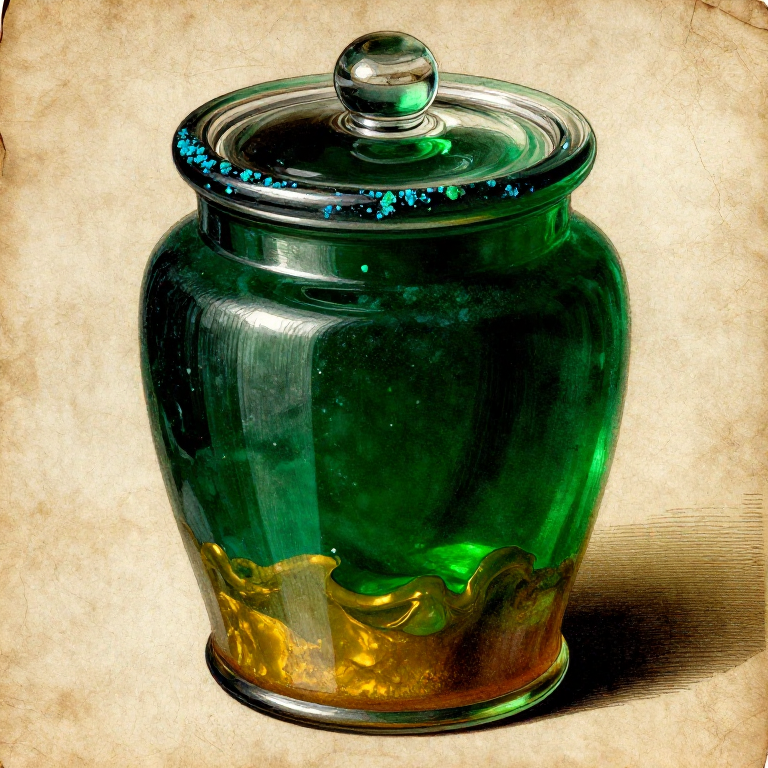


Making Copper Resinate Green — The Transparent Glaze of Medieval and Renaissance Painters
Copper resinate is a transparent, intensely green glaze pigment made by dissolving verdigris (copper acetate) in a natural resin — traditionally Venice turpentine (larch balsam), or dammar/mastic resin dissolved in turpentine spirits. The result is a deep, luminous, transparent green that was one of the most important glazing colours in European painting from the 14th to 17th centuries.
Unlike the opaque mineral greens (malachite, green earth), copper resinate is transparent — light passes through the green glaze layer and reflects off the white ground or underpainting below, creating a luminous, jewel-like depth. This transparency made it invaluable for painting foliage, drapery, and jewels. Giovanni Bellini, Jan van Eyck, and Raphael all used copper resinate green glazes extensively.
SAFETY WARNING: This process involves handling verdigris (copper acetate), which is TOXIC if ingested and irritating to skin and eyes. Heating verdigris releases acetic acid vapour. Hot turpentine is FLAMMABLE. Work in a well-ventilated area, wear gloves and eye protection, and keep away from open flames. Use an electric hot plate or water bath, never direct flame.
Instructions
Prepare the resin medium
Prepare the resin medium
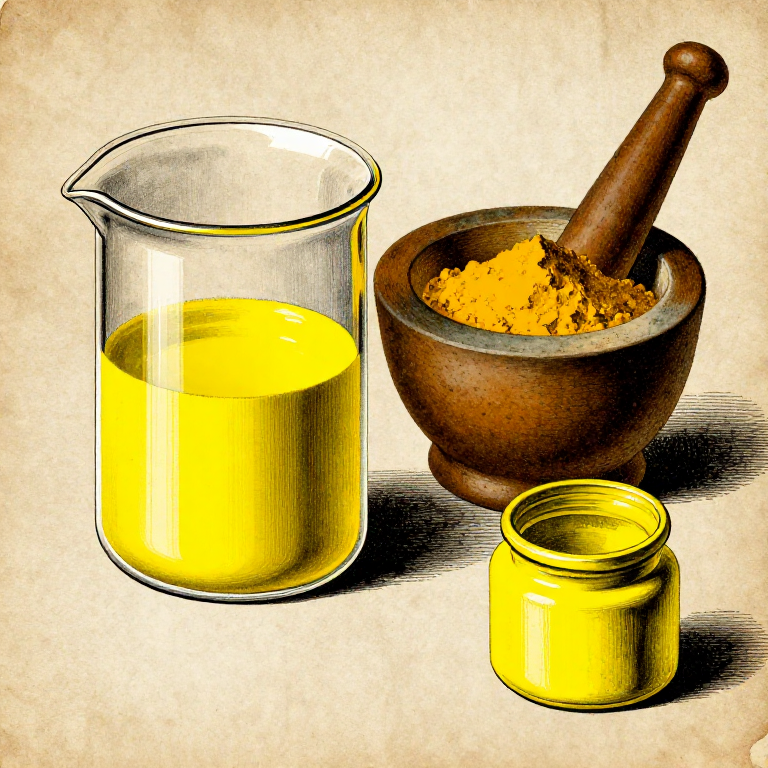
Dissolve dammar resin in turpentine spirits to make a thick varnish. Place 50 g of crushed dammar resin in a glass jar and add 100 ml of turpentine spirits. Seal and let dissolve over 24-48 hours, shaking occasionally, until the dammar has fully dissolved into a clear, thick, honey-coloured varnish. Alternatively, use Venice turpentine (larch balsam) directly — it is already a thick, honey-like resin that dissolves verdigris readily. Venice turpentine was the preferred medium in 15th-century Venetian painting for this recipe.
Materials for this step:
 Gum Turpentine100 ml
Tools needed:
 Clean Glass Jars with Lids
Grind the verdigris
Grind the verdigris
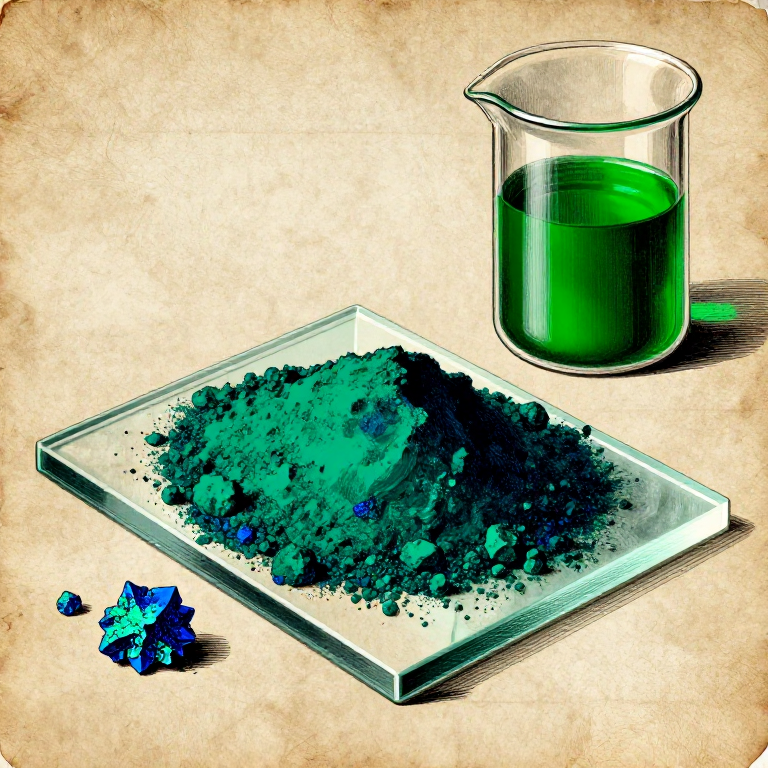
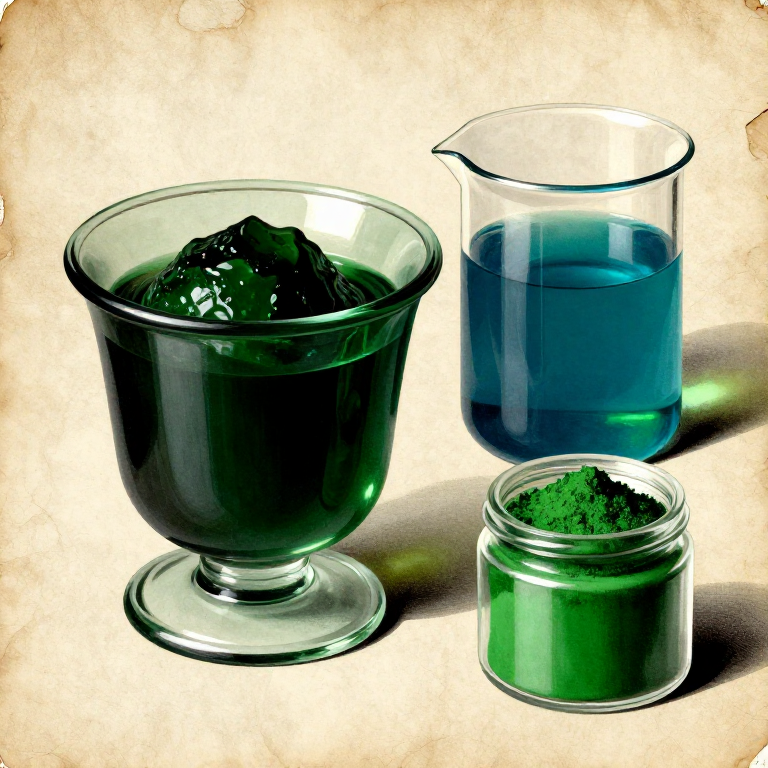
Grind verdigris (copper acetate) to a fine powder on a glass muller. Verdigris is a bright blue-green crystalline powder — commercial copper acetate from a chemical supplier works perfectly. You need approximately 20-30 g for this batch. Wear gloves when handling — verdigris is moderately toxic and irritating to skin. The finer you grind it, the more completely it will dissolve in the resin, producing a more transparent and uniform glaze.
Materials for this step:
 Verdigris Pigment30 g
Tools needed:
 Glass Muller
Dissolve verdigris in the resin
Dissolve verdigris in the resin
Warm the dammar-turpentine varnish (or Venice turpentine) gently in a double boiler or water bath to approximately 60-80°C — NEVER over direct flame, as turpentine vapour is highly flammable. Slowly add the ground verdigris to the warm resin, stirring continuously with a glass rod. The verdigris gradually dissolves, and the resin transforms from honey-gold to a deep, brilliant, transparent green. Continue heating and stirring for 15-30 minutes until all the verdigris has dissolved and the mixture is a uniform, intensely green, transparent liquid. The chemical reaction converts copper acetate into copper resinate — a copper salt of the resin acids.
Tools needed:
 Heat-Resistant Glass Beaker (1 liter)
 Chemical Splash Goggles
Strain and store
Strain and store
While still warm and fluid, strain the green resin through fine cheesecloth into a clean glass jar to remove any undissolved particles. The finished copper resinate should be a deep, brilliantly transparent green — when spread thinly on white paper or glass, light passes through it like a stained-glass window. Store in a sealed glass jar. The resin solidifies as it cools into a hard, translucent green mass. For use in oil painting, warm gently or dissolve a portion in turpentine spirits to make a fluid glaze. Apply over a white or light-coloured underpainting for maximum luminosity.
Tools needed:
 Fine Cheesecloth
 Dark Glass Jars with Airtight Lids
Application notes and known limitations
Application notes and known limitations
Copper resinate produces the most vivid, transparent greens in oil painting — no other historical green pigment matches its depth and luminosity when used as a thin glaze. However, it has a well-known flaw: over centuries, copper resinate glazes turn brown. This darkening (oxidation of the copper compound) has affected many Renaissance paintings — passages that were once vivid green foliage now appear dark brown. Van Eyck's 'Ghent Altarpiece' and Raphael's landscapes both show this deterioration. Despite this, copper resinate remained in use for centuries because no other green could match its transparency when fresh. For modern reproduction painting, apply thin and protect with good varnish to slow the inevitable browning.
Materials
2- 100 mlPlaceholder
- Placeholder
Tools Required
7- Placeholder
- Placeholder
- Placeholder
- Placeholder
- Placeholder
- Placeholder
Connected Blueprint Materials
Related Blueprints
These blueprints share knowledge with this one — techniques, materials, or principles that connect them in the learning graph.
Related blueprints
Other builds that share materials, tools, or techniques with this one.
CC0 Public Domain
This blueprint is released under CC0. You are free to copy, modify, distribute, and use this work for any purpose, without asking permission.
Support the Maker by purchasing products through their Blueprint where they earn a Maker Commission set by Vendors, or create a new iteration of this Blueprint and include it as a connection in your own Blueprint to share revenue.