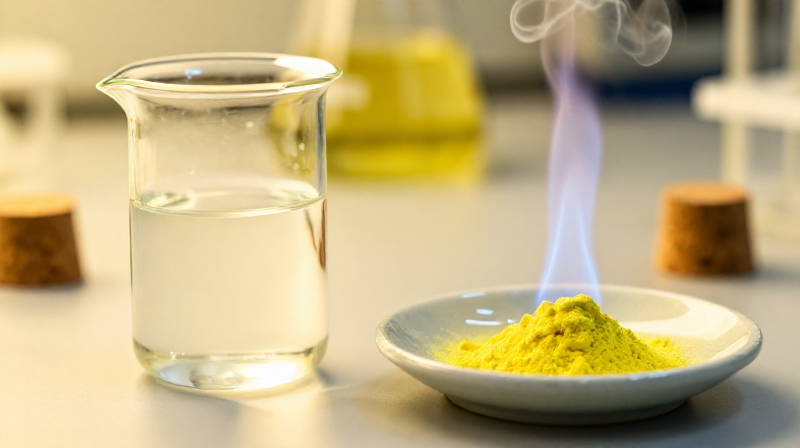


Making Sulfuric Acid by the Lead Chamber Process — The Acid That Built the Industrial Revolution
Sulfuric acid (H₂SO₄, oil of vitriol) is the single most important chemical in industrial history. More sulfuric acid is produced worldwide than any other manufactured chemical — over 260 million tonnes per year — and a nation's sulfuric acid output was long used as the measure of its industrial development. It is essential for manufacturing fertilizers, refining petroleum, processing metals, producing dyes and pigments, and hundreds of other processes.
Before 1746, sulfuric acid was made by the 'bell process' — burning sulfur with saltpeter under small glass bells and collecting the acid mist. This produced tiny quantities at enormous cost. In 1746, John Roebuck and Samuel Garbett in Birmingham replaced the fragile glass bells with large lead-lined chambers — lead being resistant to dilute sulfuric acid and far cheaper than glass. This single change scaled production by a factor of one hundred and slashed the price, making sulfuric acid available for the first time as a bulk industrial chemical.
The chemistry is elegant: sulfur burns in air to form sulfur dioxide (SO₂), which is then oxidized to sulfur trioxide (SO₃) by nitrogen dioxide (NO₂) from decomposing saltpeter. The NO₂ acts as a catalyst — it is consumed in oxidizing SO₂ but regenerated when the resulting nitric oxide (NO) reacts with air. SO₃ dissolves in water to form sulfuric acid. The catalytic cycle: SO₂ + NO₂ → SO₃ + NO, then 2NO + O₂ → 2NO₂ — the nitrogen oxides shuttle oxygen from the air to the sulfur dioxide.
This lab-scale demonstration replicates the essential chemistry of Roebuck's industrial process using glass vessels in place of the original lead chambers. The product is dilute sulfuric acid — concentrating it further requires specialized apparatus and extreme care, as hot concentrated sulfuric acid is one of the most dangerous substances in the laboratory.
SAFETY WARNING: Sulfur dioxide is a toxic, choking gas that causes severe respiratory irritation. Nitrogen dioxide (brown fumes) is acutely toxic to the lungs. Sulfuric acid causes severe burns. Work ONLY in a functioning fume hood or outdoors with wind at your back. Wear full PPE including acid-rated respirator. Never heat concentrated sulfuric acid without proper training.
Instructions
Prepare full protective equipment and fume hood
Prepare full protective equipment and fume hood
Set up in a functioning fume hood or work outdoors with wind at your back. Wear a respirator with acid gas and P100 cartridges, chemical splash goggles, heavy-duty nitrile gloves, and a full lab coat. This process produces sulfur dioxide (a choking, toxic gas) and nitrogen dioxide (brown fumes, acutely toxic to the lungs). Both gases are immediately dangerous at moderate concentrations. Have a water wash station accessible for acid splashes. Keep a bucket of water nearby — dilute sulfuric acid washes off skin with copious water.
Tools needed:
 P100/FFP3 Respirator with Acid Gas Cartridge
 Chemical Splash Goggles
 Nitrile Rubber Gloves (Thick)
 Lab Coat
Weigh the sulfur
Weigh the sulfur
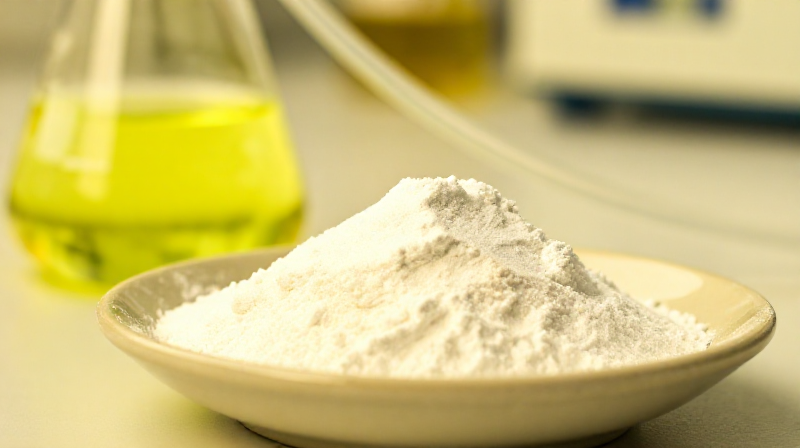
Weigh 10 g of flowers of sulfur (finely divided elemental sulfur, S₈). Sulfur is the fuel of this process — when burned, each sulfur atom combines with oxygen to form sulfur dioxide (SO₂). Flowers of sulfur is preferred over roll sulfur because the fine powder ignites readily and burns completely. The pale yellow powder has a faint characteristic smell.
Materials for this step:
 Sulfur10 g
Tools needed:
 Digital Precision Scale
Weigh the saltpeter
Weigh the saltpeter
Weigh 2 g of potassium nitrate (KNO₃, saltpeter). The saltpeter is the catalyst source — when heated, it decomposes to release nitrogen dioxide (NO₂), the brown gas that catalyses the oxidation of SO₂ to SO₃. Only a small amount is needed because the nitrogen oxides are regenerated in a catalytic cycle: NO₂ oxidises SO₂, producing NO, which is then re-oxidised by atmospheric oxygen back to NO₂. This catalytic insight — that a small amount of niter could convert a large amount of sulfur into acid — was the key to the Lead Chamber Process.
Materials for this step:
 Potassium Nitrate (saltpeter)2 g
Grind sulfur and saltpeter together
Grind sulfur and saltpeter together
Combine the sulfur and saltpeter in a porcelain mortar and grind gently to an intimate, uniform mixture. The saltpeter must be thoroughly dispersed through the sulfur so that nitrogen oxides are released throughout the combustion, not just at the start. Grind only enough to mix — do not pound vigorously, as mixtures of sulfur and oxidisers can ignite from friction. The finished mixture is a pale yellow powder with small white specks of saltpeter.
Tools needed:
 Mortar and Pestle (Porcelain)
Load the first charge into a porcelain dish
Load the first charge into a porcelain dish
Transfer approximately 3 g of the sulfur-saltpeter mixture into a porcelain evaporating dish. Spread it in a thin, even layer — this ensures complete combustion. The evaporating dish serves as the combustion vessel: it is heatproof, chemically inert to the acidic gases, and shallow enough for efficient burning. In Roebuck's original process, sulfur and saltpeter were burned on iron trays inside the lead chambers.
Tools needed:
 Evaporating Dish (Porcelain)
Place the dish inside a large glass beaker
Place the dish inside a large glass beaker
Set the loaded evaporating dish on the bottom of a large (1–2 litre) glass beaker. This beaker is your 'lead chamber' — it serves the same purpose as Roebuck's lead-lined rooms, trapping the gaseous reactants so the catalytic cycle can proceed. The beaker must be dry at this stage. Position the beaker inside the fume hood or in your outdoor workspace where you can cover it quickly after ignition.
Tools needed:
 Glass Beaker (Borosilicate, 500ml)
Ignite the sulfur-saltpeter charge
Ignite the sulfur-saltpeter charge
Light a spirit lamp and use its flame to ignite the sulfur-saltpeter mixture in the evaporating dish. The sulfur catches fire with a pale blue flame. Within seconds, the saltpeter decomposes at its ignition point (~400 °C), releasing oxygen and nitrogen dioxide. The mixture burns with a brighter, more vigorous flame than pure sulfur — the saltpeter provides additional oxygen and the nitrogen oxides that are essential for producing sulfuric acid rather than merely sulfurous acid.
Tools needed:
 Alcohol Burner (Spirit Lamp)
Cover the beaker immediately with a watch glass
Cover the beaker immediately with a watch glass
As soon as the charge is burning steadily, cover the beaker mouth with a watch glass, leaving a gap of 2–3 mm on one side for air. The gap is critical — the catalytic cycle requires oxygen from the air to regenerate NO₂ from NO. Without air, the cycle stops after one pass and most SO₂ remains unoxidised. Dense white and brown fumes fill the beaker instantly: the white is SO₃ aerosol, the brown is NO₂ — Roebuck would have seen these same colours inside his lead chambers.
Tools needed:
 Watch Glass
Observe the catalytic oxidation cycle
Observe the catalytic oxidation cycle
Watch through the glass as the reaction proceeds. The brown NO₂ fumes gradually diminish as the nitrogen dioxide is consumed by reacting with SO₂ — this is the catalytic step: SO₂ + NO₂ → SO₃ + NO. As NO accumulates, it drifts toward the air gap and contacts fresh oxygen, re-oxidising to brown NO₂: 2NO + O₂ → 2NO₂. This regeneration is visible as brown wisps near the gap. The cycle continues as long as SO₂ is present. Meanwhile, SO₃ reacts with moisture on the glass walls and in the air to form a fine mist of sulfuric acid droplets — visible as a white haze.
Wait for complete gas absorption
Wait for complete gas absorption
Allow 10–15 minutes after the charge has burned out completely. The fumes gradually clear as SO₃ reacts with moisture and deposits as acid on the glass surfaces. If brown fumes persist, the NO₂ is still cycling — wait until the beaker is nearly clear. The inner walls of the beaker will be wet with a thin film of dilute sulfuric acid. In Roebuck's process, steam was injected into the chambers to accelerate this absorption step — the water provided a bulk medium for the SO₃ to dissolve into.
Wash the chamber walls with distilled water
Wash the chamber walls with distilled water
Carefully remove the watch glass and immediately pour 100 ml of distilled water into the beaker. Swirl vigorously to dissolve the acid film from the glass walls. Use a glass stirring rod to ensure complete contact. The water turns very slightly acidic — this is your first portion of dilute sulfuric acid. The acid is extremely dilute at this stage because a single 3 g charge produces only a small amount of SO₃.
Materials for this step:
 Distilled Water (1 Liter)100 ml
Tools needed:
 Glass Stirring Rod (25cm)
Decant the acid wash into a collection beaker
Decant the acid wash into a collection beaker
Carefully pour the acid wash from the beaker into a clean collection beaker, leaving the evaporating dish behind. Use crucible tongs to hold the evaporating dish steady while pouring. Any residue in the evaporating dish — ash from the saltpeter, unburned sulfur — stays behind. The collected liquid is very dilute sulfuric acid mixed with traces of sulfurous acid and dissolved nitrogen oxides.
Tools needed:
 Crucible TongsGlass Beaker (Borosilicate, 500ml)
Repeat the combustion cycle three more times
Repeat the combustion cycle three more times
Dry the reaction beaker, reload the evaporating dish with another 3 g of sulfur-saltpeter mixture, and repeat the entire sequence: ignite, cover, wait for absorption, wash with 100 ml water, decant into the collection beaker. Perform four charges in total — this uses all 12 g of the mixture (10 g S + 2 g KNO₃). Each charge adds more sulfuric acid to the collection. The pooled liquid (approximately 400 ml) grows progressively more acidic with each cycle, just as the continuous operation of Roebuck's lead chambers produced increasingly concentrated acid.
Materials for this step:
Distilled Water (1 Liter)300 mlTest acidity with pH indicator paper
Test acidity with pH indicator paper
Dip a strip of universal pH indicator paper into the pooled acid. The paper should turn red-orange, indicating a pH of approximately 2–3 — a moderately strong acid. Pure distilled water has a pH of 7 (neutral). This confirms that an acid has been produced, but does not yet identify it as specifically sulfuric acid. The pH paper test would also be positive for sulfurous acid (H₂SO₃), nitric acid, or any other acid — a more specific test is needed.
Tools needed:
 pH Indicator Paper (Universal, 200 Strips)
Confirm sulfate ions with barium chloride test
Confirm sulfate ions with barium chloride test
Take a 10 ml sample of the acid in a test tube. Add 5 drops of dilute hydrochloric acid (to destroy any sulfite or carbonate that might give false positives), then add 1 ml of barium chloride solution. A dense, white precipitate of barium sulfate (BaSO₄) forms immediately — this is the definitive test for the sulfate ion (SO₄²⁻) and confirms that the product is sulfuric acid, not merely sulfurous acid. Barium sulfate is one of the most insoluble salts known — it will not dissolve even in concentrated hydrochloric acid. The reaction: Ba²⁺ + SO₄²⁻ → BaSO₄↓
Materials for this step:
 Barium Chloride Solution5 ml
 Dilute Hydrochloric Acid (10% HCl)5 ml
Filter the dilute sulfuric acid
Filter the dilute sulfuric acid
Pour the pooled acid through filter paper in a glass funnel to remove any suspended particles — ash from the saltpeter, sulfur residue, or dust. The filtrate is a clear, colourless liquid: dilute sulfuric acid at approximately 0.5–1% concentration. In Roebuck's original process, the acid accumulated on the lead chamber floors at roughly 35–40% concentration — the much higher strength was achieved by continuous operation over days with steam injection.
Tools needed:
 Filter Paper (fine pore)
 Glass Funnel (Stemmed)
Store the finished sulfuric acid
Store the finished sulfuric acid
Transfer the filtered acid to a glass bottle with a tight-fitting stopper. Label clearly: SULFURIC ACID (dilute, ~1%), date of preparation, CORROSIVE. Store upright in a cool place away from metals (sulfuric acid corrodes most metals), organic materials, and bases. The Lead Chamber Process dominated world sulfuric acid production for over 150 years — from Roebuck's first chambers in 1746 until the Contact Process (using platinum or vanadium pentoxide catalysts) gradually replaced it in the late 19th century. By that time, sulfuric acid production had become the yardstick of industrial civilisation itself.
Tools needed:
 Glass Storage Jar with Lid
Materials
5- Placeholder
- Placeholder
- Placeholder
- Placeholder
Tools Required
16- Placeholder
- Placeholder
- Placeholder
- Placeholder
- Placeholder
- Placeholder
- Placeholder
- Placeholder
- Placeholder
- Placeholder
- Placeholder
- Placeholder
- Placeholder
- Placeholder
Connected Blueprint Materials
Related Blueprints
These blueprints share knowledge with this one — techniques, materials, or principles that connect them in the learning graph.
Related blueprints
Other builds that share materials, tools, or techniques with this one.
CC0 Public Domain
This blueprint is released under CC0. You are free to copy, modify, distribute, and use this work for any purpose, without asking permission.
Support the Maker by purchasing products through their Blueprint where they earn a Maker Commission set by Vendors, or create a new iteration of this Blueprint and include it as a connection in your own Blueprint to share revenue.