ART
BEAUTY & WELLNESS
CRAFT
CULTURE & HISTORY
ENTERTAINMENT
ENVIRONMENT
FOOD & DRINKS
GREEN FUTURE
REVERSE ENGINEERING
SCIENCES
SPORTS
TECHNOLOGY
WEARABLES

Understanding Fluorine from Fluorite — The Most Reactive Element on Earth
Intermediate
Instructions
1
1
Identify Fluorite in the Field
Identify Fluorite in the Field
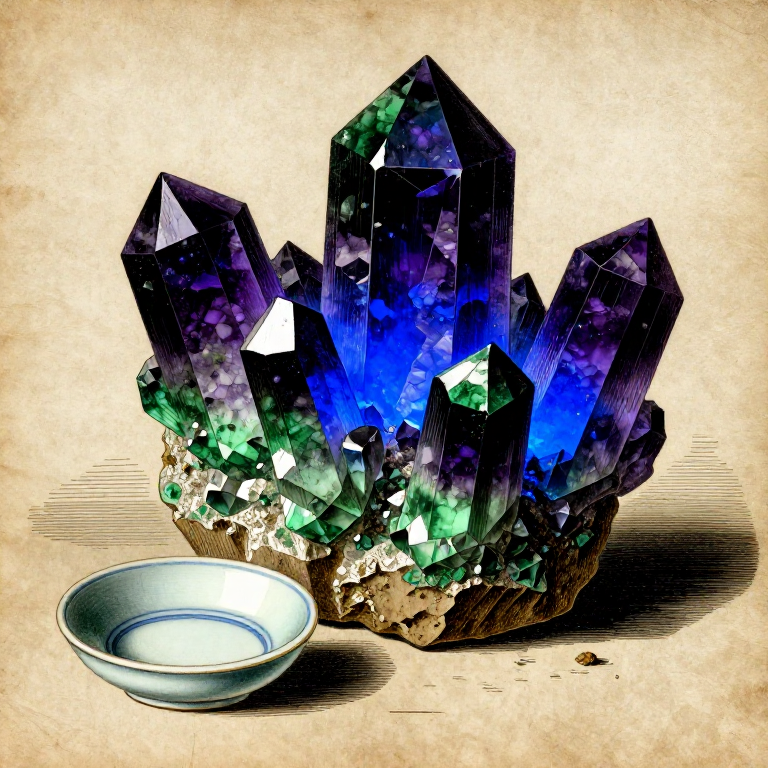
Fluorite (CaF₂) forms distinctive cubic crystals in hydrothermal veins, often alongside quartz and galena. Colors range from purple and green to yellow and colorless, caused by trace impurities and radiation damage to the crystal lattice. Fluorite has a Mohs hardness of 4 and exhibits perfect octahedral cleavage — it splits cleanly along four directions.
Tools needed:
Hand Lens (10x Magnification)
2
2
Test Fluorite Properties
Test Fluorite Properties
Confirm identification by testing hardness — fluorite is scratched by a steel knife (hardness 5.5) but scratches a copper coin (hardness 3.5). Under ultraviolet light, many fluorite specimens fluoresce bright blue or purple — in fact, the word 'fluorescence' derives from fluorite. Streak is always white regardless of crystal color.
Materials for this step:
 Fluorite Specimen
Tools needed:
Hand Lens (10x Magnification)
 Streak Plate (Unglazed Porcelain)
3
3
Understand Historical Uses as Flux
Understand Historical Uses as Flux
Fluorite's name comes from Latin 'fluere' (to flow). Since the 1500s, metallurgists added powdered fluorite to iron smelting to lower the melting point of slag, making it flow more easily. This 'fluorspar' use continues today — steel mills consume over 3 million tonnes annually. Adding 2-5% fluorite to slag reduces its viscosity dramatically, improving metal separation.
4
4
Crush and Grade Fluorite Ore
Crush and Grade Fluorite Ore
Break fluorite specimens into smaller pieces using a geological hammer. Industrial grading separates fluorite into three categories: acid-grade (97%+ CaF₂, for hydrofluoric acid production), ceramic-grade (85-96%, for glass and enamel), and metallurgical-grade (60-85%, for flux). The higher the CaF₂ content, the more valuable the ore.
Materials for this step:
Fluorite SpecimenTools needed:
 Geological Hammer
 Safety Goggles
5
5
React Fluorite with Sulfuric Acid (Demonstration)
React Fluorite with Sulfuric Acid (Demonstration)
The industrial route to elemental fluorine begins with hydrofluoric acid: CaF₂ + H₂SO₄ → 2HF + CaSO₄. This reaction is performed at 250°C in steel kilns lined with acid-resistant alloys. DANGER: Hydrofluoric acid penetrates skin painlessly and destroys bone tissue. Industrial HF production is never attempted outside specialized facilities. This step is for understanding the chemistry only.
Materials for this step:
 Sulfuric Acid (96% concentrated)
Tools needed:
 Chemical Splash Goggles
 Chemical-Resistant Gloves
 P100/FFP3 Respirator with Acid Gas Cartridge
6
6
Understand Moissan's Electrolysis of HF
Understand Moissan's Electrolysis of HF
Henri Moissan isolated elemental fluorine in 1886 after decades of failed attempts that killed or injured multiple chemists. He electrolyzed anhydrous HF dissolved in potassium hydrogen fluoride (KHF₂) at -23°C using platinum-iridium electrodes in a fluorite vessel. The pale yellow gas that appeared at the anode was fluorine — so reactive it attacks glass, water, and most metals on contact.
7
7
Demonstrate Fluorite's Optical Properties
Demonstrate Fluorite's Optical Properties
Place a clear fluorite crystal on printed text — the exceptionally low refractive index dispersion makes fluorite prized for high-quality camera lenses and scientific optics. Unlike glass, fluorite transmits ultraviolet and infrared light, which is why telescope makers use fluorite elements for apochromatic correction that eliminates color fringing.
Materials for this step:
Fluorite SpecimenTools needed:
Hand Lens (10x Magnification)
8
8
Examine Fluorine Compounds in Daily Life
Examine Fluorine Compounds in Daily Life
Sodium fluoride (NaF) is added to toothpaste and drinking water at 0.7 ppm to prevent tooth decay — fluoride ions replace hydroxyl groups in tooth enamel, forming harder fluorapatite. Polytetrafluoroethylene (PTFE/Teflon) coats non-stick pans — fluorine's bond to carbon is the strongest single bond in organic chemistry. Fluorinated refrigerants (HFCs) replaced ozone-depleting CFCs.
9
9
Perform Fluorite Acid Etch Test
Perform Fluorite Acid Etch Test
Place a small fluorite chip in a ceramic dish. Add a few drops of dilute hydrochloric acid — unlike calcite, fluorite does NOT fizz because it contains no carbonate. This negative acid test distinguishes fluorite from calcite, which it often resembles. Both can be purple and form cubic-looking crystals, but only calcite reacts with acid.
Materials for this step:
Fluorite Specimen Hydrochloric Acid (10% dilute)
Tools needed:
 Evaporating Dish (Porcelain)Safety GogglesChemical-Resistant Gloves
10
10
Map Fluorite's Role in Modern Industry
Map Fluorite's Role in Modern Industry
Fluorine's industrial importance extends far beyond flux: uranium hexafluoride (UF₆) is the gaseous form used in nuclear fuel enrichment by centrifuge separation of U-235 from U-238. Sulfur hexafluoride (SF₆) is the best gaseous electrical insulator known, used in high-voltage switchgear. Fluoropolymers line chemical tanks, seal spacecraft, and insulate wiring in extreme environments.
11
11
Document Findings and Safety Summary
Document Findings and Safety Summary
Record fluorite specimen characteristics: crystal habit, color, fluorescence response, hardness, and cleavage quality. Note that elemental fluorine cannot be safely handled outside industrial facilities — it reacts with virtually every substance including noble gases at high temperatures. Fluorine's electronegativity of 3.98 is the highest of all elements, making it the ultimate oxidizer.
Tools needed:
 Precision Scale (0.01g)
Materials
3- 1 piecePlaceholder
- 1 piecePlaceholder
- Placeholder
Tools Required
9- Placeholder
- Placeholder
- Placeholder
- Placeholder
- Placeholder
- Placeholder
- Placeholder
- Placeholder
Related blueprints
Other builds that share materials, tools, or techniques with this one.

Understanding Osmium from Platinum Group Ores — The Densest Element on Earthchemistry
Understanding Samarium from Monazite — The First Rare Earth Magnetchemistry
Understanding Niobium from Columbite — The Superconducting Steel Strengthenerchemistry
Understanding Gadolinium from Monazite — The MRI Contrast Agent Metalchemistry
Understanding Holmium from Xenotime — The Strongest Magnetic Elementchemistry
Understanding Thulium from Xenotime — The Rarest Stable Lanthanidechemistry
CC0 Public Domain
This blueprint is released under CC0. You are free to copy, modify, distribute, and use this work for any purpose, without asking permission.
Support the Maker by purchasing products through their Blueprint where they earn a Maker Commission set by Vendors, or create a new iteration of this Blueprint and include it as a connection in your own Blueprint to share revenue.