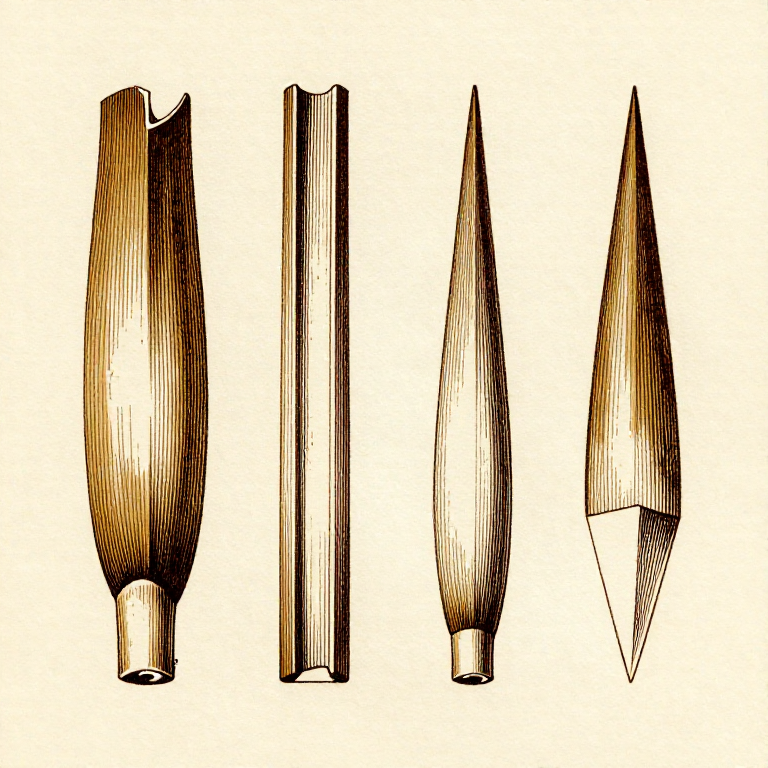


Cutting a Reed Stylus for Cuneiform — The Mesopotamian Writing Tool
دستورالعملها
Select the Reed
Select the Reed
Gather mature, dried reed stems from common reed (Phragmites australis) or giant reed (Arundo donax) — both grow abundantly in marshlands and along riverbanks throughout the Near East. The reed should be fully mature and dry (straw-coloured, not green), with a straight stem section between nodes. Select stems approximately 8-12 mm in diameter — thick enough to grip comfortably but thin enough to produce fine impressions. Cut a section 15-20 cm long between two nodes. The hollow interior of the reed creates the triangular cross-section when the tip is cut at an angle.
مواد مورد نیاز این مرحله:
 نی خشک2-3 sections, 15-20 cm long سانتیمتر
ابزارهای مورد نیاز:
 چاقوی سنگ چخماق
Cut the Writing Tip
Cut the Writing Tip
Using a sharp flint flake or obsidian blade, make an angled cut across one end of the reed at approximately 45 degrees. This cut exposes the hollow interior and creates an elliptical cross-section. Then make a second cut perpendicular to the first, trimming one side of the ellipse to create a roughly triangular point. The triangular cross-section is essential — when pressed into clay at different angles, it produces the horizontal, vertical, and diagonal wedge shapes that form cuneiform signs. The wider face of the triangle makes the thick end of the wedge; the narrow edge makes the thin tail.
Shape and Smooth the Tip
Shape and Smooth the Tip
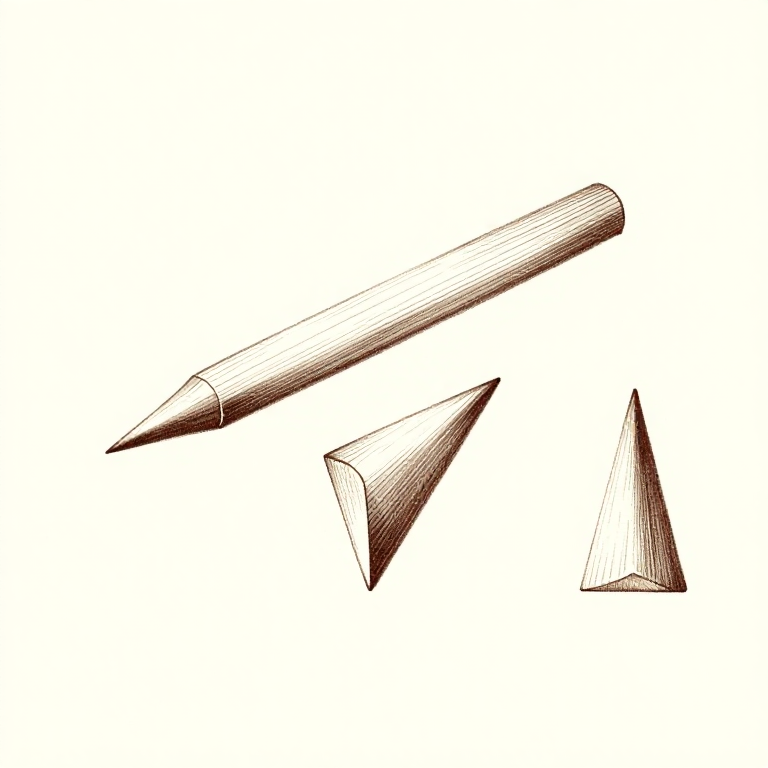
Refine the triangular tip by carefully trimming any rough or splintered fibers with a sharp blade. The tip does not need to be sharp — it creates impressions by being pushed into soft clay, not by cutting. A slightly blunt tip actually produces cleaner impressions than a sharp one, which can tear the clay surface. The flat face that presses into the clay should be smooth and about 3-5 mm across for standard-sized writing. For larger inscriptions (royal monuments), a broader stylus was used; for very fine script (such as on small cylinder seals or amulets), a needle-thin stylus was employed.
Test on Clay
Test on Clay
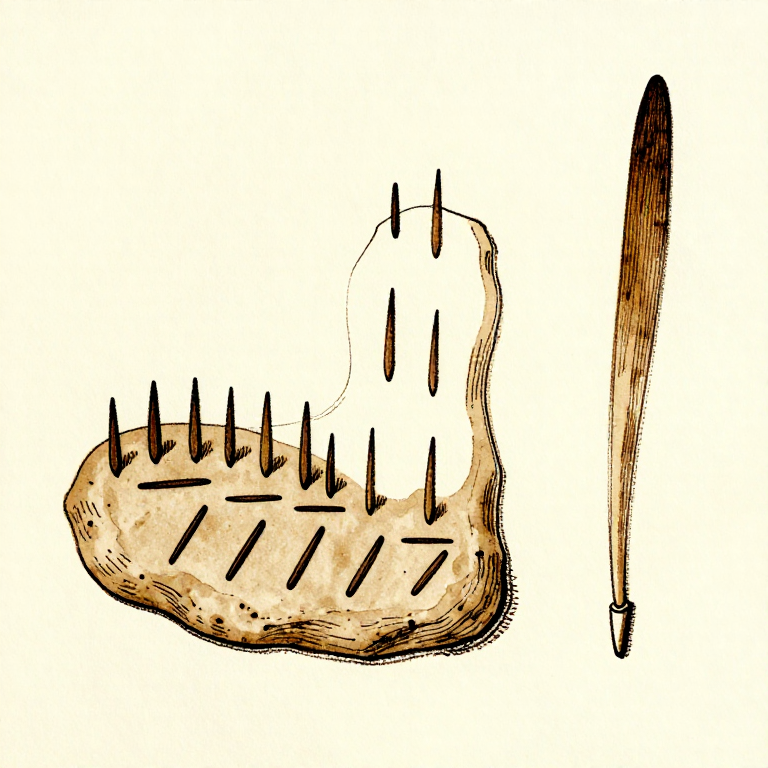
Press the stylus tip into a small piece of wet clay at various angles to check the quality of the wedge impressions. A vertical push with the stylus at 30-45 degrees to the tablet surface should produce a clean, deep triangular impression with a pointed tail. Rotating the stylus 90 degrees and pushing again should produce a horizontal wedge. If the impressions are ragged or uneven, re-trim the tip. The clay consistency matters too — clay that is too wet sticks to the stylus; clay that is too dry resists impression and the stylus skips. Well-prepared clay should receive a clean impression and release the stylus without pulling clay with it.
Care and Replacement
Care and Replacement
Reed styli wear down with use as the clay gradually abrades the soft plant fiber. A single stylus typically lasts for several tablets before the tip becomes too blunt for fine work. In Mesopotamian scribal schools (e-dub-ba, 'tablet houses'), students maintained multiple styli of different sizes. A worn stylus can be re-cut by trimming the tip back to fresh reed — each re-cut shortens the stylus slightly. Store styli in a dry place to prevent mould and softening. Dried reed is brittle; if a stylus cracks, discard it and cut a new one. The entire process of cutting a fresh stylus takes only a few minutes, making it one of the simplest yet most consequential tools in human history.
مواد
2- 2-3 sections, 15-20 cm long سانتیمترجایگزین
- Marsh reed (Phragmites australis or Arundo donax)2-3 sections, 15-20 cm long قطعه
ابزارهای لازم
2- جایگزین
- Sharp flint flake or obsidian blade
این نقشه میسازد
CC0 مالکیت عمومی
این نقشه تحت مجوز CC0 منتشر شده است. شما آزاد هستید آن را کپی، ویرایش، توزیع و برای هر هدفی بدون نیاز به اجازه استفاده کنید.
با خرید محصولات از طریق نقشه از سازنده حمایت کنید و او کمیسیون سازنده تعیین شده توسط فروشندگان، دریافت میکند یا یک نسخه جدید از این نقشه ایجاد کنید و آن را به عنوان اتصال در نقشه خود قرار دهید تا درآمد به اشتراک گذاشته شود.