همکاری
هنر
زیبایی و سلامت
صنایع دستی
فرهنگ و تاریخ
سرگرمی
محیط زیست
غذا و نوشیدنی
مهندسی معکوس
علوم
ورزش
فناوری
پوشیدنیها
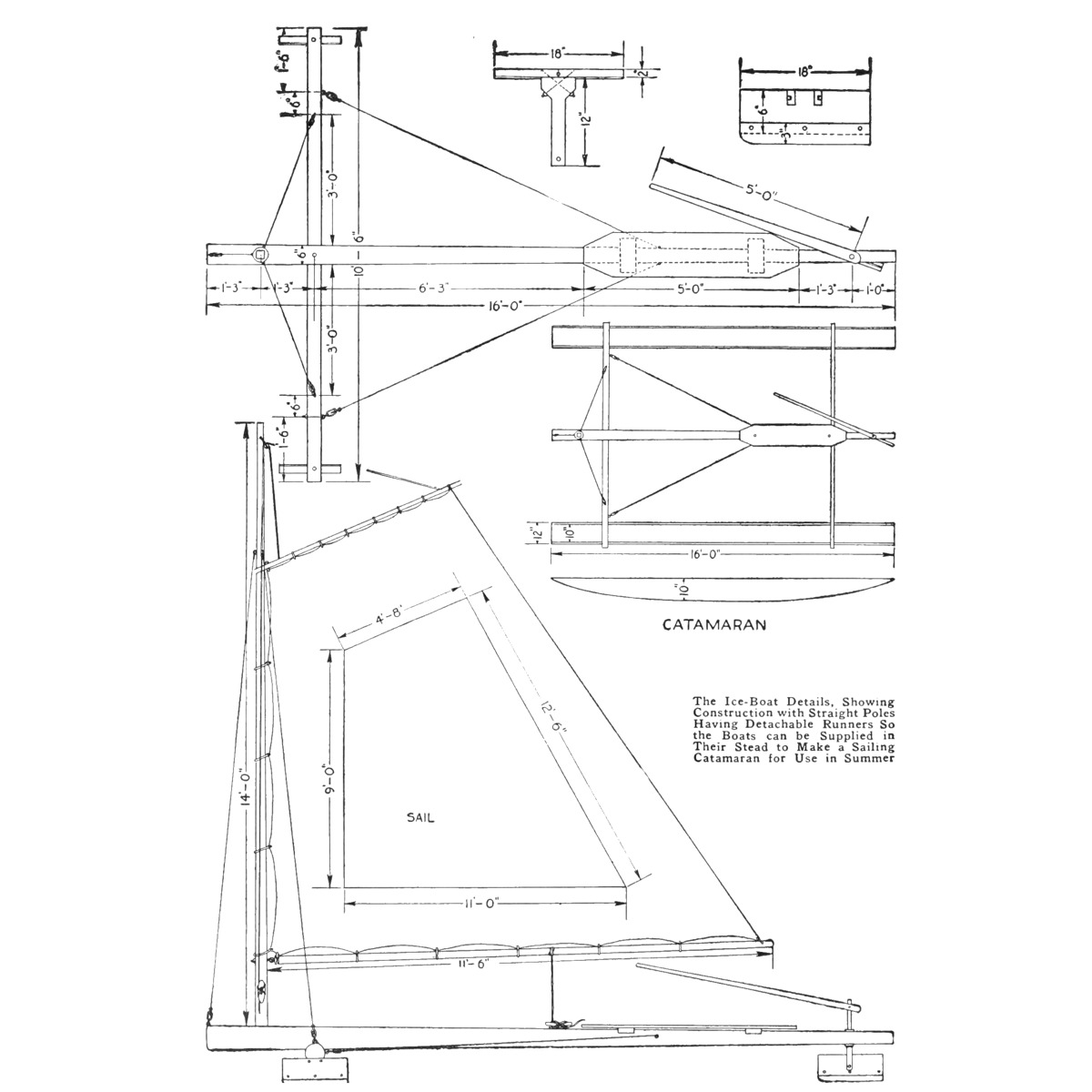


Ice Boat: Crossed Timbers, Skate-Edged Runners, Bicycle-Fork Steering and a Gaff Sail (Boy Mechanic, 1915)
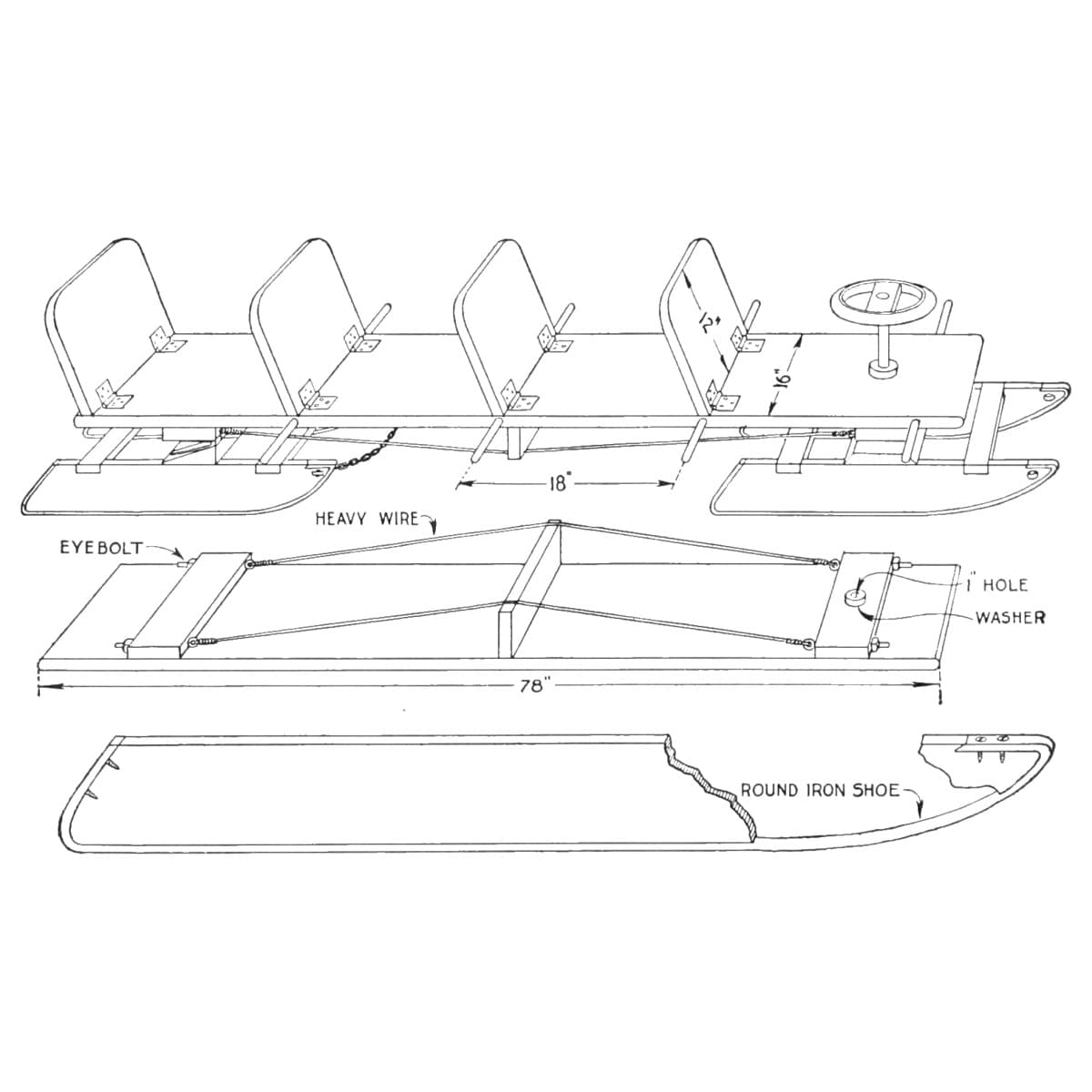
Robert K. Patterson's ice boat from The Boy Mechanic, Book 2 (1915): a 16 ft timber crossed by a 10-1/2 ft one and braced with wires, two front runners of band iron ground like a skate edge, and a rear steering runner clamped in a cut-down bicycle fork worked by a lever. His text and his drawing differ on the mast (about 12 ft against 14 ft); both are given.
پیشرفته
About 1 week
دستورالعملها
1
1
Text against drawing
Text against drawing
در حال بارگذاری دفترچهٔ Jupyter…
2
2
Read The Boy Mechanic, Book 2
Read The Boy Mechanic, Book 2
"In constructing the ice boat, use two poles, or timbers, one 16 ft. and the other 10-1/2 ft. long, crossed at a point 2-1/2 ft. from one end of the longer timber. The crossed pieces are firmly braced with wires, as shown."
3
3
Cross and brace the frame
Cross and brace the frame
Cross the 10-1/2 ft timber over the 16 ft one, 2-1/2 ft from its front end, and fasten them firmly. Brace them with wires as in the drawing: from the bow to points on the cross timber, and from the cross timber back along the long one. The drawing puts the wire points 6 in and 1 ft 6 in from each end of the cross timber.
مواد مورد نیاز این مرحله:
 تیرک چوبی2 قطعه
 پیچ سرگرد گردنچهارگوش1 قطعه
 مفتول فولادی1 قطعه
ابزارهای مورد نیاز:
 ارهٔ دستی
 دریل دستهٔ گردان با مته
 متر نواری
 مداد
4
4
Make the front runners
Make the front runners
Cut two band-iron strips 18 in long, 3 in wide and 1/8 in thick; grind one edge like the edge of a skate and round the ends. Bolt each to the side of a wood piece 18 in long, 6 in wide and 2 in thick, so the ground edge projects about 1 in. With a pole frame, bolt each runner block at right angles to a 12 in piece of wood shaped as drawn, the bolts running diagonally through its shouldered part; the pole end rests on this and is bolted down. With squared timbers, fasten the runners straight to them.
مواد مورد نیاز این مرحله:
 تسمه فولاد نرم1 قطعه
 تختهٔ چوب سخت1 قطعهپیچ سرگرد گردنچهارگوش1 قطعه
ابزارهای مورد نیاز:
 ارهٔ آهنبر
 سنگسنبادهٔ رومیزی
 گیرهٔ رومیزی
 دریل دستیارهٔ دستی
5
5
Make the steering runner
Make the steering runner
Fasten the rear runner between two pieces of wood so its edge projects, and clamp it in a bicycle fork cut down to leave about 3 in of the blades. Bore a hole through the rear end of the long timber for the fork head. Fit a lever (5 ft on the drawing) to the top of the fork head: bore a hole through the lever end at a slight angle to fit the head, slot the end, bore across the width of the handle and put in a bolt as a clamp.
مواد مورد نیاز این مرحله:
تسمه فولاد نرم1 قطعهتختهٔ چوب سخت1 قطعه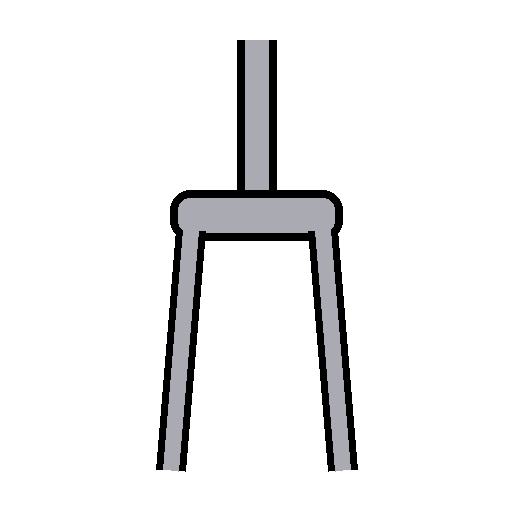 دوشاخهٔ دوچرخه1 قطعهپیچ سرگرد گردنچهارگوش1 قطعه
 تیرک چوب نرم1 قطعه
ابزارهای مورد نیاز:
ارهٔ آهنبرسنگسنبادهٔ رومیزیدریل دستهٔ گردان با متهارهٔ دستی اسکنهها
6
6
Step the mast and fit the seat
Step the mast and fit the seat
Cut a mortise in the long timber 15 in from the front end and set the mast in it; stay it with wires as drawn. His text says the mast should be about 12 ft; his drawing marks it 14 ft 0 in: choose one and keep the sail to suit. Fasten a board on two crosspieces mortised into the top of the long timber, as a seat for the driver (5 ft long on the drawing, ending 2 ft 3 in from the stern).
مواد مورد نیاز این مرحله:
تیرک چوب نرم1 قطعهمفتول فولادی1 قطعه تختهٔ کاج1 قطعه
 پیچ چوب1 قطعه
ابزارهای مورد نیاز:
ارهٔ دستیاسکنهها رندهٔ دستیمتر نواری
7
7
Make and rig the sail
Make and rig the sail
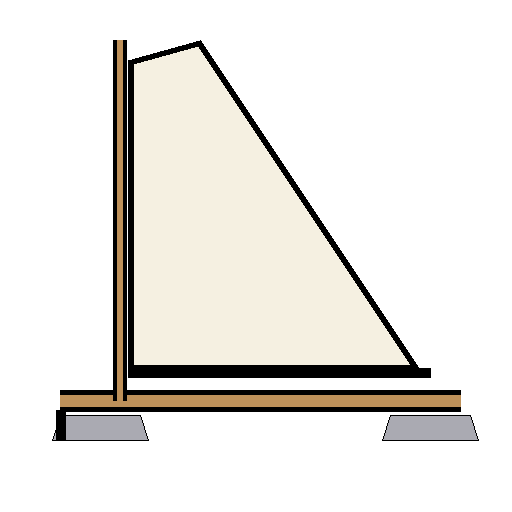
Make the sail of any good material to his drawing: luff (along the mast) 9 ft 0 in, head 4 ft 8 in, foot 11 ft 0 in, leech 12 ft 6 in. Hang the main boom, 11-1/2 ft long, and the upper spar on the mast "in the usual manner". The text also names a jib boom of about 6 ft, which the drawing does not show.
مواد مورد نیاز این مرحله:
 پارچهٔ کرباس1 قطعهتیرک چوب نرم1 قطعه
 طناب پنبهای1 قطعه
ابزارهای مورد نیاز:
 قیچیارهٔ دستیمتر نواری
8
8
Troubleshooting
Troubleshooting
Ice boat troubleshooting.
Flow
Loading...
9
9
History and honest limits
History and honest limits
From "An Ice Boat and Catamaran" by Robert K. Patterson, in **The Boy Mechanic, Book 2**, Popular Mechanics, 1915 (Project Gutenberg 44585; checked on the archive.org scan boymechanicbook200chic2, pp. 27-28). His text and drawing differ on the mast (about 12 ft against 14 ft 0 in) and on the jib boom, which is in the text only; both are stated, not resolved. He gives no timber sections, wire size or sail cloth: those choices are ours, as are the tools and metric figures. The summer catamaran conversion is not made here.
مواد
11- 2 قطعهجایگزین
- 3 قطعهجایگزین
- 2 قطعهجایگزین
- 1 قطعهجایگزین
- 1 قطعهجایگزین
- 1 قطعهجایگزین
- 1 قطعهجایگزین
- 1 قطعهجایگزین
- 1 قطعهجایگزین
- 1 قطعهجایگزین
- 1 قطعهجایگزین
ابزارهای لازم
11- جایگزین
- جایگزین
- 1 vendor sell this, none ship to you yetجایگزین
- 1 vendor sell this, none ship to you yetجایگزین
- جایگزین
- جایگزین
- جایگزین
- جایگزین
- جایگزین
- جایگزین
- جایگزین
این نقشه میسازد
نقشههای مرتبط
این نقشهها دانش مشترکی دارند — تکنیکها، مواد یا اصول
CC0 مالکیت عمومی
این نقشه تحت مجوز CC0 منتشر شده است. شما آزاد هستید آن را کپی، ویرایش، توزیع و برای هر هدفی بدون نیاز به اجازه استفاده کنید.
با خرید محصولات از طریق نقشه از سازنده حمایت کنید و او کمیسیون سازنده تعیین شده توسط فروشندگان، دریافت میکند یا یک نسخه جدید از این نقشه ایجاد کنید و آن را به عنوان اتصال در نقشه خود قرار دهید تا درآمد به اشتراک گذاشته شود.