هنر
زیبایی و سلامت
صنایع دستی
فرهنگ و تاریخ
سرگرمی
محیط زیست
غذا و نوشیدنی
مهندسی معکوس
علوم
ورزش
فناوری
پوشیدنیها
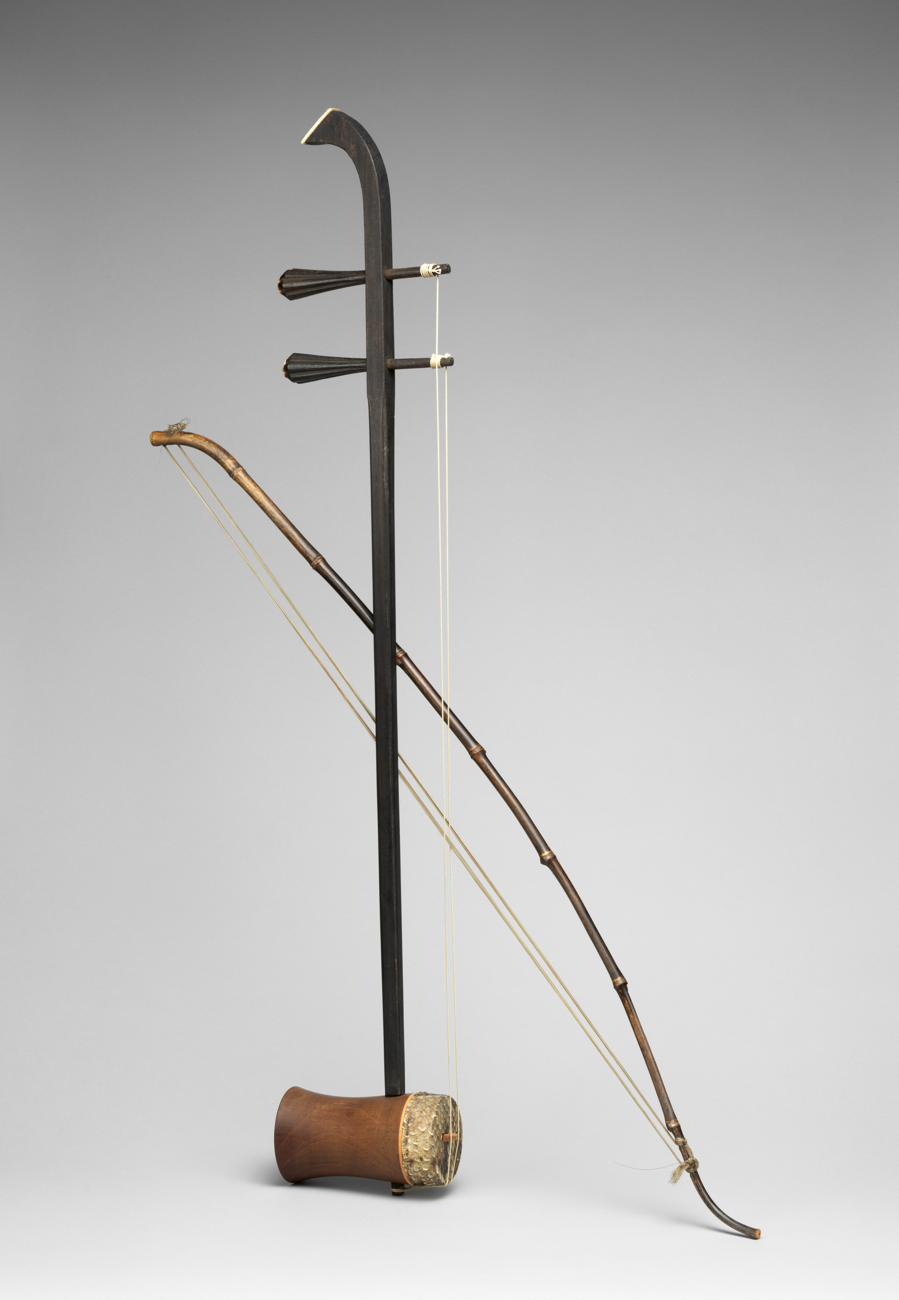


Building an Erhu — The Chinese Two-String Bowed Fiddle
Build an erhu: a two-string Chinese fiddle with a bow trapped between the strings, a little skin-covered drum for a body, and no fingerboard — you press the strings in mid-air and slide between notes. A serious maker build in the bowed string and stick-slip friction, the physics behind every violin.
متوسط
Several hours over a few sessions
دستورالعملها
1
1
A fiddle with a drum for a body
A fiddle with a drum for a body
The erhu has just two strings, a bow that lives trapped between them, and a little skin-covered drum for a body. It has no fingerboard, so you press the strings in mid-air and slide to every note between.
2
2
Make the resonator drum
Make the resonator drum
Cut a short, thick length of bamboo about 13 cm long, open at both ends. This little hollow tube is the sound-body of the erhu.
مواد مورد نیاز این مرحله:
 خیزران1 قطعه
ابزارهای مورد نیاز:
 ارهٔ آهنبر
3
3
Skin the front
Skin the front
Soak a piece of rawhide, stretch it drum-tight over one end of the tube, glue and lash it down, and let it dry hard. This membrane is what makes the erhu loud, like a banjo head.
مواد مورد نیاز این مرحله:
 پوست خام1 قطعه
 چسب چوب PVA1 قطعه
4
4
Fit the neck
Fit the neck
Push a long dowel neck down through the body near the skin end, so it stands up tall and straight from the drum.
مواد مورد نیاز این مرحله:
 میلهٔ دوبل چوبی1 قطعهچسب چوب PVA1 قطعه
5
5
Fit two tuning pegs
Fit two tuning pegs
Bore two holes near the top of the neck and fit a friction tuning peg into each, one above the other.
مواد مورد نیاز این مرحله:
 گوشی کوک2 قطعه
ابزارهای مورد نیاز:
 درفش
درفش6
6
String it
String it
Run two strings from the base of the body up to the two pegs, close together and parallel — the erhu's whole set of strings.
مواد مورد نیاز این مرحله:
 سیم فولادی ساز ۰٫۰۳۲ اینچ1 قطعه
7
7
Stand the bridge on the skin
Stand the bridge on the skin
Carve a tiny wooden bridge and stand it on the middle of the skin, under the strings, so the strings press down onto the membrane.
ابزارهای مورد نیاز:
 چاقوی اسلوید
8
8
Tune the two strings a fifth apart
Tune the two strings a fifth apart
Tune the inner string to a low note and the outer string a fifth higher, like D and A. Twist the pegs to reach the two notes.
9
9
Make the bow
Make the bow
Tie a flat hank of horsehair between the two ends of a springy stick to make a bow, tight enough to twang.
مواد مورد نیاز این مرحله:
 شاخهٔ خمیده (کمان)1 قطعه
 موی آرشه (موی اسب)1 قطعه
10
10
Thread the bow between the strings
Thread the bow between the strings
Slide the bow hair BETWEEN the two strings. On an erhu the bow lives there permanently and cannot be taken out — that is why it plays only its own two strings.
11
11
Rosin the hair
Rosin the hair
Rub hard pine rosin along the bow hair so it grips the strings. Without rosin the hair is too slippery to set a string singing.
12
12
Play a note
Play a note
Draw the bow steadily across a string. Press the hair toward the inner or the outer string to choose which one sounds.
13
13
Slide and bend
Slide and bend
With no fingerboard, press a string in open air and slide your finger up or down the neck to glide smoothly between notes — the erhu's crying, singing voice.
14
14
Compendium — bowing and the skin drum
Compendium — bowing and the skin drum
The erhu makes sound the way every bowed instrument does: by stick-slip friction. The rosined hair grabs the string and drags it sideways until the string's tension tears it free; the string snaps back, is caught again, and the cycle repeats hundreds of times a second. This catch-and-release, called Helmholtz motion, keeps the string vibrating steadily for as long as you bow — which is why a bowed note can sing on and on while a plucked one quickly dies. Unlike a lyre or a guitar, the erhu's soundbox is a little DRUM: the strings press through the bridge onto a stretched skin, and that membrane radiates the sound into the air, exactly as a banjo head does, giving the erhu its bright, nasal, almost human voice. And it has no fingerboard — you stop the strings by pressing them in open air — so there are no fixed frets and you can slide through every pitch, which is why the erhu can weep and sing like a person. It grew from the bowed huqin fiddles of the Tang and Song dynasties more than a thousand years ago, and its two strings are tuned a fifth apart. Its cousins are the whole huqin family and, far to the west, every member of the violin family — all of them stick-slip machines singing through a resonating body.
مواد
8- 1 قطعهجایگزین
- 1 قطعهجایگزین
- 1 قطعهجایگزین
- 1 قطعهجایگزین
- 2 قطعهجایگزین
- جایگزین
- 1 قطعهجایگزین
- 1 قطعهجایگزین
ابزارهای لازم
3- جایگزین
- جایگزین
- جایگزین
نقشههای مرتبط
این نقشهها دانش مشترکی دارند — تکنیکها، مواد یا اصول

CC0 مالکیت عمومی
این نقشه تحت مجوز CC0 منتشر شده است. شما آزاد هستید آن را کپی، ویرایش، توزیع و برای هر هدفی بدون نیاز به اجازه استفاده کنید.
با خرید محصولات از طریق نقشه از سازنده حمایت کنید و او کمیسیون سازنده تعیین شده توسط فروشندگان، دریافت میکند یا یک نسخه جدید از این نقشه ایجاد کنید و آن را به عنوان اتصال در نقشه خود قرار دهید تا درآمد به اشتراک گذاشته شود.