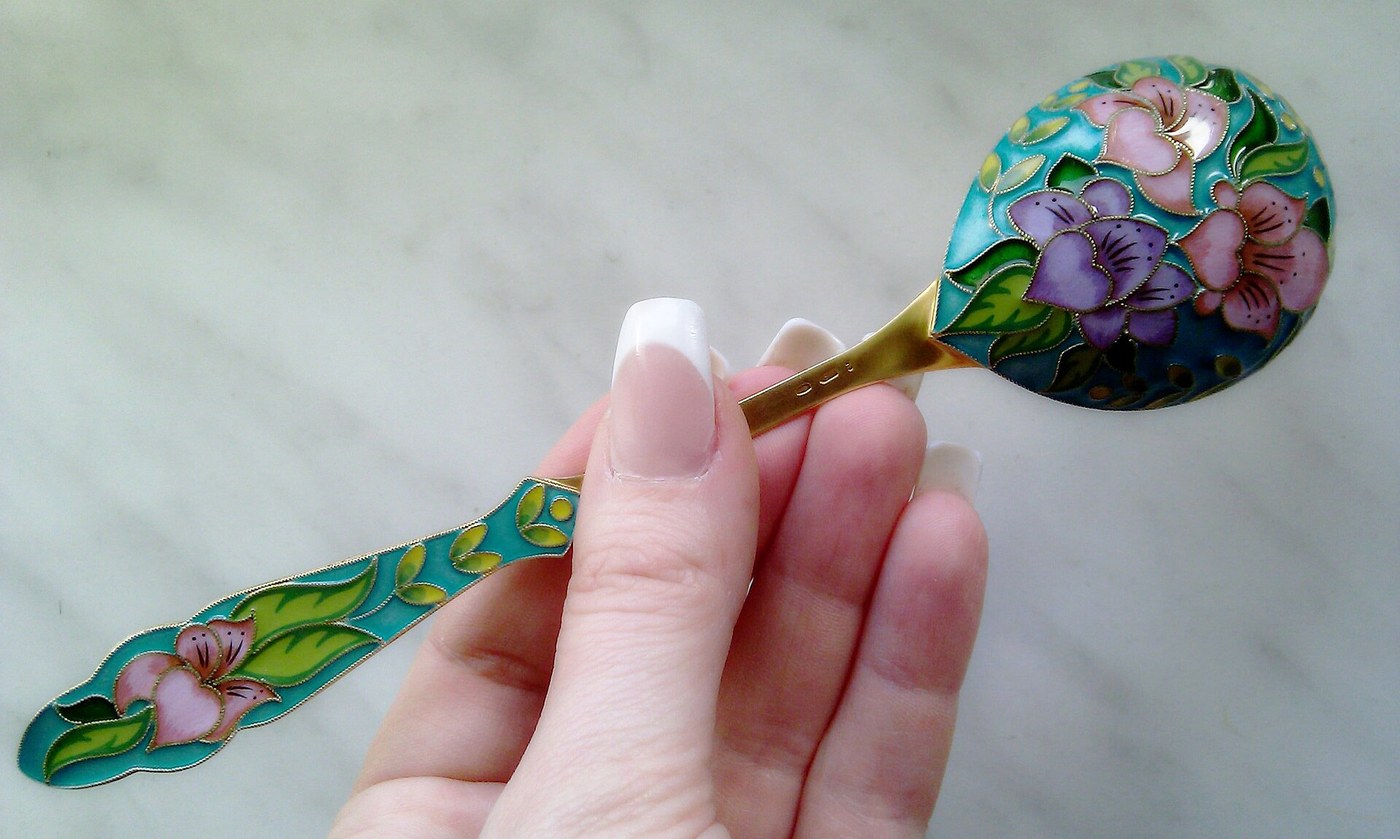


Cloisonné Enamel
دستورالعملها
Match the metal to the glass
Match the metal to the glass
Enamel fails on the wrong substrate for a reason you can predict.
- Use copper, fine silver or gold — not brass, not steel.
- Clean the metal to bare bright and handle it by the edges.
- Note the metal's thickness: too thin and it will warp in the kiln.
مواد مورد نیاز این مرحله:
 ورق مس1 ورق
Bend and set the wires on edge
Bend and set the wires on edge
Flat wire, standing upright, following the drawing.
- Bend flattened wire to the outline of each shape.
- Stand each on edge on the metal and fix it — traditionally with a trace of gum, then fused in a first firing.
- Check every cell is fully closed.
مواد مورد نیاز این مرحله:
 سیم مسی1 length
Wash the enamel and fill the cells
Wash the enamel and fill the cells
Powdered glass, washed until the water runs clear, laid wet into each cell.
- Wash each colour repeatedly to remove the fines.
- Lay the wet powder into its cell with a fine spatula or quill.
- Draw off surplus water and let it dry completely before firing.
مواد مورد نیاز این مرحله:
 پودر لعاب شیشهای1 مجموعه
Fire, refill, repeat — then stone it flat
Fire, refill, repeat — then stone it flat
Expect three or more firings before the cells are full.
- Fire until the surface goes glossy, then cool.
- Note the enamel has sunk well below the wire — refill and fire again.
- When proud of the wire, grind the whole surface flat with abrasive stone under water, then re-fire briefly to restore gloss.
مواد مورد نیاز این مرحله:
 دماسنج فوری1 قطعه
History and context
History and context
Cloisonné is ancient — Egyptian work uses cut gemstones set in cells rather than fused glass, which is properly inlay rather than enamel, and the distinction matters. Fused glass cloisonné flourishes in Byzantium, reaches extraordinary refinement in Chinese work from the Ming dynasty onward, and in Japanese shippō of the nineteenth century.
Anglo-Saxon garnet cloisonné — the Sutton Hoo shoulder clasps, the Staffordshire Hoard — is the inlay kind: thin slices of garnet set over patterned gold foil that reflects light back through the stone. It is a different craft that looks similar, and confusing the two is common.
Champlevé is the sibling technique, and worth naming because the visual result is close: instead of building walls up with wire, you carve cells DOWN into a thicker metal plate and fill those. Champlevé suits heavier objects and thicker metal; cloisonné allows finer, more intricate cell work on thin sheet. Limoges made its name in champlevé.
Why the repeated firings are not inefficiency: each cycle also relieves stress and lets the enameller correct colour. Japanese masters ran a dozen or more firings on a single piece, and the depth of colour in that work comes directly from that patience.
نقشههای مرتبط
این نقشهها دانش مشترکی دارند — تکنیکها، مواد یا اصول

CC0 مالکیت عمومی
این نقشه تحت مجوز CC0 منتشر شده است. شما آزاد هستید آن را کپی، ویرایش، توزیع و برای هر هدفی بدون نیاز به اجازه استفاده کنید.
با خرید محصولات از طریق نقشه از سازنده حمایت کنید و او کمیسیون سازنده تعیین شده توسط فروشندگان، دریافت میکند یا یک نسخه جدید از این نقشه ایجاد کنید و آن را به عنوان اتصال در نقشه خود قرار دهید تا درآمد به اشتراک گذاشته شود.