هنر
زیبایی و سلامت
صنایع دستی
فرهنگ و تاریخ
سرگرمی
محیط زیست
غذا و نوشیدنی
مهندسی معکوس
علوم
ورزش
فناوری
پوشیدنیها
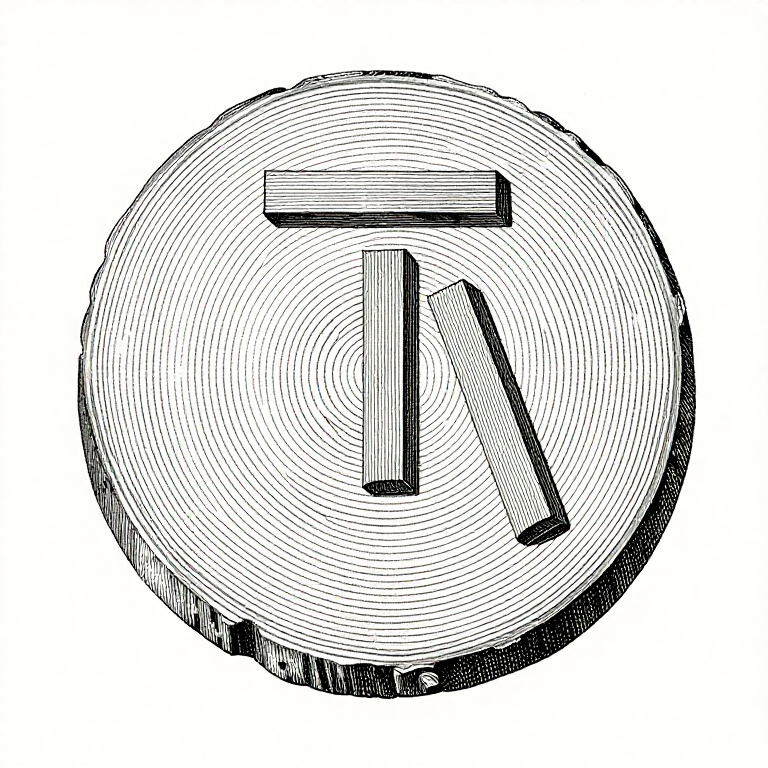


Flatsawn, Quartersawn, Riftsawn: How It Was Cut Decides How Much It Moves
Two boards from the same tree can move by different amounts and warp in completely different ways, purely because of where in the log they came from and how the rings run through them.
The end grain tells you which you have, in one glance. Rings running roughly PARALLEL to the face means flatsawn; rings running roughly PERPENDICULAR to the face means quartersawn; anything in between is riftsawn.
Since tangential movement is about twice radial, quartersawn stock moves roughly HALF as much across its width as flatsawn — and it stays flat rather than cupping. That is worth real money, and it is why it costs more.
متوسط
2 hours
دستورالعملها
1
1
Read the end grain
Read the end grain
Look at the end of the board. FLATSAWN shows long sweeping arcs of growth ring, often the cathedral pattern on the face. QUARTERSAWN shows rings running nearly straight across the thickness, close to 90 degrees to the face, and often a ribbon of medullary ray flecking on the face in oak.
RIFTSAWN sits between, with rings at roughly 30 to 60 degrees. It moves less than flatsawn, does not cup much, and has no ray fleck — which makes it the usual choice for table legs, where a consistent grain on all four faces matters.
One board can be all three along its length, because a log is round and a saw cut is straight. Read the end grain at BOTH ends before deciding what a board is.
مواد مورد نیاز این مرحله:
 تختهٔ چوب سخت1 قطعه
 قطعهٔ چوب سخت1 قطعه
ابزارهای مورد نیاز:
 خطکش
خطکش2
2
Flatsawn cups away from the heart
Flatsawn cups away from the heart
A flatsawn board cups because its two faces are at different distances from the centre of the tree, so one face shrinks tangentially more than the other. The result is predictable: **the board cups away from the heart side** — the rings try to straighten out.
So you can tell which way a board will cup before it does, from the end grain alone. Put the heart side where a cup will do least harm, or where a fixing will hold it.
Alternating heart-up and heart-down across a glued panel is the old advice, and it is a compromise rather than a cure: it turns one big cup into a washboard of small ones. Where the face matters, better to use quartersawn stock, or narrower boards, or accept the cup and fasten for it.
مواد مورد نیاز این مرحله:
تختهٔ چوب سخت1 قطعهابزارهای مورد نیاز:
 شمشههای سنجش پیچشخطکش
 گونیای ترکیبی
3
3
What each cut is worth, and what it costs
What each cut is worth, and what it costs
QUARTERSAWN: about half the width movement, stays flat, ray fleck in oak, and a more even face. It costs more because the sawyer gets fewer and narrower boards out of a log. Use it for tabletops, drawer sides, panels, anything wide that must stay flat.
FLATSAWN: cheapest, widest boards, the most figure, and the most movement and cupping. Use it where width is cheap and flatness is held by construction — narrow parts, carcase sides that are fixed at both ends, anything painted.
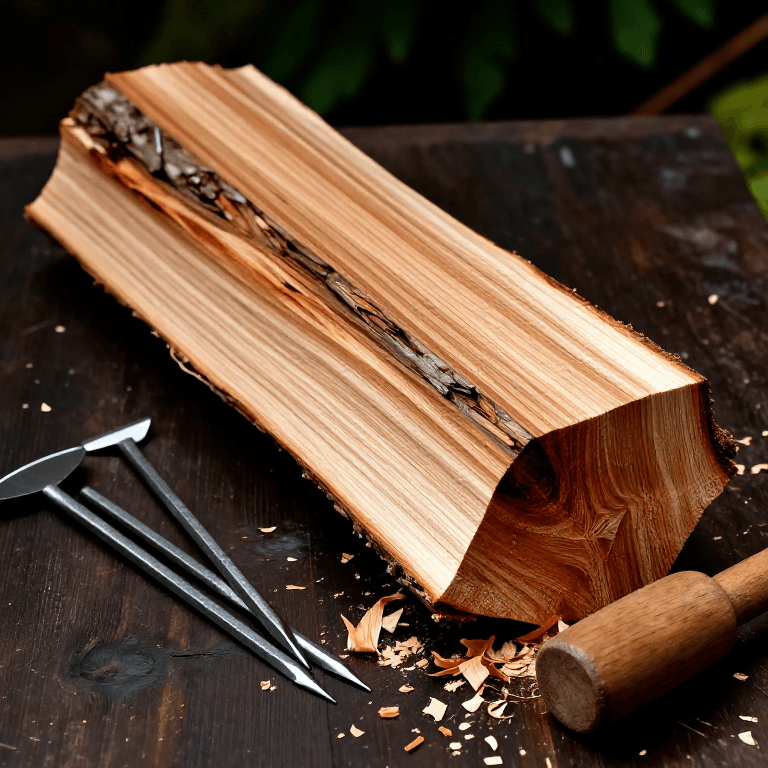
RIFTSAWN: in between, and the specific answer for square parts like legs, because all four faces show similar straight grain. It is also what you get from riving, which splits along the rays and is why riven timber is so stable.
مواد مورد نیاز این مرحله:
تختهٔ چوب سخت1 قطعه تختهٔ چوب نرم خشک1 قطعه
ابزارهای مورد نیاز:
خطکش کولیس دیجیتال ۶ اینچی
4
4
Plywood: the exception that proves the rule
Plywood: the exception that proves the rule
Plywood barely moves in any direction, because alternate layers have their grain at right angles and each one restrains the next. A sheet of Baltic birch is dimensionally stable in a way no solid board can be.
That makes it the correct material for anything wide that must not move — a cabinet back, a drawer bottom, a jig, a router template. Using solid wood there and then trapping it is a common and entirely avoidable failure.
The trade is that plywood has no solid thickness to work: it will not take a moulded edge, the exposed edge is ugly and fragile, and it does not hold a screw in its edge well. Which is a design decision — stability against workability — rather than one being better.
مواد مورد نیاز این مرحله:
 تختهٔ چندلایهٔ توس بالتیک1 قطعه
ابزارهای مورد نیاز:
خطکشکولیس دیجیتال ۶ اینچیمواد
4- 1 قطعهجایگزین
- 1 قطعهجایگزین
- 1 قطعهجایگزین
- جایگزین
نقشههای مرتبط
این نقشهها دانش مشترکی دارند — تکنیکها، مواد یا اصول
CC0 مالکیت عمومی
این نقشه تحت مجوز CC0 منتشر شده است. شما آزاد هستید آن را کپی، ویرایش، توزیع و برای هر هدفی بدون نیاز به اجازه استفاده کنید.
با خرید محصولات از طریق نقشه از سازنده حمایت کنید و او کمیسیون سازنده تعیین شده توسط فروشندگان، دریافت میکند یا یک نسخه جدید از این نقشه ایجاد کنید و آن را به عنوان اتصال در نقشه خود قرار دهید تا درآمد به اشتراک گذاشته شود.