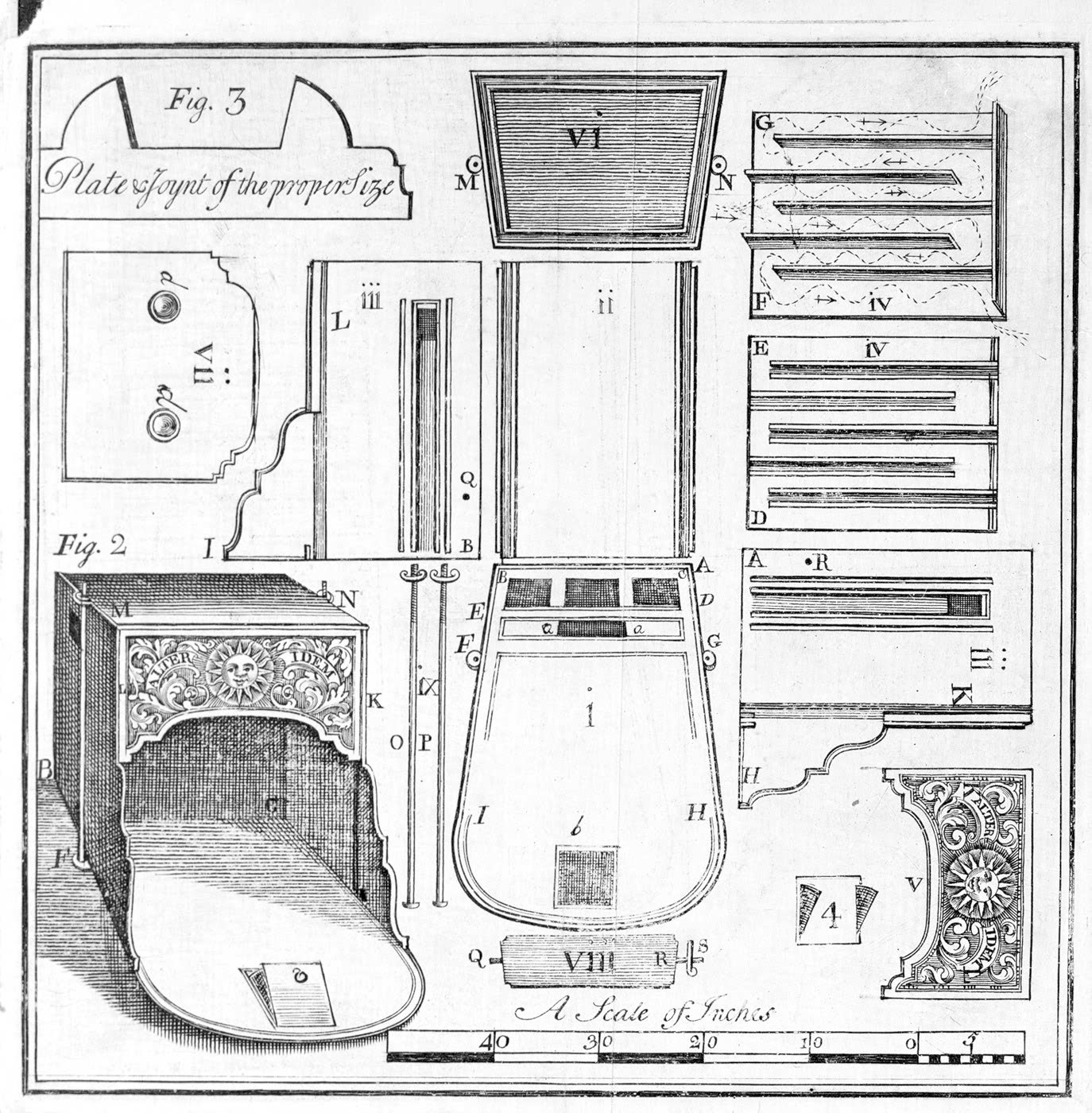


Franklin Stove
دستورالعملها
Separate the three ways heat moves
Separate the three ways heat moves
Name them on a real heat source before designing anything.
- Radiation — hold a hand to the side of a hot object and feel warmth across the gap.
- Convection — hold a hand above it and feel the rising air.
- Conduction — touch the surface it stands on.
مواد مورد نیاز این مرحله:
 دماسنج فوری1 قطعه
Show why a metal box beats an open recess
Show why a metal box beats an open recess
Compare two enclosures around the same small heat source — a candle or a low lamp, safely.
- Put the source in a masonry-like recess of brick or stone and measure air temperature a set distance in front.
- Repeat with the source inside a thin metal enclosure standing clear of the wall.
- Compare readings at the same distance and time.
مواد مورد نیاز این مرحله:
 آجر نسوز2 قطعه
Trace the flue path
Trace the flue path
Franklin's distinctive feature was making the smoke take the long way out.
- Sketch a straight-up flue: hot gas leaves at once, taking its heat with it.
- Now sketch a path that goes down and around a baffle before rising to the chimney.
- Mark where the gas gives up heat to metal along the way.
Measure a stove's real limit
Measure a stove's real limit
Efficiency is set by what leaves up the chimney.
- Measure the flue gas temperature of any real stove or heater, safely and from outside the flue if need be.
- Note the room temperature.
- The difference, multiplied by the gas flow, is heat leaving the building.
History and context
History and context
Benjamin Franklin described his Pennsylvania fireplace in 1741. Governor George Thomas offered him a patent monopoly. Franklin refused it, writing in his autobiography that as we enjoy great advantages from the inventions of others, we should be glad of an opportunity to serve others by any invention of ours, and this we should do freely and generously. He allowed others to make it, and complained mainly when a London ironmonger patented a modified version and made a small fortune from it.
An honest assessment of the design. The original with its inverted-siphon flue did not work as well as advertised and sold poorly; the downdraught was unreliable without a hot chimney. Later makers dropped the siphon and kept the freestanding radiating iron box, and it is that simplified form that spread — so the thing called a Franklin stove today is largely not the thing Franklin built. David Rittenhouse later added a straight stovepipe that fixed the draught problem.
Count Rumford attacked the same problem from the opposite direction a few decades later, redesigning the open fireplace itself rather than replacing it — a shallow angled firebox to radiate more into the room, and a narrowed throat with a smoke shelf to stop downdraughts. Both approaches survive.
Why the refusal still matters here. Franklin's stated reason for declining the patent — that we all inherit others' inventions and should give ours back — is the argument this platform is built on. He made it in 1741 without any of the vocabulary of open licensing, and he lost money by it deliberately.
CC0 مالکیت عمومی
این نقشه تحت مجوز CC0 منتشر شده است. شما آزاد هستید آن را کپی، ویرایش، توزیع و برای هر هدفی بدون نیاز به اجازه استفاده کنید.
با خرید محصولات از طریق نقشه از سازنده حمایت کنید و او کمیسیون سازنده تعیین شده توسط فروشندگان، دریافت میکند یا یک نسخه جدید از این نقشه ایجاد کنید و آن را به عنوان اتصال در نقشه خود قرار دهید تا درآمد به اشتراک گذاشته شود.