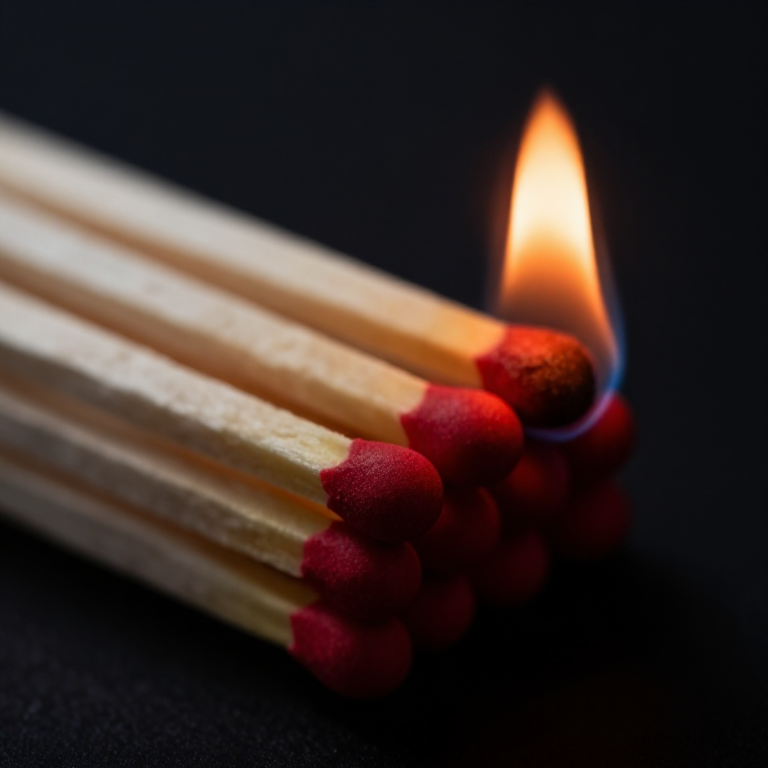

Making Friction Matches — Fire on the Strike of a Stick
For all of history, making fire meant friction sticks, flint and steel, or carrying an ember. Then in the 1820s and 30s the friction match put instant fire in a pocket: a little stick whose tip bursts into flame when dragged across a rough surface. It seems trivial now, but it was a genuine chemical invention that transformed daily life.
The head packs three things together: an oxidiser to supply oxygen, an igniter that catches from the heat of friction, and a fuel bridge to carry the flame down to the wood. In the original strike-anywhere matches the igniter was white phosphorus, which lights at the gentlest heat. Drag the head and the friction warms the phosphorus enough to ignite; it sets off the oxidiser in a fierce little flare; the sulphur-tipped splint catches and the wood burns.
White phosphorus also had a dark side — its vapour gave match factory workers a horrific bone disease called phossy jaw, which is why it was eventually banned in favour of the red-phosphorus safety match. This blueprint covers the chemistry of both, and treats the materials with the respect that a powerful oxidiser and a deadly poison demand.
محتوای خطرناک
این بلوپرینت شامل روشهای خطرناک است. وارد شوید و محتوای خطرناک را در تنظیمات حساب خود فعال کنید تا دستورالعملهای مرحله به مرحله را مشاهده کنید.
ورودنقشههای مرتبط
این نقشهها دانش مشترکی دارند — تکنیکها، مواد یا اصول

CC0 مالکیت عمومی
این نقشه تحت مجوز CC0 منتشر شده است. شما آزاد هستید آن را کپی، ویرایش، توزیع و برای هر هدفی بدون نیاز به اجازه استفاده کنید.
با خرید محصولات از طریق نقشه از سازنده حمایت کنید و او کمیسیون سازنده تعیین شده توسط فروشندگان، دریافت میکند یا یک نسخه جدید از این نقشه ایجاد کنید و آن را به عنوان اتصال در نقشه خود قرار دهید تا درآمد به اشتراک گذاشته شود.