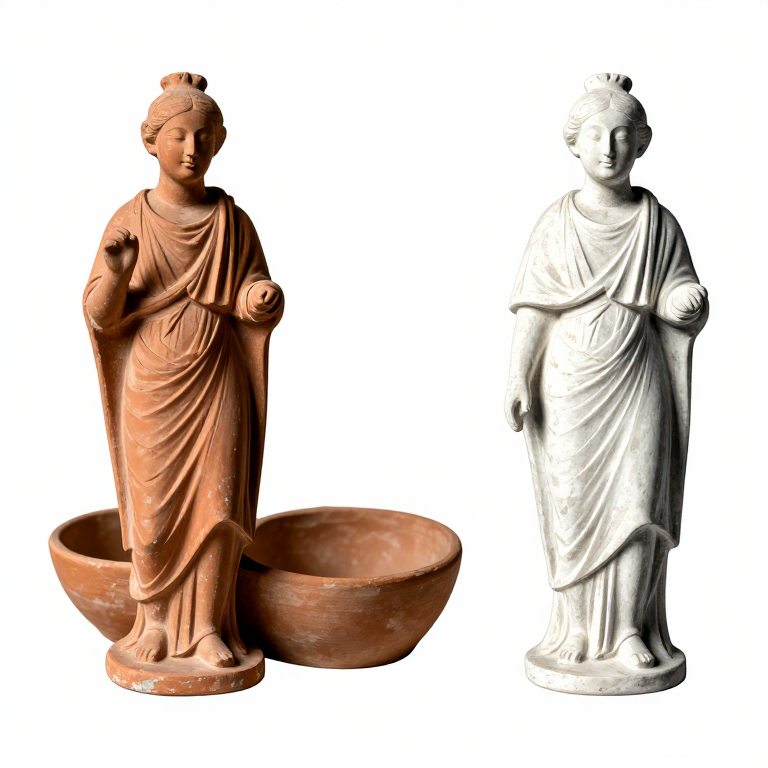
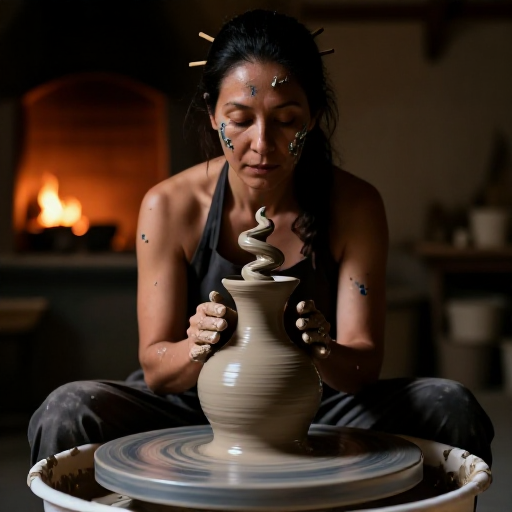

Greek Terracotta Figurine — Molding a Tanagra Terracotta Figurine
دستورالعملها
Create or Prepare the Press Mold
Create or Prepare the Press Mold
Model an original figurine (the archetype) in clay, approximately 15-25 cm tall. Once satisfied with the form, create a two-piece mold by pressing the front half of the figure into a thick slab of firm clay (or plaster), allowing it to set, then repeating for the back half. The mold halves must have registration marks (keys) so they align precisely when reassembled. Allow the mold to dry thoroughly and fire it to create a durable, reusable press mold. Greek workshops kept libraries of molds and could produce hundreds of figurines from a single mold set. Different heads, arms, and accessories could be mixed and matched between mold sets to create variety from a limited number of molds — an ancient precursor to modular manufacturing.
مواد مورد نیاز این مرحله:
 گِل طبیعی500 g گرمگِل طبیعی1-2 kg کیلوگرم
 لعابآب سفیدsmall amount قطعه
 اُخرای خامsmall amounts of ochre, blue, pink قطعه
ابزارهای مورد نیاز:
 ابزار مجسمهسازی گِل
 مجموعهٔ اسفنج سفالگری
 کورهٔ سفالگری
 مجموعهٔ قلممو
Press Clay into the Mold Halves
Press Clay into the Mold Halves
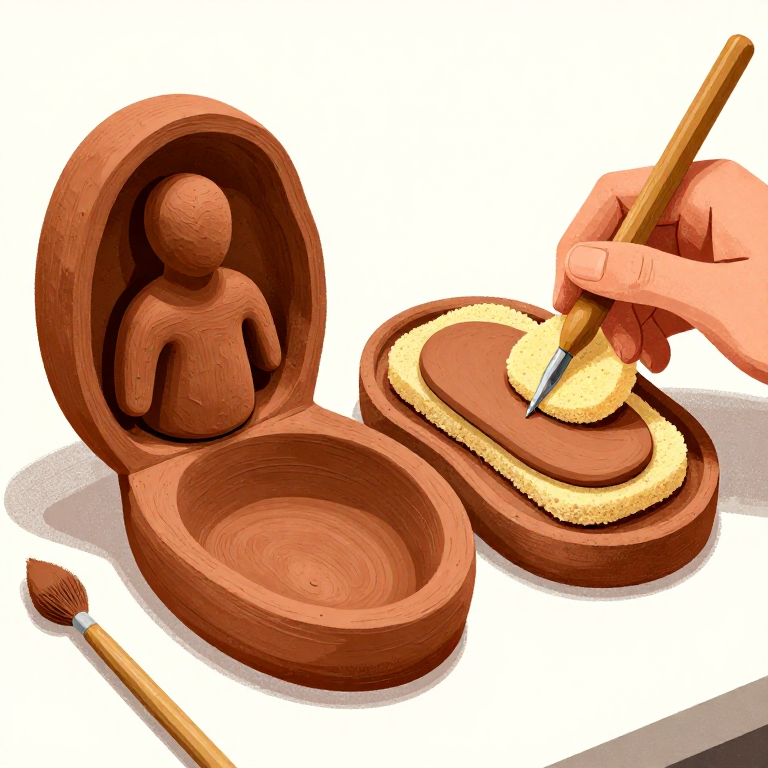
Roll out thin slabs of fine, well-prepared clay approximately 5-8 mm thick. Press a slab firmly into each mold half, using fingers and a damp sponge to push the clay into all the detailed recesses of the mold. The clay must be soft enough to capture fine details but firm enough to hold its shape when the mold is removed. Trim excess clay from the mold edges with a knife, leaving a clean, flat joining surface. Greek figurine clay was typically a fine-grained calcareous (lime-rich) clay that fired to a pale pinkish-buff color, lighter than the red iron-rich clay used for pottery vessels.
Join the Halves and Add Details
Join the Halves and Add Details
Score the edges of both pressed halves with crosshatch marks and apply clay slip. Carefully press the two halves together, aligning the registration marks. Smooth the seam on the exterior with a damp sponge and modeling tool, blending the joint invisibly. Pierce a small vent hole in an inconspicuous location (typically the back of the base) to allow steam to escape during firing — without a vent hole, trapped moisture can cause the hollow figurine to explode in the kiln. Add any hand-modeled details that the mold cannot capture: hats, fans, small objects in the figure's hands, or elaborated hairstyles. These individually modeled additions gave each figurine a unique character despite being press-molded.
Dry and Fire the Figurine
Dry and Fire the Figurine
Allow the assembled figurine to dry slowly for several days, turning it occasionally for even drying. Once completely dry, fire in a kiln at approximately 800-950 degrees Celsius in an oxidizing atmosphere. The calcareous clay fires to a pale buff or pinkish color. After firing, inspect for cracks, especially along the mold join line. Well-made Tanagra figurines are remarkably thin-walled (3-5 mm) and light despite their apparent solidity. The fired surface will be slightly rough and absorbent, ideal for accepting the white slip ground coat and mineral pigments that give Tanagra figurines their distinctive painted appearance.
Apply White Ground and Paint Details
Apply White Ground and Paint Details
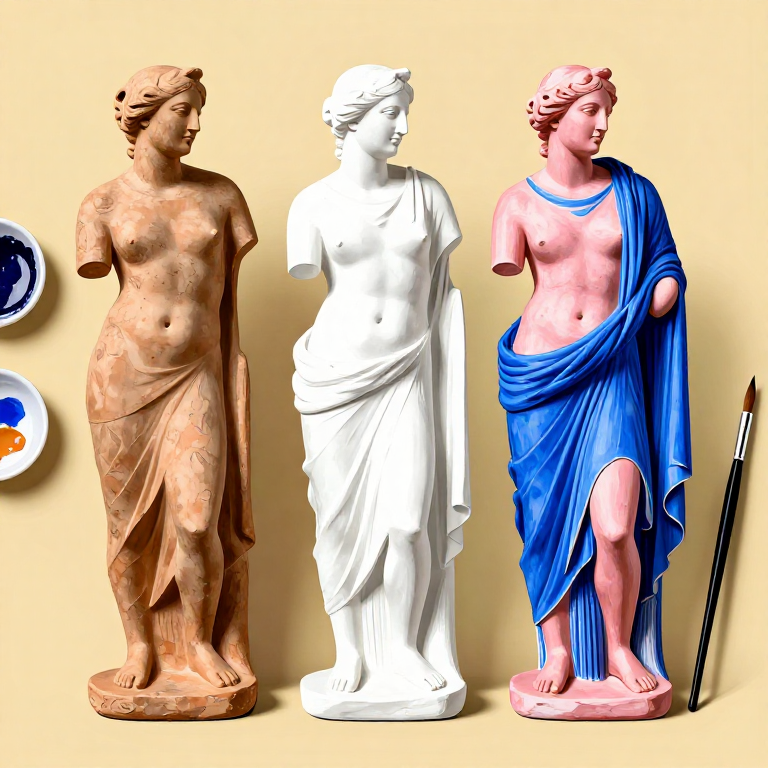
Coat the entire fired figurine with a thin layer of white kaolin slip and allow it to dry. This white ground provides a bright, uniform base for polychrome painting, similar to gesso on canvas. Using fine brushes, paint the figurine with mineral pigments mixed with a binding medium such as egg tempera or gum arabic: blue (Egyptian blue) for drapery, pink (rose madder or dilute red ochre) for skin, yellow ochre for hair, and red for details. The original polychrome painting on Tanagra figurines is largely lost from surviving examples, but traces of pigment and modern analysis confirm they were vibrantly colored. These figurines were placed in graves as offerings, displayed in homes as decoration, and dedicated at sanctuaries, serving as affordable alternatives to large-scale marble sculpture.
مواد
5- 1-2 kg کیلوگرمجایگزین
- small amounts of ochre, blue, pink قطعهجایگزین
- small amount قطعهجایگزین
- small amounts of ochre, blue, pink قطعهجایگزین
- 1 batchجایگزین
ابزارهای لازم
6- جایگزین
- جایگزین
- جایگزین
- جایگزین
- Brass Sponge10% کمیسیون$3.52
- جایگزین
CC0 مالکیت عمومی
این نقشه تحت مجوز CC0 منتشر شده است. شما آزاد هستید آن را کپی، ویرایش، توزیع و برای هر هدفی بدون نیاز به اجازه استفاده کنید.
با خرید محصولات از طریق نقشه از سازنده حمایت کنید و او کمیسیون سازنده تعیین شده توسط فروشندگان، دریافت میکند یا یک نسخه جدید از این نقشه ایجاد کنید و آن را به عنوان اتصال در نقشه خود قرار دهید تا درآمد به اشتراک گذاشته شود.