هنر
زیبایی و سلامت
صنایع دستی
فرهنگ و تاریخ
سرگرمی
محیط زیست
غذا و نوشیدنی
مهندسی معکوس
علوم
ورزش
فناوری
پوشیدنیها
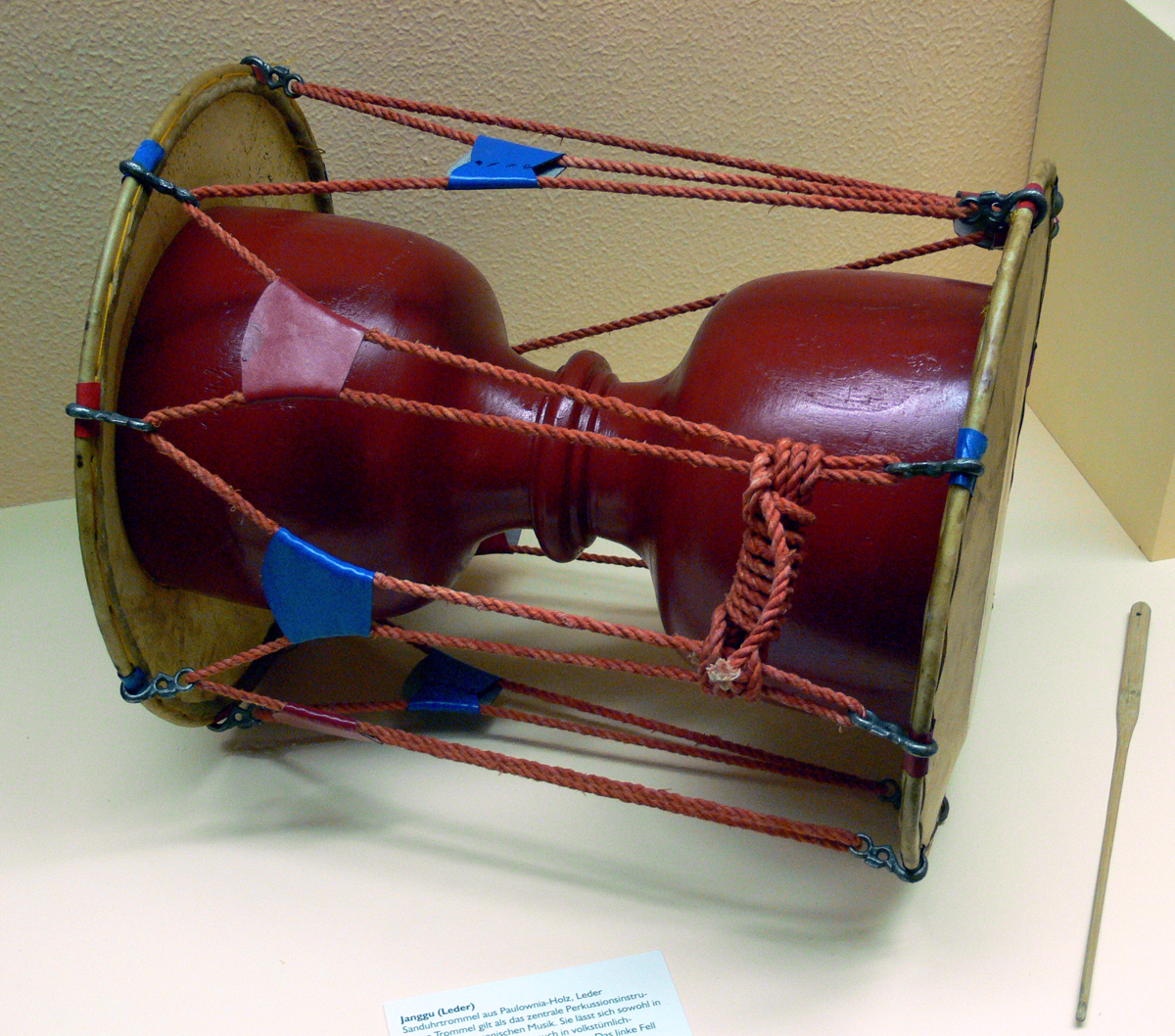


Building a Janggu — The Korean Hourglass Drum
Build a janggu: Korea's hourglass drum with two deliberately different heads — a thick, loose bass head played by hand and a thin, tight treble head played with a bamboo stick — laced together with rope you tune by sliding. A serious maker build in the drumhead: how thickness and tension set a drum's pitch, and how one drum speaks in two voices.
متوسط
Several hours over a couple of sessions
دستورالعملها
1
1
One drum, two voices
One drum, two voices
The janggu is Korea's hourglass drum. It has two different heads: a deep bass side struck with the bare hand, and a high treble side struck with a thin bamboo stick — one drum that plays both low and high.
2
2
Make the hourglass body
Make the hourglass body
Make a hollow wooden body shaped like an hourglass — two open cones joined at a narrow waist. Two matching bowls or plant pots joined base-to-base also work well.
مواد مورد نیاز این مرحله:
 تختهٔ چوب نرم خشک1 قطعه
 چسب چوب PVA1 قطعه
ابزارهای مورد نیاز:
 ارهٔ آهنبر
3
3
Cut the two heads
Cut the two heads
Cut two round hide heads, each larger than the drum's mouths. Pick a THICKER piece of hide for the bass head and a THINNER piece for the treble head.
مواد مورد نیاز این مرحله:
 پوست خام1 قطعه
4
4
Mount each head on a hoop
Mount each head on a hoop
Soak each hide and lash it around a hoop — a bent withy or a metal ring — so it can later be pulled tight over a drum mouth.
5
5
Fit the bass head
Fit the bass head
Stretch the THICKER head over the wider left mouth, but not too tight. Thick and a little loose, it will give a deep, round low tone.
6
6
Fit the treble head
Fit the treble head
Stretch the THINNER head over the right mouth and pull it tighter. Thin and tight, it will give a high, sharp tone.
7
7
Lace the heads together
Lace the heads together
Run a long cord back and forth between the two hoops in a zig-zag down the body, pulling both heads tight and binding them into one drum.
مواد مورد نیاز این مرحله:
 ریسمان اباکا1 قطعه
8
8
Add sliding tuners
Add sliding tuners
Thread small leather sliders over pairs of the ropes. Push them toward the waist to tighten the heads and raise the pitch, or back toward the ends to loosen it.
مواد مورد نیاز این مرحله:
پوست خام1 قطعه9
9
Cut the bamboo stick
Cut the bamboo stick
Cut a thin, springy bamboo stick, the yeolchae, for the treble hand — light enough to bounce, stiff enough to crack.
مواد مورد نیاز این مرحله:
 خیزران1 قطعه
ابزارهای مورد نیاز:
 چاقوی اسلوید
10
10
Play the bass
Play the bass
Rest the drum across your lap. Strike the LEFT head with your bare palm and fingers for the deep, booming 'kung' bass.
11
11
Play the treble
Play the treble
Tap the RIGHT head with the tip of the bamboo stick for a high, crisp 'deok', and rap the wooden rim for a sharp 'tak'.
12
12
Play the dialogue
Play the dialogue
Alternate the bass hand and the treble stick to build the rolling patterns of Korean pungmul and samul nori — the two heads answering each other.
13
13
Compendium — two heads, two voices
Compendium — two heads, two voices
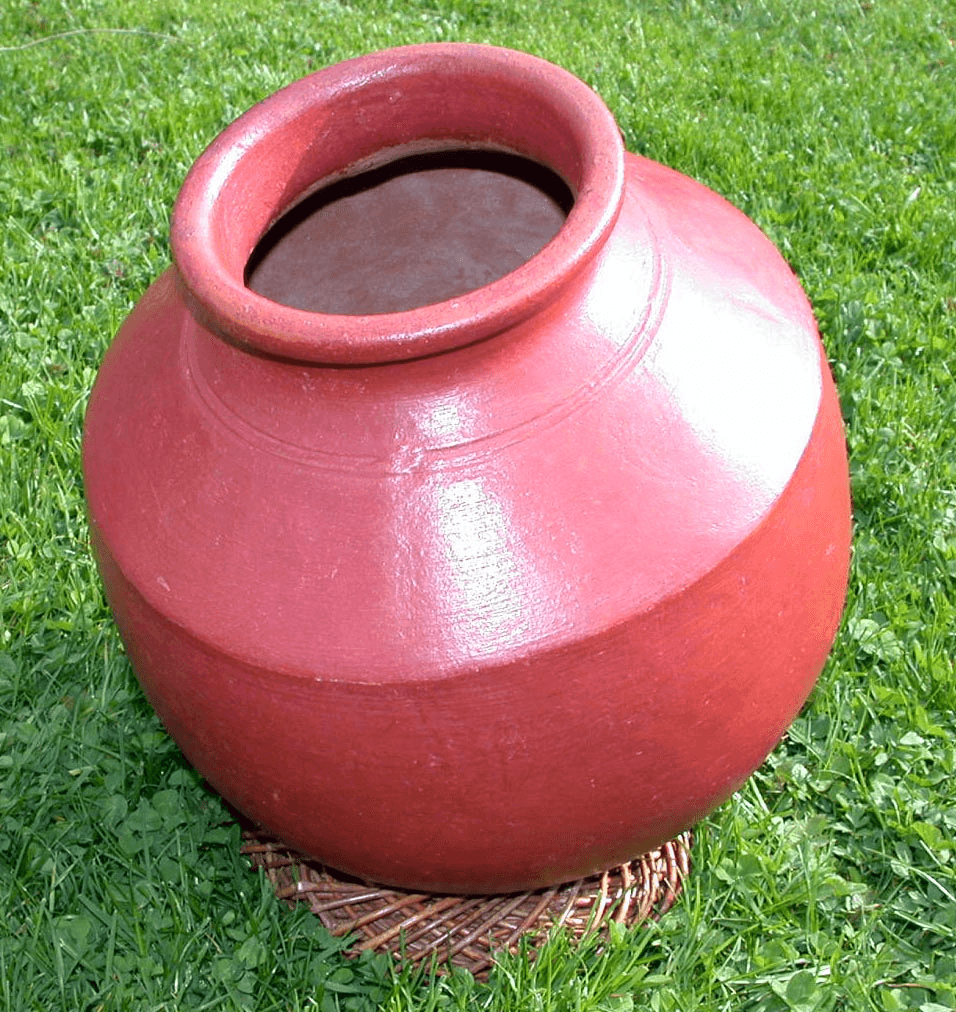
The janggu is a membranophone — a drum whose sound comes from a stretched skin vibrating — but it is really two drums in one hourglass body, made deliberately different so it can speak low and high at once. The pitch of any drumhead RISES with tension and FALLS with size and mass, and the janggu exploits both. The left head is cut from thicker hide and kept a little loose, and struck with the bare hand: a thicker, slacker membrane vibrates slowly for a deep, round 'kung' bass. The right head is thinner and pulled tighter, and struck with a springy bamboo stick: a thinner, tighter membrane vibrates fast for a sharp, high 'deok'. The rope lacing that zig-zags between the two heads lets you tune them together — slide the little leather tuners toward the narrow waist and every rope pulls tighter, raising both heads at once. Hand on one side and stick on the other let a single player carry both the beat and its accents, which is why the janggu sits at the heart of Korean drumming: the farmers' music of pungmul, the thundering samul nori quartet, and the drum behind pansori storytelling. Its cousins are every two-headed drum in the world, and on Youblob its simpler kin is the single-headed frame drum. The other way to get many tones from one instrument is to change WHERE and HOW you strike a single body — the trick of the clay ghatam.
مواد
5- 1 قطعهجایگزین
- 1 قطعهجایگزین
- 1 قطعهجایگزین
- 1 قطعهجایگزین
- 1 قطعهجایگزین
ابزارهای لازم
2- جایگزین
- جایگزین
نقشههای مرتبط
این نقشهها دانش مشترکی دارند — تکنیکها، مواد یا اصول


CC0 مالکیت عمومی
این نقشه تحت مجوز CC0 منتشر شده است. شما آزاد هستید آن را کپی، ویرایش، توزیع و برای هر هدفی بدون نیاز به اجازه استفاده کنید.
با خرید محصولات از طریق نقشه از سازنده حمایت کنید و او کمیسیون سازنده تعیین شده توسط فروشندگان، دریافت میکند یا یک نسخه جدید از این نقشه ایجاد کنید و آن را به عنوان اتصال در نقشه خود قرار دهید تا درآمد به اشتراک گذاشته شود.