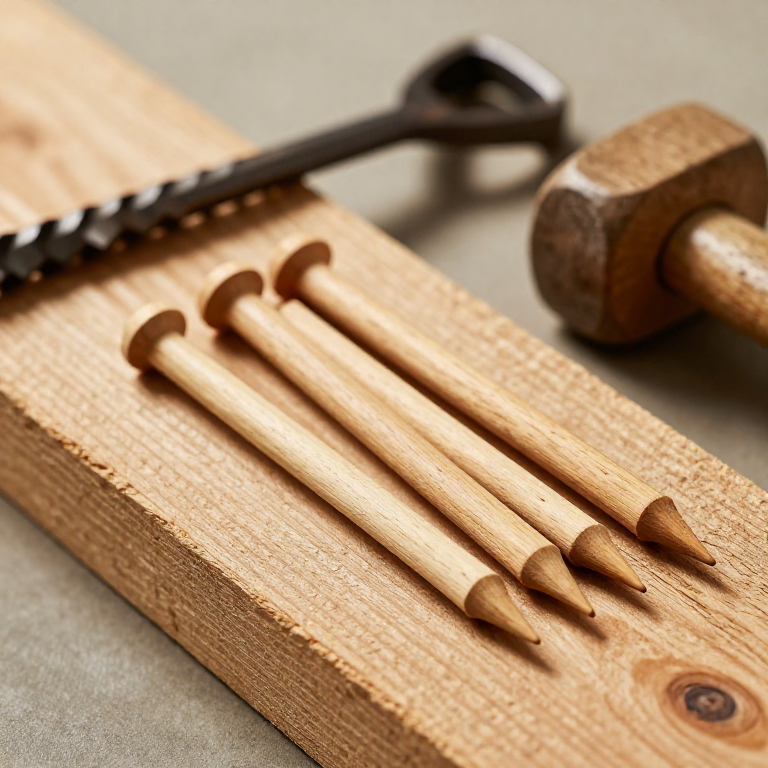


Making Treenails — Wooden Pegs for Timber Framing and Shipbuilding
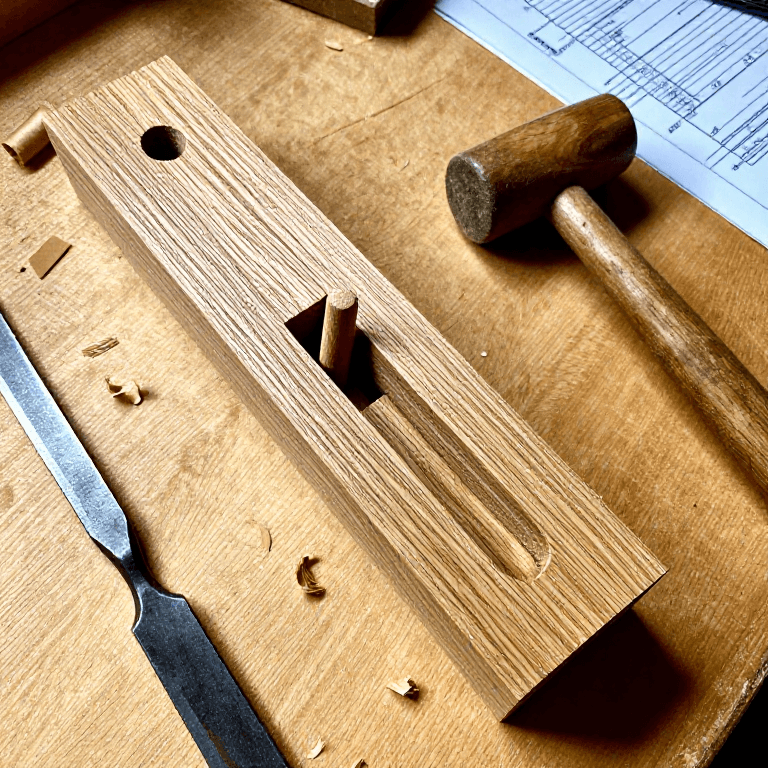
Before iron nails were cheap, wood was fastened with wood. A treenail (pronounced 'trunnel') is a cylindrical wooden peg driven into a bored hole to lock a timber joint together. Treenails held together medieval roof trusses, Viking longships, and post-and-beam barns for centuries. In many applications they outperform iron nails — they do not rust, they swell when wet to tighten the joint, and they flex with the timber instead of working loose.
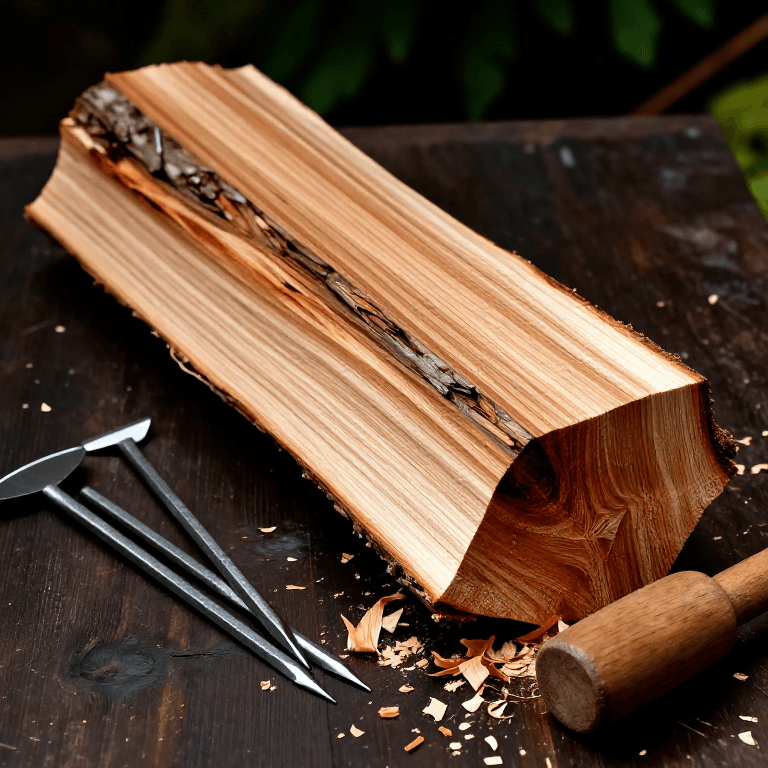
Treenails are always made from a wood harder or at least as hard as the timber they join. Oak treenails in oak frames, or locust treenails in softwood construction. They are riven from straight-grained stock, never sawn — riving preserves the grain continuity that gives the peg its shear strength. A sawn peg has cut fibres that snap under load.
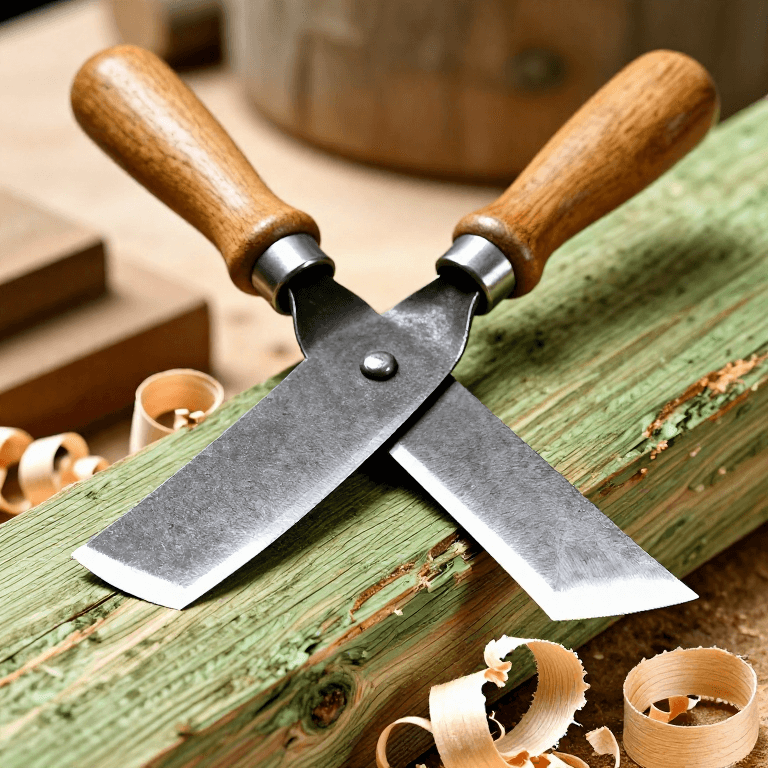
The technique is simple: rive a billet into rough square sections, then round them by driving through a steel plate with a round hole (a rounding die) or by shaving with a drawknife. The finished treenail is slightly tapered so it can be started in the hole and driven home with a mallet. Some traditions split the protruding end and drive a small hardwood wedge into the split, locking the treenail permanently.
دستورالعملها
Select straight-grained hardwood
Select straight-grained hardwood
مواد مورد نیاز این مرحله:
 چوب بلوط سرخ1 قطعه
Rive the billet into square blanks
Rive the billet into square blanks
ابزارهای مورد نیاز:
 فرو (کارد شکافنده)
Round the blanks
Round the blanks
ابزارهای مورد نیاز:
 رنده دو دسته
 نیمکت تراش
 چکش چوبی
Taper the leading end
Taper the leading end
ابزارهای مورد نیاز:
رنده دو دستهBore the holes and drive the treenails
Bore the holes and drive the treenails
ابزارهای مورد نیاز:
 مته دستی مارپیچچکش چوبی
Wedge the protruding end (optional lock)
Wedge the protruding end (optional lock)
مواد مورد نیاز این مرحله:
 گُوِهٔ چوب سخت1 قطعه
ابزارهای مورد نیاز:
 مجموعه اسکنهٔ چوب
مواد
2- چوب بلوط سرخ10% کمیسیون1 قطعهجایگزین
- 1 قطعهجایگزین
مواد نقشههای متصل
نقشههای مرتبط
این نقشهها دانش مشترکی دارند — تکنیکها، مواد یا اصول
CC0 مالکیت عمومی
این نقشه تحت مجوز CC0 منتشر شده است. شما آزاد هستید آن را کپی، ویرایش، توزیع و برای هر هدفی بدون نیاز به اجازه استفاده کنید.
با خرید محصولات از طریق نقشه از سازنده حمایت کنید و او کمیسیون سازنده تعیین شده توسط فروشندگان، دریافت میکند یا یک نسخه جدید از این نقشه ایجاد کنید و آن را به عنوان اتصال در نقشه خود قرار دهید تا درآمد به اشتراک گذاشته شود.