هنر
زیبایی و سلامت
صنایع دستی
فرهنگ و تاریخ
سرگرمی
محیط زیست
غذا و نوشیدنی
مهندسی معکوس
علوم
ورزش
فناوری
پوشیدنیها

Newton's Rings
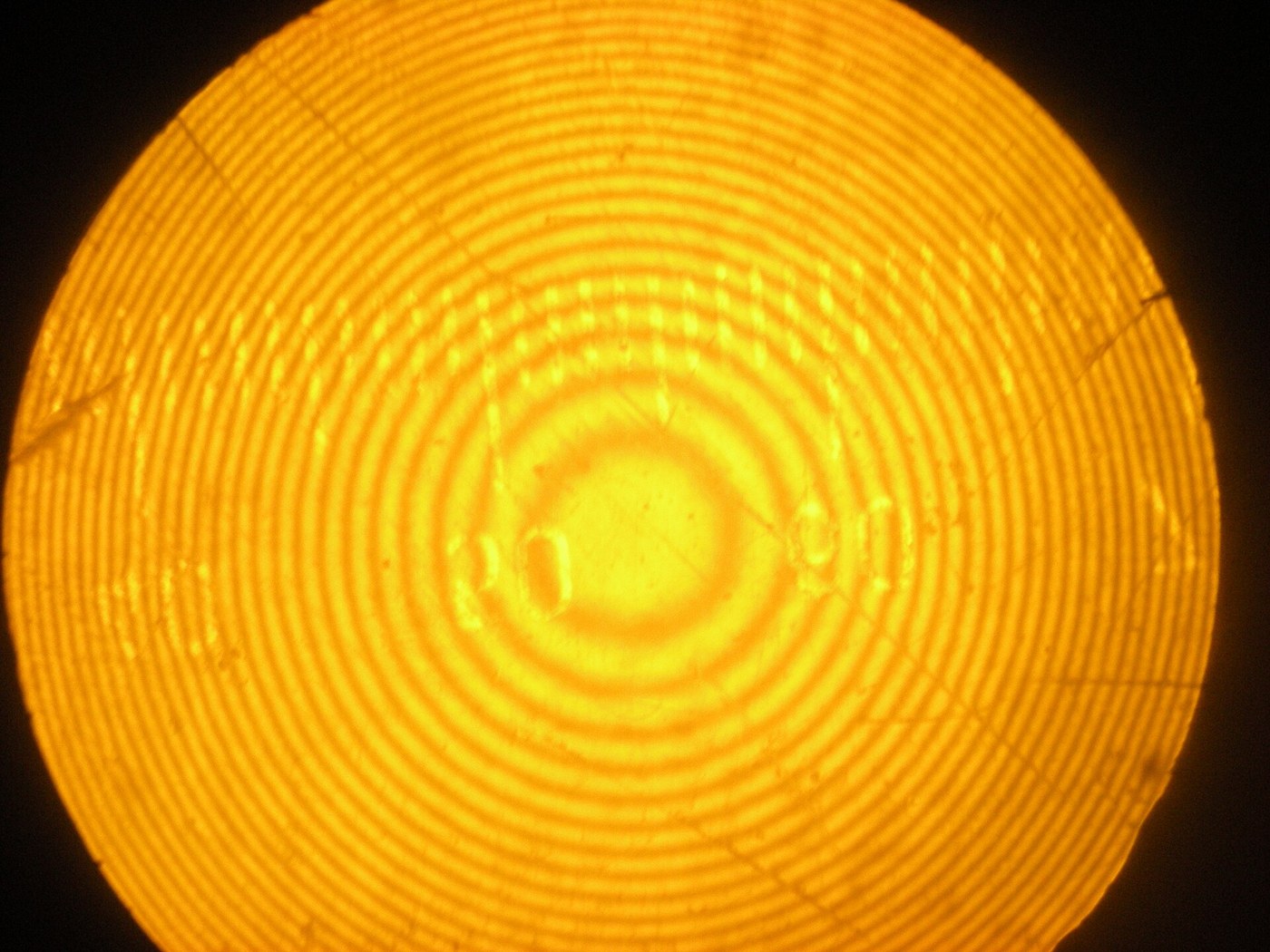
Hooke saw them in 1665 and Newton measured them, which is the difference that matters. Press a convex lens onto a flat piece of glass and coloured rings appear around the contact point — in monochromatic light, dark and bright circles; in daylight, a bullseye of spectral colour.
The wedge of air between the two surfaces grows in thickness as the square of the distance from the contact. Light reflected from the top of that wedge and from the bottom travels different distances and interferes, so a ring appears wherever the extra path is a whole number of wavelengths. Count the rings and you have measured the gap — in units of half a wavelength, about a third of a micrometre, on apparatus that costs less than a set of drill bits.
The centre is DARK in reflection, and that detail defeated Newton. His corpuscles offered no reason why two surfaces in contact should reflect nothing at all. The wave explanation is one line: reflection off the denser medium at the bottom of the film flips the phase, the top reflection does not, and at zero thickness the two cancel exactly. He recorded the effect faithfully for forty years and never could account for it.
This is the first blueprint in an interferometry batch because it is the whole idea in its simplest form: stop comparing your object to a ruler and start comparing it to a wave.
مبتدی
2 hours
دستورالعملها
1
1
Make the rings
Make the rings
Clean a plano-convex lens and a glass flat with isopropyl alcohol. One speck of dust holds the surfaces apart and destroys the pattern.
Rest the curved face on the flat and press gently at the centre. Illuminate from above through a half-silvered slide at 45 degrees, using a sodium lamp or a white LED behind a narrow-band filter, and look down through the slide with the hand lens.
مواد مورد نیاز این مرحله:
 مجموعهٔ عدسیهای تختکوژ1 قطعه
 لام میکروسکوپ با لامل1 قطعه
 ایزوپروپیل الکل ۹۹ ٪30 میلیلیتر
ابزارهای مورد نیاز:
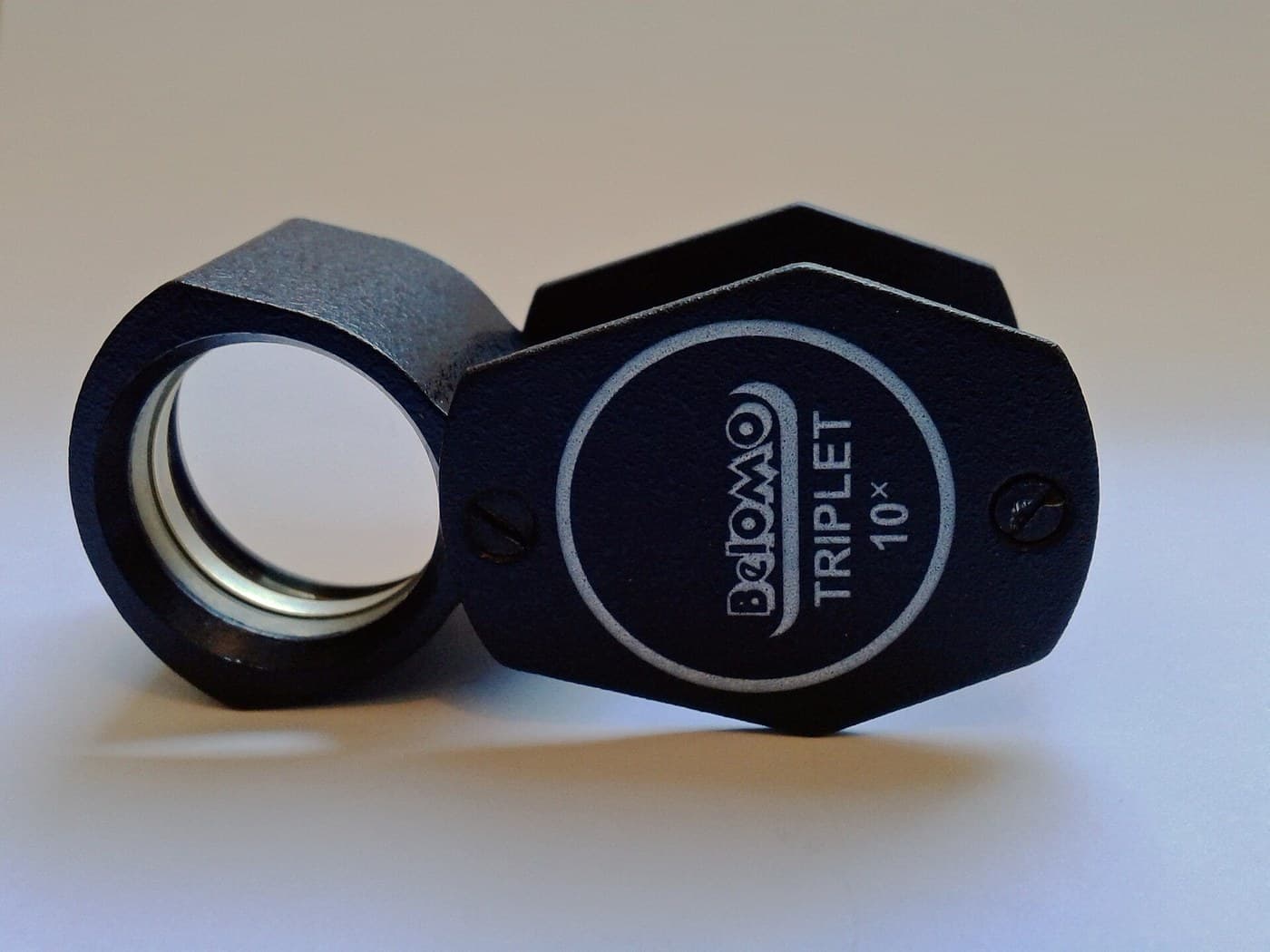
 ذرهبین دستی ۱۰ برابر
 کیت میز نوری
 منبع نور الایدی
2
2
Measure eight rings
Measure eight rings
Photograph the pattern against a steel rule in the same plane, then measure ring DIAMETERS from the image — diameters, not radii, because the centre is the hardest point to locate and cancels out.
Take the even-numbered dark rings from 2 to 16. Record each diameter in millimetres.
ابزارهای مورد نیاز:
 خطکش
خطکش کولیس دیجیتال ۶ اینچی
 رایانهٔ رومیزی
3
3
Fit the radius, and compare the alternatives
Fit the radius, and compare the alternatives
در حال بارگذاری دفترچهٔ Jupyter…
ابزارهای مورد نیاز:
رایانهٔ رومیزی4
4
Compendium: the dark centre
Compendium: the dark centre
WHY THE CENTRE IS DARK, AND WHY IT MATTERED. At contact the film has zero thickness, so both reflections travel the same distance and ought to add. They cancel, because the reflection at the air-to-glass boundary underneath inverts the wave and the glass-to-air one above does not. Newton recorded this for forty years without explaining it — corpuscles offer no mechanism for a reflection that depends on which material you are entering.
STILL USED DAILY. An optical flat on a workpiece under monochromatic light maps its departure from flatness, one half-wavelength per fringe. Gauge blocks, seal faces and lens surfaces are checked this way now — the same observation promoted from curiosity to acceptance test, and the direct ancestor of the Fizeau wedge in blueprint 3.
مواد
3- 1 قطعهجایگزین
- 1 قطعهجایگزین
- 30 میلیلیترجایگزین
ابزارهای لازم
6- جایگزین
- جایگزین
- جایگزین
- جایگزین
- جایگزین
- جایگزین
نقشههای مرتبط
این نقشهها دانش مشترکی دارند — تکنیکها، مواد یا اصول

CC0 مالکیت عمومی
این نقشه تحت مجوز CC0 منتشر شده است. شما آزاد هستید آن را کپی، ویرایش، توزیع و برای هر هدفی بدون نیاز به اجازه استفاده کنید.
با خرید محصولات از طریق نقشه از سازنده حمایت کنید و او کمیسیون سازنده تعیین شده توسط فروشندگان، دریافت میکند یا یک نسخه جدید از این نقشه ایجاد کنید و آن را به عنوان اتصال در نقشه خود قرار دهید تا درآمد به اشتراک گذاشته شود.