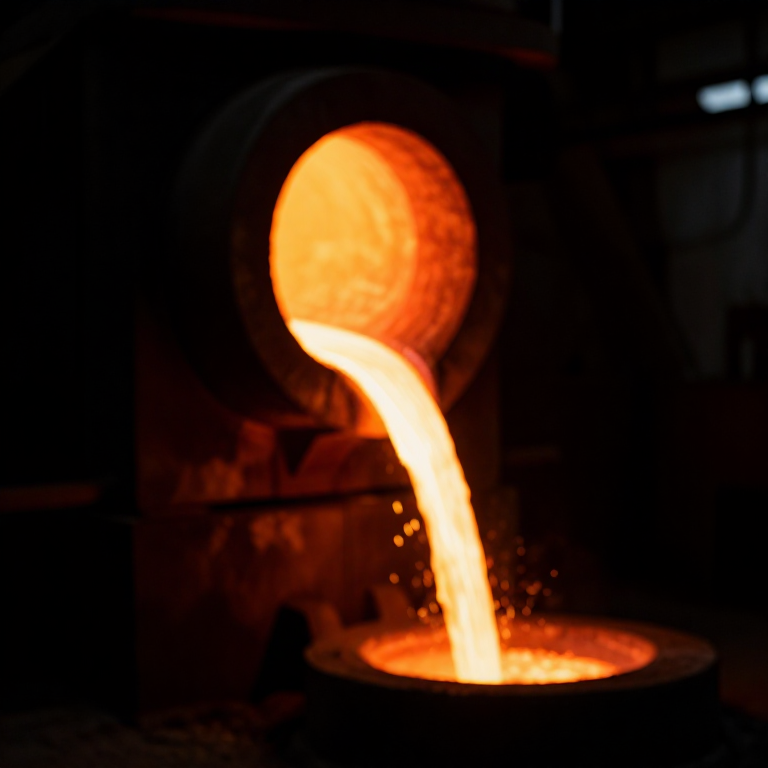


Smelting Pig Iron in a Coke Blast Furnace — Molten Iron at Industrial Scale
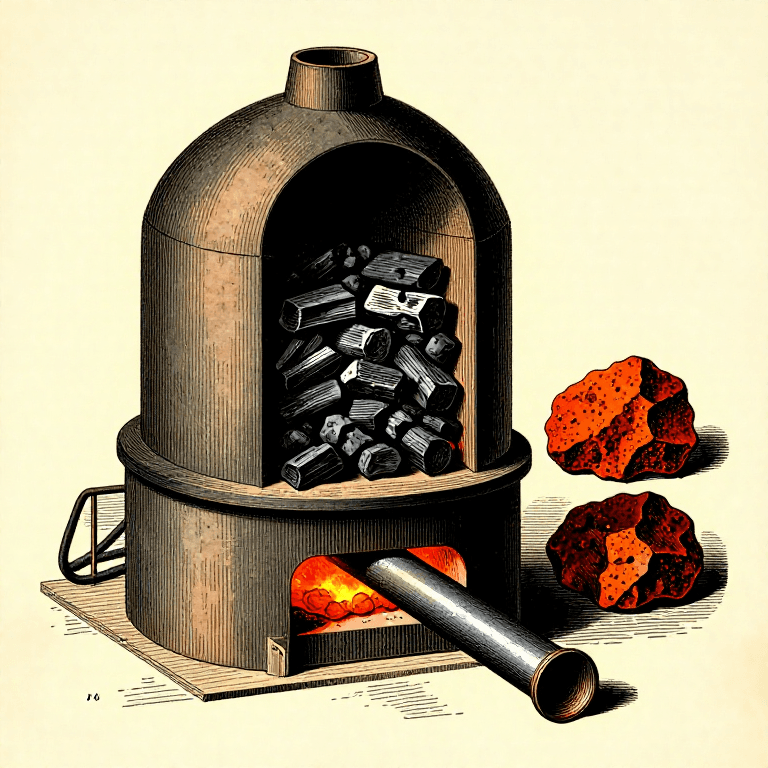
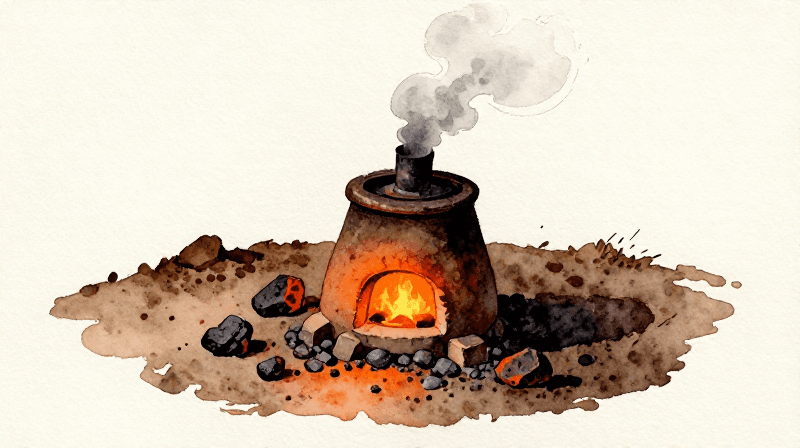
The bloomery gave the ancient world iron, but only in small spongy lumps, one slow batch at a time. The blast furnace changed everything: a tall shaft kept continuously charged and blown produces a steady river of molten iron. Where a bloomery never melts its metal, a blast furnace runs hot enough to liquefy iron entirely, letting it pool at the hearth and be tapped out by the tonne.
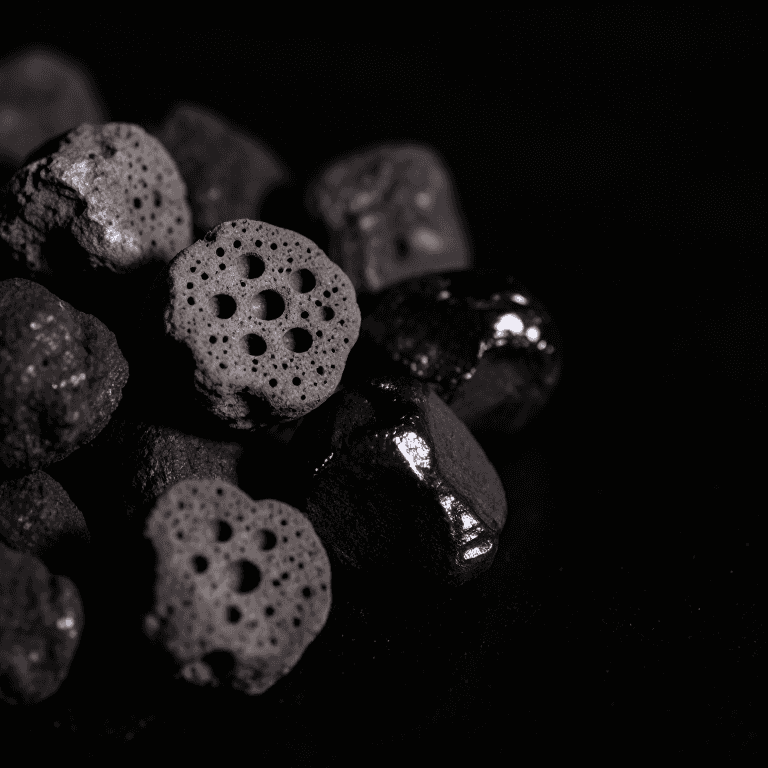
The key is heat and chemistry working together. A powerful air blast burns coke to carbon monoxide, which strips the oxygen from iron ore; meanwhile the descending iron soaks up carbon until it melts. Limestone added as flux carries off the stony impurities as a floating slag. What runs out of the tap hole is pig iron — iron saturated with about four percent carbon: hard, brittle, and perfect for casting or for refining into wrought iron and steel.
When coke replaced charcoal as the blast-furnace fuel in the early 1700s, iron could finally be made in unlimited quantity without consuming whole forests. Cheap pig iron became the raw material of the Industrial Revolution — the metal behind rails, bridges, engines, and machines.
دستورالعملها
Understand pig iron
Understand pig iron
Build the shaft furnace
Build the shaft furnace
مواد مورد نیاز این مرحله:
 آجر نسوز80 قطعه
ابزارهای مورد نیاز:
 بیلچهٔ دستی
Crush the ore and flux
Crush the ore and flux
مواد مورد نیاز این مرحله:
 سنگ آهن باتلاقی خشکشده30 کیلوگرم
 صفحهٔ سنگ آهک8 کیلوگرم
ابزارهای مورد نیاز:
 چکش
چکشSet up the air blast
Set up the air blast
ابزارهای مورد نیاز:
 دم آهنگری
Light the coke bed
Light the coke bed
مواد مورد نیاز این مرحله:
 کک متالورژی40 کیلوگرم
Charge in layers
Charge in layers
مواد مورد نیاز این مرحله:
کک متالورژی40 کیلوگرمReduce the ore
Reduce the ore
Melt and carburize
Melt and carburize
Form and tap the slag
Form and tap the slag
ابزارهای مورد نیاز:
 میلهٔ تخلیهٔ کوره
Tap the molten iron
Tap the molten iron
ابزارهای مورد نیاز:
میلهٔ تخلیهٔ کورهCast the pigs
Cast the pigs
مواد مورد نیاز این مرحله:
 ماسهٔ ریختهگری50 کیلوگرم
Cool, break, and identify
Cool, break, and identify
ابزارهای مورد نیاز:
چکشمواد
5- 80 قطعهجایگزین
- 30 کیلوگرمجایگزین
- 8 کیلوگرمجایگزین
- 40 کیلوگرمجایگزین
- 50 کیلوگرمجایگزین
مواد نقشههای متصل

نقشههای مرتبط
این نقشهها دانش مشترکی دارند — تکنیکها، مواد یا اصول


CC0 مالکیت عمومی
این نقشه تحت مجوز CC0 منتشر شده است. شما آزاد هستید آن را کپی، ویرایش، توزیع و برای هر هدفی بدون نیاز به اجازه استفاده کنید.
با خرید محصولات از طریق نقشه از سازنده حمایت کنید و او کمیسیون سازنده تعیین شده توسط فروشندگان، دریافت میکند یا یک نسخه جدید از این نقشه ایجاد کنید و آن را به عنوان اتصال در نقشه خود قرار دهید تا درآمد به اشتراک گذاشته شود.