هنر
زیبایی و سلامت
صنایع دستی
فرهنگ و تاریخ
سرگرمی
محیط زیست
غذا و نوشیدنی
مهندسی معکوس
علوم
ورزش
فناوری
پوشیدنیها
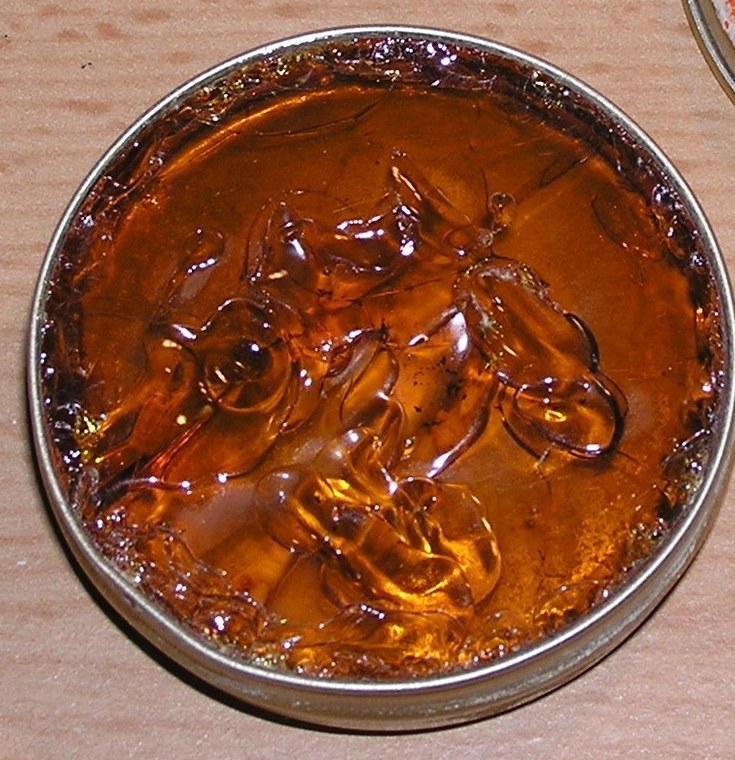


Plastic Rosin Flux: Ripley, 1929
Perry C. Ripley of Chicago, for the Kester Solder Company, patented this flux in 1929, US 1,724,680. In cored solder the heat releases the flux onto the surfaces to be joined. Rosin in the usual dry, powdered form cracks, lets in air and moisture and decomposes. Mixed with turpentine, rosin stays permanently plastic: it does not crystallise or crack, and it keeps air and moisture out. Ripley made it as the core of rosin-core solder.
مبتدی
Workshop process
دستورالعملها
1
1
Melt the rosin
Melt the rosin
Melt the rosin in a suitable container until it is fluid.
مواد مورد نیاز این مرحله:
 کلوفن کاج1 as required
ابزارهای مورد نیاز:
 دیگ
 صفحه گرمکن
2
2
Add the turpentine
Add the turpentine
Add turpentine as the plasticiser, from 2% to 50% by weight depending on the grade of rosin, since rosins contain varying amounts of fluids. It may also be added while the rosin is still melting. Ripley lists other solvents (kerosene, naphtha, alcohol, acetone and more), but chose turpentine: it is not very volatile at soldering temperatures and does not conduct electricity.
مواد مورد نیاز این مرحله:
 تربانتین1 as required
ابزارهای مورد نیاز:
 ترازو
3
3
Mix thoroughly
Mix thoroughly
Agitate the rosin and turpentine mechanically until the turpentine has penetrated the whole rosin mass. The result is a rosin flux in a substantially permanent plastic form.
ابزارهای مورد نیاز:
 همزن
این نقشه میسازد


نقشههای مرتبط
این نقشهها دانش مشترکی دارند — تکنیکها، مواد یا اصول


CC0 مالکیت عمومی
این نقشه تحت مجوز CC0 منتشر شده است. شما آزاد هستید آن را کپی، ویرایش، توزیع و برای هر هدفی بدون نیاز به اجازه استفاده کنید.
با خرید محصولات از طریق نقشه از سازنده حمایت کنید و او کمیسیون سازنده تعیین شده توسط فروشندگان، دریافت میکند یا یک نسخه جدید از این نقشه ایجاد کنید و آن را به عنوان اتصال در نقشه خود قرار دهید تا درآمد به اشتراک گذاشته شود.