هنر
زیبایی و سلامت
صنایع دستی
فرهنگ و تاریخ
سرگرمی
محیط زیست
غذا و نوشیدنی
مهندسی معکوس
علوم
ورزش
فناوری
پوشیدنیها
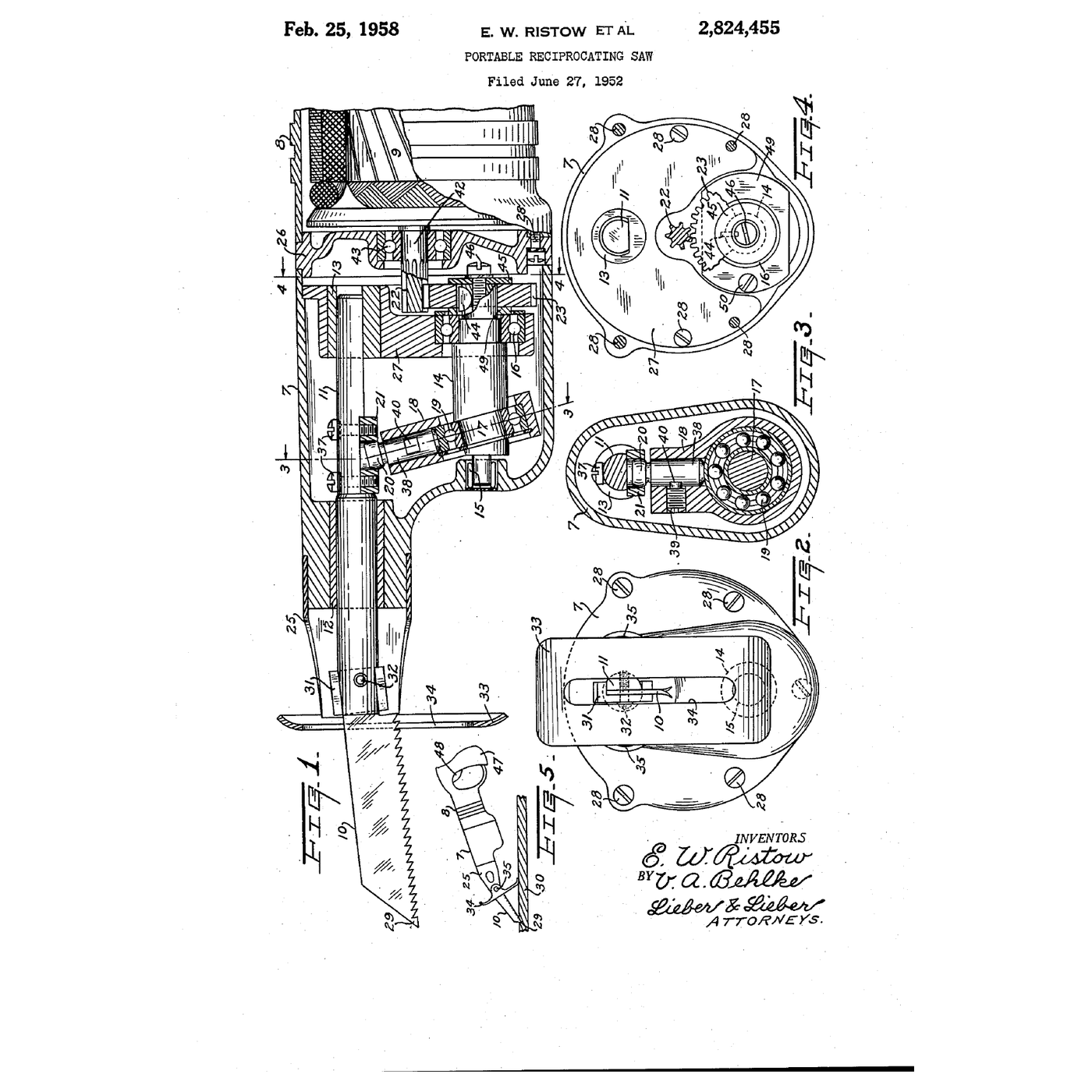


A Blade That Goes Where No Frame Can
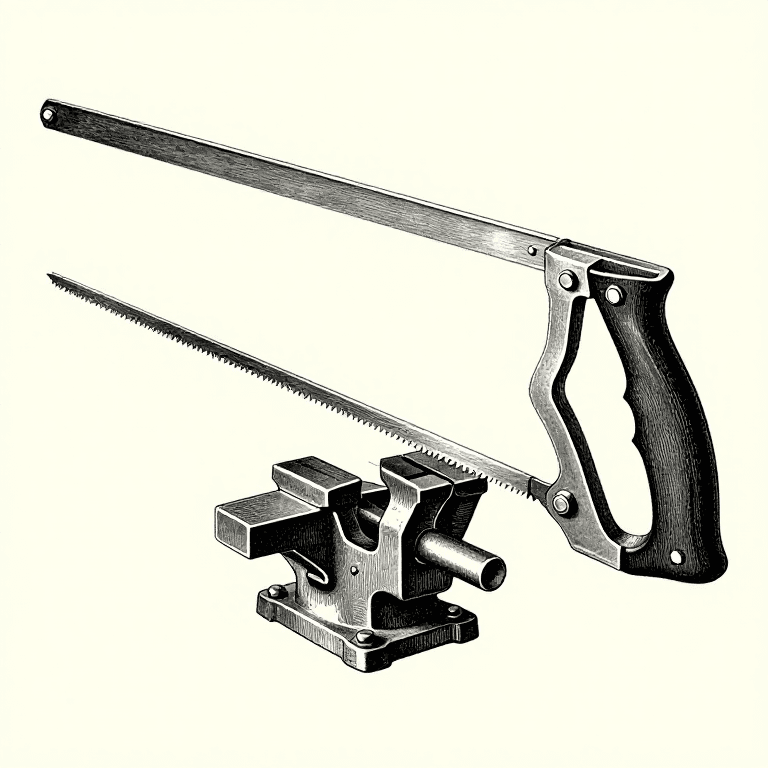
A hacksaw is a blade in tension inside a frame, and the frame is the problem. It decides how deep you can cut and it cannot follow the blade into a wall, a floor or the underside of a car.
Take the frame away and the blade must work in compression on the push and tension on the pull, driven from one end only. That is a harder job for the blade and a much easier one for the operator, and it is what Ristow and Behlke's saw does.
Inside is a mechanism worth understanding on its own: an oblique crank sweeping a cone, a ball bearing riding it, and an oscillating arm with a spherical head in a socket. Rotation in, reciprocation out, in a housing narrow enough to fit between joists.
متوسط
About 2 hours
دستورالعملها
1
1
Blade choice first, because the blade is the tool
Blade choice first, because the blade is the tool
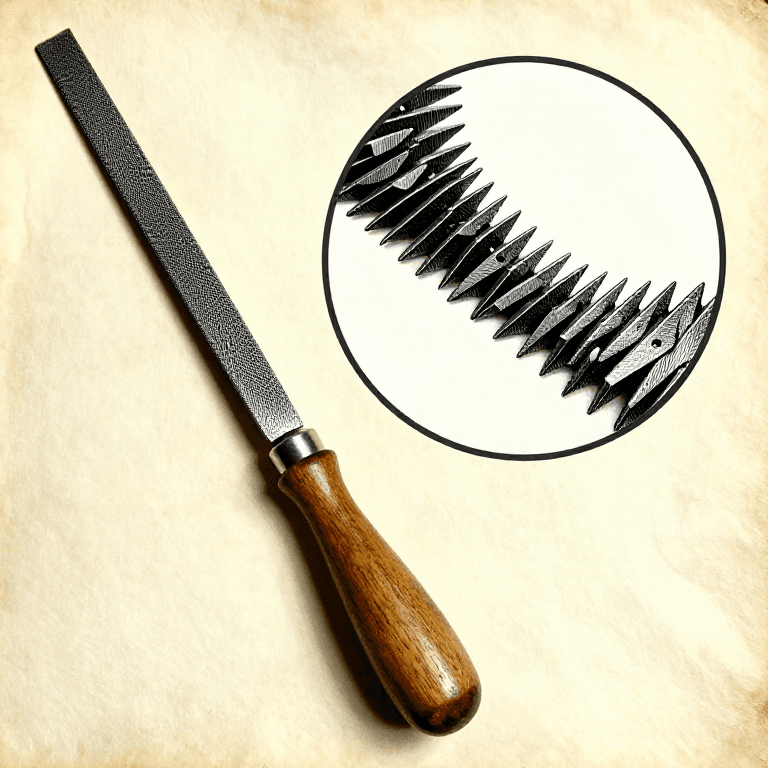
Lay the blade set out and measure the tooth pitch on each with the caliper — count teeth over 25 mm rather than trusting the printing.
The rule is the same one the hacksaw rung sets out: **at least three teeth in the cut at all times**. On a reciprocating saw the stroke is around 19 mm, so a 6 TPI blade has about four teeth passing through the work and a 24 TPI blade has eighteen. Put the coarse blade on thin steel and single teeth hook the edge and snatch; put the fine blade in wet timber and the gullets pack solid within a second.
Check the blade length too. The stroke plus the material thickness plus a margin must be less than the blade's working length, or the saw bottoms out and hammers rather than cuts.
Fit the blade with the teeth pointing back toward the tool for most work, which cuts on the pull and holds the shoe against the work. Turning it over to cut on the push is for flush cutting, and it is the setup where the saw will try to walk off the job.
ابزارهای مورد نیاز:
 اره افقی رفتوبرگشتی
 دست تیغه اره رفتوبرگشتی
 کولیس دیجیتال ۶ اینچی
2
2
The oblique crank, read off the patent
The oblique crank, read off the patent
The patent describes 'a rearwardly open unitary casing' — one casting, open at the back, so the shafts go in and come out one way only. That is a manufacturing and a servicing claim before it is a mechanical one.
Inside, a small gear on the motor shaft drives a larger gear on a **rotary crank shaft journalled within the casing**. Integral with that shaft is an **oblique crank** — set at an angle to the shaft axis, so it sweeps a cone rather than a circle as it turns.
That oblique crank 'coacts with the oscillatory arm element' through **ball bearings**. As the cone sweeps, it pushes the arm to one side, then the other, once per revolution. The arm is not sliding on the crank; it is being rocked by it, through a rolling contact.
The arm's far end carries a **spherical head** that fits into a **socket** on the blade shaft. A ball in a socket transmits the push and pull along the blade axis while letting the arm swing through its arc — so the arm rocks and the blade goes straight.
Three claims, and two of them are about getting the shafts in and out of the back of the casing. Somebody expected this tool to be repaired.
ابزارهای مورد نیاز:
اره افقی رفتوبرگشتی مجموعه آچار آلن
 مجموعه پیچگوشتی
3
3
Cut with the shoe, not with your arms
Cut with the shoe, not with your arms
Clamp a piece of scrap in the bench vise. Start the cut with the **shoe pressed firmly against the work** and the blade clear, then squeeze the trigger and let the blade in.
The shoe is not a guard. It is the fulcrum: with it held tight, the reaction from the blade pushes the tool against the work and the saw sits still. Let the shoe lift and the same reaction becomes a hammer, the tool bucks, and the blade bends or breaks.
Try both deliberately on scrap. Cut with the shoe hard against the work, then pull the tool back 20 mm and cut on the blade alone. The difference in vibration is the entire technique of this tool in one comparison.
Now cut something that pinches: a length of pipe supported at both ends so the kerf closes. Feel the blade bind, and stop. Then support it so the kerf OPENS and cut again. A blade with no frame cannot resist a closing kerf, and this is the commonest way they are snapped.
مواد مورد نیاز این مرحله:
 ورق فولاد نرم1 قطعه
ابزارهای مورد نیاز:
اره افقی رفتوبرگشتیدست تیغه اره رفتوبرگشتی گیرهٔ رومیزی
 عینک ایمنی
 محافظ شنوایی
 دستکش جوشکاری
4
4
Stroke from obliquity, and teeth in the cut
Stroke from obliquity, and teeth in the cut
در حال بارگذاری دفترچهٔ Jupyter…
ابزارهای مورد نیاز:
کولیس دیجیتال ۶ اینچی5
5
History and context
History and context
**US 2,824,455**, Edward W. Ristow of Wauwatosa and Versel A. Behlke of Greenfield, Wisconsin, assignors to Milwaukee Electric Tool Corporation. Filed 27 June 1952, granted 25 February 1958. Long expired.
Milwaukee sold the tool as the Sawzall, a name that has since become the word for the type. It was built for people who cut things that cannot be brought to a bench — plumbers, electricians, demolition crews, vehicle recovery — and its design brief is visible in the patent: one casting, serviceable from the back, no frame anywhere.
Ristow appears again in this batch. Nine years later he and Jerome Schnettler patented the portable jig saw, rung 8, solving a related problem with a completely different mechanism — a gear and eccentric pin rather than an oblique crank. One engineer, two answers to 'make a blade cut without a frame around the work'.
**Honest limits.** A blade driven from one end buckles on the push stroke, so it must be thick, which makes the kerf wide and the cut rough. Accuracy is poor by any standard — this is a tool for getting through something, not for making a joint. It vibrates hard enough to matter over a working day. And it will cut whatever is behind the wall as happily as the wall, which is a different kind of limit and the one that causes the expensive surprises.
مواد
1- 1 قطعهجایگزین
ابزارهای لازم
9- جایگزین
- دست تیغه اره رفتوبرگشتی10% کمیسیونجایگزین
- جایگزین
- جایگزین
- جایگزین
- جایگزین
- جایگزین
- محافظ شنوایی10% کمیسیونجایگزین
- جایگزین
نقشههای مرتبط
این نقشهها دانش مشترکی دارند — تکنیکها، مواد یا اصول

CC0 مالکیت عمومی
این نقشه تحت مجوز CC0 منتشر شده است. شما آزاد هستید آن را کپی، ویرایش، توزیع و برای هر هدفی بدون نیاز به اجازه استفاده کنید.
با خرید محصولات از طریق نقشه از سازنده حمایت کنید و او کمیسیون سازنده تعیین شده توسط فروشندگان، دریافت میکند یا یک نسخه جدید از این نقشه ایجاد کنید و آن را به عنوان اتصال در نقشه خود قرار دهید تا درآمد به اشتراک گذاشته شود.